Your new post is loading...

|
Scooped by
Roland Schegg
July 26, 5:46 AM
|
"Les voyageurs s’approprient vite l’intelligence artificielle (IA). En France, 40% d’entre eux l’ont utilisé en 2026 pour préparer leurs voyages, contre 19% en 2025 et seulement 9% en 2024. Le lancement de ChatGPT en novembre 2022 a marqué un tournant dans les méthodes de recherche de l’information. Les consommateurs adoptent désormais une approche plus conversationnelle.
Comme le montre le graphique ci-après, les voyageurs français utilisent un peu plus l’IA que les Allemands et les Britanniques, mais moins que les Américains."
|
|
Scooped by
Roland Schegg
July 24, 10:14 AM
|
L’auteur défend Claude non pas comme un simple outil conversationnel, mais comme un assistant particulièrement adapté au traitement de dossiers longs, complexes et contradictoires. Son expérimentation menée auprès de cadres d’une institution publique montre que les besoins réels portent moins sur la rédaction de courriels que sur l’analyse de conventions, politiques, règlements, plans stratégiques ou demandes de financement. Grâce à sa grande fenêtre de contexte et à sa capacité à maintenir une ligne de raisonnement cohérente sur de nombreux documents, Claude se distinguerait par son « endurance cognitive », sa prudence face aux informations manquantes et sa capacité à vérifier son propre travail. Ces qualités sont particulièrement pertinentes pour les organisations touristiques, souvent confrontées à des équipes réduites, à une forte charge administrative et à des cadres normatifs complexes. L’article recommande toutefois une adoption pragmatique et non technophile : commencer par analyser les besoins concrets, lancer un pilote limité avec des règles d’usage claires, puis évaluer les résultats sur des données empiriques. Claude n’est pas présenté comme supérieur dans tous les domaines : il peut être plus lent et plus coûteux, pose des questions de confidentialité et n’a pas encore été rigoureusement évalué pour le raisonnement long en français. La conclusion centrale est donc méthodologique : choisir l’outil en fonction des tâches réelles, rester attentif aux limites et être prêt à changer de solution dès que les résultats montrent qu’une autre est plus performante.
|
|
Scooped by
Roland Schegg
July 24, 10:08 AM
|
Every day, millions of AI-generated photos are created. And while AI has a lot of potential, it’s not always used in the right way. Leading to feeds flooded with fake imagery and travelers who can’t even tell what’s real anymore. Until now.
Tennessee Tourism is including a new, certified mark to verify the authenticity of our photos featuring Tennessee’s great outdoors. So, you can trust it’s a real view from a real destination you can really visit.
|
|
Scooped by
Roland Schegg
July 23, 4:53 AM
|
Dans le cadre du projet de recherche Resilient Tourism, soutenu par InnoSuisse, les professeurs Roland Schegg, Marc K. Peter et Michael Fux, de l’institut Tourisme de la HES-SO Valais-Wallis, ont mené une enquête auprès des organisations suisses de gestion de destination (DMO*) au début de l’année 2026. Grâce à des collaborations internationales, cette enquête a aussi été diffusée en Autriche, en France et au Canada, pour parvenir à collecter plus de 260 réponses complètes.
Les questions abordaient 4 thématiques : les réseaux sociaux et la distribution en ligne, la transformation numérique, l’utilisation et la gouvernance des données et l’adoption de l’intelligence artificielle.
|
|
Scooped by
Roland Schegg
July 21, 12:03 PM
|
The first time Booking Holdings CEO Glenn Fogel coined the term “connected trip” as a formal corporate strategy in public was during the company's second-quarter earnings call in 2019.
Fogel laid out the vision as follows: “Our long-term vision is what we call the connected trip ... It is about building a seamless, holistic system that gives and does everything for the traveler, makes their lives easier and gives value to them.”
Seven years in, the “connected trip” has outlasted even generative artificial intelligence (AI) as a quarterly earnings buzzword. A beautiful corporate vision in investor decks and completely nonexistent in reality.
|
|
Scooped by
Roland Schegg
July 21, 5:06 AM
|
"Une nouvelle étude de SparkToro confirme l'accélération du zéro-clic sur Google. Pour les destinations et entreprises touristiques du Québec, l'enjeu n'est plus de faire cliquer… mais d'être la réponse!
Un visiteur tape « meilleur spa Charlevoix » dans Google. Il obtient sa réponse (emplacement, prix, avis) sans jamais quitter la page de résultats. Aucun clic vers le site du spa, aucune trace dans Google Analytics, aucune ligne dans le tableau de bord marketing. Et pourtant, quelque part, une décision de voyage vient peut-être de se prendre."
|
|
Scooped by
Roland Schegg
July 21, 3:52 AM
|
"Die DACH-Hotellerie ist in generativen KI-Suchsystemen nahezu unsichtbar. Das ist das zentrale Ergebnis dieser Studie, für die im Juli 2026 die KI-Sichtbarkeit von 515 Vier- und Fünf-Sterne-Hotels in Deutschland, Österreich und der Schweiz gemessen wurde.
Gemessen wurde dabei nicht, ob KI-Systeme ein Hotel kennen — sondern ob sie es empfehlen, wenn ein Gast ohne Nennung eines Markennamens nach einer Unterkunft fragt. Genau in dieser Situation entstehen neue Gäste.
Die fünf zentralen Befunde
Die durchschnittliche KI-Sichtbarkeit liegt bei 11,2 von 100 Punkten. Der Median liegt bei 11,6 — die Verteilung wird also nicht durch Ausreißer verzerrt, sondern beschreibt den Normalzustand der Branche.
93 Prozent aller Häuser liegen unter 20 Punkten. Von 472 untersuchten Einzelhotels erreichen nur sechs überhaupt 30 Punkte. Ein einziges kommt über 40. 28 Häuser stehen bei null.
Kettenhotels werden dreimal häufiger empfohlen als Privathotels. Ketten- und Mehrhaus-Domains erreichen im Schnitt 36,2 Punkte gegenüber 11,2 bei Einzelhäusern. Der Grund ist messbar: Eine Ketten-Domain erscheint in durchschnittlich 72,8 Themen, ein Einzelhaus in 26,6.
Sterne bieten keinen Schutz. Fünf-Sterne-Häuser liegen bei 12,9 Punkten, Vier-Sterne-Häuser bei 10,7. Beide Gruppen bleiben weit unter der Schwelle, ab der KI-Systeme verlässlich empfehlen.
Das Problem ist strukturell, nicht national. Schweiz 14,3 · Deutschland 11,2 · Österreich 9,6. In allen drei Ländern liegen über 90 Prozent der Häuser unter 20 Punkten."
|
|
Scooped by
Roland Schegg
July 20, 11:10 AM
|
Was digitale Spuren über Landschaften verraten
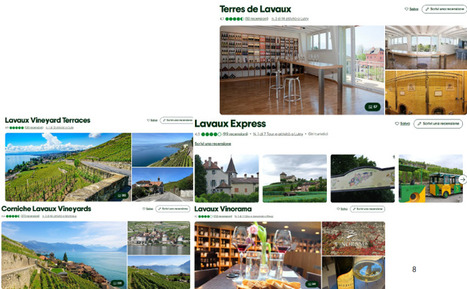
Was haben ein Kommentar auf TripAdvisor nach einem Spaziergang durch die Weinberge des Lavaux und eine regionale Tourismusstrategie gemeinsam? Auf den ersten Blick nicht viel. Und doch stellen diese „digitalen Spuren“ heute eine wertvolle Ressource dar, um die Erfahrungen der Besucher tiefgreifend zu verstehen und die Entwicklung der Reiseziele zu steuern.
Emanuele Mele, Roland Schegg und Romano Wyss vom Institut für Tourismus (ITO) der HES-SO Valais-Wallis haben dieses Potenzial in einer Studie untersucht, die sich mit der Darstellung der Landschaften des Lavaux in Online-Bewertungen befasst. Das Ziel: aufzuzeigen, wie die von den Besuchern spontan generierten Daten zu einem strategischen Hebel für Regionen, darunter auch das Wallis, werden können.
|
|
Scooped by
Roland Schegg
July 19, 4:52 AM
|
"Der Beitrag zeigt, dass Local SEO zunehmend zur Grundlage für Sichtbarkeit in KI-Systemen wird. Kleine Tourismusorte können sich gegenüber bekannten Destinationen behaupten, wenn ihre digitalen Informationen klar, aktuell und maschinenlesbar sind. Vollständig gepflegte Google-Business-Profile, konsistente Kontaktdaten, Öffnungszeiten, Preise, Anreiseinformationen, Bewertungen und konkrete Angaben zu Angeboten helfen nicht nur bei Google Maps und klassischen Suchmaschinen. Sie liefern zugleich jene verlässlichen Signale, auf die ChatGPT, Gemini, Perplexity und andere KI-Systeme zurückgreifen, wenn sie Reiseziele vergleichen und Empfehlungen formulieren. Damit entwickelt sich Local SEO immer stärker zu einem Bestandteil der Generative Engine Optimization (GEO). In einer KI-geprägten Suche reicht es nicht mehr, mit allgemeinen Werbebotschaften präsent zu sein. Destinationen müssen als vertrauenswürdige, aktuelle und eindeutig interpretierbare Datenquelle erkennbar werden. Für kleinere Orte entsteht daraus eine strategische Chance: Wer lokale Informationen systematisch pflegt, strukturiert bereitstellt und durch Bewertungen, Bilder und regelmässige Aktualisierungen bestätigt, kann auch ohne grosse Marketingbudgets in KI-generierten Antworten sichtbar und empfehlenswert werden."
|
|
Scooped by
Roland Schegg
July 17, 2:37 AM
|
AI assistants are becoming the new intermediary between brands and their customers. The article argues that AI presence is becoming the third pillar of a brand’s online presence, alongside websites and social media: AI assistants increasingly interpret, compare and recommend brands directly, meaning companies already have an AI-generated identity whether they manage it or not. Effective AI presence therefore requires ensuring that AI systems can accurately understand the brand, represent it using trustworthy and up-to-date information, and interact with structured data or services. The author proposes three management steps—audit, govern and operate—and highlights travel as an early example, where AI may recommend destinations, hotels and itineraries without users visiting their websites. A benchmark of more than 900 destinations reportedly found very low readiness, suggesting that organizations acting early can gain a competitive advantage by becoming authoritative sources that AI systems trust and recommend.
|
|
Scooped by
Roland Schegg
July 16, 5:05 AM
|
"Die internationale DMO-Umfrage zeigt: Daten werden strategisch wichtiger. Doch Ressourcen, Kompetenzen und gemeinsame Standards reichen vielerorts noch nicht aus.
Destination Management-Organisationen sammeln längst nicht mehr nur Logiernächte, Gästekarten- und Websitezahlen. Daten sollen Kampagnen präziser machen, Besucherströme erklären, Angebote personalisieren und Entscheidungen gegenüber Politik und Leistungsträgern objektivieren. Der dritte Bericht der internationalen DMO-Studienreihe zeigt jedoch eine deutliche Umsetzungslücke: Das Bewusstsein ist vorhanden, eine belastbare Datenorganisation vielerorts noch nicht."
|
|
Scooped by
Roland Schegg
July 9, 10:25 AM
|
AI is transforming industries from finance to healthcare, and hospitality is not an exception. Despite AI adoption in APAC AND MEA is unusually dynamic compared to more mature markets the challenge now is moving from fragmented data to a clean, unified commercial foundation that can support real-time decisions across pricing, distribution, and demand channels. The reason isn’t a lack of ambition, but a lack of something far more fundamental: unified data.
While digital transformation has advanced across industries, hospitality still lags. The State of Distribution 2025 report, based on a survey of 21,000 hotels worldwide, revealed that AI ranked last among planned technology investments. This does not reflect a lack of interest, but rather a lack of readiness to unlock AI’s full potential. The need for change is even more urgent in the hotel industry, where the adoption of digital tools has been slower than in other sectors. It is no surprise that artificial intelligence is often seen as the next big leap, but what will determine who gains from it is not the model itself, but the data that fuels it.
|
|
Scooped by
Roland Schegg
July 9, 3:59 AM
|
The paradigm shift brought about by AI and the recent emergence of ads on ChatGPT have forced digital marketing platforms to grit their teeth and evolve at breakneck speed. In reality, they have been pushing marketing teams to use algorithms for years, but now the transformation is much more significant. On the one hand, this is due to the need to reach users who are communicating in a different way. On the other hand, it is about simplifying and optimizing the hotelier’s day-to-day management.
Do we know what each platform offers in this new ecosystem? Are we ready to incorporate AI into our hotel marketing strategy?
In this article, we will try to break down what the major advertising platforms have to offer.
|
|
|
Scooped by
Roland Schegg
July 26, 5:22 AM
|
Wer Ferien mit ChatGPT plant, erhält nicht zwingend Informationen direkt von den Hotel-Websites. Eine neue Schweizer Studie zeigt grosse Unterschiede bei der KI-Sichtbarkeit von Luxushotels. Massgebend sei weniger der Markenname als die technische Aufbereitung der Website.
|
|
Scooped by
Roland Schegg
July 24, 10:09 AM
|
AI Ethics Consideration Tool
Five questions to assess the ethical dimensions of any AI task before work begins, producing a routing recommendation and a tailored set of considerations to document.
The four DTTT AI Transparency Framework models all operate after the fact — they record what AI did, how productive it was, what it cost the environment and how ethically sound the content was. This tool works upstream of that, helping practitioners and teams think through the ethical implications of an AI task before they begin. It is not a veto mechanism. It is a structured prompt to surface considerations that should be addressed and documented.
Answer the five questions below. The tool produces a routing recommendation (Proceed, Review or Escalate), identifies which framework models to apply on completion, and generates a tailored list of considerations to work through before proceeding.
|
|
Scooped by
Roland Schegg
July 24, 10:03 AM
|
The European Commission has fined Google €460 million for not complying with the Digital Markets Act (DMA) by preferencing its own services in search.
The DMA states that businesses must not favor their own services over those of third parties in rankings. The European regulator found Google preferenced its own services across a number of verticals, including hotels and transport.
The commission said the search giant gives its own services more prominence in search by using, for example, “enhanced visuals and filters” or putting its services at the top of results.
In a separate decision, Google was fined a further €430 million for not letting app developers that distribute their apps via Google Play freely inform customers of “often cheaper, offers, and to direct them to those offers to make purchases, for example on websites or alternative app stores.”
|
|
Scooped by
Roland Schegg
July 23, 4:15 AM
|
Am 2. August 2026 wird der EU AI Act für viele Unternehmen spürbar: Zentrale Transparenz-, Aufsichts- und Sanktionsvorschriften werden anwendbar. Die Verordnung richtet sich nicht nur an Technologieunternehmen, sondern ebenso an Betriebe, die künstliche Intelligenz beruflich einsetzen. Dazu gehören Hotels, Reiseveranstalter, Destinationen, Buchungsplattformen und Medien. Für die Schweizer Hotellerie lautet die entscheidende Botschaft jedoch: Der AI Act wird nicht automatisch zu Schweizer Recht. Er kann Schweizer Betriebe aber dann erreichen, wenn sie den EU-Markt gezielt bearbeiten oder Ergebnisse ihrer KI-Systeme in der Europäischen Union verwendet werden.
|
|
Scooped by
Roland Schegg
July 21, 5:08 AM
|
Just when you thought you had SEO figured out, here comes AI travel search and shuffles hotel discovery all over again. Traditional search rankings still matter, but AI-powered answer engines and generative platforms are changing how visibility works.
More and more people rely on the suggestions from this somewhat magical and scary creature to make travel decisions. Some studies even state that 40% of travellers already use AI tools to plan trips.
|
|
Scooped by
Roland Schegg
July 21, 5:02 AM
|
Le géant américain multiplie les annonces autour de l’IA : recherche connectée aux apps tierces, repositionnement de NotebookLM et création vidéo par avatar personnel.
|
|
Scooped by
Roland Schegg
July 21, 3:40 AM
|
Generative KI-Systeme gewinnen bei der Hotelsuche an Bedeutung. Eine DACH-Studie zeigt: Schweizer Hotels werden zwar häufiger empfohlen als Häuser in Deutschland und Österreich. Insgesamt bleibt die Sichtbarkeit der Branche jedoch gering.
|
|
Scooped by
Roland Schegg
July 20, 11:09 AM
|
Ce que les traces numériques révèlent des paysages
Quel est le point commun entre un commentaire laissé sur TripAdvisor après une balade dans les vignobles de Lavaux et une stratégie touristique régionale ? À première vue, pas grand-chose. Et pourtant, ces « traces numériques » constituent aujourd’hui une ressource précieuse pour comprendre en profondeur l’expérience des visiteurs et orienter le développement des destinations.
Emanuele Mele, Roland Schegg et Romano Wyss, de l’Institut Tourisme (ITO) de la HES-SO Valais-Wallis, ont exploré ce potentiel à travers une étude consacrée à la représentation des paysages du Lavaux dans les avis en ligne. L’objectif : montrer comment les données spontanément produites par les visiteurs peuvent devenir un levier stratégique pour les territoires.
|
|
Scooped by
Roland Schegg
July 17, 9:31 AM
|
Much of the recent debate around artificial intelligence (AI) in travel has been about how far online travel players might be disintermediated.
Consumer research, alongside an audit of the AI platforms and initiatives from the online travel agencies (OTAs), reveals the greater impact could be on their margins.
The study of leisure travelers in the U.S. from investment bank BTIG, conducted June 26, has found significant consumer willingness to use the available AI tools for inspiration, planning and even booking.
More than 60% of travelers have dabbled with AI, with the majority comfortable using it across inspiration (76% very or somewhat willing), research (80% very/somewhat) and itinerary building (65% very/somewhat).
|
|
Scooped by
Roland Schegg
July 16, 11:17 AM
|
AI has moved from novelty to habit for most U.S. travelers, reshaping how trips get researched, planned and booked.
According to Phocuswright’s research report The AI Surge: Travel's Fastest Behavioral Shift in a Decade, generative AI platforms such as ChatGPT surged to 33% usage for trip research, quintupling since 2024, and adoption is no longer limited to early adopters. Millennials lead the way, with 74% using AI for at least one trip in the past year, followed by 72% of Gen Z. But usage climbed sharply across every generation, including a notable jump among boomers, in just the past six months.
|
|
Scooped by
Roland Schegg
July 13, 4:14 AM
|
RÉSEAUX SOCIAUX : ÇA NE CONVERTIT PAS BEAUCOUP!
C’est un enseignement majeur de cette étude : si les DMO sont très présents sur les réseaux sociaux, cela ne se traduit pas en augmentation de la fréquentation du site web de destination : « Facebook et Instagram sont devenus des outils quasi universels pour les DMO dans les quatre pays. LinkedIn, YouTube et les avis Google sont également largement utilisés. En termes d’adoption des plateformes, le secteur a atteint un haut niveau de maturité et de standardisation, l’époque où les réseaux sociaux constituaient un projet parallèle expérimental est révolue depuis longtemps. Et pourtant, malgré cette présence quasi universelle, les réseaux sociaux ne génèrent en moyenne que 4% du trafic vers les sites web des DMO«
Le rapport note que seul le Canada sort du lot avec une meilleure conversion; mais force est de constater que le score maximum de conversion est de 11% pour quelques destinations. Et encore, il s’agît d’une redirection vers le site web de destination, ce qui ne veut pas dire réservation…
|
|
Scooped by
Roland Schegg
July 9, 7:14 AM
|
"Pour les organisations touristiques, un bon référencement sur Google ne suffit plus. Avec l’essor des moteurs de recherche alimentés par l’intelligence artificielle, la visibilité dans leurs réponses devient un enjeu stratégique. Or beaucoup ne disposent ni des données, ni des ressources, ni de la stratégie numérique nécessaires pour s’adapter à cette évolution."
|