Your new post is loading...

|
Scooped by
Roland Schegg
May 16, 6:49 AM
|
Une plateforme conversationnelle pour rechercher et réserver des vols
Alors que l’intelligence artificielle poursuit son intégration dans l’industrie du voyage, la plateforme Mindtrip dévoile une nouvelle expérience de réservation aérienne conversationnelle. Développée avec Sabre et PayPal, cette solution permet de rechercher, comparer et réserver des vols directement via une interface alimentée par l’IA agentique.
|
|
Scooped by
Roland Schegg
May 14, 12:28 AM
|
Un tiers des voyageurs utilisent déjà l’intelligence artificielle pour planifier leurs vacances. Pourtant, seuls 5% des acteurs touristiques suisses ont commencé à travailler leur visibilité sur ces nouveaux outils. Jeremy Kinnear, fondateur de Gencie et spécialiste du référencement, a présenté lors du dernier webinaire Digitourism les enjeux et les actions concrètes à mener pour exister dans les réponses des IA (intelligences artificielles).
Quand un internaute cherche quelque chose sur Google, il obtient une liste de résultats et choisit lui-même sur quoi cliquer. Avec les outils d’IA comme ChatGPT, Perplexity ou Gemini, le fonctionnement est différent. « L’IA fait le travail d’analyse à la place de l’utilisateur et prémâche le travail. Cela prend moins de temps, mais on est dirigé par l’IA. », note Jeremy Kinnear.
Les résultats varient d’un outil à l’autre, et même d’un utilisateur à l’autre, selon son profil et ses préférences. Ce changement de paradigme a une conséquence directe pour les entreprises touristiques : si elles ne figurent pas dans les sources que les IA consultent, elles n’existent tout simplement pas dans les réponses générées.
|
|
Scooped by
Roland Schegg
May 13, 9:45 AM
|
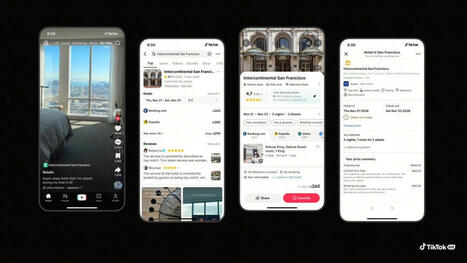
"TikTok is moving from trip inspiration into bookings, turning videos for hotels and experiences into bookable inventory inside the app.
TikTok turned scrolling into buying with TikTok Shop — now it wants to do the same for trip booking. TikTok Go, launching Tuesday in the U.S., lets users tap destination videos to compare rates and book hotels, tours, and experiences through OTAs and experience partners.
Launch partners include Booking.com, Expedia, Viator, GetYourGuide, Tiqets, and Trip.com. The move is TikTok’s most direct push into the sector since it introduced Travel Ads last September.
“TikTok is already where America discovers what’s next. Now it’s where they can book it,” the company said in a blog post on Tuesday."
|
|
Scooped by
Roland Schegg
May 11, 11:44 PM
|
Le journaliste et auteur Bruno Giussani détaille dans ce nouvel épisode de «IA qu’à m’expliquer» les mécanismes de l’emprise technologique qui caractérise notre époque
|
|
Scooped by
Roland Schegg
May 10, 2:13 AM
|
Contrairement aux Etats-Unis, ni l’Union européenne ni la Suisse n’ont a priori eu accès au dernier modèle d’Anthropic, une intelligence artificielle si puissante qu’elle est capable d’organiser des cyberattaques très efficaces
|
|
Scooped by
Roland Schegg
May 5, 9:56 AM
|
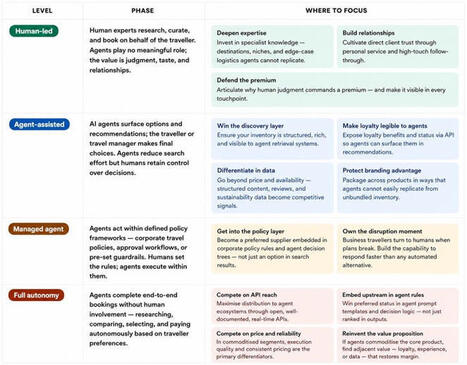
As travel brands test and deploy agentic artificial intelligence (AI), they are defining where the technology fits best, from internal reporting and workflow automation to customer service and disruption management.
Some are encouraging broad experimentation across teams. Others are taking a more controlled approach.
But as deployment continues, many companies are drawing firmer boundaries around where AI agents can act independently—and where human oversight remains essential.
Travel companies need to deploy AI agents or risk being left behind, said Accor’s Amro Khoudeir, senior VP of digital marketing for the premium, midscale and economy division, MEA and Asia Pacific.
“I'm highly encouraging my team to step away from doing anything they can automate,” he told Phocuswire.
|
|
Scooped by
Roland Schegg
May 1, 8:04 AM
|
"Google built the AI search surfaces displacing travel’s organic traffic. Now it’s bringing travel advertisers into the system that powers them — and the price is the keyword control paid search has run on for decades.
Google is expanding its AI Max advertising product — which goes beyond keyword-based campaigns and connects ads to AI Overview searches — to travel brands, the company announced Thursday, while also teasing upcoming travel-specific tools.
The move brings hotel ads, property promotions, and booking links into a system designed to match ads to conversational queries, not just keywords. AI Max interprets intent from these more complex searches to align ads.
That could also represent a change in where the ads appear. With AI Max, travel formats appear eligible to show inside AI Overviews and AI Mode, where Google is answering travel queries directly on the results page. "
|
|
Scooped by
Roland Schegg
April 29, 8:36 AM
|
L’IA donne des super-pouvoirs analytiques aux petits acteurs
Or je dois admettre que depuis 18 mois, quelque chose a changé. Pas dans les discours – ils restent globalement aussi grandiloquents qu’avant – mais dans ce que l’IA générative permet désormais de faire, dans le réel, à des organisations qui hier encore n’auraient jamais pu se le permettre. Et ce changement-là, contrairement aux QR codes et aux applis, mérite qu’on s’y arrête sérieusement.
Soyons clairs : je n’écris pas un énième billet pour faire l’apologie de l’IA. Trop de gens s’en chargent déjà et avec un enthousiasme souvent inversement proportionnel à leur compréhension de ce qu’elle fait vraiment. Mon constat est plus terre-à-terre. Un petit hôtelier de région, une attraction familiale, un petit OGD avec trois employés – ces acteurs représentent 90 % de notre industrie touristique. Pendant 25 ans, j’ai accompagné ces organisations et j’ai constaté la même chose : elles ont des données, parfois beaucoup, mais elles n’ont ni le temps, ni les compétences, ni les ressources pour les analyser. Sortir un tableau croisé dynamique propre à partir des fichiers de réservation, croiser ça avec la météo et les données de fréquentation locale, identifier des patterns de comportement utiles pour ajuster une grille tarifaire ou un calendrier de campagne… ça nécessitait jadis un analyste à temps plein ou une firme externe à 50 000 $ le mandat. Inaccessible.
|
|
Scooped by
Roland Schegg
April 28, 1:05 AM
|
Il y a deux ans, parler de GEO (Generative Engine Optimization) relevait encore de la curiosité professionnelle. Aujourd’hui, c’est devenu un réflexe stratégique. Les chiffres qui s’accumulent depuis le début de 2026 ne laissent plus aucun doute : la manière dont les consommateurs cherchent, comparent et choisissent des marques, des produits ou des destinations a basculé. Et si vous avez suivi mes articles sur le sujet au fil des deux dernières années, je vous propose une petite mise au point avec les données les plus récentes.
Petit rappel pour ceux qui débarquent : le GEO consiste à optimiser son contenu pour qu’il soit trouvé, compris, cité et recommandé par les moteurs de recherche générative tels que ChatGPT, Google Gemini, Perplexity, Claude, Microsoft Copilot et ainsi de suite. J’en parlais il y a maintenant deux ans dans C’est l’heure d’adapter votre SEO vers le GEO, et j’y suis revenu à plusieurs reprises, notamment dans GEO vs SEO : quelles différences et quels impacts sur la visibilité en ligne.
|
|
Scooped by
Roland Schegg
April 25, 6:20 AM
|
Avec GPT-5.5, OpenAI entend améliorer la capacité de son modèle à planifier, utiliser des outils et mener à bien des tâches complexes sans supervision détaillée.
|
|
Scooped by
Roland Schegg
April 25, 4:50 AM
|
"Per-click pricing is the advertising auction travel already competes in. ChatGPT just pulled up a chair.
OpenAI has turned on cost-per-click ads inside ChatGPT, according to Digiday. The shift moves ChatGPT ads off an impression-based model — where advertisers paid for views — and onto the pricing model that underpins search advertising.
Per-click pricing is how Google built its ad empire, and it’s the benchmark travel marketers already use to measure performance. OpenAI’s move puts ChatGPT into that same auction logic..."
|
|
Scooped by
Roland Schegg
April 23, 12:23 PM
|
Hotels are struggling to appear in artificial intelligence-generated travel recommendations as large language models (LLMs) change how travelers discover and compare lodging options.
With AI-driven travel planning growing in popularity, a hotel’s visibility increasingly is determined by how complete and consistent its information is across digital channels.
A report from HotelWorld AI, World’s Best at AI 2025 Index, found that only about 16% of global hotel supply is visible in search results on ChatGPT, Google's AI and Perplexity, leaving most properties absent from what are becoming key resources for trip planning.
The report, which analyzed 131,000 properties in 30 countries, ranked visibility in these platforms across the hotel landscape. The findings indicate that chain-affiliated properties are significantly more likely to be surfaced compared to independents, with seven parent chains accounting for the top 25 most-visible brands.
|
|
Scooped by
Roland Schegg
April 22, 8:51 AM
|
"Turns out you can probably find some entire-home short-term rental listings in New York City, after all, because hosts take lawfully registered listings and convert them into illegal ones. Airbnb isn't required to take any action to limit the practice — and apparently isn't doing so.
New York City's Office of Special Enforcement said it conducted a partial review of all approved short-term rental listings and found that 27% were offering illegal stays for entire homes and/or accommodations of more than two guests."
|
|
|
Scooped by
Roland Schegg
May 16, 6:48 AM
|
AI systems tend to prioritize visibility, scale, and formally sanctioned content; patterns that favor professionally marketed, highly reviewed, and digitally optimized experiences. Thus AI often recommends bucket-list attractions, standardized offerings, and businesses that already benefit from strong platform visibility and tourist traffic.
This protocol directs AI to prioritize locally-grounded and less prominent enterprises that are often closer to the authentic culture and everyday life of a place. We developed this protocol so that discerning travelers can use AI tools to plan more distinctive, meaningful and locally beneficial trips.
|
|
Scooped by
Roland Schegg
May 13, 12:26 PM
|
On May 26 and 27, 2026, HES-SO Valais-Wallis will host the closing conference of the Innosuisse “Resilient Tourism” program, focusing on the digital drivers and challenges that will shape the future of the tourism sector. This two-day event will bring together researchers, businesses, and public sector stakeholders to explore the transformative role of data, digitalization, and artificial intelligence in the future of Swiss tourism.
|
|
Scooped by
Roland Schegg
May 12, 9:56 AM
|
Off the back of a travel booking test last summer, TikTok has formally announced in-app booking with TikTok GO.
The social media giant named Booking.com, Expedia, Trip.com, Viator, GetYourGuide and Tiqets (which was recently acquired by Expedia Group) as TikTok GO partners.
“Every day on TikTok, millions of people discover where to eat, where to stay and what to do next,” said Adam Presser, CEO of TikTok USDS Joint Venture. “TikTok GO connects that moment of inspiration directly to the businesses behind it, and that’s good for creators, good for local businesses and good for communities.”
|
|
Scooped by
Roland Schegg
May 11, 12:06 PM
|
In January 2025, I published the article "Why AI agents will supercharge, not bypass, OTAs," which became the year's most popular opinion piece on PhocusWire.
Fast forward to March 2026. I was on stage before an audience of over 250 marketing experts from the world's leading travel companies at the Phocuswright AI Marketing Summit, asking a simple question: "How many of you have tracked at least one end-to-end agentic booking so far?"
Only one hand went up.
That moment captures the tension at the heart of this conversation. AI disruption is simultaneously the most-discussed topic in travel technology and one of the least operationally real. The LinkedIn posts are everywhere. The actual bookings, almost nowhere. And yet the structural forces reshaping how travelers research, compare and buy travel are real.
The honest answer to "when will this fully arrive?" is: We don't know. The pace at which AI agents will take over travel shopping is uncertain—shaped by technology development, agentic protocols, consumer adoption and regulatory dynamics.
|
|
Scooped by
Roland Schegg
May 7, 2:47 AM
|
Künstliche Intelligenz galt lange als potenzieller Gamechanger im digitalen Vertrieb der Hotellerie. Viele Branchen-Beobachter hofften auf neue Player, die Googles Dominanz im Bereich der Reiseintention aufbrechen könnten. Doch die Realität entwickelt sich anders: Nicht ein neuer Akteur verändert das System, sondern Google selbst baut seine bestehende Machtposition mit Hilfe von KI weiter aus. AI Mode wirkt wie ein Paradigmenwechsel – ist aber in Wahrheit die konsequente Weiterentwicklung eines bekannten Modells. Hotel Inside hat AI Mode analysiert.
|
|
Scooped by
Roland Schegg
May 4, 3:22 PM
|
Destination marketing organizations (DMOs) are working to find their footing as artificial intelligence (AI) prompts tectonic shifts in online visibility.
With Phocuswright reporting that 56% of travelers are using AI for planning, prioritizing AI visibility is paramount for travel companies.
“Travel discovery is clearly moving from browsing links to getting direct answers, and that shift is understandably unsettling for many DMOs,” said Dave Corner, senior director of destination experience for SimpleView.
The nature of DMOs puts them at a strategic advantage when it comes to being cited in conversational queries. Visibility in AI search isn’t about chasing a trend or out-optimizing an algorithm, he said.
|
|
Scooped by
Roland Schegg
April 29, 9:29 AM
|
Booking Holdings is positioning its artificial intelligence (AI) efforts as a moat against general AI models. The company reported early testing showed lifts in user conversion, reduced customer service interaction and other positive metrics across brands.
CEO Glenn Fogel shared a progress report on Booking Holdings’ AI endeavors ranging from Priceline's Penny and conversational shopping to Booking.com’s implementations in search and self-service and Agoda’s use to boost efficiency.
“In very early testing from a small sample set, we are seeing a noticeable uplift from users who engage with Penny compared to non-Penny users,” Fogel said.
|
|
Scooped by
Roland Schegg
April 29, 6:44 AM
|
Hotels are tired of paying “rent” on their own guests.The hospitality industry is experiencing a quiet but powerful shift. While Online Travel Agencies (OTAs) remain an important part of the distribution ecosystem, an increasing number of travelers who begin their journey on OTA platforms ultimately choose to book directly with the hotel online. This emerging behavior signals a booking renaissance: a chance for hotels to stop being passive participants in the guest journey and start owning the relationship. That presents a significant opportunity for hotels to reclaim revenue, strengthen guest relationships, and reduce OTA dependency without abandoning third-party channels altogether.
|
|
Scooped by
Roland Schegg
April 28, 12:13 AM
|
Today we’re expanding what you can connect to Claude. Alongside the work tools you already use, you can now connect the apps you use throughout your week, including AllTrails, Instacart, Audible, Tripadvisor, Intuit TurboTax, and more.
|
|
Scooped by
Roland Schegg
April 25, 4:53 AM
|
Payments and financial infrastructure may seem “behind the scenes,” but pretty much everyone can think of a time when a blocked transaction or confusing checkout stood in the way of a great travel experience. Elevating payments strategically at an organizational level can lead to better customer experiences, more efficient and cost-effective operations, and increased profitability.
|
|
Scooped by
Roland Schegg
April 25, 4:21 AM
|
Les 26 et 27 mai 2026, la conférence finale du projet de recherche Innosuisse « Resilient Tourism » réunira à Sierre les acteurs clés de la transformation du tourisme suisse. Porté par six hautes écoles — la HES-SO Valais-Wallis, l’EHL Hospitality Business School, la Haute Ecole de Lucerne (HSLU), la Haute Ecole des Grisons (FHGR), l’Université de St-Gall et l’institut ICARE— le projet a mobilisé plus de 30 partenaires touristiques, du niveau local au niveau national. Pendant quatre ans, ce consortium a travaillé à transformer la donnée et le numérique en véritables leviers de résilience, d’innovation et de compétitivité pour le secteur touristique suisse.
Le thème de cette conférence « Scaling Smart: How Digital Is Shaping the Future of Tourism » reflète parfaitement l’évolution en cours. Il ne s’agit plus simplement d’adopter des outils numériques, mais de comprendre comment structurer, intégrer et exploiter la donnée à grande échelle.
|
|
Scooped by
Roland Schegg
April 23, 6:59 AM
|
Users don’t behave differently in AI assistants than they do in traditional search (Google). In both cases, decisions follow the same pattern:
Discovery → consideration → transaction
These are simply stages of the same funnel, with one goal: make a decision and follow through. Technology doesn’t change this behavior. This is how users behave.
Discovery: AI’s greatest strength
Today, AI assistants excel in the discovery phase or planning phase (also known as awareness), when users are still exploring options without a clear decision. Assistants already capture around 30% of searches at this stage, and that will only increase. The value proposition of AI, led by Gemini and ChatGPT, is undeniable.
|