Your new post is loading...
The Netherlands is recalibrating its power transition as severe transmission constraints and frequent midday negative power prices drive a strategic shift from rooftop solar toward large-scale offshore wind and grid flexibility. As a result, the renewable share of the country’s capacity mix is forecast to increase from 65% to over 80% by 2035, according to GlobalData, a leading intelligence and productivity platform. GlobalData’s latest report, “Netherlands Power Market Trends and Analysis by Capacity, Generation, Transmission, Distribution, Regulations, Key Players and Forecast to 2035,” reveals that the country’s cumulative installed power capacity is projected to expand at a compound annual growth rate (CAGR) of 4.0% between 2025 and 2035. Over this period, thermal power’s share is expected to contract by nearly half as coal exits the system.
South Africa’s power market is shifting from a coal-dominated, state-led system toward a more competitive model in which private developers build renewable projects for corporate buyers, municipalities, and to supply the grid, alongside growing bilateral trading and electricity wheeling. Against this backdrop, renewable technologies are expected to overtake thermal generation in the country’s capacity mix by 2035, as solar PV and wind replace retiring coal capacity, according to GlobalData, a leading intelligence and productivity platform. GlobalData’s report, “South Africa Power Market Trends and Analysis by Capacity, Generation, Transmission, Distribution, Regulations, Key Players and Forecast to 2035,” reveals that the country’s installed power capacity is projected to grow at a compound annual growth rate (CAGR) of 3.5% between 2025 and 2035.
El informe energético Green Transition Scenarios 2026 de Statkraft ofrece previsiones sobre la evolución de la transición energética entre 2026 y 2050 a través de cuatro escenarios distintos, con especial atención a las perspectivas global, europea y noruega. La publicación, de carácter anual, se fundamenta en los análisis y conocimientos de expertos de Statkraft especializados en infraestructuras, sistemas, análisis de mercado y comercialización energética en más de 20 países. Según el estudio, las emisiones mundiales de CO₂ vinculadas a la energía se aproximan a su pico y se reducirán entre un 20% y un 56% para 2050 respecto a los niveles actuales, aunque el escenario más favorable no resulta suficiente por sí solo para cumplir el objetivo de limitar el calentamiento global a 1,5 °C. En la Unión Europea, donde las renovables alcanzaron el 48% de la generación en 2025 pero las importaciones energéticas se sitúan aún en el 57%, el informe proyecta que los centros de datos representarán entre el 6% y el 9% de la demanda eléctrica total para 2050.
The International Renewable Energy Agency’s (IRENA) World Energy Transition Outlook 2026: 1.5°C Pathway report indicates that while renewable energy deployment and electrification continue to expand, current global progress remains insufficient to meet climate targets. Under IRENA's updated 1.5°C Scenario, global renewable power capacity must reach 18.4 TW by 2035 and 38.2 TW by 2050, lifting electricity’s share of global final energy consumption from 23% to 35% by 2035 and over 50% by 2050 (including 77% in buildings, 47% in transport, and 42% in industry). Achieving this transition—which varies regionally, with 2050 electricity shares projected at 64% in the EU, 53% in ASEAN, and near 50% in Africa and Latin America—requires USD 256 trillion in cumulative investment between 2026 and 2050 (USD 10.3 trillion annually), boosting average global GDP by 1.1% and yielding USD 47 trillion in cumulative economic gains.
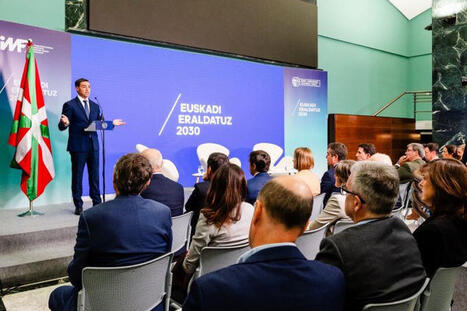
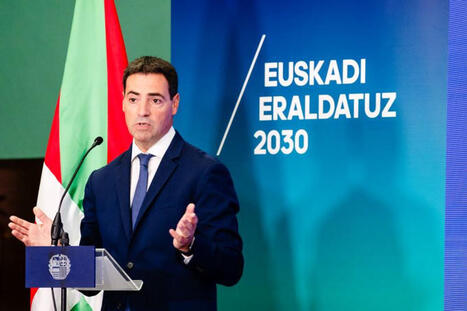
El Gobierno Vasco ha aprobado el decreto que regula la Línea de Financiación Garantizada Indartuz, un instrumento dotado inicialmente con 100 millones de euros —enmarcado en la estrategia Euskadi Eraldatuz 2030 para movilizar 1.000 millones— destinado a pymes, personas autónomas y grandes empresas elegibles en Euskadi. Las operaciones, canalizadas en colaboración con Elkargi y entidades financieras de la Alianza Financiera Vasca, ofrecerán préstamos de entre 50.000 y 250.000 euros para autónomos y de 200.000 a 2 millones de euros para empresas, con plazos de hasta diez años (hasta dos de carencia), tipos limitados al Euríbor a 6 meses más un 0,75% de diferencial máximo y bonificación total de la comisión de aval. Las ayudas financiarán proyectos estratégicos de digitalización, descarbonización, eficiencia energética e internacionalización.
BloombergNEF and Bloomberg Philanthropies have published the India Transition Factbook 2026, analyzing the country's decarbonization progress to bolster energy security and curb fossil fuel imports. As the world's second-largest solar and wind market and fifth-largest energy transition investment destination ($72 billion in 2025, or 1.7% of GDP), India achieved a 50% non-fossil installed capacity share on its grid in 2025 (five years ahead of its NDC target), with projections to exceed 60% by 2028. The report outlines $123–163 billion in wind and solar capital requirements through 2030, grid expansion to integrate 336 GW of renewables by 2032, and a reduction in energy imports from 5.3% of GDP in 2025 to 3.1% by 2035. Although India leads global green ammonia exports with 0.3 million metric tons in annual contracts, BNEF models indicate it will miss most 2030 EV adoption targets (except three-wheelers) and highlights surging data center electricity demand, projected to reach 636 TWh (11% of national consumption) by 2050.
DNV has published the tenth edition of its Energy Transition Outlook 2026, concluding that energy security and industrial competitiveness are accelerating global electrification and widening the deployment gap, with energy-importing nations building out clean tech three times faster than fossil-fuel exporters. The analysis forecasts that global greenhouse gas emissions will decline by 44% by 2050 (leading to approximately 2.3°C of warming by the end of the century), depleting the remaining 1.5°C carbon budget as early as 2029. Additionally, the report highlights that solar PV will become the world's primary electricity generation source by 2031, while total power demand is set to more than double by mid-century—driven by electric vehicles, cooling, and data centers/AI—requiring an urgent shift toward system integration, grid expansion, and battery storage amid rising costs and persistent headwinds in hydrogen and carbon capture technologies.
McKinsey & Company has published its Global Energy Perspective report, warning that the energy transition has effectively shifted into a demand expansion driven by emerging economies and the surging power consumption of AI data centers, which are projected to account for 10% to 15% of global electricity by 2030. Power grids have emerged as the primary bottleneck to electrification, requiring global grid investments to reach $970 billion annually by 2050. Compounded by geopolitical fragmentation that elevates capital costs for solar (up 20–25%) and battery storage (up 40–50%), the runway for fossil fuels has extended toward potential highs of 130 million barrels per day of oil by 2035, underscoring the need to more than double annual nuclear capacity deployment through 2050 to maintain grid security, affordability, and decarbonization targets.
El MITECO, a través del Instituto para la Transición Justa (ITJ), publicó dos Consultas públicas previas para regular la concesión de capacidad de acceso a la red eléctrica en nudos de transición justa que, hasta ahora, se encontraban reservados. La iniciativa tiene como finalidad ordenar la adjudicación de hasta 11 GW de capacidad disponible en conjunto, tras valorar el resultado de la Manifestación de Interés (MdI) celebrada entre abril y junio de 2026, en la que se identificó un volumen relevante de proyectos empresariales de renovables y almacenamiento a la espera de conectarse en distintos nudos de transición justa. La MdI permitió conocer el interés inversor en los nudos de transición justa de A Coruña, Almería, Asturias, Burgos, Cádiz, León, Palencia y Puertollano, cuya capacidad de acceso disponible suma en conjunto hasta 11 GW. A partir de este análisis, el ITJ plantea dos procedimientos diferenciados de adjudicación en función del tipo de interés identificado en cada zona.
El Gobierno Vasco, a través de la SPRI y en colaboración con el Servicio Público Vasco de Empleo (Lanbide), ha puesto en marcha el programa piloto "Emakumea Industriara", un Proyecto Transformador dotado con un millón de euros para financiar itinerarios formativos y becas de hasta 1.000 euros mensuales destinadas a integrar a mujeres procedentes de otros sectores en puestos de producción industrial. La iniciativa, enmarcada en el Plan de Industria Euskadi 2030, prevé financiar entre 5 y 7 proyectos locales de hasta seis meses de duración gestionados junto a agencias de desarrollo y asociaciones industriales, con el objetivo de elevar la representatividad femenina en el taller, actualmente en el 21,7% en el sector industrial vasco, y cubrir la demanda de talento profesional a través de compromisos directos de contratación.
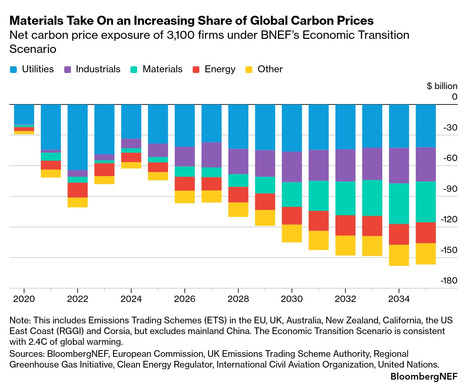
BloombergNEF has published its annual 'Transition Risk and Opportunity Outlook' report, which models the impact of the energy transition and carbon pricing on the cashflows of over 70,000 companies across five key sectors through 2035. The report projects that corporate net carbon costs in regulated markets will rise to $157 billion in 2035 against a net revenue opportunity of $559 billion, anticipating revenue growth for electric vehicle manufacturers, renewable power utilities, and transition metal miners, while forecasting declining revenues and displacement of road fuel demand by 15.6 million barrels per day for coal-dependent utilities, legacy automakers, and the oil and gas sector.
La Administración del presidente estadounidense Donald Trump, a través del director de la Agencia de Protección Ambiental (EPA), Lee Zeldin, ha anunciado la desregulación de las emisiones de gases de efecto invernadero para las centrales eléctricas de carbón y gas, revocando las normativas aprobadas en 2024 bajo la presidencia de Joe Biden. La medida se acompaña de una propuesta para retirar las competencias regulatorias de la EPA amparadas en la Ley del Aire Limpio de 1970 —con la que el Ejecutivo calcula un ahorro superior a los 680.000 millones de dólares para los consumidores— y busca impulsar un incremento superior a diez veces en la producción de carbón para el sector eléctrico, generando duras críticas por parte de defensores del medio ambiente y excoordinadores climáticos por el impacto directo en la salud pública y en los objetivos globales de descarbonización.
BloombergNEF has published a report on renewable energy adoption in developing markets, highlighting that localized solar and energy storage solutions are increasingly outcompeting centralized power infrastructure in emerging economies. The analysis details how falling technology costs, high grid-connection tariffs, and chronic reliability issues in national power networks are driving commercial, industrial, and rural consumers toward decentralized solar-plus-storage microgrids, enabling localized energy resilience, lower operational electricity expenses, and accelerated off-grid decarbonization across developing regions.
|
El Gobierno Vasco ha gastado 1.106 millones de euros de los 1.307 millones asignados directamente por la Comisión Europea dentro del Mecanismo de Recuperación y Resiliencia (Next Generation EU), alcanzando una tasa de ejecución del 84,6% al cierre del plazo oficial, mientras que los 201 millones restantes corresponden a reintegros (24,2 millones) y remanentes sin consumir (176,9 millones). Según detalló el vicelehendakari Mikel Torres, los fondos europeos han movilizado en total 4.694 millones de euros en Euskadi entre convocatorias estatales, autonómicas y directas, beneficiando a 30.409 entidades —con un 41% adjudicado a pymes y un 36% a grandes empresas—, elevando el PIB real vasco en 1,3 puntos porcentuales y generando o manteniendo unos 10.000 empleos. Los proyectos de mayor impacto se concentraron en el Vehículo Eléctrico y Conectado (623 millones), Energías Renovables, Hidrógeno y Almacenamiento (353 millones) y Descarbonización Industrial (165 millones), figurando Iberdrola (385 millones), Mercedes-Benz (280,5 millones), Irizar (205,3 millones) y Bay of Biscay Hydrogen (160 millones) entre los principales adjudicatarios.
El Grupo SPRI ha presentado el Mapeo de Capacidades Productivas de Euskadi, un servicio gratuito de información y análisis diseñado para identificar proveedores industriales, procesos de fabricación, tecnologías y materiales (como acero, aluminio o titanio) en Araba, Bizkaia y Gipuzkoa. Dirigido a empresas industriales, servicios conexos, clústeres y asociaciones sectoriales, el instrumento va más allá de la clasificación por cadenas de valor tradicionales (como automoción, energía o aeronáutica) para conectar necesidades específicas de suministro y fabricación cruzada mediante un procedimiento estructurado en cuatro pasos: recepción de la solicitud, análisis de necesidades, identificación de capacidades y entrega de información especializada.
According to Rystad Energy's Global Energy Scenarios 2026: Pathways to Resilience report, global reliance on imported energy is projected to peak by 2034 as energy security concerns—heightened by supply disruptions linked to the war in Ukraine and the US-Israeli conflict with Iran—accelerate electrification across transport, industry, and heating. Introducing a new reference pathway titled Pragmatism, the study projects that global primary energy demand will reach 702 EJ by 2050, with electricity’s share of useful energy rising from 28% to 41% and net importer dependency falling from 40% to 26%. While Chinese clean-technology exports (reaching 12% of global non-China EV sales in 2026 and holding over 78% of key battery/solar manufacturing capacity) provide immediate alternatives to fossil fuel flows, they shift geopolitical risks from fuel flows to asset supply chains, while global fossil CO₂ emissions are expected to fall to 20 Gt by 2050 under the reference scenario.
According to BloombergNEF’s Central and Southeast Europe Energy Market Outlook 2026, power sector investment across the region is surging, driven by projected additions of 93 GW of solar PV and 20 GW of wind capacity between 2026 and 2036, led by Poland, Romania, and Bulgaria. Falling merchant power prices, persistent grid connection bottlenecks, and declining coal generation—which accounted for 34% of regional supply—are shifting financial value toward storage, transmission, and long-term contracts (CfDs and PPAs) backed by the EU Modernisation Fund. High price volatility, with average two-hour day-ahead spreads ranging from €118 to €153/MWh in 2025 and widening in 2026 due to commodity price shocks, is fueling a battery storage boom, exemplified by Bulgaria's deployment of 4 GW of battery capacity against a 7.4 GW peak demand.
Según datos de Eurostat difundidos por la Comisión Europea, la Unión Europea ha desembolsado 197.000 millones de euros en compras de energía a Rusia entre marzo de 2022 y julio de 2026. Fuentes comunitarias destacan que la factura energética hacia Moscú habría alcanzado los 475.000 millones de euros de no haber implementado medidas de diversificación y despliegue renovable como el plan REPowerEU. Los análisis se alinean con las estimaciones del Centre for Research on Energy and Clean Air (CREA), que eleva el gasto total en energía rusa a 238.600 millones de euros desde el inicio de la invasión de Ucrania.
The International Renewable Energy Agency (IRENA) has released its World Energy Transition Outlook 2026, calling for urgent power system reforms, grid enhancements, and expanded storage to realign with the 1.5°C pathway. To meet rising demand, global renewable capacity must scale from 5.2 TW to 38.2 TW by 2050, increasing electricity’s share of final consumption to 35% by 2035 and over 50% by 2050 (with 80% supplied by solar and wind). Requiring $10.3 trillion in annual investments through 2050, this transition would boost global GDP by 1.1% annually, create over 80 million renewable jobs, and lower end-user power prices by 15%.
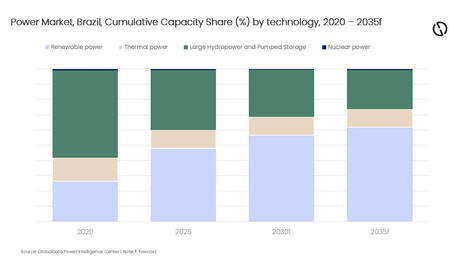
GlobalData has published a report titled “Brazil Power Market Trends and Analysis by Capacity, Generation, Transmission, Distribution, Regulations, Key Players and Forecast to 2035”, projecting that Brazil's cumulative installed power capacity will grow at a compound annual growth rate (CAGR) of 4.7% between 2025 and 2035, raising the renewable capacity share from 48.0% to nearly 62% and pushing renewable generation close to 50% of the total matrix. Driven by solar PV—which is on track to surpass large hydropower as the country's largest single power source by 2035—alongside onshore wind in the Northeast, natural gas for hydrological balancing, and long-term offshore wind potential, the Brazilian power sector is forecast to attract nearly $93 billion in new capital investment between 2026 and 2030, with solar PV capturing approximately 58% of the total. Furthermore, the report highlights that grid reliability, transmission expansion, and long-term climate targets—such as cutting net greenhouse gas emissions by 59% to 67% by 2035—will be supported by the 2025 Power Sector Reform Law, which opens the free contracting market and establishes a grid-scale storage framework, alongside the new Low Carbon Hydrogen Framework.
The International Energy Agency (IEA) has released a report requested by Türkiye and Australia to support COP31 discussions on a proposed global target to raise electricity’s share of final energy consumption from 23% today to 35% by 2035. The analysis demonstrates that existing cost-effective technologies can elevate global electrification to 33% by 2035—placing the 35% target within reach—with heightened fossil fuel prices from ongoing Strait of Hormuz supply disruptions further expanding economically viable deployment. Under an accelerated scenario, faster adoption of electric vehicles, heat pumps, and industrial power processes could reduce global oil demand by 18 million barrels per day, cut CO2 emissions across end-use sectors by 40%, and reduce net annual energy import bills for importing nations by over $400 billion by 2035, provided investments scale up to reinforce grid infrastructure, supply chain security, and system flexibility.
The World Energy Council has released its 2026 World Energy Trilemma report, titled 'Rebalancing World Energy: Trade-Offs and Transformations', which analyzes the operational pressures on global energy systems caused by rising electricity demand from artificial intelligence, data centers, and industrial electrification alongside supply chain and geopolitical disruptions. The study details how transition challenges are shifting from generation deployment toward grid capacity, energy storage, and system interoperability, citing infrastructure bottlenecks across regions including China's deployment of over 50 ultra-high-voltage transmission lines exceeding 420 GW, rising curtailment challenges in highly decarbonized power systems like Brazil's 90% renewable grid, and the grid flexibility requirements needed to support clean energy targets in emerging and developing markets.
The International Renewable Energy Agency (IRENA), the COP31 Presidency, and the Global Renewables Alliance (GRA) have released the report 'Delivering on the UAE Consensus: Tracking progress toward tripling renewable energy capacity and doubling energy efficiency by 2030', which assesses global progress toward international climate goals following a record 693 GW of new renewable power additions in 2025 that brought global capacity to 5.15 TW. The report indicates that meeting the 2030 target of 11.2 TW requires accelerating annual additions to 1,200 GW on average between 2026 and 2030, alongside doubling annual grid investments to nearly $1 trillion. It highlights that variable renewables are projected to reach 62% of total installed power by 2030, while warning that energy intensity improvements reached only 2% in 2025 and advocating for a new benchmark of 35% final energy electrification by 2035.
El Gobierno Vasco, mediante la sociedad pública INDARTUZ Kapitala del Instituto Vasco de Finanzas (IVF), ha resuelto la primera convocatoria del Programa de Inversión en Escalabilidad integrado en el Plan Euskadi Eraldatuz 2030, comprometiendo hasta 60 millones de euros en cuatro fondos de inversión seleccionados (Gálate Deeptech I, Talde Capital Crecimiento III, Stellum Food&Tech II y Easo Ventures III). La iniciativa establece por primera vez un modelo sistemático de inversión indirecta a través de gestoras privadas en concurrencia competitiva, exigiendo que los vehículos seleccionados inviertan en empresas de interés regional al menos el doble del importe aportado por fondos públicos para impulsar el crecimiento, la consolidación industrial y la base tecnológica en el tejido empresarial local.
La Comisión de Digitalización de la Cámara de Comercio de España ha publicado el informe 'Competir en la economía digital: el papel de las infraestructuras IT', que señala que España cuenta con una posición ventajosa para consolidarse como hub digital del sur de Europa gracias a su red de fibra óptica, conectividad y oferta de energía renovable. Sin embargo, el documento advierte que los cuellos de botella en la capacidad de la red eléctrica y la lentitud en los trámites burocráticos amenazan con frenar el desarrollo de centros de datos y la atracción de inversiones tecnológicas estratégicas en el país.
|