Your new post is loading...
This report discusses the power market structure of Germany and provides historical and forecast numbers for capacity, generation, and consumption up to 2035. Detailed analysis of the country’s power market regulatory structure, competitive landscape, and a list of major power plants are provided. The report also gives a snapshot of the power sector in the country on broad parameters of macroeconomics, supply security, generation infrastructure, transmission and distribution infrastructure, degree of competition, regulatory scenario, and future potential. An analysis of the deals in the country’s power sector is also included in the report.
The National Laboratory of the Rockies (NLR) released the Electricity Annual Technology Baseline (ATB) 2025 Update, offering updated data to inform U.S. electricity sector analysis. This year’s update follows in that tradition by bringing improvements in data transparency, technology-specific projections, and representations of financial assumptions. Key 2025 updates include: (1) Geothermal technologies: Updated projections and cost curves to reflect advances in geothermal technologies. (2) Nuclear technologies: Added nuclear microreactor technology with representation of an advanced sodium-cooled microreactor. (3) Time scale: Extended data to 2060 to support the analysis of the full life cycle of power plants built today. (4) Metrics references and descriptors: More clearly displayed references and evidence types for specific data points in visualizations such as Tableau. (5) Financial assumptions: Piloted a financial assumptions case that estimates costs based on cost drivers beyond research and development. (6) Tax credits: Provided representation of tax credit transferability and updates to tax credits to reflect 2025 legislation.
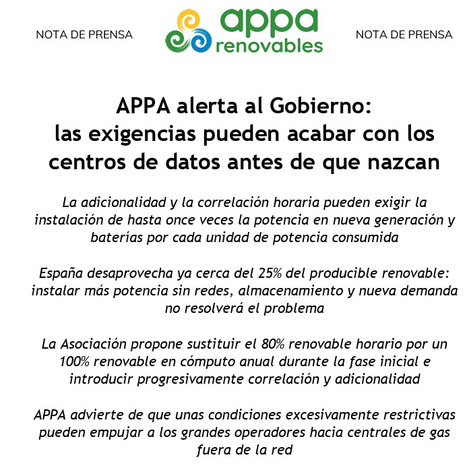
APPA Renovables ha reclamado al Gobierno que modifique los criterios de adicionalidad y correlación horaria incluidos en el proyecto de real decreto sobre centros de datos. La Asociación defiende que estas infraestructuras se abastezcan íntegramente con electricidad renovable —no solo en un 80%, sino al 100%—, pero considera que, durante una primera etapa, ese objetivo debe acreditarse en cómputo anual, de forma que permita aprovechar la abundante generación renovable que actualmente se desperdicia en España. Para la Asociación, unas condiciones excesivamente exigentes paralizarán el desarrollo de los centros de datos en nuestro país o los obligará a generar su electricidad con gas al margen de la red eléctrica.
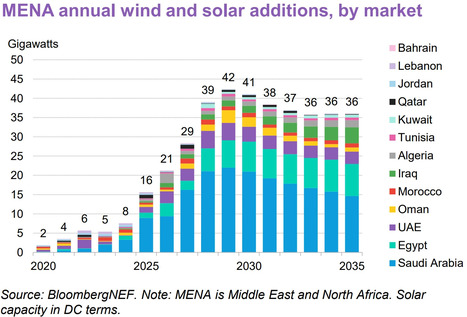
The Middle East and North Africa (MENA) installed a record 16 gigawatts of solar and wind capacity in 2025, with additions set to rise by 37% in 2026. The Iran war has heightened concerns over energy security and fossil fuel exposure, reinforcing the role of renewables in freeing hydrocarbons for export in producing countries and reducing import dependence in others. With solar remaining the main engine of clean power growth and wind and storage entering a phase of sustained additions according to BloombergNEF. Record investment is supporting a broader and increasingly regional clean power market. Renewable energy investment reached $22 billion in 2025, its third consecutive record year, while regional investors accounted for 85% of 2025 financing activity.
El Plan de Recuperación, Transformación y Resiliencia de España finaliza el 31 de agosto, fecha en la que, según el calendario europeo, deben estar ejecutados los hitos y objetivos contemplados en el mismo. No obstante, España dispone hasta el 30 septiembre para solicitar oficialmente los últimos desembolsos de los fondos europeos asignados. Hasta el momento, España ha recibido un total de 78.000 millones en seis desembolsos, equivalente al 76,5% de los 102.000 millones que tiene asignados, tras haber cumplido 338 hitos y objetivos. Queda pendiente el séptimo y último desembolso de los fondos europeos 'Next Generation EU'. La aprobación de este último desembolso permitirá a España haber recibido más de 100.000 millones de euros de la contribución financiera del Mecanismo de Recuperación y Resiliencia antes de que finalice 2026.
The Iran war’s impact on the energy transition in South and Southeast Asia has been heavily influenced by governments’ efforts to shield consumers from rising power and transport fuel prices. India and Indonesia produce about two-thirds of their electricity from burning domestic coal and were therefore largely insulated on the power side. But the war exposed Vietnam and the Philippines’ heavy reliance on imported fuels. Both rolled out fuel subsidies and tax exemptions, along with power market interventions designed to protect consumers. In the Philippines and Malaysia, rooftop solar additions surged.
Germany’s energy transition is progressing, but lacks the momentum needed to meet the country’s 2030 renewables targets, according to the German Institute for Economic Research’s (DIW) latest Energy Transition Monitor, which covers the first half of 2026. The targets are mandated by the country’s flagship Renewable Energy Act (EEG) which aims for renewables to make up 80 percent of electricity consumption by 2030, and includes specific goals for installed solar and wind power capacity. By mid-2026, Germany had installed just under 126 gigawatts (GW) of solar PV capacity, or 58 percent of the 2030 target of 215 GW, the report showed. Onshore wind capacity stood at 70 GW, or 61 percent of the 115 GW target. Solar is expanding faster than wind, but neither technology is being built out quickly enough to reach 2030 targets, DIW said.
The final FER X Decree entered into force on August 7, 2026, introducing Italy’s long-term support framework for renewable energy technologies with generation costs close to market competitiveness. The regime covers solar photovoltaic (PV), onshore wind, hydropower, and sewage-gas projects until December 31, 2030, supporting up to 37.15 GW of capacity: 27.15 GW through indicative auction volumes and up to 10 GW through direct access for plants up to 1 MW.
Wood Mackenzie's mid-year review finds most striking how contained the damage to metals and mining has been. The clearest evidence sits in aluminium. At the height of the conflict, the disruption was expected to generate a supply deficit of between 2.5 and 3 million tonnes. The revised expectation is approximately 900,000 tonnes. Approximately 32% of global direct reduced iron production was also affected, though this remains a small share of overall global steel output. The indirect effects are proving harder to contain. The conflict has disrupted half of global sulphur supply, and China’s restrictions on sulphuric acid shipments have compounded the pressure on copper and nickel production. Copper is expected to be in surplus this year, with trade imbalances driven by tariff-related US inflows continuing to support higher prices. Global steel demand is faltering. Lithium has continued through the disruption largely unscathed, backed by existing oversupply and offtake concentrated in China.
El Gobierno Central ha aprobado un Real Decreto por el que se regulan los planes de inversión de las redes de transporte y distribución de energía eléctrica, con el objetivo de acelerar la electrificación de la economía y aumentar la capacidad de conexión de nueva demanda industrial, residencial y de transporte electrificado. La norma autoriza una inversión adicional de 17.900 millones de euros hasta 2030 en redes eléctricas, con el fin de reforzar las infraestructuras necesarias para la conexión de nueva vivienda, industria y transporte electrificado, así como para mejorar la seguridad del sistema, la protección de la avifauna y la resiliencia frente a fenómenos naturales adversos. Considerando también las inversiones permanentes ya permitidas con cargo al sistema eléctrico, el desembolso total en redes eléctricas podría superar los 35.000 millones de euros hasta final de la década. En concreto, se prevé una senda creciente de inversiones adicionales de 10.200 millones de euros adicionales en redes de distribución, distribuidos entre 2027 y 2030 y 7.700 millones de euros adicionales en redes de transporte, en función de la planificación que finalmente apruebe el Gobierno. En el caso de la distribución, las inversiones adicionales deberán destinarse a categorías concretas, entre ellas: - Conexión de demandas industriales, residenciales y de descarbonización del transporte.
- Actuaciones de control de tensión, telemando, telecontrol, observabilidad y ciberseguridad.
- Inversiones anticipatorias en zonas sin redes o con redes saturadas.
- Adaptación de líneas a la normativa de protección de la avifauna.
- Actuaciones de resiliencia climática frente a fenómenos naturales adversos.
Asimismo, la norma establece nuevos criterios de transparencia y control sobre los planes de inversión de las empresas distribuidoras.
The Trump administration has imposed new tariffs ranging from 10% to 12.5% on imports from 60 trading partners—including China and the European Union—citing a lack of rigorous enforcement regarding forced labor prohibitions. The measure took effect immediately after a temporary 10% global tariff, which had been in place for 150 days, expired. The move represents the White House's latest attempt to restore President Donald Trump's tariff structure after the U.S. Supreme Court struck down earlier emergency "reciprocal" tariffs in February. By invoking Section 301 of the Trade Act of 1974, the administration aims to establish a legally defensible tariff baseline covering roughly 99.4% of U.S. imports to better withstand potential court challenges. The new duties apply to countries including the UK, Canada, Mexico, India, Argentina, and Japan, while carving out exemptions for key sectors such as oil, gas, fertilizer, select agricultural products, and critical minerals.
El Gobierno ha puesto en marcha un nuevo instrumento para acelerar el despliegue de las energías renovables en España con mayores garantías de integración social, territorial y ambiental. El Ministerio para la Transición Ecológica y el Reto Demográfico ha iniciado la tramitación de un real decreto que permitirá conceder de forma directa una subvención de 200.000 euros a la Asociación Española de Normalización (UNE) para desarrollar las normas técnicas que darán forma al futuro estándar de excelencia aplicable a los proyectos de energías renovables y al sello de excelencia para la producción de biometano.
IEA analysis identifies widening range of vulnerabilities, though policy action – including on rare earths – shows progress is possible. The 2026 edition of the IEA’s annual Global Critical Minerals Outlook, out today, presents the latest data and analysis on supply, demand, investment and more for key energy minerals, including copper, lithium, nickel, cobalt, graphite and rare earth elements. It also examines market trends for a broader range of strategic minerals that play vital roles across the energy, high-tech, aerospace and advanced manufacturing industries. The report finds that after declining in recent years, the prices of critical minerals rebounded in 2025 and early 2026 as supply conditions tightened – a trend that has been amplified by a raft of new export restrictions from leading suppliers. Price volatility and geopolitical tensions have weighed on investment, which fell by 9% in 2025, ending several consecutive years of growth.
|
This report examines how far China’s clean energy transition has progressed, whether its momentum can be sustained and what China’s trajectory means for the rest of the world. It moves beyond the familiar debate over whether China’s clean energy build-out represents genuine transition or mere addition, asking instead whether clean electricity is beginning to take over the functions long performed by fossil fuels. The analysis traces this shift across power generation, system flexibility and the electrification of industry and transport, and considers whether the transition can carry through its more demanding “building while breaking” phase, before setting out what China’s progress means for how other countries approach their own energy choices. It draws on Chinese public data, international sources such as the International Energy Agency and World Bank and Ember’s own datasets.
El Ministerio para la Transición Ecológica y el Reto Demográfico (MITECO) ha abierto una Consulta pública previa de las bases reguladoras de un nuevo programa de ayudas a proyectos que impulsen en España la cadena de valor industrial de tecnologías renovables: baterías, redes eléctricas, energía eólica, hidrógeno, solar fotovoltaica, bombas de calor... La iniciativa estará financiada con cargo al europeo Fondo de Desarrollo Regional (FEDER 2021-2027) y permitirá redoblar la apuesta por la fabricación nacional de los equipos y componentes en el ámbito de las energías de cero emisiones netas, de acuerdo con el listado elaborado por la UE. La iniciativa nace para fortalecer y ampliar la capacidad de fabricación de equipos, componentes y transformación de materias primas esenciales para la transición a una economía de cero emisiones netas, así como para permitir una mayor competitividad, modernización y transformación del tejido industrial nacional asociado.
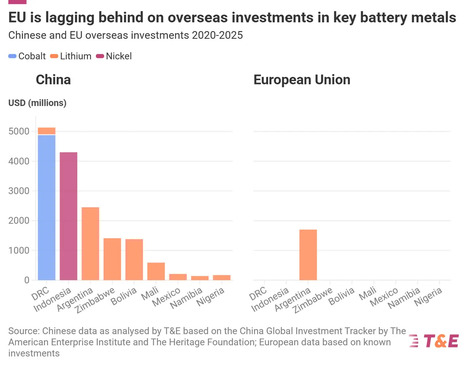
The EU is heavily dependent on imports of raw materials and is failing to catch up with investments globally. At the same time, the recent energy crisis has highlighted the need to avoid new dependencies on critical raw materials. The future CRM centre, supported by robust industrial policy and building on work in Member States, must provide real financial power to deliver on raw materials projects and secure resilient, sustainable supply chains for Europe. According to T&E, the CRM Centre should go a lot further than mere coordination and stockpiling. It should become the financial arm of a sustainable European mineral diplomacy, steer and support national investments, coordinate the work of development banks and export credit agencies and aggregate offtake. This requires a proper budget that should come primarily from the European Competitiveness Fund and the Global Europe Instrument.
DNV’s paper introduces a new Resilience Framework and highlights the mindset shift needed to move resilience from a compliance exercise to a strategic priority. Drawing on DNV’s deep expertise in risk management in the energy sector, the framework provides a systems-wide, risk-based blueprint for understanding vulnerabilities, prioritizing action and strengthening preparedness and recovery. At its launch, DNV stressed that no organization can solve these challenges on its own as risks can cascade through infrastructure, supply chains, economies and societies. Critical energy infrastructure now rarely faces one singular threat in isolation. Instead, vulnerabilities in one area can cascade into physical or technical failures spanning an entire value chain. These threats can combine to impact the supply and cost of energy, and will only be intensified without a collaborative, systems-wide approach to resilience. The framework sets out a four-step cycle: analyze risks, prioritize investments, implement measures and check and validate.
Los Ministerios para la Transición Ecológica y el Reto Demográfico (MITECO), Economía, Comercio y Empresa, y Transformación Digital y Función Pública (MTDFP), avanzan en un desarrollo ordenado y eficiente de los centros de datos e inician el trámite de audiencia pública, por la vía de urgencia, del Proyecto de real decreto por el que se regulan los requisitos de sostenibilidad Energética, medioambiental y de resiliencia y soberanía digital aplicables a los centros de datos. La propuesta normativa recoge medidas en materia de resiliencia y soberanía digital, como la obligación de que la operación del centro y el control de los datos asociados a la operación correspondan a entidades sujetas al derecho de la UE, y también en materia de sostenibilidad ambiental y energética, como la obligación de consumir energía renovable de nueva implantación, además de cumplir criterios de eficiencia energética y de consumo de agua.
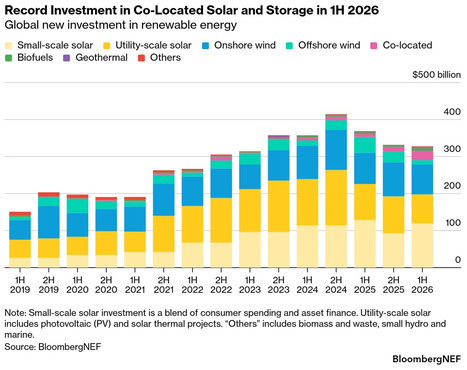
Renewable energy investment in the first half of 2026 reached $327.5 billion, on par with the preceding six-month level but down 21% from its peak in the second half of 2024. The numbers show that the broader growth story for renewables remains intact despite policy changes in key markets like the US and China. China accounted for a mere quarter of global investment in 1H 2026, sliding from over half of global investment in 2022, as developers adjusted revenue expectations following last year’s power market reforms. The US was the second-largest market in 1H 2026, investment was up 54% year-on-year as project developers pushed to hit deadlines for claiming tax credits and to support unprecedented load growth from data centers. Solar investment rose 41% year-on-year to a record $45.8 billion, while wind investment more than doubled to $13.8 billion. European onshore wind nvestment reached $92.3 billion in 1H 2026, down 27% from the same period last year.
Después de un cuarto de siglo apoyado casi por completo en los combustibles fósiles, que cubrieron cerca del 80% de la generación eléctrica del país entre 2000 y 2024, México podría estar a las puertas de una transformación energética acelerada. El detonante es un cambio regulatorio: en junio se adjudicaron 7.410 megavatios de proyectos solares y eólicos entre casi 38.000 MW propuestos por inversores, señal del apetito que despierta el sector. La mayor parte, unos 6.700 MW, corresponde a fotovoltaica, y el resto a energía eólica. La novedad clave es que todos los proyectos deberán incorporar baterías equivalentes a, al menos, el 30% de su capacidad, con una autonomía mínima de tres horas.
Según un informe de Alvarez & Marsal, España ha perdido relevancia dentro del mercado europeo de transacciones, pasando de representar históricamente alrededor del 15% de la actividad renovable a apenas el 6% de las operaciones durante el último trimestre de 2025. Tras una década marcada por la rápida incorporación de nueva capacidad eólica y fotovoltaica, los inversores están desplazando su interés hacia activos que permitan integrar esa electricidad en el sistema, como el almacenamiento con baterías, las redes de transporte y distribución y las infraestructuras capaces de aportar flexibilidad. El cambio responde a un escenario de mayor incertidumbre sobre los precios, una creciente congestión de la red y unos retornos más ajustados que han provocado un fuerte descenso de la actividad corporativa en el sector.
El Consejo de Ministros ha aprobado, a propuesta del Ministerio para la Transición Ecológica y el Reto Demográfico (MITECO), un Acuerdo por el que se declaran “instalaciones energéticas estratégicas” los proyectos de generación renovable y de almacenamiento energético adjudicatarios de los procedimientos para la concesión de capacidad de acceso en los nudos de transición justa, regulados a partir de la disposición adicional vigésima segunda de la Ley 24/2013, del sector eléctrico. La declaración otorga a estos proyectos la consideración de “proyectos energéticos preferentes”, lo que supone una atención prioritaria por parte de las Administraciones intervinientes.
The trade truce between the European Union and the United States holds for now despite Washington's rollout of new Section 301 tariffs ranging from 10% to 12.5% on 60 trading partners, including the EU. Brussels has decided against immediate retaliation because the new rates do not breach the 15% ceiling established under the bilateral joint statement. Although European officials firmly reject the U.S. allegations regarding weak forced labor enforcement as unfounded, the European Commission is prioritizing commercial stability and protecting the existing agreement over rekindling a full-scale trade war.
El Pleno del Congreso ha convalidado este jueves el Real Decreto-ley 18/2026, de 29 de junio, por el que se adoptan determinadas medidas en el marco del Plan Integral de Respuesta a la Crisis en Oriente Medio. De acuerdo con la exposición de motivos, este real decreto-ley mantiene “de manera transitoria” algunas de las medidas del Real Decreto-ley 7/2026, de 20 de marzo, por el que se aprueba el Plan Integral de Respuesta a la Crisis en Oriente Medio, “articulando su retirada progresiva conforme se consolide la estabilización de los mercados energéticos y disminuyan los riesgos asociados a la actual coyuntura geopolítica”, que se hará “de forma escalonada” hasta su desaparición a finales de septiembre de 2026. La norma se estructura en cinco capítulos, ocho disposiciones adicionales, dos transitorias, una derogatoria y cinco disposiciones finales. El capítulo I contempla medidas en materia energética, que tienen por objeto “continuar con el despliegue renovable” y “agilizar la urgente reducción de la exposición a la volatilidad de los combustibles fósiles tanto en términos de precio como de abastecimiento”, mediante la electrificación de la demanda, sustituyendo el uso de combustibles fósiles por electricidad en los distintos usos energéticos para reducir la dependencia. Las medidas se destinan, entre otros ámbitos, a las infraestructuras de recarga para vehículos eléctricos, las redes de distribución y el almacenamiento de las energías renovables. Además de rebajas fiscales, el RD incluye la eliminación definitiva del Impuesto sobre el Valor de la Producción Eléctrica, del 7%.
The IEA’s latest Electricity Mid-Year Update forecasts that global electricity demand will grow by 3.6% in 2026 and by a further 3.8% in 2027 – up from 3% growth in 2025. Global electricity consumption is projected to reach 30,700 terawatt-hours (TWh) in 2027, compared with 28,600 TWh in 2025. The disruptions to liquified natural gas (LNG) flows through the Strait of Hormuz have tested electricity markets around the world, driving natural gas prices in Asia and Europe to their highest levels since the 2022-23 energy crisis and prompting emergency measures to curb energy use in some regions. Power systems have for the most part weathered the impacts of the crisis so far, with additional LNG supplies – particularly from North America – helping to ease market tightness. Nevertheless, spikes in gas prices have prompted fuel switching from natural gas to coal in several Asian and European countries. At the same time, rising power generation from renewable sources has contributed to the diversification of electricity supplies in many countries, supporting energy security and helping cushion the impacts of the shock. Renewables are on track to become the world’s largest source of electricity generation in 2026, overtaking coal after reaching near parity in 2025. Renewable generation is set to grow by more than 8% in 2026, and it is poised to increase its share of global electricity generation from 33% in 2025 to 37% by 2027.
|