Your new post is loading...

|
Scooped by
Energy Cities
December 4, 9:52 AM
|
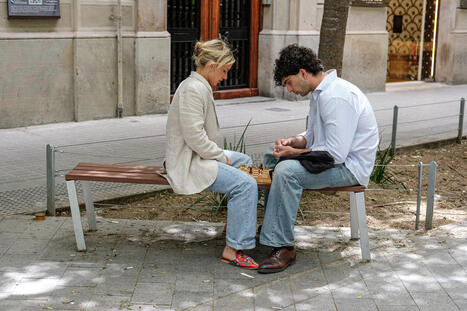
A project to transform Barcelona’s traffic-choked Eixample district into a greener, pedestrian-friendly urban space has evolved into a contest over identity and belonging, demonstrating how cities today are microcosms of fierce ideological battles raging across Europe. While disagreement keeps dialogue alive, antagonism can paralyse much-needed urban change.
|
|
Scooped by
Energy Cities
December 4, 9:41 AM
|
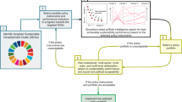
This study investigates the pivotal role of political stability, good governance, and institutional support in achieving Sustainable Development Goals (SDGs) 7, 11, and 12 in Pakistan, an emerging economy. SDG 7 deals with affordable, reliable, sustainable and modern energy for all, SDG 11 deals with sustainable cities and communities and SDGs 12 promotes sustainable consumption and production patterns. The data was collected using a quantitative method from various sources, including the Ministry of Planning, Development and Special Initiatives, the Ministry of Climate Change, the Pakistan Institute of Development Economics, and various NGOs involved in issues such as renewable energy, sustainable cities, and responsible consumption. The collected data was analyzed by using SMART PLS. This study concludes that political stability serves as the foundation for achieving sustainable development goals. It has been observed that the implementation of good governance, which includes principles of transparency, accountability, and public participation, significantly enhances the effectiveness of policies aimed at achieving these SDGs. More specifically, sufficient financial resources and appropriate physical infrastructure are identified as key factors in addressing challenges related to Pakistan’s sustainable development goals. Policymakers should also prioritize investments in sustainable infrastructure projects that align with SDGs 7, 11, and 12, such as investing in renewable energy sources, sustainable urban development, and promoting responsible consumption and production practices.
|
|
Scooped by
Energy Cities
December 3, 10:17 AM
|
This year’s climate summit in Belem did not deliver necessary progress to limit temperature rise to 1.5°C. Similarly, the EU’s contribution to the needed global emissions reductions by 2035 are not at the level required. The EU can make up for these failures by starting with the development of an EU roadmap to phase out fossil fuels, in line with its (failed) demand to get a global roadmap in the Belem conclusions. Wendel Trio reports.
|
|
Scooped by
Energy Cities
December 1, 8:49 AM
|
“Retrofitted buildings can attract stronger tenant demand, they have lower vacancy, reduced operating costs and all of this stabilises that cashflow. There’s also the futureproofing against regulatory risks and reputational damage.”
Buildings need to be decarbonised. More efficiency means a lower carbon footprint, cheaper energy bills and healthier occupants.
But at a time of high energy prices and inflation, there are concerns that renovation, retrofits and building green homes are an expensive and unaffordable luxury.
|
|
Scooped by
Energy Cities
November 28, 7:44 AM
|
At AMS Institute we design solutions for urban challenges, and educate tomorrow’s engineers. We develop a deep understanding of the city and research & valorize interdisciplinary metropolitan solutions to integrate these into the city of Amsterdam.
|
|
Scooped by
Energy Cities
November 24, 11:04 AM
|
It began in the small Catalan town of Taradell as a plan to provide local people with allotments where they could grow their own food.
Four activists came together with the aim of promoting good environmental practices in local agriculture and business, as well as supplying renewable energy. The project, however, was about much more than growing vegetables.
The town has a strong tradition of community action, and as the initiative gathered momentum, the activists formed a cooperative, Taradell Sostenible, which now has 111 members and supplies power to more than 100 households.
|
|
Scooped by
Energy Cities
November 21, 9:24 AM
|
Hyped as a driver of economic growth, culture has been systematically devalued and marginalised in public policy over the past few decades. This has led to increased precarity now compounded by predatory AI systems. If GDP is not a good metric to measure the value of arts and culture, how should we rethink their role in our societies?
|
|
Scooped by
Energy Cities
November 14, 7:27 AM
|
L’Union européenne vise la neutralité carbone en 2050. Dès 2030, 112 villes européennes, dont Dijon, veulent atteindre cet objectif. Dijon a ciblé un quartier politique de la ville, où se côtoient 28 nationalités, pour démontrer que la transition écologique peut être populaire et inclusive. Des médiateurs salariés, des services civiques et des habitants ambassadeurs sont allés sur le terrain afin d’expliquer le projet aux habitants et de les impliquer.
|
|
Scooped by
Energy Cities
November 14, 5:35 AM
|
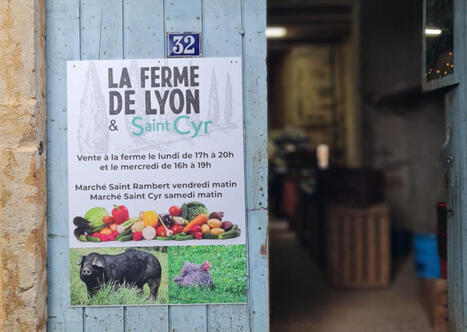
La métropole de Lyon est entrée au capital de la « dernière ferme de Lyon » menacée de disparition sous l’effet de la pression foncière. En devenant actionnaire de cette coopérative agricole, la collectivité entend pérenniser l’activité de l’exploitation.
|
|
Scooped by
Energy Cities
November 13, 11:10 AM
|
Kalamata has been selected as one of the European Union`s Mission Cities within the "100 Climate-Neutral and Smart Cities by 2030" initiatives, earning the prestigious EU Mission Label. This recognition places Kalamata among the leading European cities committed to achieving climate neturality ahead of schedule. Guided by its Climate City Contract, a co-created roadmap, the municipality is working with citizens, businesses, and institutions to implement sustainable solutions in energy, buildings, transport, mobility, and waste management, while promoting innovation, digital transformation, and resilience, setting an example of green urban development in Greece and beyond.
|
|
Scooped by
Energy Cities
November 13, 9:55 AM
|
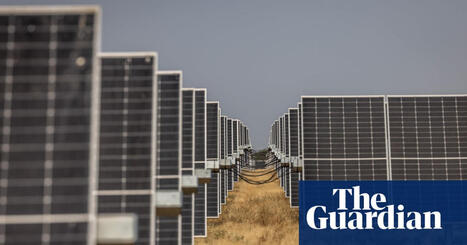
Two artists in London are finding ingenious ways to fund a project that puts power in the hands of people. Other communities are watching with interest
It would be easy to mistake artists Dan Edelstyn and Hilary Powell for master magicians. For their first stunt, they made £1m of debt disappear (more on that later), and for their next trick they’re conjuring up a power station from an ordinary, east London terraced street.
Not the wheezing, fossil fuel burning kind, but one fuelled by sunlight, one that prioritises people over profit, and puts power generation in the hands of the communities it serves.
|
|
Scooped by
Energy Cities
November 13, 9:37 AM
|
The city of Brussels is shifting its policies in the Pietonnier zone due to tensions between cyclists and pedestrians.
Cyclists and pedestrians have clashed in the zone, with cyclists not adhering to the 6 kilometers-per-hour speed limit, leading to complaints from pedestrians.
The city has announced a ban on bikes in the zone most of the day, with bikes only allowed between 4 and 11 a.m., and is considering diverting bikes to a parallel axis along narrower streets to the west.
|
|
Scooped by
Energy Cities
November 13, 9:29 AM
|
Green heating technologies promise to slash Europe’s emissions, energy demand and energy prices, but that is only feasible if national governments start planning properly now, explains Euroheat and Power’s Aurélie Beauvais.
|
|
|
Scooped by
Energy Cities
December 4, 9:46 AM
|
Far from being mere certificates, guarantees of origin (GOs) underpin the entire renewable energy value chain – building trust and accountability among producers, businesses and consumers. By ensuring transparent tracking of green electricity and enabling cross-border recognition, GOs can accelerate decarbonisation across the EU and the Energy Community, helping Europe achieve its climate targets. Mutual recognition between the EU and the Energy Community would open regional markets, attract investment, and give consumers and businesses a tangible role in the energy transition.
|
|
Scooped by
Energy Cities
December 3, 10:32 AM
|
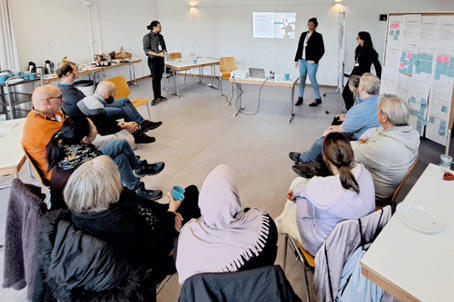
How can sustainability policies truly serve everyone and ensure that no one—especially people experiencing poverty—is left behind? This guiding question lies at the heart of our project on Poverty Reduction and Sustainability, in which we are applying a system mapping approach to analyse North Rhine-Westphalia’s (NRW) sustainability strategy.“Can you say what will happen with the final results of your research once the ministry has received them? What will they change?” - this was one of key questions raised by a citizen affected by poverty, who took part in our first participatory workshop held within the Climate & Poverty research project.
|
|
Scooped by
Energy Cities
December 3, 9:38 AM
|
The shift is timely as the signs of a heating world is becoming even more apparent: record-breaking heatwaves in Europe, dangerously warm nights spreading in cities across continents, and millions of people in Asia working and living in conditions no longer fit for human comfort.
|
|
Scooped by
Energy Cities
November 28, 7:48 AM
|
The Swiss town of Lancy, Geneva, joins the 1300 towns and cities around the world to ban billboard advertising, following a court ruling.
|
|
Scooped by
Energy Cities
November 28, 3:34 AM
|
Créée dans les années 1970 pour répondre à des enjeux d’urbanisme, la régie agricole de Toulouse s’est transformée jusqu’à prendre un virage clair en 2020 : soutenir la souveraineté alimentaire de la ville. Agriculture 100 % bio, circuits courts, production de pain pour la restauration scolaire, filière viticole structurée… À travers le Domaine de Candie et ses 250 hectares de terres agricoles intra-muros, la métropole a pour objectif d’alimenter les 35 000 repas municipaux journaliers. Le tout, en faisant rayonner le “bien manger” auprès des habitants et des restaurateurs.
|
|
Scooped by
Energy Cities
November 24, 9:56 AM
|
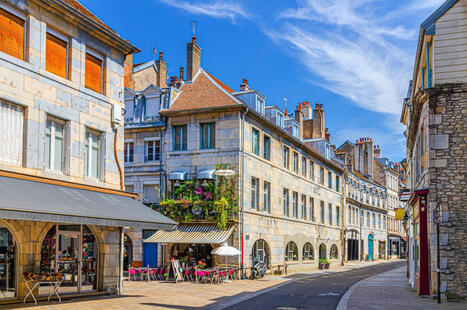
On a blue-skied summer morning, Place Pasteur in the historic center of Besançon is abuzz with colorful market stalls selling trinkets and antiques. But it’s also here that residents bring a different kind of valuable good every weekday, to give away for free.
|
|
Scooped by
Energy Cities
November 21, 9:11 AM
|
Governments across the continent have attacked green rules with increasing ferocity – all while professing their commitment to existing climate targets. The unusually wind-powered and cycle-friendly Nordic nation – whose ruling Social Democrats suffered a setback in elections on Tuesday – promised on Monday to cut planet-heating pollution by at least 82% by 2035 from 1990 levels. The goal inches past the UK’s landmark 81% target for that year and races ahead of the EU’s rather wide goal of 66.3% to 72.5%.
|
|
Scooped by
Energy Cities
November 14, 5:51 AM
|
Les eurodéputés ont approuvé le 13 novembre leur version de l’omnibus sur le devoir de vigilance des entreprises avec une majorité allant du Parti populaire européen à l’extrême droite, et l’appui d’une poignée de centristes et de sociaux-démocrates. C’est la première fois qu’un texte de cette importance politique et législative est adopté par cet attelage à droite toute. La détérioration continue des relations entre les formations centrales rend la suite de la mandature plus imprévisible encore qu’auparavant.
|
|
Scooped by
Energy Cities
November 14, 5:26 AM
|
Porteuses des deux tiers de l’investissement public civil, les collectivités locales jouent un rôle déterminant pour réussir la transition bas-carbone. Le prochain mandat municipal sera décisif pour atteindre les objectifs climat que la France s’est fixée à l’horizon 2030. À l’heure des débats sur le projet de loi de finances 2026 et à la veille du Congrès des maires, les marges de manœuvre budgétaires des territoires suscitent de nouvelles interrogations. Les analyses d’I4CE montrent que les investissements des collectivités en faveur du climat ont progressé depuis 2017, mais cette dynamique pourrait marquer le pas en cette fin de mandat. Par ailleurs, les montants engagés demeurent encore insuffisants au regard des besoins identifiés pour contribuer aux objectifs nationaux de réduction des gaz à effet de serre. Le prochain mandat doit donc être celui d’un changement d’échelle. Pour réussir, État et collectivités doivent changer de méthode afin d’activer pleinement les leviers existants et renforcer l’action locale en faveur de la transition.
|
|
Scooped by
Energy Cities
November 13, 11:05 AM
|
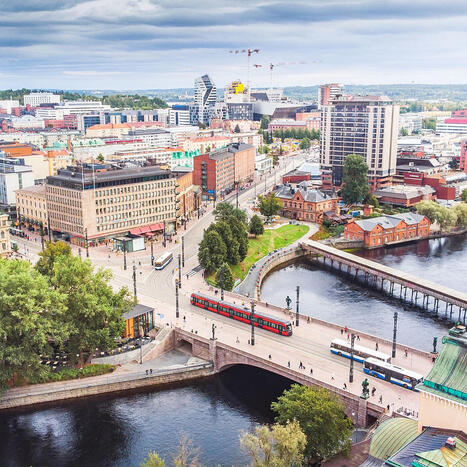
Tampere’s story is one of changes, and the city has reinvented itself repeatedly. Beginning as the cradle of Finnish industrialisation, moving onto being an ICT hub and home for Nokia and finally transforming into a developing smart city, Tampere has come a long way to become one of the most advanced cities in northern Europe, while keeping its clean urban nature. Tampere is not only Finland’s third largest city with its 241 000 inhabitants, it is also the Sauna capital of the world.
|
|
Scooped by
Energy Cities
November 13, 9:52 AM
|
A first-of-its-kind energy initiative aims to make the green transition more accessible, delivering affordable solar power to those most in need
A scheme in London is delivering clean, affordable energy directly to residents in social housing via newly regulated solar microgrids.
Rooftop panels have existed on housing estates such as Frampton Park in the borough of Hackney for some time, but they only feed into the grid.
However, a new, first-of-its-kind scheme enables tenants to benefit directly from the power generated on their rooftops.
|
|
Scooped by
Energy Cities
November 13, 9:36 AM
|
On Amsterdam’s 750th anniversary, it continues to be a leader in climate adaptation — showing how a city can thrive in overcoming existential challenges.
|