Ah, les champs ! Cette commune des Alpes-Maritimes a engagé une transition alimentaire écologique depuis maintenant quinze ans. Elle incite les habitant·es à cultiver, attribue de nouvelles terres à l’agriculture… Des pratiques qu’elle voudrait voir se développer ailleurs, y compris au-delà des frontières.
A new vision for urban living is taking shape, driven by an urgent need to make our cities more liveable, sustainable and resilient. Here’s what the metropolitan areas of tomorrow will look like Wooden towers rise above the tree canopy, their facades alive with plants and shimmering solar cladding. The hum of traffic is gone. Instead, a quiet feet of autonomous robovans glides along dedicated lanes, linking neighbourhoods in smooth, predictable loops.
Europe banished much of its industry, but we continue to enjoy its fruits: globalised manufacturing chains provide us with cheap goods that arrive in neat packages. And while our cities are beautified with good intentions, they are being reduced to markets for the consumption of that beauty: streetscapes fill Instagram feeds, as surely as homes become Airbnbs. Meanwhile the average resident, faced with dwindling employment outside the tourism industry, is increasingly priced out of their own home town. When heavy industry was offshored, so was its labour.
As the energy transition gathers pace, fault lines are emerging within the environmental movement between those who prioritise the rapid deployment of large-scale green infrastructure and those who emphasise local participation. With shifting political priorities at the European level, could these conflicts contribute to a fairer transition rather than slowing it down?
Bilbao and other Basque municipalities were awarded the ELoGE for excellence in democratic governance at a ceremony attended by Congress During a ceremony in Bilbao (Spain) on 5 February 2026, attended by Congress Secretary General Mathieu Mori, the City of Bilbao and municipalities of Leioa, Errenteria and Urretxu were awarded the European Label of Governance Excellence (ELoGE), and Tolosa was honoured for its commitment to good democratic governance. Bilbao and Leioa obtained the ELoGE award for the second time.
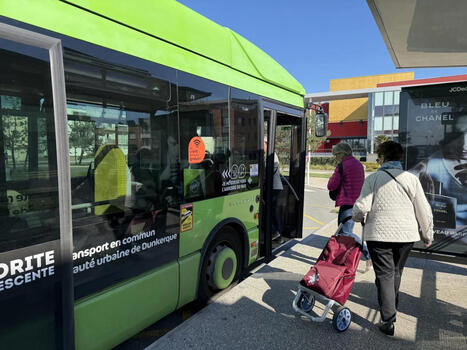
In 2014, Dunkirk made the decision to get on board with free public transit. Mayor Patrice Vergriete, who has a doctorate in urban planning, pledged during his election campaign that the city would become the largest in France to drop fares on local networks. Today about 150 vehicles — labeled “100% free bus, 7 days a week” — crisscross the city and its surroundings, giving 200,000 residents free access to 18 routes. “We made this decision to prioritize freedom [for residents] and really create a shock to improve mobility in Dunkirk,” says Jean-François Montagne, the deputy mayor of Dunkirk and head of the region’s ecological transition efforts.
Close to 1,000 municipalities have taken part in a recent survey about municipal heat planning: a key finding is that cooperation from an early stage onwards facilitates implementation. Financing and a lack of resources and of knowledge are still presenting challenges.
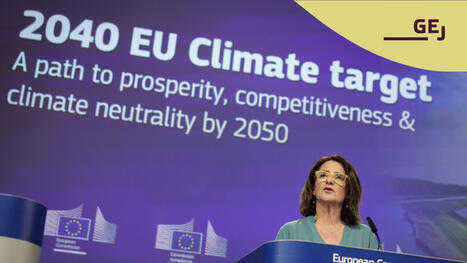
A critical step on the path towards climate neutrality, the European Union’s 2040 target calls for a 90-per-cent reduction in emissions. Yet as far-reaching as this goal may seem, its provisions constitute a weakening of Europe’s climate ambitions under the Green Deal. By allowing costly and ineffective CO2 removal and storage technologies as a way of lowering emissions, the target risks deterring direct emission cuts and outsourcing pollution.
France has updated its National Strategy for Food, Nutrition and Climate, urging citizens to cut back on meat to reduce emissions.
The French government has recently urged people to “limit” their meat consumption as part of new guidelines aimed at improving public health and cutting emissions.
Renowned for iconic dishes such as steak-frites and beef bourguignon, the country is beginning to confront the environmental impact of its meat-heavy culinary traditions.
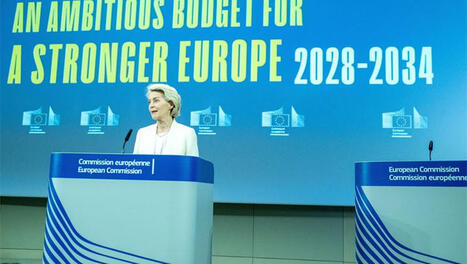
The European Commission calls it its “most ambitious” spending plan yet, but experts warn that repayments, interest rates and competing priorities may limit what the net strategic sectors actually receive.
Last summer, the European Commission unveiled its proposal for 2028 to 2034, designed to meet the bloc’s looming needs — from bolstering its long-underfunded armies and responding to climate disasters to rejigging a sluggish economy.
Food and agriculture account for roughly one third of global greenhouse gas emissions, second only to fossil fuels. Yet recent analysis by Sentient Media, reported by the Guardian, found that fewer than 4 percent of climate news stories mention animal agriculture as a source of emissions. This gap in coverage has contributed to widespread misunderstanding of the climate impact of meat and dairy, despite livestock being responsible for nearly 60 percent of food system emissions.
Under the city’s Participatory Budget, any resident above the age of seven, regardless of their nationality, can propose a project to be paid for by municipal funds. The model, increasingly popular across the globe, is helping authorities spend resources efficiently and boost democratic participation in an era when trust in government is low and political apathy is on the rise.
A project to transform Barcelona’s traffic-choked Eixample district into a greener, pedestrian-friendly urban space has evolved into a contest over identity and belonging, demonstrating how cities today are microcosms of fierce ideological battles raging across Europe. While disagreement keeps dialogue alive, antagonism can paralyse much-needed urban change.
In an interview with Euronews, EU Housing Commissioner Dan Jørgensen calls upon investors, authorities and market players to work together to find a solution for an emergency impacting more and more EU citizens.
In order to help tackle the housing crisis, the European Commission is working on proposals that would boost the construction of new homes, loosen state aid rules and remove bureaucratic barriers.
What if saving money, creating jobs and tackling climate change all went hand in hand? In this episode, we leave the policy talk behind and meet the people making the circular economy happen, from repair café volunteers and reuse hubs to engineers refurbishing tools and fashion workers giving textiles a second life. Their stories reveal five simple reasons people love the circular economy. This isn’t a distant ambition. It’s already here and people want more of it.
Once a fringe political force, Green parties have helped bring environmental concerns into the mainstream. Yet as the urgency of the transition grows and societies grapple with economic insecurity, distrust, and political polarisation, their outsider culture and minority mindset may now be holding them back. Can political ecology move beyond its “pioneer syndrome” to build broader alliances, regain public trust, and become a governing force for systemic change?
The upcoming food sovereignty conferences are likely to shape debates on the future of French agriculture in 2026. The main responses provided over the past two years can be summarised as follows: remove production constraints to produce more of everything (both animal and plant products), to recover market shares in France and abroad. Seeking to produce more of everything without considering adaptation or transition is a form of denial, at a time when climate change is hitting farmers hard and regularly, and when our dependence on imported fertilisers and oilseed meals undermines our sovereignty. The conferences must take these considerations into account — otherwise, they will serve only to perpetuate the notion of an illusory sovereignty.
Efficient Buildings Europe says the Affordable Housing Plan, presented by the European Commission in December 2025, rightfully acknowledges the role of energy-efficient buildings and energy renovations and will require new forms of cooperation between EU and national actors.
The European Commission’s Affordable Housing Plan aims to address one of the most pressing needs of European citizens. The Commission says the plan is a first step to support Member States deliver more affordable, sustainable and quality homes across Europe.
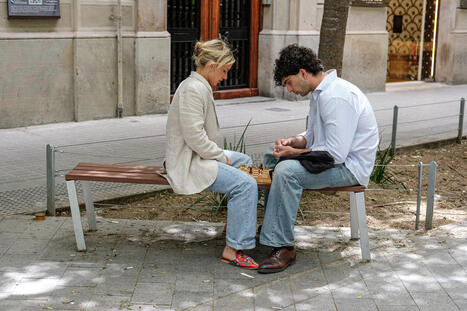
The Good Bench manual is a practical and inspiring tool for anyone working on cities, streets, and public spaces. It explores how something as simple as a bench can play a powerful role in shaping social life, wellbeing, and inclusion in the public realm. Rather than treating seating as an afterthought or a design object, the manual reframes it as essential urban infrastructure and a clear signal of hospitality. It explains why places with good seating feel lively and welcoming, while places without it often become spaces people only pass through.
The Energy Community Secretariat has invited postgraduates, researchers, and young professionals to apply for the 10th edition of the Energy Community Summer School, taking place at Polis University in Tirana, Albania, between August 22 and 29 this year. The program focuses on energy sectors in transition, in particular in South Eastern and Eastern Europe, according to the announcement.
The Energy Community Summer School, designed for postgraduate students, researchers, and early-career professionals, provides an in-depth exploration of the technical, economic, legal, political, and sustainability dimensions of the energy transition, including energy systems, markets, and geopolitics.
As democratic, citizen-led initiatives, energy communities play an important role in the ongoing efforts to speed up Europe’s transition to renewables. Yet behind their progressive image, familiar inequalities endure: women and FLINTA are still largely absent from membership and decision-making. If these grassroots projects are meant to reshape not only how energy is produced but who holds power, the question of gender can no longer be treated as secondary.
Energy communities are often regarded as one of the most promising developments linked to the energy transition – and for good reasons.
These are exciting times in the energy sector. Geopolitical instability, high energy prices, power shortages and grid bottlenecks have created an energy crisis that demands creativity, cooperation and social innovation. For those of us working with energy and climate from a communication standpoint, the wave of fresh thinking across Europe is particularly inspiring.
Europe’s democratic systems are facing serious challenges from within. However, the European Union shouldn’t look exclusively inward but focus on the global stage, where a confrontation is unfolding between democracy and autocracy. Promoting democracy worldwide is vital for warding off domestic and foreign threats.
Agnes Szalkai-Lorincz from Friends of the Earth Hungary joins Everything Is Changing about the rise of solar energy and the early development of energy communities in the country. We explore why trust, cooperation, and citizen-led innovation are essential for a fair energy transition, how cultural barriers shape community projects, and what policy changes are needed to build a more inclusive, climate-just future.
The first Citizens' Assembly organized in Vilnius has ended. Vilnius residents, who participated in it and were elected through a democratic lottery, agreed on 24 recommendations for more sustainable movement in the city. On December 10, they will be officially handed over to Vilnius city leaders. Event open to anyone who wants to participate.
During the meetings held in September-November, the assembly participants discussed and agreed on how to achieve that we would choose public transport, cycling and walking more often in Vilnius. The recommendations prepared cover many different mobility-related topics – from urban planning, pedestrian and cycle paths, public transport, from traffic organization to the school network, education, communication and culture.
To get content containing either thought or leadership enter:
To get content containing both thought and leadership enter:
To get content containing the expression thought leadership enter:
You can enter several keywords and you can refine them whenever you want. Our suggestion engine uses more signals but entering a few keywords here will rapidly give you great content to curate.


 Your new post is loading...