Your new post is loading...

|
Scooped by
Energy Cities
June 12, 4:28 AM
|
Dans le cadre de sa coopération avec Montréal, la Ville de Strasbourg a expérimenté une
démarche participative de réaménagement d’espaces publics dans le quartier de la gare. Baptisée « Rues et places des possibles », elle repose sur un principe fort : faire un pas de côté en tant que collectivité et confier à un panel citoyen la formulation des propositions de transformation. Objectif : tester une gouvernance plus ascendante, capable de produire à la fois des aménagements plus justes et un nouveau dialogue entre habitants, acteurs locaux, services techniques et élus.
|
|
Scooped by
Energy Cities
April 16, 10:46 AM
|
The Package includes a widely ambitious European goal for community energy projects (90GW by 2030), and second, the commitment that the Commission will deliver – much needed – guidance to member states on creating regulatory frameworks and financing tools for energy communities.
|
|
Scooped by
Energy Cities
April 16, 8:57 AM
|
In regions affected by climate stress, rapid urbanization, and persistent inequality, how we define poverty shapes how effectively our policies and investments respond to real needs. A multidimensional view of poverty that looks beyond just income must underpin solutions to bring real change.
|
|
Scooped by
Energy Cities
April 16, 5:12 AM
|
The capitalist emphasis on working hard as the key to success comfortably ignores an ugly reality: that the workforce faces worsening conditions and increasing precarity, while extractivism has brought the planet to the verge of ecological collapse. From the teachings of André Gorz to Gen Z’s quest for work-life balance, liberating time is at the centre of endeavours to achieve a better life – not just to consume freely as individuals, but to come together as a community.
|
|
Scooped by
Energy Cities
April 1, 10:57 AM
|
With climate change getting worse and the Iran war threatening fuel supplies, Shaz Rahman looks at how co-ops can offer energy solutions In the energy sector, a host of community energy co-ops sprang up and installed solar panels on community buildings, funded by the Feed-in Tariff (a policy mechanism designed to encourage renewable energy adoption by paying producers for the electricity they generated). This initiative offered a guaranteed price for the power generated, giving co-ops the security to fund the capital for the panels.
|
|
Scooped by
Energy Cities
March 24, 4:01 AM
|
Last week we saw headlines with food policy expert Professor Tim Lang warning that the UK food system is dangerously vulnerable to shocks. From climate disruption to geopolitical conflict, Lang argues that the country is not adequately prepared to ensure its population can be fed if supply chains are disrupted. It’s a stark assessment, but it’s not a new one - says Amit Dattani, Soil Association Director of Healthy and Sustainable Food:
|
|
Scooped by
Energy Cities
March 20, 9:08 AM
|
As war exposes the fragility of global energy supplies, communities are showing how clean power can be local, affordable and owned by the people who use it
If you’d not met the man, and I asked you to picture a ‘Reg Platt’, what would spring to mind? A retired gas fitter? A dogged constable in a Hercule Poirot drama? Almost certainly not a buzzing entrepreneur, with grizzled rock star good looks, who’s driving a revolution in solar power across the rooftops of east London.
So much for nominative determinism.
|
|
Scooped by
Energy Cities
March 12, 11:21 AM
|
The EU's growing housing crisis is reaching an inflection point: one in ten Europeans is unable to pay their rent or a mortgage on time, and several European countries suffer from severe housing shortages. Housing and Energy Commissioner Dan Jørgensen tells us his plan to avoid the politicization of the crisis, while S&D President Iratxe García Pérez explores her group’s program to cut home costs, including a new housing fund.
|
|
Scooped by
Energy Cities
March 12, 4:53 AM
|
Spain spent the last six years investing heavily in wind and solar energy, leading to some of the cheapest power prices in Europe.
But one European country is well placed to weather these shocks thanks to its investment in renewable energy.
Since 2019, Spain has doubled its wind and solar capacity, adding over 40 GW - more than any other EU country except Germany, whose power market is twice the size of Spain’s.
|
|
Scooped by
Energy Cities
March 11, 5:50 AM
|
Achieving the UK’s net zero target by 2050 will cost less than a single oil shock and bring health and economic benefits while insulating the country against future costs, the government’s climate advisers have forecast.
Eliminating the UK’s reliance on fossil fuels by adopting renewable energy and green technologies, such as electric vehicles and heat pumps, would be the best and most cost-effective option for the future economy, the Climate Change Committee (CCC) found.
|
|
Scooped by
Energy Cities
March 9, 5:34 AM
|
Transitioning to renewable energy does, in itself, require energy. But how much? A new model finds that phasing out all fossil fuels in EU by 2035 would require up to 39% of the current total energy supply.
|
|
Scooped by
Energy Cities
March 5, 10:40 AM
|
Amsterdam is set to ban climate-damaging advertising in public spaces, following a trend spreading across Dutch cities. The capital of the Netherlands will prohibit both fossil fuel and meat adverts under the new measure. Amsterdam initially proposed the move in 2020, becoming the first city in the world to do so. Since then, France has also enacted legislation outlawing adverts from non-renewable energy companies, and one Italian city has plans to do the same.
|
|
Scooped by
Energy Cities
March 5, 10:08 AM
|
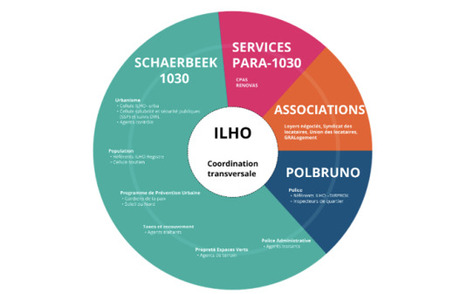
The ILHO (Investigation Logement Huisvesting Onderzoek) housing investigation system in Schaerbeek (BE) mobilises a multidisciplinary team, including municipal departments (urban planning, population, debt recovery, etc.) and external partners (police, neighbourhood associations, etc.) to combat inadequate housing and exploitative landlords. The system prevents landlords enriching themselves at the expense of vulnerable tenants.
The system also enhances knowledge of local buildings, and better connects administrative data in a territory, to identify who lives in each home. By connecting house owners with organisations that help renovate buildings and support tenants, the ILHO aims to improve housing quality and tenants’ well-being.
|
|
|
Scooped by
Energy Cities
April 16, 10:58 AM
|
Community-led heating and cooling networks can lower costs, boost comfort, and support the EU’s transition to clean, locally produced energy. How can we all enjoy comfortable temperatures in our homes at a fair, affordable price? Locally produced renewable heating and cooling networks fight energy poverty, increase comfort, make our cities sustainable and the Union more energy independent and competitive in challenging times.
|
|
Scooped by
Energy Cities
April 16, 9:34 AM
|
In a normal year, Sweden’s food production corresponds to about 150–200 percent of the population’s caloric energy needs and 200–250 percent of protein needs. This is the result of a new report from PLATE, a Centre-hosted research programme for resilient meals.
|
|
Scooped by
Energy Cities
April 16, 8:47 AM
|
As well as the very real human suffering in the Persian Gulf, the recent escalation of the current conflict has sent shockwaves through global energy markets, exposing how vulnerable countries, including the UK, are to fossil fuel volatility. The impact on household bills has been widely discussed but, as with previous crises like the invasion…
|
|
Scooped by
Energy Cities
April 10, 10:49 AM
|
Europe’s fiscal debate remains fixated on debt and deficits. Yet climate change represents a growing and still largely unpriced threat to public finances. Without early investment in mitigation and adaptation, families and businesses will face repeated shocks, higher prices, a weaker economy and a state forced into consistent emergency spending.
In late January, torrential rainfall triggered a massive landslide near Niscemi, Sicily, opening a 4-kilometre chasm beneath homes and forcing entire neighbourhoods to evacuate. Weeks later, storms swept across Spain and Portugal, forcing thousands to be driven from their homes and causing millions of euros of damage to crops. These are not isolated incidents.
|
|
Scooped by
Energy Cities
March 30, 7:53 AM
|
En pleine préparation du budget UE 2028-2034, Plan4Climate publie un rapport clé : comment financer efficacement la décarbonation et protéger les ménages et territoires vulnérables dans 12 États-membres ? Rappel utile : selon l’Agence Environnementale européenne, il manque actuellement €742 milliards d’investissements publics et privés pour réussir le Green Deal. Les financements européens représentent environ un tiers des financements publics climatiques qui permettront de le combler, ce qui rend ce budget indispensable pour répondre à la demande croissante de financements climatiques et verts.
|
|
Scooped by
Energy Cities
March 24, 3:55 AM
|
This week the government has unveiled its long-awaited Land Use Framework – a plan to set out how we use land in England that has been promised for several years.
The Soil Association has been calling for the framework to prioritise agroecological farming, like organic, and to scale up production of nature-friendly, British fruit and veg.
|
|
Scooped by
Energy Cities
March 20, 3:57 AM
|
Chris Vrettos, Senior Policy Advisor and Sara Tachelet, HR Director of REScoop, a EUSEW partner organisation, explore how the EU Citizens Energy Package will deliver community energy projects and promote clean power across the continent.
|
|
Scooped by
Energy Cities
March 12, 10:28 AM
|
Led by LCP Delta and the Centre for Energy Equality on behalf of Northern Powergrid, the project will explore how to improve access to energy flexibility for households and SMEs across the North East of England who may otherwise be unable to participate. The initiative ultimately aims to provide free or low‑cost batteries to households, helping them store energy and use it during peak times to reduce bills through time‑of‑day tariffs
|
|
Scooped by
Energy Cities
March 11, 5:54 AM
|
Europe’s vision of a citizen led energy revolution is falling short of expectations with legal confusion and technical barriers slowing progress, according to new auditors.
A report from the European Court of Auditors warns that energy communities were supposed to transform how people generate and share power across the bloc but the rollout has been far slower than planned.
|
|
Scooped by
Energy Cities
March 9, 11:26 AM
|
n Estonia and identified the record-breaking heatwave as a key factor. According to data from the University of Tartu and the Estonian Environmental Research Centre, an average of more than 36 people die prematurely during heatwaves each year in Estonia’s five largest cities. Vulnerable groups like the elderly, people with chronic diseases, children and pregnant women are disproportionately affected when it comes to extreme heat.
|
|
Scooped by
Energy Cities
March 6, 9:30 AM
|
La troisième Programmation Pluriannuelle de l'Énergie (PPE3) est un document clé de la planification écologique française. Le Réseau Action Climat propose une analyse commentée et une remise en perspective de son contenu, adopté avec près de 3 ans de retard.
|
|
Scooped by
Energy Cities
March 5, 10:30 AM
|
À mesure que les épisodes de chaleur extrême se multiplient, l’ombre, l’eau et le vent deviennent des ressources stratégiques. Lors d’un événement organisé par La Fabrique de la Cité, urbanistes, ingénieurs et économistes ont confronté leurs retours de terrain pour esquisser une ville plus habitable en été. “Les températures de l’air sont plus élevées dans les zones urbanisées que dans la campagne environnante.” Le rappel est posé d’emblée par Clément Gaillard, urbaniste bioclimatique, lors de l’événement “Concevoir la ville fraîche : retours d’expérience et nouvelles approches” organisé courant février 2026 par La Fabrique de la Cité.
|