


Dev Patnaik, author of Wired to Care, shared his innovative ideas on how grantmakers can build empathy for the communities they serve, bring stakeholders into the center of their work and shape more effective collaborations.

Empathy in the Workplace
52.9K views |
+2 today
International News about Empathy in the Workplace - for more see CultureOfEmpathy.com
Curated by
Edwin Rutsch
 Your new post is loading...
 Scoop.it! 
Ragu and other brands are brilliantly executing these types of social media campaigns by mastering the art of empathy, an often elusive concept that others are still seemingly struggling to grasp.
Empathy breeds compassion and a desire to help someone with a problem, and blurs the lines between consumer and brand by demonstrating that we are all often in the same boat in trying to find a solution. As Alvin Goodman, a Professor of Philosophy and Science at Rutgers University, once said, “(Empathy is) the ability to put oneself into the mental shoes of another person to understand (their) emotions and feelings.”
by John Trader 
Scoop.it!

“Put yourself in her shoes.” That’s what we tell someone when we want them to see things from someone else’s point of view: To really understand what another person is thinking or experiencing. Empathy is the ability to communicate (send and receive messages) and lead by understanding others’ thoughts, views, and feelings.
a cornerstone of emotional intelligence. To help set the stage, here are some basic facts about empathy: Terry Schmitz
Scoop.it!

However, there’s a dark side to empathy that is rarely discussed. UX Booth’s own Andrew Maier explains in his article about reducing noise, that “although office environments are designed to encourage creativity, their inhabitants can occasionally hinder it”.
“Sometimes we can become overwhelmed by empathy at work,” adds Judith Orloff, MD, an assistant clinical professor of psychiatry at UCLA and author of “Emotional Freedom: Liberate Yourself from Negative Emotions and Transform Your Life.” She stresses that “in the workplace, empathy has both an upside and a downside. People who are extremely empathic and sensitive need to be aware of both.”
by Melisa Angulo-Javier
Scoop.it!

Twitter's Biz Stone on Monday encouraged entrepreneurs to embrace a business model that incorporates empathy and a willingness to fail as much as a desire for revenue and market dominance....
There also needs to be a level of empathy; your business endeavors can't be completely selfish and cut-throat. In working with Twitter, "it has been revealed to me that people are basically good and if you give them a simple way to help others, they will prove this to you every single day."
By Chloe Albanesius ====================== There also needs to be a level of empathy; your business endeavors can't be completely selfish and cut-throat. ===========
Scoop.it!

Rene Huey-Lipton, SVP at BrainJuicer North America discusses the omportance of empathy.
In her book Karen Armstrong says this:
“Imagination is crucial to the compassionate life. A uniquely human quality, it enables the artist to create entirely new worlds and give a strong semblance of reality to events that never happened and to people who never existed.”
It seems to me, and apologies to Karen for using her work this way, that the act of creating entirely new worlds or ideas, and giving strong semblance of reality to events that never happened…is exactly what we in the marketing world are charged with. And answering that charges takes Imaginative Empathy.
So let’s break it down. =================== “Imagination is crucial to the compassionate life. =========
Scoop.it!

Emotional intelligence (also known as EQ), particularly the principle of empathy, is increasingly relevant to marketing careers. Creating an environment where people will be prepared to change their opinion, or be willing to hear what you are saying, is a key part of influencing.
Molly Harvey, author of Outstanding Leadership, says global entrepreneur Sir Richard Branson is the ultimate influencer. The poster child of emotional intelligence has built up his personal brand so that he has become somebody who people trust. He has famously used his EQ as much as his IQ to lead Virgin, which owns more than 400 companies around the world.
Scoop.it!

What does empathy have to do with innovation and technology? According to Rhode Island based designer Seung Chan Lim, plenty and not enough.
SP: The corporate environment seems like the perfect place for more empathy.
SCL: Yes! I think so, too. When you get down to it, you realize that corporations are filled with really smart and capable people but the organizational structure doesn’t allow them to utilize their talents in ways that is conducive to doing great work. I’m also trying to raise funds for the next phase, which is to prototype a new kind of human-computer interaction paradigm for making software. I’m underwhelmed by the two predominant paradigms, textual programming and visual programming. I’d like to imbue the principles of empathic conversation into this domain.
Scoop.it!

Today though, I want to focus on "empathy, which is absolutely vital for sustained success within any sales relationship, where you are trying to persuade another — often a stranger — to make a decision they may not even have considered prior to your meeting.
The buyer-seller situation, like any human contact, is an exercise in human relations — the interplay, cause and effect of behavior by two or more people on each other. In the buyer-seller situation, the seller must be responsible for shaping mutual behavior.
Scoop.it!

It turns out that neo-classical economics is flawed, however, in the way it defines human motives, because pure, absolute self-interest in any person is not the norm, but an aberration. Very few people are ever completely self-oriented, never doing anything that might undermine their own interest. People like this are called psychopaths, and what makes them aberrations is that they're completely immune to the feelings of others. The rest of us have empathy. Concern for others' feelings is hard-wired in our brains. You don't have to "learn" empathy. Newborn babies, a few days old, will cry when they hear other newborns cry.
Scoop.it!

MIT neuroscientists are studying the patterns of brain activity that correlate with empathy. They hope to use their findings to determine how well people respond to reconciliation programs aimed at boosting empathy between groups in conflict, since compassion for others suffering often fails between members of opposing conflict groups.
MIT postdoc Emile Bruneau has long been drawn to conflict — not as a participant, but an observer. In 1994, while doing volunteer work in South Africa, he witnessed firsthand the turmoil surrounding the fall of apartheid; during a 2001 trip to visit friends in Sri Lanka, he found himself in the midst of the violent conflict between the Tamil Tigers and the Sri Lankan military. ======================== aimed at boosting empathy between groups in conflict, since compassion for others suffering often fails between members of opposing conflict groups. =============
Scoop.it!

Once again, they discovered "a significant relation between the amount of fiction people read and their empathic and theory-of-mind abilities" allowing them to conclude that it was reading fiction that improved the subjects' social skills, not that those with already high interpersonal skills tended to read more.
Theory of mind, the ability to interpret and respond to those different from us — colleagues, employees, bosses, customers and clients — is plainly critical to success, particularly in a globalized economy. The imperative to try to understand others' points of view - to be empathetic - is essential in any collaborative enterprise.
Scoop.it!

Connecting with employees brings out the best in them. Great employees are five to 10 times more productive than average ones are.
Showing those you lead that you care about them is not only compassionate, but also sound business. Organizational research shows the results of doing so are increased productivity, profits, workforce engagement and trust, said Marie Miyashiro, author of "The Empathy Factor." Tips from her and others to reach your people. By MICHAEL MINK
|
Scoop.it!

Customer service empathy can be boiled down to five simple questions:
- How does the person I'm trying to help feel?
Scoop.it!

Empathy is more than knowing what someone needs or understanding how they feel. It’s more than being sympathetic. Empathy is being able to genuinely experience their emotional state, their desires and expectations and frustrations.
When you have an idea—one that’s truly a breakthrough—you’re going to be a little ahead of everyone else almost by definition (or you’re not being very innovative). Sometimes folks can quickly connect the dots and catch up, but often they can’t. You’re several steps ahead and they’re struggling to understand how you got there—and it’s not their fault that they’re struggling. On the contrary, you’re the one that found a new path, one that they’re not on yet.
Scoop.it!

“Self-absorption in all its forms kills empathy, let alone compassion.” Daniel Goleman knows a thing or two about developing empathy, as the author of Social Intelligence: The New Science of Human Relationships.
Showing a genuine interest in others and actively listening to them are clearly key components of empathy. But when we are talking about global leaders who work across many cultures, how does one develop intercultural empathy? It’s an important question, since social expressions and behaviors vary widely among cultures.
For global leaders, the answer to this question is more than just interesting. It’s critical to leadership success, because empathy is key to developing strong relationships.
BY Jennie Walker
Scoop.it!

Given all the recent chit-chat about the humanities and “soft” skills, coupled with the fact that I’ll soon be moving into management myself, I thought it’d be a good time to discuss one very important specific soft skill in the workplace: Empathy.
Do you care? Do you care about your fellow colleagues? Your boss? Your subordinates? A seasoned software manager writes in his blog, Stevey’s Blog Rants, that his number one tip for managers is empathy...
According to a white paper by the Center for Creative Leadership, empathy has a direct correlation on job performance, although the strength of this correlation is culture dependent.
Scoop.it!

Studies in behavioral finance indicate that emotions drive people’s financial decisions. Therefore, it is valuable for those who advise about money to gain access to their clients’ emotions and feelings about money. With this knowledge, financial planners can help clients express and manage their emotions around money and guide them toward wise decisions. The link that allows us as humans to connect with the emotions of another human being is empathy.
Empathic active listening is a practice that aids listeners in connecting with the core emotions of others. It combines the acute listening for circumstantial details of active listening with the macro focus of empathic listening. Putting those two together, an empathic active listener hears and reflects back circumstances, then connects those circumstances with the core feeling behind what the speaker is saying. ...
by J. Jeffrey Spahn and Jed Purses
Scoop.it!

We will help you focus on the power of empathy at three levels of awareness: self-awareness, collaborative awareness and organizational awareness. Developing empathy at each level integrates motivation and action, self-expression and listening, independence and team-work, individual staff’s values and company.
We dare to say that empathy is the essential skill for all staff in any organization in order to adapt to his shift that is taking place in our society. Empathy is essential for a sustainable, interdependent, and mutually supportive global society.
Scoop.it!
Empathy is a relatively new word, only having come about in the 20th century. While most social work classes discuss empathy to some extent, few schools have incorporated the latest research into the curriculum . But Gerdes believes they soon will, because empathy is an important concept for both social workers and the general public.
“When you have an empathy deficit, like Hitler did, you have genocide,” Gerdes says. “When you have appropriate empathy, those things don’t happen because you’ll interfere with them happening. You’ll do everything you can, because it’s at the core of our human interaction that I try to understand you and you try to understand me.”

's comment February 20, 2012 11:40 AM
I like this. It reminds me of something that the poet Denise Levertov wrote, which is one of my all time favorite quotes by anyone:
"There can be no self-respect without respect for others, no love and reverence for others without love and reverence for oneself; and no recognition of others is possible without the imagination. The imagination of what it is to be those other forms of life that want to live is the only way to recognition; and it is that imaginative recognition that brings compassion to birth. Man's capacity for evil, then, is less a positive capacity, for all its horrendous activity, than a failure to develop mans most human function, the imagination, to its fullness, and consequently a failure to develop compassion."
Scoop.it!

Listening is a very important part of conversation. Yet, if we are honest, most of us would admit to needing to sharpen our listening skills. Listening well means we not only hear what the other is saying, but striving for understanding. Paying close attention to conversation means listening carefully and not being distracted by what is going on around you. It also means quieting your own internal dialogue. When a person perceives that you are engaged in what they are saying, they more quickly respond to your comments and suggestions. In fact, listening well is the first step in being heard...
Scoop.it!

Empathy is a stifled phrase in the leadership literature, but it’s an indispensable leadership concept. It’s one of the yardsticks for measuring the Emotional Quotient (EQ) of a leader. It enables us to establish ties of trust with the people we lead; and gives us insights into what their feelings or thoughts may be. Empathy enhances our understanding of people and informs our decisions. In today’s organizational environment, it has become critical to not only understand the scope of your work, but also to be able to analyse and understand yourself and the people you manage, in terms of motivation, behaviour and performance potential.
by Samuel Duru
Scoop.it!

I wish I could design stuff like David Kelley. It’s not hard to see why.
He’s the founder of IDEO and the Hasso Plattner Institute of Design at Stanford. Smart doesn’t begin to describe this guy. As a designer and innovator, he’s on par with the likes of a Steve Jobs, with one crucial difference -- he’s not a raving jerk to his employees. Empathetic is actually the term he uses in an interview with Fast Company:
“The main tenet of design thinking is empathy for the people you're trying to design for...
Empathy, Kelley insists, is also the key to cultivating what he calls “curious employees”:
Scoop.it!
When Facebook engineer Arturo Bejar observed users were reporting pictures of themselves, not those with illegal content, he recognized the need for a better way for users to resolve internal conflicts.
Scoop.it!
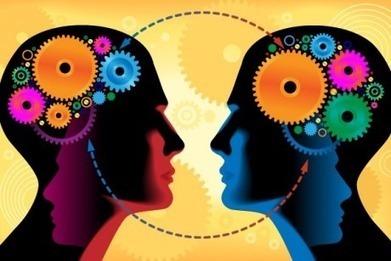
Emotions and actions are powerfully contagious. When we see someone laugh, cry, show disgust and experience pain, in some sense we share those feelings. When we see a great actor, musician or athletic perform at the peak of their abilities, it can feel like we are experiencing something of what they feel.
In the 1990’s when a research team at the University of Parma, lead by neurophysiologist Giacomo Rizzolatti, made the serendipitous discovery of “mirror neurons,” a new revolution in our understanding of humans as social beings began. Since that time, neuroscience findings have helped us to appreciate the implications of the powerful sharing of experience.
Relationships are all about connecting with others. However, very few people consciously think about how relationships are formed. When relationships are working, there is a tendency to take them for granted and not think about how they’ve been established.
by Louise Altman
|




