




"Throughout your work as an online learner you develop effective communication skills when you engage in threaded discussion forums and send email, submit written assignments and give oral presentations."
Get Started for FREE
Sign up with Facebook Sign up with X
I don't have a Facebook or a X account


 Your new post is loading...
 Your new post is loading...
Your new post is loading...
 Scoop.it!
"Throughout your work as an online learner you develop effective communication skills when you engage in threaded discussion forums and send email, submit written assignments and give oral presentations." 
No comment yet.
Sign up to comment
Scoop.it!

"This post presents some great visions of future of mobile learning."
Scoop.it!

The newest crop of Washington and Lee University (WLU) freshmen didn’t have to look past T-shirts worn by the school’s IT staff in acclimating to life on campus.
Scoop.it!

"Mayer’s Multimedia Learning Theory provides a framework that allows the instructional designer to provide meaningful learning by providing a learning environment through multimedia that requires the learner to select relevant information, organize that information into a coherent representation and then integrate that representation into his/her existing knowledge (Mayer, 1997)."
Scoop.it!

Are children really “digital born”? ARTHUR GOLDSTUCK argues that this fondly held belief is a myth. He suggests a tool used by kids that adults can also embrace to become “digital made”.
Scoop.it!
Find e-Learning for Life in Ubiquitous Academic at http://t.co/f9xNDpYX.
Scoop.it!

The number of college admissions officials using Facebook to learn more about an applicant has quadrupled in the past year...
Scoop.it!

"Most rookie Instructional Designers have a misconception that Instructional Design is quite academic in nature. I was a part of the vast majority up until a few months ago. Over time, I realized that most Instructional Design theories are rooted in common sense. However, as Instructional Design beginners, we are so overawed by these theories that we fail to understand the simple principles behind them."
Scoop.it!

"There are many arguments for using social media in education... One of the most powerful arguments is simply because Facebook is, and has been since its creation, a Web site that students want to use."
"There are a number of new tools that aim to blend social and studying aspects. One of them is Hoot.me, a Facebook application that turns the social networking site into “study mode."
Scoop.it!

"During the middle of the twentieth century a psychologist name Benjamin Bloom created a classification system to identify levels of thinking. This arrangement is known as Bloom’s Taxonomy. Intellectual processes are ordered from the most basic, “knowledge” to the most complex, “evaluation”. Recently, Bloom’s Taxonomy has been updated to reflect modern research and educational principles."
Scoop.it!

With the proper guidance from parents and teachers, social media sites such as Facebook and Google+ can be powerful educational tools.

Gonzalo Edward Gonzalez Cornejo's curator insight,
August 15, 2013 6:43 PM
It could be relevant for our study 
Jacqueline Elizondo's curator insight,
January 31, 2022 11:47 PM
I enjoyed how this article allowed for this question to be asked and also be answered. Social Media is made available to people of ages 13 and older and even at that many question whether or not they should be in it. But this article addresses this issue as well.
Scoop.it!

From the layman users to businesses, almost everyone is part of the online social ecosystem. Now, the education industry seems to be picking pace as things are getting social in schools and universities.
Scoop.it!

We recently asked readers: “What are the qualities of an effective 21st-century educator?” Here are our readers' top responses.
|
Scoop.it!

If so many students spend so much time on social media networks, teachers shouldn’t be missing out on this opportunity for interaction.
Scoop.it!

Eau Claire, Wisconsin's L.E. Phillips Memorial Public Library will soon begin offering 32 iPads for seven-day checkouts.
Scoop.it!
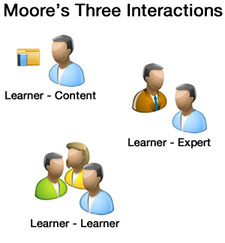
"Interaction has always been seen as a key component of an online course. Whether it is student-student or student-teacher interaction, the ability to discuss and exchange ideas has long been considered to be the piece that adds value to an online course, keeping it from becoming simply the posting of written course material on a web page, the digital equivalent of a correspondence course. In fact, many programs promote the highly interactive nature of their curriculum as evidence of its educational value. But what if this assumption were wrong?"
Scoop.it!

While iPads have rocketed to popularity on many college campuses since Apple introduced the device in spring 2010, many public high schools this fall will move away from textbooks in favor of the lightweight tablet computers.
Scoop.it!

How will new forms of Social Media Change Education? Web 2.0 saw the Internet move away from static 'access only' webpages into an arena in which learners could interact with one another, comment on things and engage ...
Scoop.it!

Learners types or the learning style preferred by various learner types is an important design consideration which affects how person interacts with the environment.
Scoop.it!

"Educators who’ve been wanting to use YouTube videos in class can now find an easy way in. Today, YouTube launched its own teacher’s channel: YouTube.com/Teachers, a guide to using videos in class."
Scoop.it!

Please tell us about the types of instructional and education technologies that you think can make the biggest impact on education.
Scoop.it!

"Here is a list of predictions I made in 2001 about the classroom of the future. I’m pleasantly surprised about how accurate it has turned out to be – but I think it will be even more challenging to predict the next ten years because there are so many options opening up. What are your predictions for the next ten years? And is it worth bothering to make such predictions anyway?"
Scoop.it!
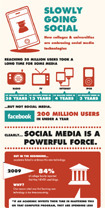
"Universities are often at the forefront of intellectual thought, but they have been known to lag behind the rest of society when it comes to learning and adopting new technologies. Such has certainly been the case with social media technologies. In fact, so reluctant were universities to adopt social media on campus that in 2007, only about half of colleges reported social media usage."
Scoop.it!

"My keystrokes often substitute for my presence. That's not good! But that's not the biggest downside to technology. Far worse is what e-mail has done to our expectations and level of discourse."
|





