I live in Florida and hard times are visible everywhere. I've seen businesses open with promise and flair only to close within a year with nary a sound and barely an announcement. This extends to t...
Via Dr. Susan Bainbridge
Get Started for FREE
Sign up with Facebook Sign up with X
I don't have a Facebook or a X account


|
Rescooped by
EDTECH@UTRGV
from The 21st Century
onto Educational Technology News September 8, 2011 11:00 AM
|
 Scoop.it!
I live in Florida and hard times are visible everywhere. I've seen businesses open with promise and flair only to close within a year with nary a sound and barely an announcement. This extends to t...

 Your new post is loading...
 Your new post is loading...
Your new post is loading...
Scoop.it!
|
|
|
Scooped by
EDTECH@UTRGV
March 17, 9:58 AM
|
Scoop.it!

A short-lived AI tool promised to help users write like the greats—and a bunch of other random people, including me.
"Grammarly...briefly offered users the opportunity to put their writing through something called 'Expert Review.' This produced AI-generated advice purportedly from the perspective of a bunch of famous authors"
|
|
Scooped by
EDTECH@UTRGV
March 17, 9:44 AM
|
Scoop.it!

Professional educators understand that knowledge, comprehension, application, analysis, synthesis, and evaluation are developed through different learning methods and have to be assessed through different methods as well.
“The reason we ask students to write [essays] is that, for a human brain, the most efficient way to produce a good essay is to first understand the topic and then think critically about it."
|
|
Scooped by
EDTECH@UTRGV
March 17, 9:38 AM
|
Scoop.it!

AI-generated study questions integrated into textbooks can save educators time, increase engagement, and drive positive results for students.
According to the study results, "students who practiced chapter-by-chapter saw average scores increase by nearly two percentage points, with significant gains observed among lower-performing students."
|
|
Scooped by
EDTECH@UTRGV
March 16, 2:47 PM
|
Scoop.it!
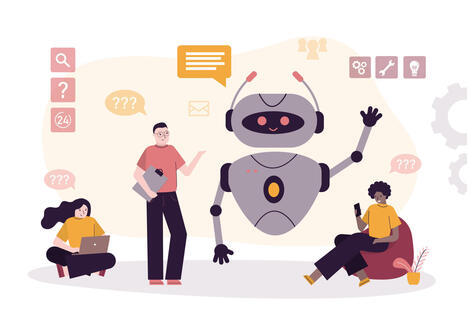
Discover how custom AI tutors transformed a large business law course by providing scalable, personalized learning support and structured legal analysis practice.
"The tutors offered accessible, personalized learning experiences that supplemented instruction in ways not feasible at scale with traditional methods"
|
|
Scooped by
EDTECH@UTRGV
March 16, 2:39 PM
|
Scoop.it!

Integrating artificial intelligence into our societies and personal lives binds us to certain futures and forecloses the possibility of others. Are we ready to accept the consequences?
"[A]dopting AI binds us to certain futures and forecloses the possibility of others. We had better ensure that the potential environmental, political and social costs are worth it."
|
|
Scooped by
EDTECH@UTRGV
March 16, 2:29 PM
|
Scoop.it!

"As universities rush to adopt generative AI–powered tools that claim to enhance teaching, learning and workforce preparation, a growing contingent of academics is questioning where that urgency is coming from and whom it stands to benefit."
"The resolution, which the CCCC overwhelmingly approved at its annual convention in Cleveland two weeks ago, reflects the writing education community’s support for the right to opt out of using generative AI in the classroom"
|
|
Scooped by
EDTECH@UTRGV
March 13, 11:18 AM
|
Scoop.it!

In the coming year, K-12 IT directors will be taking a critical look at edtech and making sure it delivers what students and teachers really need.
"The era of technology for technology’s sake is over. The pandemic forced rapid adoption without reflection. Now comes the reckoning."
|
|
Scooped by
EDTECH@UTRGV
March 13, 11:15 AM
|
Scoop.it!

Teaching students essential technology skills at an early age ensures that they master critical thinking skills for the future of work.
"A new generation of students and shifting workplaces are ushering in new education needs"
|
|
Scooped by
EDTECH@UTRGV
March 13, 11:11 AM
|
Scoop.it!
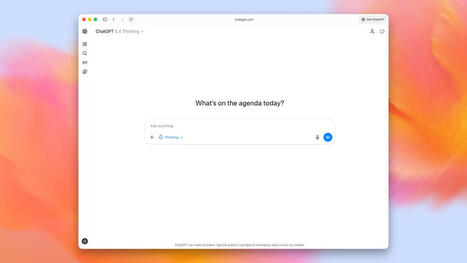

GPT-5.4 is also more reliable, producing 18% fewer errors and 33% fewer false claims than GPT-5.2, according to OpenAI.
"GPT-5.4's 83% score suggests AI rivals expert professionals. Tests span nine industries and 44 real-world occupations. New capabilities boost coding, tools, and computer control."
|
|
Scooped by
EDTECH@UTRGV
March 13, 11:09 AM
|
Scoop.it!
"The seduction of the blank prompt: The cognitive atrophy of instant gratification"
"[I]n our rush towards efficiency, we are outsourcing something far more valuable than tasks. We are outsourcing our thinking."
|
|
Scooped by
EDTECH@UTRGV
March 12, 10:47 AM
|
Scoop.it!

A 2025 study shows that an AI-based tutor improves learning when it prompts reasoning and is paired with peer discussion.
"[W]hen AI is designed as a tutor that asks questions instead of simply giving answers – and when students are also required to explain their reasoning to classmates – the technology can support learning rather than replace it."
|
|
Scooped by
EDTECH@UTRGV
March 12, 10:40 AM
|
Scoop.it!

AI is quickly becoming standard practice in higher education, with students and faculty reporting widespread use.
"75% of employers said they would rather hire a less experienced candidate with a generative AI credential than a more experienced candidate without one."
|
|
Scooped by
EDTECH@UTRGV
March 17, 10:02 AM
|
Scoop.it!

Chatbots tend to produce solid writing, but their prose largely reflects a single, uniform voice.
"Predictive language technologies have become so routine – baked into smartphones, email services and chatbots – that we barely notice them anymore. But they raise a difficult question: What happens to a writer’s unique voice when AI routinely completes their thoughts – or generates them altogether from scratch?"
|
|
Scooped by
EDTECH@UTRGV
March 17, 9:48 AM
|
Scoop.it!

Digital learning environments must be clear and aligned to allow learners to meaningfully engage with the material.
"Clear learning environments also support self-regulation. Learners who understand environmental structure can make informed decisions about where to focus attention and effort. Ambiguity, by contrast, increases reliance on external guidance and reduces learner autonomy."
|
|
Scooped by
EDTECH@UTRGV
March 17, 9:40 AM
|
Scoop.it!
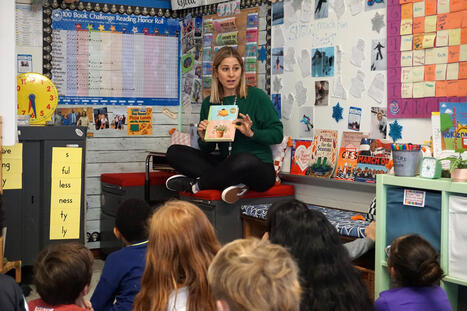
Screen time in school ballooned during the pandemic and is now embedded throughout the instructional day.
"[M]any parents are reassessing device use and cutting back at home. But some are encountering an unexpected challenge as they try to rein in screen time — their kids’ schools."
|
|
Scooped by
EDTECH@UTRGV
March 17, 9:35 AM
|
Scoop.it!
"2026 will be one of organizational uncertainty and AI recalibration. These two issues are creating anxiety among employees. Managing a workplace filled with anxiety and uncertainty will require focus and attention on “soft” skills. More than ever, the quality of employee-to-employee relationships will be critical to organizational success."
"The coming year will be full of organizational uncertainty and AI recalibration."
|
|
Scooped by
EDTECH@UTRGV
March 16, 2:44 PM
|
Scoop.it!
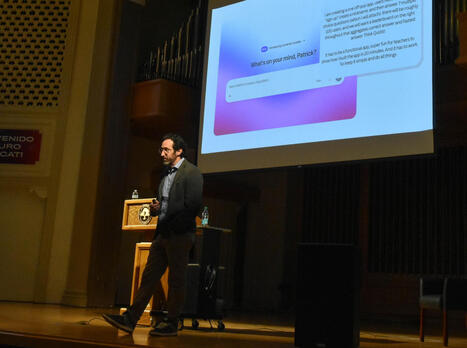
"While it was once a faraway and futuristic idea, AI has now found its way into many aspects of everyday life, including higher education. This is what Patrick Dempsey, founder and co-CEO of Pend AI, spoke about in his keynote lecture on Feb. 18.
He began the talk with a trivia quiz about actor Patrick Dempsey. Once a winner was declared, he revealed the point of the exercise. He’d created the questions, Gemini AI created the multiple choice answers and Bubble AI had put together the quiz, demonstrating what AI is capable of and the technology that today’s students are surrounded by."
"Higher education is, at least in part, meant to equip students with the skills and specialized knowledge from their fields they will need in their careers after graduation. For this reason, Dempsey weighed in on the discourse surrounding AI in the workplace. While many worry that AI will automate jobs wholesale, he posited that AI could be used to automate certain tasks within jobs that don’t require this specialized knowledge, like emailing and meetings."
|
|
Scooped by
EDTECH@UTRGV
March 16, 2:35 PM
|
Scoop.it!
"From Redguard to Skyrim, the Elder Scrolls games became easier to play. What if that’s actually a better design?"
"Although it had a fun story and some unique lore moments (like original Khajiit speech), the worst thing was usability."
|
|
Scooped by
EDTECH@UTRGV
March 16, 2:25 PM
|
Scoop.it!

Graduate students increasingly use artificial-intelligence tools to draft, code and search — but many fear it could erode the very skills a doctorate is meant to build.
“AI is a blessing, but it has made students lazy. People don’t go the extra mile to build the skill.”
|
|
Scooped by
EDTECH@UTRGV
March 13, 11:16 AM
|
Scoop.it!
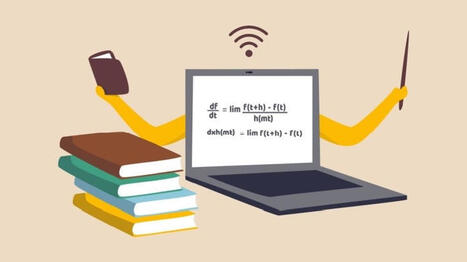
Understanding student intention in enrolling in online courses is more likely to ensure that scalable online learning ecosystems are built.
"Students’ performance expectancy, ease of use, engagement, flexibility and institutional trust influence their decisions."

What attract your future students to your online courses? Here are some insights!
|
|
Scooped by
EDTECH@UTRGV
March 13, 11:14 AM
|
Scoop.it!

Learn how spaced learning in higher education improves retention, reduces procrastination, and strengthens student mastery through intentional assignment design.
"Brain research shows that the more time students spend on an assignment over time, the more successful they are, but more importantly, the more they absorb the content and make it their own on a deeper level."
|
|
Scooped by
EDTECH@UTRGV
March 13, 11:10 AM
|
Scoop.it!

Cameron Kerry and Saurabh Mishra discuss how countries can build cognitive infrastructure to operationalize AI for real-world impact.
"AI is not a standalone sector; it creates value only when embedded in real industries."
|
|
Scooped by
EDTECH@UTRGV
March 12, 10:50 AM
|
Scoop.it!
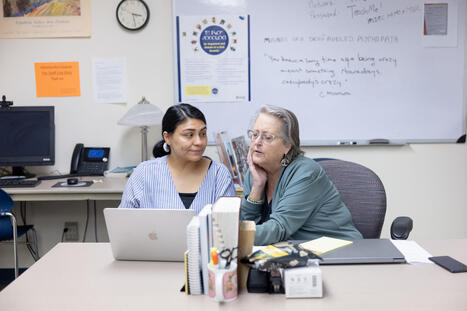
How can teachers use AI in practical, low-risk ways that will save them time and reduce their workload – without compromising their professional judgement?
“Your ability to ‘get good outcomes using AI’ tracks with your ability to ‘get good outcomes without AI.' AI does not replace strong teaching; it amplifies it. The educators who benefit most are those who use AI as a second thinker, a teaching assistant, or a proofreader – not as a decision-maker."
|
|
Scooped by
EDTECH@UTRGV
March 12, 10:44 AM
|
Scoop.it!
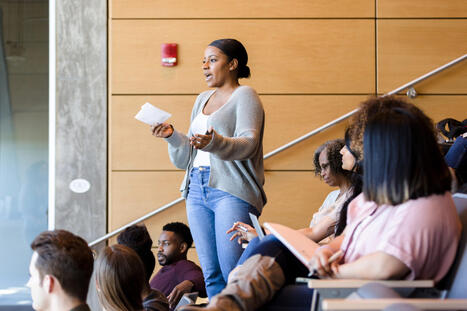
Learn how structured think-aloud methodologies help faculty assess higher-order critical thinking, metacognitive skills, and AI use in higher education.
"[I]f AI can generate essays and solutions, the focus of educators needs to shift from evaluating their final products to equipping and assessing students on critical thinking, self-regulation, and motivational skills. Effective assessment techniques need to provide insight into a learner’s thought processes in real time."
|
|
Scooped by
EDTECH@UTRGV
March 12, 10:39 AM
|
Scoop.it!

"An international survey of university academics and students by Coursera, the massive online learning platform with 375 leading university and industry partners, has revealed highly positive attitudes towards generative AI and that more than 95% make use of AI tools. But a weighty 56% fear that higher education is unprepared to handle AI."
"The report lists four key takeaways for university leaders regarding faculty and AI: prioritise investment in AI tools for faculty; provide targeted AI training; promote best practices; and identify AI champions to lead change."