
"Most AI literacy curricula begin and end with the same lesson: here’s how to use ChatGPT responsibly. Learn to prompt. Check your sources. Don’t plagiarize. That’s not AI literacy. That’s a typing tutorial for 2023."
Get Started for FREE
Sign up with Facebook Sign up with X
I don't have a Facebook or a X account


|
Scooped by
EDTECH@UTRGV
onto Educational Technology News February 26, 1:02 PM
|
 Scoop.it!
"Most AI literacy curricula begin and end with the same lesson: here’s how to use ChatGPT responsibly. Learn to prompt. Check your sources. Don’t plagiarize. That’s not AI literacy. That’s a typing tutorial for 2023."

 Your new post is loading...
 Your new post is loading...
Your new post is loading...
Scoop.it!
|
|
|
Scooped by
EDTECH@UTRGV
March 18, 12:25 PM
|
Scoop.it!

Higher ed institutions that successfully integrate emerging technologies and strengthen cybersecurity may very well thrive.
"From the rise of artificial intelligence to escalating cybersecurity threats, higher education leaders are navigating a landscape where long-standing academic structures are being tested by new realities."
|
|
Scooped by
EDTECH@UTRGV
March 18, 12:22 PM
|
Scoop.it!

"Accessibility is about creating a sustainable, continuous process that ensures every student, regardless of ability, has equal access to education."
"Title II of the ADA specifically governs state and local government entities, which includes public K-12 school districts, public universities, and community colleges. The core mission is simple: all services, activities, and programs provided by these institutions must be accessible to people with disabilities."
|
|
Scooped by
EDTECH@UTRGV
March 18, 12:13 PM
|
Scoop.it!

"The seduction of the blank prompt: The cognitive atrophy of instant gratification"
"[I]n our rush towards efficiency, we are outsourcing something far more valuable than tasks. We are outsourcing our thinking."
|
|
Scooped by
EDTECH@UTRGV
March 18, 12:06 PM
|
Scoop.it!

Discover active learning strategies for student engagement that improve focus, boost retention, and create an interactive classroom in the digital age.
"In addition to the limited attention span, technology also impacts the brain’s craving for stimulation, training it to expect high-reward, fast-paced digital experiences."
|
|
Scooped by
EDTECH@UTRGV
March 17, 9:58 AM
|
Scoop.it!

A short-lived AI tool promised to help users write like the greats—and a bunch of other random people, including me.
"Grammarly...briefly offered users the opportunity to put their writing through something called 'Expert Review.' This produced AI-generated advice purportedly from the perspective of a bunch of famous authors"
|
|
Scooped by
EDTECH@UTRGV
March 17, 9:44 AM
|
Scoop.it!

Professional educators understand that knowledge, comprehension, application, analysis, synthesis, and evaluation are developed through different learning methods and have to be assessed through different methods as well.
“The reason we ask students to write [essays] is that, for a human brain, the most efficient way to produce a good essay is to first understand the topic and then think critically about it."
|
|
Scooped by
EDTECH@UTRGV
March 17, 9:38 AM
|
Scoop.it!

AI-generated study questions integrated into textbooks can save educators time, increase engagement, and drive positive results for students.
According to the study results, "students who practiced chapter-by-chapter saw average scores increase by nearly two percentage points, with significant gains observed among lower-performing students."
|
|
Scooped by
EDTECH@UTRGV
March 16, 2:47 PM
|
Scoop.it!
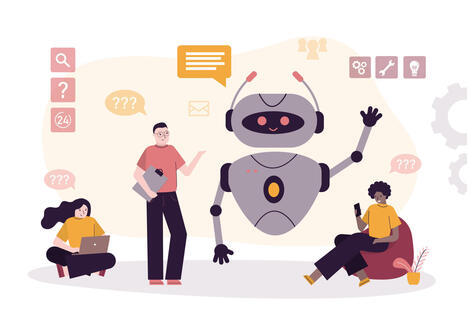
Discover how custom AI tutors transformed a large business law course by providing scalable, personalized learning support and structured legal analysis practice.
"The tutors offered accessible, personalized learning experiences that supplemented instruction in ways not feasible at scale with traditional methods"
|
|
Scooped by
EDTECH@UTRGV
March 16, 2:39 PM
|
Scoop.it!

Integrating artificial intelligence into our societies and personal lives binds us to certain futures and forecloses the possibility of others. Are we ready to accept the consequences?
"[A]dopting AI binds us to certain futures and forecloses the possibility of others. We had better ensure that the potential environmental, political and social costs are worth it."
|
|
Scooped by
EDTECH@UTRGV
March 16, 2:29 PM
|
Scoop.it!

"As universities rush to adopt generative AI–powered tools that claim to enhance teaching, learning and workforce preparation, a growing contingent of academics is questioning where that urgency is coming from and whom it stands to benefit."
"The resolution, which the CCCC overwhelmingly approved at its annual convention in Cleveland two weeks ago, reflects the writing education community’s support for the right to opt out of using generative AI in the classroom"
|
|
Scooped by
EDTECH@UTRGV
March 13, 11:18 AM
|
Scoop.it!

In the coming year, K-12 IT directors will be taking a critical look at edtech and making sure it delivers what students and teachers really need.
"The era of technology for technology’s sake is over. The pandemic forced rapid adoption without reflection. Now comes the reckoning."
|
|
Scooped by
EDTECH@UTRGV
March 13, 11:15 AM
|
Scoop.it!

Teaching students essential technology skills at an early age ensures that they master critical thinking skills for the future of work.
"A new generation of students and shifting workplaces are ushering in new education needs"
|
|
Scooped by
EDTECH@UTRGV
March 18, 12:29 PM
|
Scoop.it!

"Few spheres of public life have been more rapidly and thoroughly transformed by generative AI products than education, and few professions have been more dramatically upended than teachers and education workers. There’s a case to be made that the first major social transformation of the modern AI era was the mass diffusion of ChatGPT into classrooms, where students took to using it as an easy implement for cheating on homework."
"Teachers and students alike are being encouraged from all angles to adopt AI products, setting up new arenas for tension and conflict, and posing serious questions about the future of instruction."
|
|
Scooped by
EDTECH@UTRGV
March 18, 12:24 PM
|
Scoop.it!

The AI tools that will actually shift outcomes for students are the ones built on pedagogical foundations.
"The evidence for structured methodology over content delivery alone is decades old and thoroughly replicated. Yet most AI tools for teaching treat lesson structure as an afterthought."
|
|
Scooped by
EDTECH@UTRGV
March 18, 12:18 PM
|
Scoop.it!

"Collaboration is urgently needed among generative artificial intelligence developers, universities, academic publishers and policy-makers to develop academically aligned, citation-traceable AI systems grounded in peer-reviewed scholarly collections – particularly in under-represented regions and contexts – according to a new study."
"[I]nstitutionally grounded and academically aligned AI systems offer an opportunity to reinforce integrity, transparency and epistemic sovereignty in higher education."
|
|
Scooped by
EDTECH@UTRGV
March 18, 12:11 PM
|
Scoop.it!

We need to teach skepticism and critical thinking as philosophical responses to machine intelligence.
"Instead of just changing our assignments, we must do something more provocative and arguably far more challenging. We must reflect on how we think and find value in thinking in an age where a machine is happy to do just that for us."
|
|
Scooped by
EDTECH@UTRGV
March 17, 10:02 AM
|
Scoop.it!

Chatbots tend to produce solid writing, but their prose largely reflects a single, uniform voice.
"Predictive language technologies have become so routine – baked into smartphones, email services and chatbots – that we barely notice them anymore. But they raise a difficult question: What happens to a writer’s unique voice when AI routinely completes their thoughts – or generates them altogether from scratch?"
|
|
Scooped by
EDTECH@UTRGV
March 17, 9:48 AM
|
Scoop.it!

Digital learning environments must be clear and aligned to allow learners to meaningfully engage with the material.
"Clear learning environments also support self-regulation. Learners who understand environmental structure can make informed decisions about where to focus attention and effort. Ambiguity, by contrast, increases reliance on external guidance and reduces learner autonomy."
|
|
Scooped by
EDTECH@UTRGV
March 17, 9:40 AM
|
Scoop.it!

Screen time in school ballooned during the pandemic and is now embedded throughout the instructional day.
"[M]any parents are reassessing device use and cutting back at home. But some are encountering an unexpected challenge as they try to rein in screen time — their kids’ schools."
|
|
Scooped by
EDTECH@UTRGV
March 17, 9:35 AM
|
Scoop.it!
"2026 will be one of organizational uncertainty and AI recalibration. These two issues are creating anxiety among employees. Managing a workplace filled with anxiety and uncertainty will require focus and attention on “soft” skills. More than ever, the quality of employee-to-employee relationships will be critical to organizational success."
"The coming year will be full of organizational uncertainty and AI recalibration."
|
|
Scooped by
EDTECH@UTRGV
March 16, 2:44 PM
|
Scoop.it!
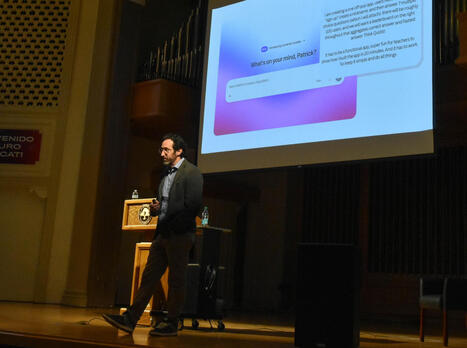
"While it was once a faraway and futuristic idea, AI has now found its way into many aspects of everyday life, including higher education. This is what Patrick Dempsey, founder and co-CEO of Pend AI, spoke about in his keynote lecture on Feb. 18.
He began the talk with a trivia quiz about actor Patrick Dempsey. Once a winner was declared, he revealed the point of the exercise. He’d created the questions, Gemini AI created the multiple choice answers and Bubble AI had put together the quiz, demonstrating what AI is capable of and the technology that today’s students are surrounded by."
"Higher education is, at least in part, meant to equip students with the skills and specialized knowledge from their fields they will need in their careers after graduation. For this reason, Dempsey weighed in on the discourse surrounding AI in the workplace. While many worry that AI will automate jobs wholesale, he posited that AI could be used to automate certain tasks within jobs that don’t require this specialized knowledge, like emailing and meetings."
|
|
Scooped by
EDTECH@UTRGV
March 16, 2:35 PM
|
Scoop.it!
"From Redguard to Skyrim, the Elder Scrolls games became easier to play. What if that’s actually a better design?"
"Although it had a fun story and some unique lore moments (like original Khajiit speech), the worst thing was usability."
|
|
Scooped by
EDTECH@UTRGV
March 16, 2:25 PM
|
Scoop.it!

Graduate students increasingly use artificial-intelligence tools to draft, code and search — but many fear it could erode the very skills a doctorate is meant to build.
“AI is a blessing, but it has made students lazy. People don’t go the extra mile to build the skill.”
|
|
Scooped by
EDTECH@UTRGV
March 13, 11:16 AM
|
Scoop.it!
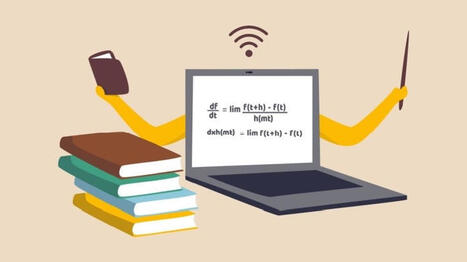
Understanding student intention in enrolling in online courses is more likely to ensure that scalable online learning ecosystems are built.
"Students’ performance expectancy, ease of use, engagement, flexibility and institutional trust influence their decisions."

What attract your future students to your online courses? Here are some insights!
|
|
Scooped by
EDTECH@UTRGV
March 13, 11:14 AM
|
Scoop.it!

Learn how spaced learning in higher education improves retention, reduces procrastination, and strengthens student mastery through intentional assignment design.
"Brain research shows that the more time students spend on an assignment over time, the more successful they are, but more importantly, the more they absorb the content and make it their own on a deeper level."





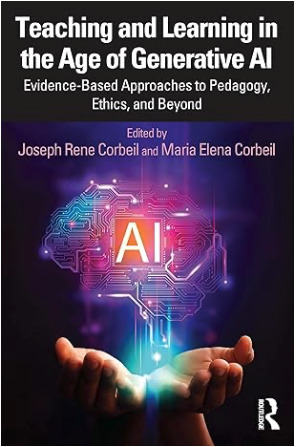


"The world students are entering — the world that’s arriving right now — requires something far more comprehensive. The chatbot is just the opening act. What follows is an AI environment that will reshape how young people think, feel, relate, work, and build their identities."