


Rihanna makes history as the first black face of Dior, but is it going to the change the mindset
of the whitewashed fashion industry?

 Your new post is loading...
 Scoop.it! Rihanna makes history as the first black face of Dior, but is it going to the change the mindset 
No comment yet.
Sign up to comment
Scoop.it!
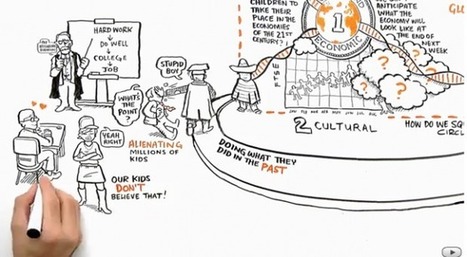
Why haven't education reform efforts amounted to much? Because they start with the wrong problem, says John Abbott, director of the 21st Century Learning Initiative. Overhauling the educational paradigm means replacing the metaphor — the concept of the world and its inhabitants as machine-like entities — that has shaped the education system, as well as many other aspects of our culture. Via Patti Kinney
Scoop.it!

From
ww2

Leaders who demonstrate a continual desire to learn and connect whenever possible help set a precedence of transparency and innovation in a school's culture. Via Patti Kinney
Scoop.it!
Norman Borlaug the man who saved a Billion lives. He invented new types of wheats, and rice. He received the Nobel Prize for his work.
Dennis Swender's insight:
The accomplishments of the late Norman Borlough continue to provide a welcome and overshadowing contrast to the atrocities of world violence and wars of the last 3 centuries
Scoop.it!
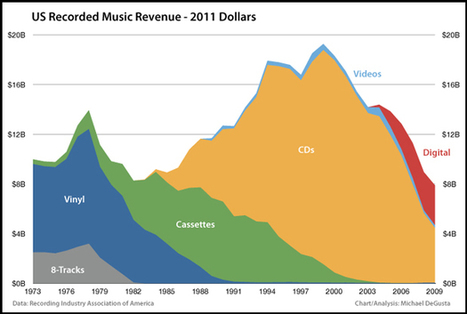
It's much worse than people realize.

Luis Cesar Nunes's curator insight,
March 31, 2015 7:48 AM
We are becoming obsolete as a Charlie Chaplin film, perpetuate the grace of the silent film as the industry is all forward-talkie. 
Colleen Blankenship's curator insight,
March 30, 2016 12:11 PM
The relatively recent decline of music industry, as well as the newspaper industry, are good examples to teach the concept of creative destruction. As jobs are created through new emerging technologies, older jobs will be rendered obsolete and be 'destroyed.' While many bemoan the loss of particular jobs as regrettable, it is a part of globalization of economic geography that as jobs are created with new technologies, other jobs disappear. Indoor plumbing meant the death of the water-carrying guilds (while I might be sad they lost their jobs, I'm keeping my plumbing). The trick is to make these transitions smooth and to prepare the labor force to have skills that the new economy will demand so that individual families and workers aren't casualties of this 'creative destruction' process. Tags: economic, labor, globalization, unit 6 industry. 
BrianCaldwell7's curator insight,
April 5, 2016 8:12 AM
The relatively recent decline of music industry, as well as the newspaper industry, are good examples to teach the concept of creative destruction. As jobs are created through new emerging technologies, older jobs will be rendered obsolete and be 'destroyed.' While many bemoan the loss of particular jobs as regrettable, it is a part of globalization of economic geography that as jobs are created with new technologies, other jobs disappear. Indoor plumbing meant the death of the water-carrying guilds (while I might be sad they lost their jobs, I'm keeping my plumbing). The trick is to make these transitions smooth and to prepare the labor force to have skills that the new economy will demand so that individual families and workers aren't casualties of this 'creative destruction' process. Tags: economic, labor, globalization, unit 6 industry.
Scoop.it!

Republicans and Democrats are more divided along ideological lines – and partisan antipathy is deeper and more extensive – than at any point in recent history. And these trends manifest themselves in myriad ways, both in politics and in everyday life.
A decade ago, the public was less ideologically consistent than it is today. In 2004, only about one-in-ten Americans were uniformly liberal or conservative across most values. Today, the share who are ideologically consistent has doubled: 21% express either consistently liberal or conservative opinions across a range of issues – the size and scope of government, the environment, foreign policy and many others.
Tags: political, statistics, regions, USA.
Luis Cesar Nunes's curator insight,
March 31, 2015 7:57 AM
The right-wing ideology is worldwide, years of racist colonial acculturation, sexist and neoliberal social inequality. The culture industry was filled to disclose these conceptions. 
Eden Eaves's curator insight,
May 24, 2015 8:14 PM
Unit 6 A decade ago, the public was less ideologically consistent than it is today. In 2004, only about one-in-ten Americans were uniformly liberal or conservative across most values. Today, the share who are ideologically consistent has doubled: 21% express either consistently liberal or conservative opinions across a range of issues – the size and scope of government, the environment, foreign policy and many others. 
Chris Costa's curator insight,
September 16, 2015 9:49 AM
Bipartisanship is at an all-time low in this nation's history, which is evident in every facet of our political system; our Congress for the past 10 years has been the most inactive it has been since the 1890's. Party members on both sides of the debate have refused to compromise, leaving many Americans frustrated. The polarization of the parties has been the primary driver of this divide, with ideological and social issues now at the forefront of any political debate, in the place of economic, foreign, and other domestic policies. With this ideological element now added to politics, we see much more aggression in terms of how Americans on either end of the political spectrum now view the other end. Although this is great in the sense that many young Americans are becoming more interested in and more involved with politics, it also leads to incorrect, fragmented views that demonize the opposing party. Americans are finding a shrinking amount of political issues to compromise on, and until we learn to do so, Congress will remain in a gridlock.
Scoop.it!
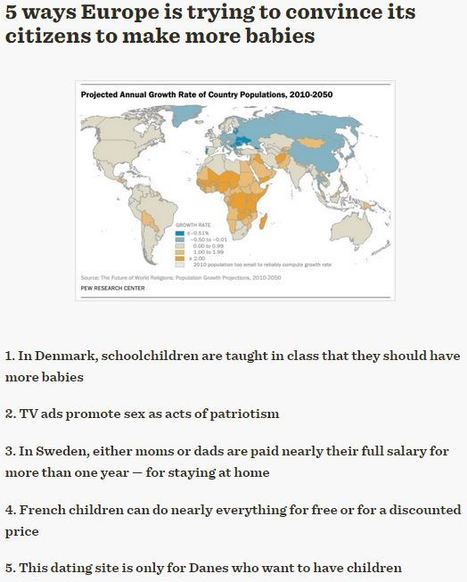
"All over the continent, potential parents have shown reluctance to have more babies. Hence, governments and advocacy groups are becoming increasingly creative about getting their citizens to make babies."
Tag: Europe, declining populations, population, demographic transition model.

Adam Deneault's curator insight,
December 7, 2015 4:32 PM
After reading such an article, I could not understand why someone would not want to have children, especially with the incentives offered by the governments. Clearly it seems as if Denmark is the most concerned because they take up three out of five of the slots for how Europe is trying to convince its citizens to make more babies. In general, the incentives seem to be very good, good enough for someone to want to have children. In Sweden you get 480 days out of work plus 80% of your previous salary, Denmark says if Danes were successful in conceiving a child while being on a vacation organized by the company, they were eligible to win three years of free diapers and a trip abroad and France pays families monthly allowances to their children who are younger than 20, plus discounts. 
Benjamin Jackson's curator insight,
December 13, 2015 3:01 PM
the fact that these campaigns are necessary in this age where migrants are flooding Europe and the birth rate is declining. its amazing that this is necessary, but with the birthrate declining the only other home to insure their economic system continues to function is to get the migrants working. 
Zavier Lineberger's curator insight,
March 13, 2018 11:53 PM
(Europe) Europe, especially in the middle and eastern regions, faces a challenge: population decay. Europeans are having less children so the population rate is decreasing, unlike many parts of the world. In Denmark, instead of focusing only on preventing pregnancy and using contraceptives, educators mention the advantages to having children. Denmark also launched advertisements linking sex to patriotism, gives benefits to couples conceiving during vacations, and created a dating site for citizens who intend to start a family. Nearby Sweden passed a law allowing either the mother or father to be entitled to 80% of their pay for 480 days after their child's birth, eliminating some financial concerns for inability to work during childcare. In France, families with children/young adults under 20 get a monthly federal stipend and heavy discounts.
However, according the accompanying map, the projected annual growth rate of the three countries mentioned are all positive (0.00 to 0.99% growth). This may be because of the mentioned campaigns, but the article does not mention the efforts to remedy this social problem in countries marked in blue. These areas face great population problems in the next decades, and it would be interesting to understand more of their problems.
Scoop.it!
This presentation describes the philosophy behind the European R&D project Big Foot - Crossing Mountains, Crossing Generations focusing on intergenerational lea Via EDEN
Scoop.it!

Neuroscience is changing the meaning of criminal guilt. That might make us more, not less, responsible for our actions Via Greg Downey

Greg Downey's curator insight,
January 5, 2013 6:11 PM
Great long piece on the ways that understandings of automatic action, semi-consciousness and even extremely small brain insults (like tiny tumours or other inconsistencies) might be considered in legal cases as mitigating criminal liability. Well worth a read.
Scoop.it!

WIRE is Amnesty International's global magazine for people who are passionate about human rights. Read about our campaigns and fresh research, meet the people we work for and with, and - most importantly - take action. Via Greg Downey
Greg Downey's curator insight,
March 1, 2013 4:10 PM
Latest issue of Amnesty International's Wire magazine is out -- available for download here. Stories on arms treaties, human cost of Syria, Romani activism, and more. Free to download.
Scoop.it!

Clearly massive hard drives are becoming like attics—places where forgotten things wait to be rediscovered. Yesterday while talking with a friend in the final stages of dissertation writing about t... Via Greg Downey
Scoop.it!
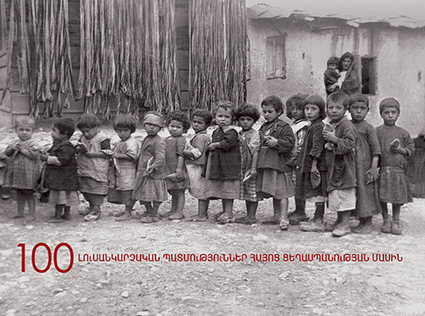
“For most of the world, the Armenian Genocide is the slaughter you know next to nothing about. But every year on April 24, Genocide Remembrance Day, we Armenians remember the injustice of a crime that is rarely acknowledged and often flatly denied. It was April 24, 1915, when the Armenian intellectuals, professionals, editors and religious leaders in Constantinople were rounded up by the Ottoman authorities — and almost all of them executed. During World War I, the Ottoman Empire killed three of every four of its Armenian citizens. The majority of Armenians alive today are descendants of the few survivors.”

Maricarmen Husson's curator insight,
April 17, 2015 7:37 PM
A 100 AÑOS DEL GENOCIDIO ARMENIO Cada año el 24 de abril, día de la conmemoración del Genocidio, nosotros los armenios recordamos la injusticia de un crimen que rara vez se reconoció y a menudo negó rotundamente. Era el 24 de abril de 1915, cuando los intelectuales armenios, profesionales, editores y líderes religiosos de Constantinopla fueron detenidos por las autoridades otomanas - y casi todos ellos ejecutados. Durante la Primera Guerra Mundial, el Imperio Otomano mató a tres de cada cuatro de sus ciudadanos armenios. La mayoría de los armenios vivos hoy son descendientes de los pocos sobrevivientes ". 
Kristin Mandsager San Bento's curator insight,
May 1, 2015 4:17 PM
I have to be honest, I never knew we had a Genocide Remembrance Day. As I get older, there seems to be a day for everything. This is a horrific act. Unfortunately, as we've seen historically many countries have tried this. There is never a good outcome. It's atrocious that we could ever standby and not do something.
Eden Eaves's curator insight,
May 24, 2015 6:24 PM
Unit 3 For most of the world, the Armenian Genocide is the slaughter we know almost nothing about. But every year on April 24,Genocide Remembrance Day, Armenians all over the world remember the injustice of a crime that is rarely acknowledged and often flatly denied. It was April 24, 1915, when the Armenian intellectuals, professionals, editors and religious leaders in Constantinople were rounded up by the Ottoman authorities — and almost all of them executed. During World War I, the Ottoman Empire killed three of every four of its Armenian citizens. The majority of Armenians alive today are descendants of the few survivors
Scoop.it!

African American Dance Company highlights injustice through dance.
|
Scoop.it!

The constant churn affects schools' ability to provide all students with skilled teachers. But professor Richard Ingersoll says schools can fix this without spending a dime. Via Patti Kinney
Scoop.it!

Mr Laing was my year 8 Maths teacher. He was a rare breed indeed. He helped me, and my fellow pimple-clad teens, find mathematics interesting. Intermittently, he would betray a deep excitement about a mathematics problem or reveal that he had woken up in the middle of the night with an answer to some mathematics concept. We were incredulous – being excited by mathematics was anathema. Soon enough, incredulity became intrigue. Over time, he made us think that such interest might be possible for us too. Via Patti Kinney
Scoop.it!

Way up north, in the permafrost, 1300 kilometers beyond the Arctic Circle, is the world's largest secure seed storage, opened by the Norwegian Government in February 2008. From all across the globe, crates of seeds are sent here for safe and secure long-term storage in cold and dry rock vaults.
Dennis Swender's insight:
The significance of this project cannot be overstated. Due to the increasing loss of crop diversity from around the world and in the event of a global catastrophe of agricultural crops from the forces of nature and the actions of man, this project provides a safeguard for the world’s food supply to the benefit of all humanity.
Models that project an end to agriculture as we know it now are accessible to world politicians, economists, and the media. Besides safeguarding the world’s food supply for future generations, this maintenance of the genetic diversity in the world’s food crops is especially crucial to solve the fundamental challenges regarding increasing world hunger, poverty, and food production in Third World countries.
Scoop.it!

London to New York City by car? It could happen if the head of Russian Railways has his way.
Zavier Lineberger's curator insight,
March 15, 2018 3:42 PM
(Russia) In a world of globalization, this considered highway could make the world a little smaller. The Trans-Eurasian Belt Development project intends to create a road alongside the Trans-Siberian Railway, crossing all of Russia to link with roads spanning throughout Europe and connecting to North America through Alaska. The head of Russian Railways did not explain how the road would cross the Bering Strait. There are 55 miles between Russia and Alaska at the narrowest point, and one consecutive bridge would still be half the length of the longest bridge in the world. It is definitely doable. Linking to roads in Alaska and across the continent, a trip from London to New York could be about 12,910 miles, all by car. The road network would apparently pay for itself with weighty economic promise, however Russian Railways provided no information on this financial promise. The highway would connect most of the world, but tense relations between Russia and the US and Europe could hinder progress. Additionally, the road would cost trillions of dollars, take a very long time, and require frequent maintenance, especially across seldom traveled regions in Siberia. 
brielle blais's curator insight,
March 29, 2018 5:20 PM
This showcases how the geography of the world can be linked together to grow the economic stability of each country through easier access to products and goods. By creating the trans-siberean highway, Russia would be connected to the United States by their western coast. This allows access for places once very difficult to travel too.

Kelvis Hernandez's curator insight,
November 1, 2018 11:05 AM
The Russian Railway president has proposed a plan for a Europe to U.S. superhighway. The Trans'Eurasian Belt Development would lead London to Moscow through Siberia, over the Bering Strait to Alaska, through Canada ending in New York. This would take major coordination between all the different countries. You must think about the time, money and effort this would take. From Eastern Russia to Alaska, how would drivers get over the gap? Who would tear through the forests and stretches of land needed to create this?
Scoop.it!

"TeachMideast is an educational outreach initiative developed by the Middle East Policy Council. TeachMideast is a resource designed primarily to give high school and community college teachers the foundation they need to teach about critical , complex, and intriguing subjects."
Scoop.it!
Adam Deneault's curator insight,
December 14, 2015 9:15 PM
Definitely a good way for multi-purpose land use. They are utilizing the space they have conservatively, they really nailed this one on the head coming up with an idea to put a market right on a railroad track. Is this concept even safe or sanitary? Most definitely not. First off, it is not sanitary because that train on a daily basis has gone through all sorts of dirt and the train is literally passing right over the farmer's food that he is still going to sell to customers. Also, probably not the safest, because the people are just inches away from the passing train and with the wrong move, they can possibly fall onto the track and they are dead. I will hand it to them though, they act in an orderly fashion and move swiftly both when it comes and when it leaves. As a matter of fact, they go on with life so well after it leaves, it is almost like the train never passed through in the first place.

Nicole Canova's curator insight,
May 2, 2018 2:57 AM
In one video we see issues surrounding urban development, city planning (or lack thereof), population density, and land use, among other topics. As more and more people move into Southeast Asia's unplanned cities, there will be more crowding and people will have to use every last available inch of land, even if that means going right up to the train tracks. This is a culture shock to people in the West, where most land is single-use only.

Taylor Doonan's curator insight,
May 3, 2018 12:16 PM
Urban planning in a rapidly urbanizing area can be difficult, but in this area two very different urban entities use the land together so beautifully. This market was built around the train tracks and when the train passes through at a slow speed the market clears the tracks and both work together so flawlessly. This is uncommon for us to see because many cities in America had room to grow and expand and had ample planning time because urbanization happened much slower than it is in Asia, with urbanization happening so fast the countries need to use their space flexibly.
Scoop.it!

The Social Progress Imperative creates a shared language and common goals to align different organizations and achieve greater social impact.

Claire Law's curator insight,
April 25, 2015 8:45 PM
Interactive map showing different categories of social progress 
Raychel Johnson's curator insight,
May 26, 2015 10:34 PM
Summary: This article included an interactive map that was based on the Social Progress Index, which is an organization that measures how developed a country is based on the basic human needs available, access to education and healthcare, and personal rights and choices. The general pattern was that developed countries had higher amounts of these things, while developing countries obviously had less. This is similar, but more refined, than the UN Human Development Index, which measures more than just social factors.
Insight: This model can go hand in hand with the UN Human Development Index, which measures the progress of each country on much more different scales. This has been more refined to social issues, but the same patterns can be seen in both indexes.
Scoop.it!
It’s been sixty years since Kroeber and Kluckhohn published their compendium of definitions of culture. I thought it might be fun to engage with this project again. So if you have a favorite ... Via Greg Downey
Greg Downey's curator insight,
December 26, 2012 12:41 AM
Gabriele Marranci and I discovered that we do not agree on the strategy to use when dealing with the conceptual problems surrounding the culture concept. Gabriele tended to favour -- at least as I understood him -- getting rid of the concept. I tend to favour recognizing that it is too broad, that the concept covers too much ground and attempts to solve too many distinctive problems simultaneously. But I still strongly favour the concept, especially as a way of fighting both genetic determinism and universalism.
Scoop.it!
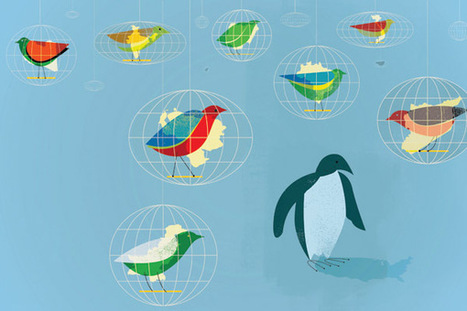
Joe Henrich, Steven Heine and Ara Norenzayan are shaking up psychology and economics with their view of how culture shapes human thought and behavior. Via Greg Downey
Greg Downey's curator insight,
February 26, 2013 4:14 PM
Profile of Joe Henrich's work and an important move to try to change how social psychologists portray human nature.
Scoop.it!

Joe Henrich and his colleagues are shaking the foundations of psychology and economics—and hoping to change the way human behavior and culture is understood. Via Jocelyn Stoller, Greg Downey
Greg Downey's curator insight,
March 3, 2013 3:21 PM
More discussion of the excellent article by Henrich, Heine and Norenzayan. Hope it's making some kind of impact on psychology!
Scoop.it!

"For many students and their families, scraping together the money to pay for college is a big enough hurdle on its own. But a new survey has found that, once on a campus, many students are unwilling or unable to come up with more money to buy books—one of the very things that helps turn tuition dollars into academic success." Via EDTECH@UTRGV
|






