


"In 2013, China replaced Mexico as the top sending country for immigrants to the United States. This followed a decade where immigration from China and India increased while immigration from Mexico decreased."

 Your new post is loading...
 Scoop.it! "In 2013, China replaced Mexico as the top sending country for immigrants to the United States. This followed a decade where immigration from China and India increased while immigration from Mexico decreased." 
Scoop.it!

Beginning in the 1950s, cities demolished thousands of homes in walkable neighborhoods to make room for freeways.
At the time, this was seen as a sign of progress. Not only did planners hope to help people get downtown more quickly, they saw many of the neighborhoods being torn down as blighted and in need of urban renewal. But tearing down a struggling neighborhood rarely made problems like crime and overcrowding go away. To the contrary, displaced people would move to other neighborhoods, often exacerbating overcrowding problems. Crime rates rose, not fell, in the years after these projects. By cutting urban neighborhoods in half, planners undermined the blocks on either side of the freeway. The freeways made nearby neighborhoods less walkable. Reduced foot traffic made them less attractive places for stores and restaurants. And that, in turn, made them even less walkable. Those with the means to do so moved to the suburbs, accelerating the neighborhoods' decline.

Shane C Cook's curator insight,
May 27, 2015 4:00 AM
It is really interesting to see how urbanization has affected not just us today but our parents and grandparents. Of course with innovation includes consequence whether good or bad it happens. Go America! 
Ryan Tibari's curator insight,
May 27, 2015 10:16 AM
Industrialization changed not only the physical face of cities, but also the social. Innovations such as highways have caused transportation to become widely easier, allowing people from all different regions of the city to travel easily back and forth from place to place.
Scoop.it!
"The reason why some countries are rich and others poor depends on the quality of their institutions, the culture they have, the natural resources they find and what latitude they're on."
Tags: development, statistics, economic, globalization, poverty.

Kaitlyn Evans's comment,
July 30, 2015 5:24 AM
I'm not sure if I believe everything this video stated, however I think it is a good topic to analyze. I think it would be interesting to see how the rich countries became rich. They can't just have started on top. I also believe the rich countries abuse the poor countries because we can get goods/minerals/just about anything for a small price and then sell it in the rich country for much more.

Adrian Bahan (MNPS)'s curator insight,
March 14, 2016 7:49 PM
I can't say I agree with all the arguments put forward in this video, it can still be a nice starting point to get students to critically analyze the ideas put forth and assess the merits of the claims being made.
Scoop.it!
"Papua New Guinea gained independence from Australia in 1975 and has over 800 languages; 87% of the population lives in rural areas."
Tags: Papua New Guinea, Oceania.

Matthew Richmond's curator insight,
December 7, 2015 2:49 PM
Re-scooped from Professor Dixon's page, some of the stats are mind boggling and they are actually portrayed as being good. For example, while 87% of the population is rural, 58% are literate. I figured the literacy numbers would be rather poor in a country where the entire population lives in rural areas, but I didn't think that 58% literacy would be something worth bragging about. Maybe except in North Korea. 
Taylor Doonan's curator insight,
May 3, 2018 12:55 PM
Papua New Guinea is a very unique country, it has an extremely diverse population and speaks more languages than any other country in the world. There are over 800 languages spoken in Papua New Guinea. This country is very interesting, they became independent from Australia in 1975 and have been slow to urbanize. Many of the countries villages are so un-urbanized that they can only be reached on foot, and many of the hundreds of languages that are spoken are only spoken on one of the villages that does not connect with another village. The country also struggles with clean drinking water and bathroom facilities. There is malnutrition across the country, but despite the difficulties the country faces they are improving their education and becoming a better country.

Kelsey McIntosh's curator insight,
May 3, 2018 10:37 PM
This video let’s us see into the world of Papua New Guinea. Even though it is Australia’s neighbor, the video focuses on the poverty and inequality that plagued the nation. PNG has extremely low life expectancies, birth and literacy rates. The country has over 800 languages and cultures that are all significantly different. Nearly half of the girls have not been educated, and some people experience extreme poverty without access to clean water and plumbing.
Scoop.it!

By Nancy Murphy
Through Rina and Open a Door, I’m witnessing first-hand the critical role that education plays in building a new generation of leaders and ultimately, peace and prosperity. Yet given the few scholarships available to international students, especially for those with low income levels, few can pursue the dream of a U.S. college education. And despite huge improvements in sub-Saharan Africa, the higher education opportunities there remain limited in number, accessibility, and quality. Deeply entrenched cultural attitudes toward women further constrain their real and perceived opportunities. Massive Open Online Courses, also known as MOOCs, may help fill that gap, transforming the lives of women who are hungry to learn and, by extension, their communities, and countries. That’s why it’s so thrilling to see MOOCs take off in Africa and teach us Westerners a lesson or two about educational innovation.
Scoop.it!

Quadcopter drones are being used in a Chinese province to help identify cheating during the high-stakes gaokao exam. Via EDTECH@UTRGV
Scoop.it!

By Shannon M. Wilkinson Every week it seems another major American brand is in crisis. Despite a large industry of experts dedicated to fixing them, these crises only seem to be getting more frequent and damaging. Via Annabel Kaye

Annabel Kaye's curator insight,
September 1, 2014 3:21 PM
Is diversity correlated with corporate success?
Scoop.it!

Despite having the second-highest GDP, the U.S. falls shorts on basic human needs, health and wellness, and education. Via Jocelyn Stoller, Kristen Magis
Scoop.it!
Melbourne Graduate School of Education Dean's Lecture from December 2011. Measurement invades so many aspects of our life, particularly in our schools. Indee...
Dennis Swender's insight:
Assessment equity rationales
Scoop.it!

"I think the time has come for the international community to stop giving the Palestinians a free pass," Netanyahu says in meeting with Czech FM Zaora'lek. Via Grace Christian Kisame K
Scoop.it!

A perfect storm of fighting between government and rebel troops, tribal clashes and population displacement has stifled humanitarian relief in the region Via Grace Christian Kisame K, Jocelyn Stoller
Scoop.it!

This is the sixth part in Francisco Goldman’s series on the missing students from the Ayotzinapa Normal School. He has also written “The Disappearance of the Forty-Three,” “Could Mexico’s Missing Students Spark a Revolution?,” “The Protests for the Missing Forty-Three,” “An Infrarrealista Revolution,” and “Who is Really Responsible For the Missing Forty-Three?” Via Jocelyn Stoller
Scoop.it!

The way to eliminate bullying on your campus is to improve school culture. Here are the questions to ask to analyze your school culture, and where to go from there. Via Suvi Salo, Mark E. Deschaine, PhD, Dennis Swender, Jim Lerman

Dennis Swender's curator insight,
May 29, 2015 4:35 AM
Practical applications for one of James Banks' 5 Dimensions of Multicultural Education: An empowering school culture and social structure |
Scoop.it!
A set of Supreme Court decisions made over 100 years ago has left U.S. territories without meaningful representation. That’s weird, right?

Tanya Townsend's curator insight,
October 12, 2015 10:57 PM
This was amazing! I love him! I am embarrassed to admit that i had no idea about any of this. I did not know that those territories were part of my country. This populations complete commitment to serving our country without any of the benefits is jaw dropping. We should be completely ashamed of our selves. I am honestly completely surprised that even in today's day in age this hasn't been fixed. Everything about this is unconstitutional. How this case loses in a court is beyond me. One of the things that stood out to me the most was the fact that 67% of Guam shows up to vote in though their votes dont count and yet only 61% of all of the US does...that embarrassing. We have clearly taken for granted our freedom to vote. 
Mark Hathaway's curator insight,
December 3, 2015 8:50 AM
The plight of our territories is a smudge on our nations character. The most controversial of these issues is Puerto Ricos status as a territory of the United States. Puerto Ricans are United States citizens by law, yet they have no representation in their government. They can not vote in presidential elections, have no real representation in the congress except their non voting delegate, and they have no representation in the electoral college. Something must be done, to rectify this situation. A possible solution may be to pass a 23rd amendment for Puerto Rico. The 23rd Amendment provides residents of the nations capital the right to vote, and representation in the electoral college. DC is given a number of electoral votes equivalent to the least populous state. That number is 3 electoral votes. The amendment does not provide DC with representation in the Congress. This Amendment has been controversial since the time of its ratification in 1961. Congress later repealed the amendment with a new DC voting rights amendment that gave DC representation in Congress. The new Amendment failed to garner enough support amongst the states for ratification. To me the 23rd Amendment solution is the best possible compromise. It gives Puerto Rico representation, while persevering the rights and sanctity of the states. 
Kelvis Hernandez's curator insight,
December 14, 2018 5:13 PM
John Oliver always does a great job discussing important topics such as this the rights of people in U.S. territories. People who live on the island territories are U.S. citizens but have no real representation. Each gets one representative in the house who has no voting power and the people are not allowed to vote for president or have a senator. From the land of freedom, this is a terrible injustice. If these people are U.S. citizens than they deserve the rights of the constitution. 1
Scoop.it!
Facing ethnic discrimination, China's Uighurs and Tibetans have fallen behind as the rest of the country surges ahead

Chris Costa's curator insight,
October 19, 2015 12:59 PM
"Can't we all just get along?" Ethnic discrimination exists in every industrialized society in every part of the globe, the result of poverty, ignorance, hatred, and various peoples now confined to national borders that do not suit their needs. Chinese discrimination against ethnic Tibetans has long been documented and observed within the West, meeting the condemnation of much of the Western world, so it was interesting to learn about the Uighurs and their plight in Chinese society- I was unaware that China had any significant Muslim populations. To learn that Chinese government officials attempted to evict and ethnic Uighur from her apartment simply for being of her ethnicity is appalling, and something that one can only hope will stop in the future. Is America in a position to judge others for how they treat their ethnic minorities? Not at all- just look at the demographics of our prison system and our families who fall below the poverty line, or our treatment of Native Americans only 100 years ago. Such racism has long been a facet of human civilization, and it is up to us to make it a thing of our past and not of our future. Can we all get along? I hope so. 
Alex Vielman's curator insight,
December 15, 2015 1:02 AM
This video is a clear example of how the Uighurs and the Tibetans have been left out of the economic boom of China. China is known for being perhaps the biggest economic power in the world, the main concern is that how is it that not everyone is benefitting from the situation? These Uighurs and Tibetan minorities are suffering from the power China has. This video shows that the rural areas in the country are suffering. Some people have moved to the city but some people have stood by to there rural roots. The minorities reject the city because they get discriminized for who they are. They don't know the language, and usually would be provided with lower wage jobs. These people prefer to stay in there rural areas but it is still important to help these people but providing a better education. 
Martin Kemp's curator insight,
December 17, 2015 3:43 PM
this is kind of a weird situation. places like tibet have the opportunity to move to places in china with great economic opportunites, but since they are treated as different and since they have pride as tibetans and want to stay in their land, they end up staying and remaining a primarily farming country and being left out of the chinese economic boom.
Scoop.it!

"The U.S. is bound by treaties to defend a quarter of humanity. Could this drag Americans into a war?"
Tags: conflict, USA, war, political.

Kevin Nguyen's curator insight,
September 16, 2015 1:26 PM
Even though U.S are bound by treaties to defend her allies, it's the political leaders that will be the decisive factor on an full-scale war or not. Depending on the nation's interests risking a full on war will result in catastrophe for both sides. The U.S could simply aid her allies and send in a few thousand troops and supplies to help. Getting fully involved in another nation's war would just backfire and in some cases make the situation even worst. 
Fred Issa's curator insight,
October 5, 2015 4:20 PM
With all of our Mutual defense Treaties, that we agreed to protect about 25% of the world's population, could this get us entangled into new wars? A must read. Fred Issa,
Scoop.it!
"The U.S. is bound by treaties to defend a quarter of humanity. Could this drag Americans into a war?"
Tags: conflict, USA, war, political.
Kevin Nguyen's curator insight,
September 16, 2015 1:26 PM
Even though U.S are bound by treaties to defend her allies, it's the political leaders that will be the decisive factor on an full-scale war or not. Depending on the nation's interests risking a full on war will result in catastrophe for both sides. The U.S could simply aid her allies and send in a few thousand troops and supplies to help. Getting fully involved in another nation's war would just backfire and in some cases make the situation even worst.
Fred Issa's curator insight,
October 5, 2015 4:20 PM
With all of our Mutual defense Treaties, that we agreed to protect about 25% of the world's population, could this get us entangled into new wars? A must read. Fred Issa,
Scoop.it!
Top 10 of the most unique, revolutionary and some even bizarre classrooms where elementary and high school students attend around the world. Subscribe to our...
Scoop.it!

(Brennan Linsley/AP Photo) WASHINGTON — Former President Bill Clinton warned Saturday night that despite great gains for the gay and transgender community, the lines of gender and race in politics could still cast a shadow in the years ahead. Via bobbygw, Deanna Dahlsad
Scoop.it!

While 90 percent of school-age children around the world attend primary school, Rebecca Winthrop and Eileen McGivney look at the large gap that persists in average levels of attainment and learning globally, writing that without a fundamental... Via Mark E. Deschaine, PhD
Scoop.it!
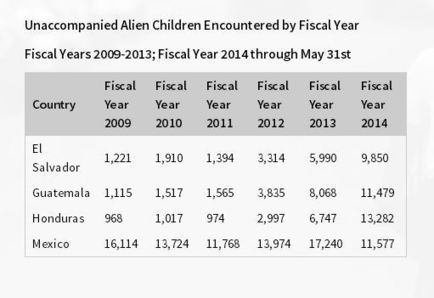
The Obama Administration is scrambling to provide more long-term shelter space for the wave of children coming from Honduras, Guatemala, and El Salvador. Via Wendi Pillars
Scoop.it!

Scoop.it!

The Taliban's massacre of more than 100 students caps an awful year for the world's children. Via Jocelyn Stoller
Scoop.it!

What's one way to get more teachers interested in working in low-income schools? A new paper suggests one possibility: Give them opportunities to do their student-teaching in such schools. Via Mel Riddile
|







Push and pull factors, and migration in relation to employment and quality of life-
This article explains how China in 2013 had more immigrants going to the US than Mexico. The reasons why were because of jobs and better life styles in the US.
This article represents push and pull factors, and migration in relation to employment and quality of life by showing why china had more immigrants going to the US because of job opportunities and better life styles.
I can already imagine the reactions I would receive from a couple of people I know if I were to post something like this on Facebook. Too often, popular opinion trumps fact, which contributes to the continued existence of stereotypes and inherently racist beliefs/institutions. I find it particularly humorous that the bulk of anti-immigration sentiment is cast at the Hispanic-American population now knowing that they do not even compromise the largest immigrant populations now entering the country! It makes it painfully obvious that this hate of Hispanic immigrants held by many Americans is less about "job security" and more about racism. I will, however, point out that the census bureau doe not account for illegal immigration to my knowledge, and I would be interested to see how this would affect the data presented in this article.
accompany "What is Normal" vidoe