


"Researchers find that the AI industry is build on geographic and social inequality, but opportunities exist to change this ..."
Via Leona Ungerer

 Your new post is loading...
 Scoop.it! "Researchers find that the AI industry is build on geographic and social inequality, but opportunities exist to change this ..." Via Leona Ungerer 
No comment yet.
Sign up to comment
Scoop.it!

"Having seen revenue plummet at brick-and-mortar stores this year, global brands are using China to experiment with more innovative retail strategies ..." Via Leona Ungerer
Scoop.it!

Join our community of activists and help you make a difference for those who faced discrimination and racism at some point in their lives! You can share your reviews and experiences because your voice matters. Via LunchBait
Scoop.it!
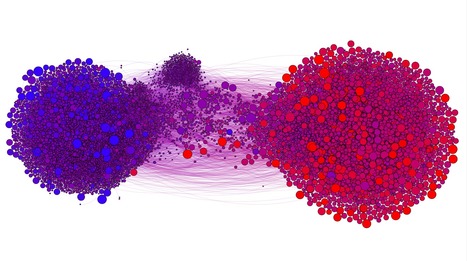
We analyze the relationship between partisanship, echo chambers, and vulnerability to online misinformation by studying news sharing behavior on Twitter. While our results confirm prior findings that online misinformation sharing is strongly correlated with right-leaning partisanship, we also uncover a similar, though weaker, trend among left-leaning users. Because of the correlation between a user’s partisanship and their position within a partisan echo chamber, these types of influence are confounded. To disentangle their effects, we performed a regression analysis and found that vulnerability to misinformation is most strongly influenced by partisanship for both left- and right-leaning users. Read the full article at: misinforeview.hks.harvard.edu Via Complexity Digest
Scoop.it!

· Research shows group members equate creativity with conformity. Creativity is a much coveted asset for a very simple reason: an idea that transcends orthodoxy has the power to bring wealth, fame and status. Via Jim Lerman
Scoop.it!
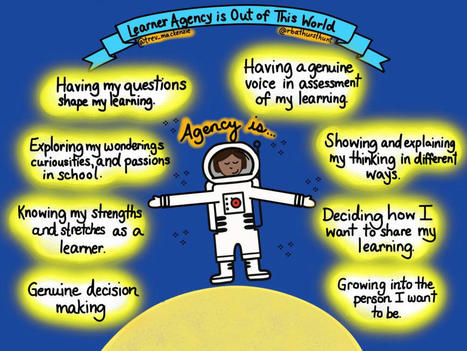
The term “student agency” continues to be at the forefront of the educational discourse around the world. By encouraging children to have more control over their learning, educators hope students will leave our classrooms and schools with a range of skills that will support them in being lifelong learners, engaged humanitarians and empathetic people. Via John Evans, GwynethJones

elvan's curator insight,
March 16, 2021 1:21 AM
https://romiosupplystore.com/ https://romiosupplystore.com/product/buy-garcinia-cambogia-extract-online/ http://romio.bloguetechno.com/Buy-Xanax-online-without-prescription-31452154 http://romio6.bloguetechno.com/Buy-Helex-online-31505573
http://romio11.bloguetechno.com/Buy-Rohypnol-online-31589253 https://cuteteacuppups.com/available-pups/

rociograciela's curator insight,
March 23, 2021 6:17 AM
https://romiosupplystore.com/ https://romiosupplystore.com/product/buy-garcinia-cambogia-extract-online/ http://romio.bloguetechno.com/Buy-Xanax-online-without-prescription-31452154 http://romio6.bloguetechno.com/Buy-Helex-online-31505573
http://romio11.bloguetechno.com/Buy-Rohypnol-online-31589253 https://cuteteacuppups.com/available-pups/
Scoop.it!

H&M proposed one solution last month: Looop, a machine in its Stockholm store that shreds old garments into new ones over the course of five hours. “The purpose of it is to engage our customers and help them understand their old garments have value,” explains Pascal Brun, H&M’s head of sustainability. “It’s also about making sure they experience the process of recycling, so it triggers behavioral change.” Looop is still in its early stages, so its capabilities are limited; it likely can’t recycle blended materials, which are difficult to separate, and zippers or hardware might pose a challenge. But Brun says they’re improving it day by day, so Looop will eventually be able to recycle many types of fibers and garments. Via Beeyond
Scoop.it!


malek's curator insight,
November 26, 2018 7:51 PM
Our students enter at around age 5 and have some 13 years to attain a high school diploma. Failure to earn a diploma is a dead end for most. In the United States, when students fail at school — or leave due to many other factors, sometimes just as resistant teenagers — we are done with you. Sure, there are outliers who are successful through luck, sweat, connections or all three, but for most, the lack of a diploma is a serious obstacle toward advancement.
Scoop.it!
Three leading practices to meet increasing expectations around diversity, equity and inclusion in ESG reporting.
Scoop.it!
Watch Part 2 here: https://youtu.be/0__XpC6c-bQ
Scoop.it!

New Pearson and Wonkhe research on students' learning experience finds that, despite their struggles with studying during Covid-19, students are open to flexible learning post-pandemic. Anna Jackson breaks down the findings. Via Nik Peachey

Nik Peachey's curator insight,
February 5, 2021 12:57 AM
What university leaders may consider heartening and daunting in equal measure is that there are very few elements of online learning and teaching that the students we surveyed would not like to see continue after the pandemic. 
LGA's curator insight,
February 5, 2021 3:25 AM
What university leaders may consider heartening and daunting in equal measure is that there are very few elements of online learning and teaching that the students we surveyed would not like to see continue after the pandemic.
Scoop.it!

A viral video of an international student being slapped on Tuesday draws attention to a much wider problem of exploitation - and that will hurt Australian universities already suffering from the pandemic. Via Peter Mellow
Scoop.it!

The Pentagon does not really know Via Rob Duke

anisah lorenz's comment,
March 6, 2022 11:51 PM
This is a touchy subject because you have to rationalize civilian deaths against potential security threats. It is sad that civilians had to die. Their lives deserved more than what they were given. It is never easy to compare the lives of many vs a few; all are important.

Malia Main's comment,
April 4, 2022 5:54 PM
I can understand the point of these airstrikes. I do. However, there should be as many precautions taken as humanly possible to limit the amount of civilian casualties. How can you just overhaul all the steps taken to ensure innocent lives aren't lost? The 'war on terror' has been going on how long now, and are we really any further along now than we were when we started? You can't just massively disrupt and ruin the lives of countless innocent bystanders and not expect consequences for that down the road.

Brandon Davis's comment,
April 7, 2022 7:16 PM
This is always a hard subject to look at. I don’t think we do enough to protect innocent civilians from airstrikes and this should be prioritized. At the same time, without excusing this very serious fact, airstrikes are an effective way of killing terrorist leaders that have the potential to kill a lot of people through their influence. While civilian casualties have typically been written off as collateral damage during war, can this same justification be used in countries where our military isn’t physically located? It’s a tough situation all around.
|
Scoop.it!

"Furloughs, passengers who won’t wear masks and tense political confrontations contributed to a year of perpetual chaos for flight attendants. “It’s insane,” one veteran attendant said ..." © Via Leona Ungerer
Scoop.it!

"In just six years, the number of Chinese people getting married for the first time has fallen by a crushing 41% -- partly due to changing attitudes to marriage, especially among women ..." Via Leona Ungerer
Scoop.it!

Diversity is defined as the practice or quality of including or involving people from various social and ethnic backgrounds and of different genders or sexual orientations. This is diversity in theory, but what does this look like in practice? Check out our blog post to know what real diversity looks like! Via LunchBait
Scoop.it!

William Blum was an employee of the US state department who became aware of the scale of US crimes abroad and decided to document them. His book, Rogue State, is one of the best beginner’s guides to understanding what really goes on in the world. He created the following list to show the countries where the US government has committed its most serious crimes since 1945.
(Adapted From: William Blum, Rogue State: A Guide To The World’s Only Superpower) Via ThePlanetaryArchives/BlackHorseMedia - San Francisco
Scoop.it!

Australia's first Indigenous digital skills training program is giving Aboriginal students the opportunity to create animated worlds from their elders' stories — and connect with culture in the process. Via NextLearning
Scoop.it!

The pandemic has caused many problems, as well as amplifying existing issues that England’s higher education system already faced. The numbers of young people entering HE has been increasing, and following the turbulence of 2020, there was a further increase in offers and acceptances. This additionally emphasizes the importance of high-quality provision so that this cohort do not miss out on the rich student experience their predecessors gained. Via Edumorfosis
Scoop.it!

Literacy, Equity + Remarkable Notes = LEARN invites both K-12 and post-secondary educators to a year of social reading, collaborative web annotation, and public conversation.
Scoop.it!
Scoop.it!

Join our guides on video tours of the Museum’s galleries and architecture. Check out Museum exhibits and stories about human rights defenders and history. Discover our many special online experiences. Via Dr. Tom D'Amico (@TDOttawa)

's curator insight, February 5, 2021 2:17 PM
It is said that nothing is quite like being there, but making a tour virtual is one way to assure accessibility.

reuvenwerber's curator insight,
February 7, 2021 4:43 AM
Join our guides on video tours of the Museum’s galleries and architecture. Check out Museum exhibits and stories about human rights defenders and history. Discover our many special online experiences.
Scoop.it!

Want to address implicit bias in your organization but not exactly sure where to start? Whether you found out bias exists through an unfortunate claim or lawsuit, or through being proactive and having an Implicit Bias Audit done, I’m here to help you figure out the next steps for mitigating your risks and putting a audacious action plan in place to eliminate bias for good. Via Elizabeth E Charles
Scoop.it!

Students explore social justice and injustice through poetry and song and write poems from their own perspective about social justice. Via Filomena Gomes
|






