Your new post is loading...

|
Rescooped by
Dennis Swender
from Box of delight
November 22, 2019 5:50 AM
|
Matching talent, skills and work culture can be one of the biggest challenges faced by the management in any organization. An inclusive workplace is a working environment that values the individual and group differences within its work force. It helps make diverse employees feel valued, welcome, integrated and included in the workforce instead of unappreciated, ignored, and isolated.
Via Elizabeth E Charles
|
|
Rescooped by
Dennis Swender
from Geography Education
November 12, 2019 11:07 AM
|
|
|
Rescooped by
Dennis Swender
from Digital Delights
November 12, 2019 10:55 AM
|
It has recently been suggested that to support the development of open access (OA) in Europe, access to open research might be ‘geoblocked’, or limited, to those countries that were involved in fun…
Via Ana Cristina Pratas
|
|
Scooped by
Dennis Swender
November 4, 2019 1:52 PM
|
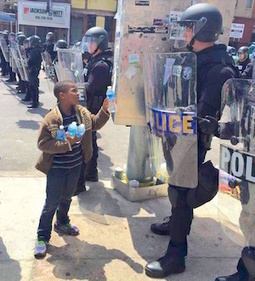
A third-year engineering student at Purdue University and United States citizen from Puerto Rico, grabbed what he needed and went to pay at a self-service checkout.
Research into young people’s experience of sending and sharing nude and nearly nude images — otherwise known as ‘sexting’.
Via John Evans
|
|
Rescooped by
Dennis Swender
from Digital Delights for Learners
November 4, 2019 1:06 PM
|
|
|
Scooped by
Dennis Swender
November 2, 2019 12:43 PM
|
This article takes a look at a graph database that is helping to solve world hunger.
|
|
Rescooped by
Dennis Swender
from Media Literacy
November 2, 2019 12:23 PM
|
Frank Baker writes: " Every one of the iconic images I’ve shared here has a story behind it. Your students could investigate the story behind the image. Students can research the photographer and the circumstances surrounding how the image came to become iconic. I also encourage you to think about how you might use memorable images as jumping off points to stimulate your students’ writing in both non-fiction and fiction. Our students now are constant consumers of visual information. These skills are vital to their critical thinking, problem-solving, and effective citizenship."
Via Mary Reilley Clark
|
|
Rescooped by
Dennis Swender
from Common Core ELA
November 2, 2019 12:18 PM
|
Sylvia Vardell writes: "It’s been 50 years since the signing of the Civil Rights Act, in 1964, when discrimination on the basis of race, color, religion, sex, or national origin became against the law. It may be difficult for children today to imagine a world in which such discrimination was a common practice, but it is important that we recognize the ongoing effects of such prejudice and pause to celebrate the progress the U.S. has made as a nation. That’s where literature can be especially powerful in capturing the pain of the past, the ongoing fight for justice, and our hopes for the future."
Via Mary Reilley Clark
|
|
Scooped by
Dennis Swender
October 25, 2019 3:20 PM
|
We'll file this one under "Things that ended up in North Korea". When it first opened in 1988 on Australia's Great Barrier Reef, it promised "paradise at sea"; a floating seven-storey mega structure with nearly 200 rooms, nightclubs, bars, restaurants, a helipad, a tennis court and a 50-seat underwa
|
|
Scooped by
Dennis Swender
October 21, 2019 2:21 PM
|
Mats Järlström's fight shows you never cross an engineer
|
|
Scooped by
Dennis Swender
October 21, 2019 1:17 PM
|
The Colorado River serves over 35 million Americans before reaching Mexico – but it is dammed at the border, leaving locals on the other side with a dry delta
With stunning photos and stories, National Geographic Explorer Wade Davis celebrates the extraordinary diversity of the world's indigenous cultures, which are disappearing from the planet at an alarming rate.
Via Ana Cristina Pratas
|
|
|
Rescooped by
Dennis Swender
from Digital Delights for Learners
November 17, 2019 12:26 PM
|
"Last week EDEN held a webinar on "The journey to social justice and openness in ODL" which was part of the European Distance Learning Week. One of the themes that resonated strongly with me, was one of equity among learners. ""Throughout the years that I have maintained this blog, I was always aware of the digital divides in education - the places where internet and digital devices were easily available and the places which these were often dreams to attain. Teaching with access to the digital in say, the UAE or in Europe, is very different to teaching with educational technology in Nepal, for instance, where at the time when I was there, even access to electricity was a tremendous challenge.'
Via Ana Cristina Pratas
What if teachers could lead without leaving the classroom—and in doing so, incubate and execute their own policy and pedagogical ideas? In recent years, the Center for Teaching Quality has supported two dozen teacherpreneurs — expert teachers who typically have a reduced teaching load of 50% — to lead bold reforms at the school, district, state and national levels. In partnership with districts (and with philanthropic financial support), teacherpreneurs like Noah Zeichner, Ali Wright, Jessica Cuthbertson and Julie Hiltz have achieved remarkable results for students, schools and the profession. These classroom experts have generated powerful proof points for CTQ’s bold brand of teacher leadership, documented in a series of case studies. Their experiences have also yielded “lessons learned” that we can share with others interested in this model:
Extra time yields extraordinary results.
The best teacherpreneurs “lead from the middle.
Technology keeps teacher leaders connected with the world while based in the classroom.
Relationships matter.
Blurring the lines between policy and practice makes each stronger.
When educators can teach and lead, they and their schools benefit.
Learn more:
Via Gust MEES
|
|
Rescooped by
Dennis Swender
from Digital Delights for Learners
November 12, 2019 8:49 AM
|
|
|
Rescooped by
Dennis Swender
from consumer psychology
November 4, 2019 1:15 PM
|
"South Koreans are rejecting Japanese goods in droves. The grassroots boycott is steeped in a bitter history, but with the two nations so entwined, the movement is not without contradictions ..."
Via Leona Ungerer
He is well known for crafting a variety of artifacts to promote and preserve the cultures of various tribes in Western and Nyanza region.
Kassim Akhwale, aged 54 years, has made this a lifetime passion, because, “of my love for African cultures and as the best way to use my creative arts talent.”
He has exhibited his art collection across East and Central Africa, under the category of Cultural Arts, that includes attires, ornaments, regalia, musical instruments, utensils and furniture.
Tools of African arts are drawn from nature, mainly from products of plants,birds and animals,which are readily available.
“This makes the artform cheaper than the others, which depend on industrial raw materials and tools,” he said. He therefore utilises tree barks, sisal fibers, seeds, gourds, grass , sticks, bones, feathers, hides and horns.
Akhwale mainly works by hand in weaving, shaping and decorating his products mostly under tree shades in Kisumu and Kakamega towns, but also at his home, in Mumias East Location.
“Where need be, I just use simple hand tools, such as knife, panga, hammer, broken glass and chisel.”
His main markets in Western and Nyanza regions, are traditional dancers, singers and instrument players, for whom he makes sisal skirts, head gear, arm bands, tunics and musical instruments such as drums, horns, gongs, African violin, nyatiti and isikuti.
The artist said he teaches himself how to play the instruments, to enable him test the quality of their performance for customers.
Cultural leaders of the Luo, Bukusu, Iteso, Batsotso, Wanga and Marama, are also his customers for ceremonial attires and regalia, that include goat skin aprons, neck garlands, hats and belts. Even political leaders do buy his fly whisks, walking sticks, decorations and ornaments.
His photo album shows him presenting some of his artefacts to various prominent leaders , among them Deputy President William Ruto, Kakamega Governor Wycliffe Oparanya, Mumias East MP, Benjamin Washiali and some past envoys to Kenya at diverse functions.
The creative artist also supplies part of exhibitors with various artifacts during the Bukhayo, Maragoli,Wanga , Luo and Bunyore cultural festivals.
Akhwale also gets hired to make for schools and colleges skits and decor, for cultural content, in music and drama festivals saying, “I’m keen to market in the educational institutions, because the youth there should be exposed to cultural artefacts for continuity.”
Women enthusiastic about African accessories , also buy his earrings, necklaces, hats, bags and bangles, made from beads, shells, seeds , feathers and bits of porcupine spines.
He sells such items directly or supplies some boutiques in Kisumu and Kakamega towns.He has supplied me with value added accessories for five years, and these are popular with my clients keen on African products,” said Janet Abong’o, a business woman at Kondele Estate in Kisumu town.
It is apparent that his passion and talent encompasses all sectors of cultural life, as you can also spot some of his artifacts in homes and houses, among them brooms, vessels, carpets, baskets, tables and stools, all made from grass, reeds and sticks. Even in some public and private offices , you would find pen holders, trays and waste baskets, made by him from the same materials.
To add value to beauty accessories and decorations, Akhwale uses paint, junk copper wires, aluminium foil and nylon strings.
“ I gather my raw materials from bushes and junkyards, where I get items to re-cycle, and that way, also help in cleaning the environment,” he stated.
For grasses and reeds that do not grow easily in the wild, he has set aside gardens for growing them.
Akhwale also makes puppets and paraphernalia that have been used by certain tribes in games and traditional rites over generations.
To keep abreast with the diverse needs of his customers, the artist says he attends many cultural and creative arts workshops, consults experts, watches cultural films, and reads reference books.
He promotes his products and passion for African culture by participating at Agricultural Shows , Field Days and Trade Fairs, in Western and Nyanza regions, and at local technology exhibitions across East and Central Africa.
Through the Ministries of Culture, Trade and Technology over the years, Akhwale has exhibited in Nairobi and Mombasa and in , Uganda, Tanzania, Rwanda and Burundi.
He forlornly, showed a letter that had invited him to exhibit in South Africa in 2017, but failed to attend because he was unable to raise Sh.25,000 needed by the event organisers.
The cultural artist remembers that in Kakamega last year, during the Devolution Conference, he made good business, “because participants from other counties. I had items that would remind them of the region. He said the organisers asked him to make a traditional table that was to be presented to President Uhuru, after opening the conference, but he did not turn up in person, but instead addressed participants through video link.
“The event organisers however assured me the gift was taken to the President in Nairobi.”
During such events, and orders for festivals, the artist can sell products worth up to Sh.50,000, compared to other times, that he could get as low as Sh.2,000 a month.
He recalled that in 1997, he caught the attention of former President Moi, with his towering puppet that depicted the Kanu cock.
“Moi had come to Butere, and I was singing in praise of the party, and dancing with my puppet, then the President joined in, congratulated me for patriotism, then pressed on my palm Sh. 20,000.”
Akhwale’s talent for creative arts emerged early when he was at Kamashia Primary School in Mumias East, and at Namulungu Secondary School, in Matungu sub-County, where he dropped out at Form Two, for lack of fees, in 1984.
But dropping out of school did not dampen his creative spirit instead he has soldiered on despite the low market and fluctuating income, for indefinite periods.
“I only sell well during shows and exhibitions, but other times many people in my catchment areas are not enthusiastic about African items,” he said. The artist therefore feels that his market would have been better if he could afford to rent town centre shops, along roads where tourists and the elites, who appreciate African art pass.
To boost the market for his products, the artist said he also needs a working capital of at least Sh.1 million to supply customers who make bulk orders for his products during regional exhibitions.
Despite the fluctuating earnings, Akhwale says he still derives satisfaction from the passion of preserving and promoting African cultures, through his talent in creative arts.
By Paul Olale
Via Charles Tiayon
|
|
Scooped by
Dennis Swender
November 2, 2019 1:15 PM
|
The ambitious attempt to standardize learning across the country known as Common Core can now be measured and the news isn't good. ACT scores are down, as is college readiness among those who spent all of high school with Common Core.
|
|
Rescooped by
Dennis Swender
from Media Literacy
November 2, 2019 12:23 PM
|
Anna Blow writes: " When we comment on news stories, most of us hope to say something about the topic at hand — even (or maybe especially) if it’s that the author got it all wrong. But what do the comments we leave say about us — about our beliefs, our biases and how we act when the ordinary rules don’t apply? And how do our comments affect the beliefs of others?
Via Mary Reilley Clark
|
|
Rescooped by
Dennis Swender
from Common Core ELA
November 2, 2019 12:19 PM
|
Annie Murphy Paul writes:
“A man who traveled from Liberia to visit family members in Texas tested positive for Ebola on Tuesday, marking the outbreak’s first diagnosis outside of Africa, health officials said.” That’s a pretty standard lead-in for a news story, pitched at the level of a newspaper-reading adult. But it’s a long, rather complex sentence, and a younger reader would likely find it easier to digest if it were broken into two parts. The lead would then start off: “A man who traveled from Liberia to visit family members in Texas tested positive for Ebola on Tuesday.”
Via Mary Reilley Clark
|
|
Rescooped by
Dennis Swender
from consumer psychology
November 2, 2019 12:06 PM
|
"Don't do a knee-jerk reaction to some study. Think through what it might really mean ..."
Via Leona Ungerer
Sniffing at the others who care is a form of virtue signalling. It’s also an ineffective way to create real change. “My Prius Hybrid gets 140 miles per gallon.” “My Tesla is…
Via Ana Cristina Pratas
|
|
Rescooped by
Dennis Swender
from Digital Delights for Learners
October 21, 2019 1:30 PM
|
|
|
Scooped by
Dennis Swender
October 21, 2019 1:10 AM
|
"In multi-lingual classrooms, for instance, there is an initial pause in the air at the start of a course - will the other students accept me? Will my peers include me? Even in monolingual classrooms this occurs at the beginning of a course. Teachers as usual will begin a course with suitable ice-breakers and warm ups, weaving the beginning of students' classroom culture. Yet, is it enough when it comes to social empathy?Click here to edit the content"
|