 Your new post is loading...
This phenomenon — testing yourself on an idea or concept to help you remember it — is called the “testing effect” or “retrieval practice.” People have known about the idea for centuries. Sir Francis Bacon mentioned it, as did the psychologist William James. In 350 BCE, Aristotle wrote that “exercise in repeatedly recalling a thing strengthens the memory.”
But the testing effect had been mostly overlooked in recent years. “What psychologists interested in learning and memory have always emphasized is the acquisition part. The taking [information] in and getting it into memory,” Roediger said.
Laypeople — and even experts — tend to think of human memory as a box to be packed with information. “Memory is dynamic, and it keeps changing,” McDaniel said. “And retrieval helps it change.” Learn more / En savoir plus / Mehr erfahren: http://www.scoop.it/t/21st-century-learning-and-teaching/?tag=Brain
Via Gust MEES
Most of us turn to the internet when we are looking for resources to use for a presentation, report or article. The internet holds the key to so many robust resources.
Yet how many of these resources can you legally use for free? How many of them can you adapt?
That’s where Open Educational Resources (OER) can help. Here’s an infographic from the Center for Open Educational Resources and Language Learning (at the University of Texas at Austin) that can help.
Learn more:
- http://www.scoop.it/t/21st-century-learning-and-teaching/?tag=OER
Via Gust MEES
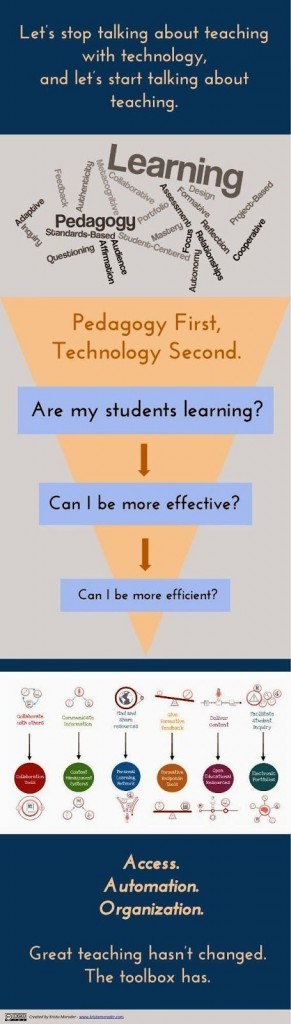
Think Pedagogy First, Technology Second
Via Gust MEES

|
Rescooped by
Mariano Fernandez S.
from Web 2.0 for juandoming
January 20, 2013 7:31 AM
|
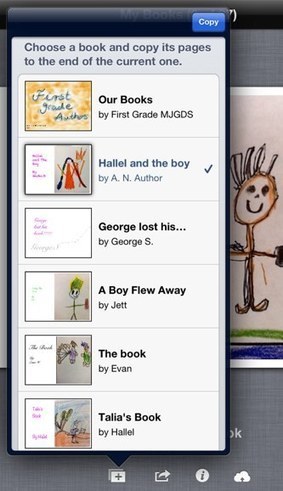
Tweet It is no secret that I am a fan of the iPad app BookCreator since its release in 2011. Our students have created several eBooks with the app. You can read about the creation, its process and ...
Via Gust MEES, Ramon Aragon, juandoming
|
|
Rescooped by
Mariano Fernandez S.
from WiredPlanet
October 20, 2012 5:35 PM
|
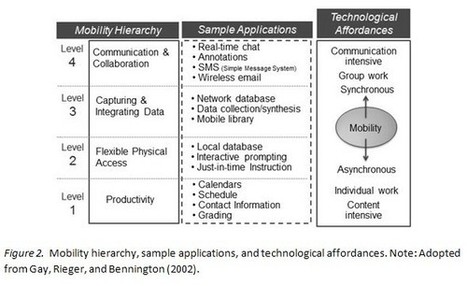
A pedagogical framework for mobile learning: Categorizing educational applications of mobile technologies into four types... IRRODL "The International Review of Research in Open and Distance Learning"
Via Gust MEES, Ana Loução, EduClick_España, juandoming
|
|
Rescooped by
Mariano Fernandez S.
from eLearning
April 1, 2012 9:23 PM
|
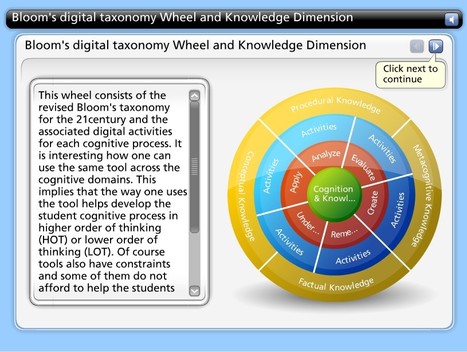
Bloom's digital taxonomy Wheel and Knowledge Dimension
|
|
|
Rescooped by
Mariano Fernandez S.
from GREENEYES
August 30, 2016 11:17 AM
|
|
|
Rescooped by
Mariano Fernandez S.
from Aprendiendo a Distancia
December 19, 2014 8:00 AM
|
In this briefing paper, the SOLIDAR Foundation, together with its members and partners, presents a closer look the state of play in 12 EU Member States regarding education and lifelong learning. It was completed with national and European recommendations to support education as a driver for inclusion, participation and
lifelong learning inside and outside formal education systems.
To fight against inequalities in education and to counteract social distress, we need sound policies and investment in the development of education...
Via Gust MEES, Militao de Maya Ricardo, Alfredo Calderón
|
|
Rescooped by
Mariano Fernandez S.
from Educación, TIC y ecología
February 27, 2013 5:25 PM
|
The folks at Boundless who last brought us the EdTech Buzzwords Infographic are back with The History of Education. The graphic takes a look at how formal education began, changes along the way, current day and predictions for the next twenty years.
Via Gust MEES, Karen B Wehner, Maribel Bañares, Ramon Aragon
|
|
Rescooped by
Mariano Fernandez S.
from Educación, TIC y ecología
November 25, 2012 7:34 AM
|
I am pretty sure as you introduce the idea to your students everyone will want to have a say in their next e-magazine. There is nothing much more rewarding to students then to have a proof of their hard work recognized in a publication of some sort. Most of the tools cited here are easy to use and have user friendly interface and they will let you create your own e-magazine or newspaper in few simple steps. Yet I would recommend your discretion as you use them with your students. Read more: http://www.educatorstechnology.com/2012/11/9-tools-to-create-e-magazines-and.html
Via Gust MEES, Ramon Aragon
|
|
Rescooped by
Mariano Fernandez S.
from eLearning
October 7, 2012 12:13 PM
|
Bloom's digital taxonomy Wheel and Knowledge Dimension
Open Educational Resources (OER) offer higher education governance leaders a cost-efficient method of improving the quality of teaching and learning while at the same time reducing costs imposed on students related to the purchase of expensive commercial textbooks and learning materials. Leading scholars around the world are already participating in the OER movement even without support from most higher education institutions, including community colleges. Higher education governance officials, particularly boards of trustees and senior academic governance leaders, have a tremendous opportunity to harness the advantages of OER for their institutions.
Via Gust MEES, Víctor Xepiti Eme
Free tools from Microsoft. Engage your students, energize a lesson plan, and save time using free tools for photos, videos, collaboration, and education. For example: - AutoCollage: Create an artful photo poster using this fun collage-making tool.
- Microsoft Photosynth: Explore famous places with cinematic quality using these virtual, visual, three-dimensional tours.
- Windows Live Movie Maker: The fast, easy way to turn photos and video clips into great-looking movies and slide shows to share in class or on the web.
Download the teacher’s guide above, and learn about a dozen more free tools.
Gust MEES: I recommend Photosynth as I was working a lot with it, you can even create virtual visits of anything with it, great tool... Read more: http://www.microsoft.com/education/en-us/teachers/guides/Pages/free-tools.aspx
Via Gust MEES, Ana Rodera, juandoming
|








![How To Find Openly Licensed Educational Resources You Can Use [Infographic] | OER | Educación y TIC | Scoop.it](https://img.scoop.it/UEhtZjmMpwB5jMfdGK4baTl72eJkfbmt4t8yenImKBVvK0kTmF0xjctABnaLJIm9)
























#3#SCEUNED16#