Your new post is loading...
April Fool’s Day is probably one of those classroom holidays you can’t escape—no matter how hard you try. So why not embrace it and teach your students a few things at the same time!
Yes—this means you quite possibly will have to endure some of those harmless pranks and hoaxes associated with this day—spiders in your desk, a plastic snake on your chair, or some mystery student messing with your computer mouse via a USB remote. Of course, I’m speaking from experience.
That said, if you’re one of those educators who enjoys having a little bit of fun with your students, then check out the recently updated list of resources below.
Via John Evans
Editor’s Note: We first quoted Caltech Artist-in-Residence David Kremers maxim, “Privacy is the new luxury” back in 2009. In the decade since then, we’ve seen a continuous assault on personal privacy, as surveillance has become the dominant business model on the internet. We’ve approached questions of privacy from many different angles over the years here at The Scholarly Kitchen, including technology architectural approaches to privacy (particularly relevant in light of new authentication systems like RA21), as well as striving to find the right balance between personalization and privacy).
Librarians have long been stalwart guardians of patron privacy — an increasingly difficult task in the era of Google and Facebook. Today’s post is by Mimi Calter, Deputy University Librarian for Stanford University, who brings a useful framework for libraries as they consider patron privacy.
Patron privacy has been a long-standing concern of libraries, and in the era of Facebook data-sharing scandals and of GDPR, the privacy of users of digital content is an increasing concern. In response to that general issue, and to several specific difficulties with data providers, Stanford Libraries, with support from a number of our peer institutions, have put forward a Statement on Patron Privacy and Database Access.
Via Elizabeth E Charles
To those who take the bus or refuse plastic toothbrushes: Don’t listen to the cynics. Research shows the little things matter.
Via june holley

|
Scooped by
Dennis Swender
September 6, 2018 10:57 AM
|
This bundle contains a collection of six image based lesson plans.
The plans are ideal for teenagers and young adults.
The aim of the plans is to encourage conversation skills whilst fostering creativity, critical thinking and encouraging empathy.
All of the lessons include a variety of discussion and conversation tasks that you can use to get students thinking, talking and creating stories about the images.
You often hear of the positive power of a smile. A recent business trip brought this to light to me, as well as the negative power that is portrayed when it is missing.
Via Stefano Principato
|
|
Scooped by
Dennis Swender
May 21, 2018 7:05 PM
|
They're so lovely. I'm just so glad to have been a part of their special day," Sheku Kanneh-Mason tells PEOPLE
|
|
Rescooped by
Dennis Swender
from Into the Driver's Seat
April 18, 2018 3:33 AM
|
Of all the resources we publish on The Learning Network, perhaps it’s our vast collection of writing prompts that is our most widely used resource for teaching and learning with The Times.
We’ve published iterations of this post in the past — 200, 401 and even 650 prompts — but never before have we gathered all our prompts, for both personal and argument writing, into one categorized list.
Admittedly, the list is huge. In fact, there are 1,225 questions below on everything from video games and fashion to smartphones and parenting, and each prompt links to a Times article as well as to additional subquestions that can encourage deeper thinking.
To help you navigate this page, here’s an index of topics:
Via Jim Lerman
These seven musicians, entrepreneurs, actors, and entertainers went through the tough decision to drop out of high school, but yet they continued on to achieve great success. (RT @NoodleEducation: Do you know who this famous high school dropout is?
Via Mary Perfitt-Nelson
Though there were a host of professional learning takeaways for me, one stood out as a real actionable item. Funny, this same theme came up at every conference I attended: Celebrating Failing.
Via John Evans
|
|
Rescooped by
Dennis Swender
from :: The 4th Era ::
December 15, 2017 11:00 AM
|
In order to help students become aware of the need for a new level of academic performance, let’s change our own strategies concerning participation points.
Use a new moniker
Instead of participation points, call them engagement points
The goal is to move students from grade seekers (passive regurgitation of information—written or verbal) to knowledge seekers (independent, engaged learners who see, reflect on, and share their thoughts on the complexity of problems/situations)
Balance preparation and participation
Via Jim Lerman
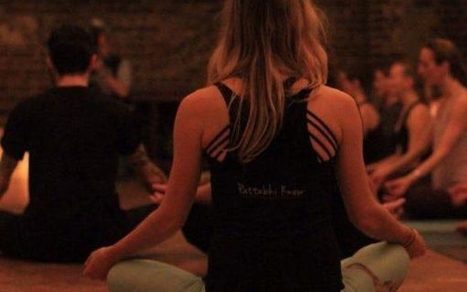
After 12 weeks the scientists saw similar verbal memory improvements in both groups of volunteers. However, visual-spatial memory was increased to a greater degree in the yoga-meditation group.
Participants practising yoga and meditation were also less likely to be depressed and anxious, and were better able to cope with stress.
Via Maggie Rouman
Vegetarians have a lower BMI and drink alcohol sparingly, but vegetarian diets are tied to generally poorer health, poorer quality of life and a higher need for health care than their meat-eating counterparts.
Via Nevermore Sithole
|
|
|
Rescooped by
Dennis Swender
from Daring Ed Tech
March 25, 2019 10:29 AM
|
WARNING: Rant Below. So, my last post was about an easy interactive reading promotion idea using Post-It Notes I got from m
Via GwynethJones
For the last two years, I have shared some of my favourite quotes from the past year that have inspired me or made me think deeper about a subject. I wanted to provide some for this year as well. …
Via Dr. Tom D'Amico (@TDOttawa)
I did something recently that scared me. I registered for the Medibank Melbourne Marathon ... and I have my work cut out for me.
Via Peter Mellow
Deaths of chess players led to alarm the game could cause fatal stress. Some researchers have tested that theory.
Via Peter Mellow
|
|
Scooped by
Dennis Swender
June 20, 2018 10:53 PM
|
|
|
Rescooped by
Dennis Swender
from Positive futures
May 14, 2018 1:27 PM
|
Older workers may not be as jaded as you might think.
New data provided to Business Insider from employee feedback platform Culture Amp found that employees between the ages of 55-64 are more likely than their younger counterparts to want a job that does good in the world.
Culture Amp, which is used by Airbnb, Lyft, and a number of prominent tech companies, gives employees a platform to give feedback to employers. The startup has raised $36.3 million in venture capital funding since it was founded in 2011.
Since the company has a wide user base, CEO Didier Elzinga tells Business Insider that he wanted to see if he could debunk some of the prevailing narratives about Millennial workers — especially the idea that younger workers want more autonomy and purpose than older ones.
"It certainly surprised me," Elzinga said. "It's not just young people that want to make a difference in the world, it's us old fuddy duddies as well."
Via David Hain
|
|
Scooped by
Dennis Swender
April 15, 2018 5:56 AM
|
Different types of hats vocabulary. Learn the English words for types of hats
|
|
Scooped by
Dennis Swender
March 7, 2018 10:05 AM
|
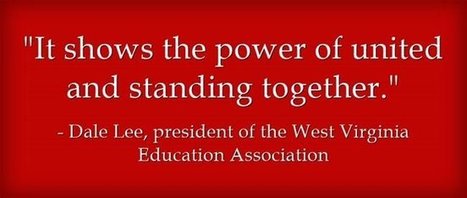
The West Virginia legislature agreed to the demands of West Virginia’s teachers, and the strike is over. Here are new additions to The Best Resources For Learning About – & Supporting – T…
|
|
Scooped by
Dennis Swender
February 17, 2018 1:54 AM
|
"The most unfair thing about life is the way it ends... I think the life cycle is all backwards."
When you face struggles with an attitude of openness—open to the painful feelings and emotions you have—you find out that it’s not comfortable, but you can still be fine and you can still step forward. Openness means you don’t instantly decide that you know this is only going to be a horrible experience—it means you admit that you don’t really know what the next step will be like, and you’d like to understand the whole truth of the matter. It’s a learning stance, instead of one that assumes the worst.
Via John Evans
|
|
Rescooped by
Dennis Swender
from Soup for thought
July 27, 2017 3:02 PM
|
Welcome back to Mid-Week Meditations, Lifehacker’s weekly dip into the pool of stoic wisdom, and how you can use its waters to reflect on and improve your life.
Via malek
|