Washington Post writer Tim Herrera meticulously tracked and cataloged his Facebook News Feed content for five or six hours on July 17, noting 1,417 status updates, photos, links, likes, event invites and more. However, he was confused by what content he was seeing. So he combed through every piece of content posted by his friends…
In other words, they could read for all the same reasons that we can now use computers. We don’t know how to use computers because we learned it in school, but because we wanted to learn it and we were free to learn it in whatever way worked best for us. It is the saddest of ironies that many people now see the fluidity and effectiveness of this process as a characteristic of computers, rather than what it is, which is a characteristic of human beings.
So much wisdom in this article. Data doesn't have all the answers, and schools are becoming more and more driven by data. Favorite quote: "Because guess what? If there is one thing that the data proves, it’s that our children are all different." And all children want to learn.
It is not up to our children to accept a disability label in order to “qualify” for an appropriate learning environment; it is up to adults to provide learning environments which are flexible enough to accommodate the natural variations in our children.
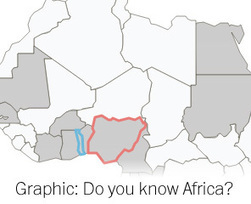
Many of Africa’s leaders will be in town next week attending a White House summit. The continent’s land is shared among 49 countries — many of which rarely make U.S. headlines. How familiar are you with Africa’s geography?
I love interactive maps like this. These are the best way to learn where things are in the world geographically. Africa is the toughest, for myself, continent in the world to be able to locate and identify where certain countries are. This is in part because Africa has so many countries and also Africa is a part of the world that is not often taught in school, therefore you have limited thoughts and ideas about these types of areas.
I have always been fascinated with Africa and its history. Through its history one can understand why Africa is the way it is today. Its a shame that Africa does not have more of a focus in the Public School Curriculum. Its played a huge part in developing western civilization, whether it be in ancient Alexandria providing grain for the Roman Republic or the coltan extracted through inhumane means in the Democratic Republic of the Congo. Africa is a continent that has been raped and torn in a repetitive manor under a variety of foul experiences brought upon by western countries. These are the same western countries that are held of high interest and regards in subject manor instituted in the Public School System. Africa has also been apart of amazing developments of human civilization, for example the Trans Saharan Trade Route which linked Kingdoms such as Ancient Ghana to dynasties far in the Middle East. It is also the birthplace of man (no big deal). In either case there needs to be a stronger push on teaching/molding "Africa" (yes, I know... broad) into the curriculum. It is important in both understanding the history of the world, specifically western civilization and how it coined itself “civilized.” Through introducing basic aspects, history, and dilemmas (both old and modern) it could inspire more interest and an expansion of knowledge from student to student. School is and will most likely continue to be Euro-centric and have large flares of Americana and other “themes” of North America.
This interactive map quizzes you on the location of the states of Africa and it shows the percentage of how many people found certain countries. South Africa, Madagascar and other more recognizable countries had higher percentages, but it is still a difficult quiz as many people do not know the geography of Africa.
Rather than characterizing immigration and migration issues as humanitarian concerns, the anti-immigration activists connect the narratives representing immigrants and migrants to our borders to the language of disease, crime, drugs, alien and lower forms of culture and life, of invading hoards, of barbarians at the gates who if allowed to enter will destroy the glorious civilization we have established among the lesser nations of the Earth.
I can vividly remember the moment, 50 years ago today, when President Lyndon B. Johnson signed the Civil Rights Act of 1964 into law. His speech that day was a call to action at a time when our nation was deeply divided – and his words resonate even today.
Jeffrey L. Bailie Kaplan University jbailie@kaplan.edu
Abstract
The purpose of this study was to examine whether a set of instructional practices commonly prescribed to online faculty in the higher education setting were consistent with the expectations of a group of experienced online student participants. Online faculty performance conventions were collected from 20 institutions of higher learning located in the United States. The collective practices yielded three primary domains related to administrative faculty performance expectations in online instruction: Communication, Presence/Engagement, and Timeliness/Responsiveness. Undergraduate participants representing a cross section of colleges and universities in the United States were surveyed to determine their expectations for online faculty as compared to scaled items derived from the lists of participating institutions. The results of this investigation offer practitioners insight into how administrative instructional guidelines relate to the user demands of an informed group of undergraduate online students.
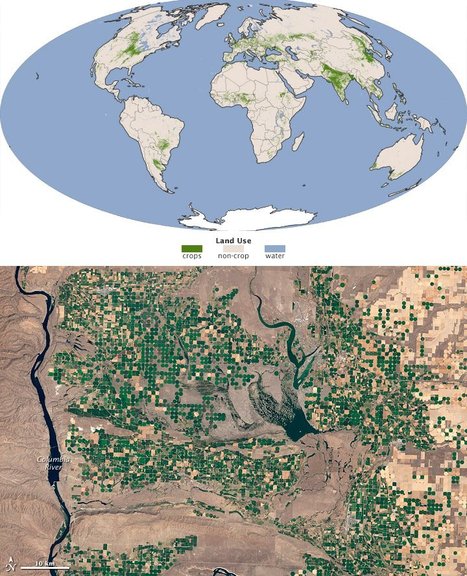
"With seven billion people now living on Earth, the ever growing demand is putting unprecedented pressure on global resources—especially forests, water, and food. How can Earth’s resources be managed best to support so many people? One key is tracking the sum of what is available, and perhaps nothing is better suited to that task than satellites."
Measurements from the Landsat satellite also make it possible to tell how much water the crops consume in an arid environment. Such measurements are likely to become more important as demands on limited water resources increase. Currently, agriculture accounts for 85 percent of the world’s fresh water consumption
With seven billion people now living on Earth, the ever growing demand is putting unprecedented pressure on global resources—especially forests, water, and food.
At memplai.com, our goal is to provide our customers with an easy and useful environment to collaborate with your friends and family to create fun and exciting video clips. We aim to give you all the tools you need to create lasting memories in a medium that makes it easy to share with your social network.
In our site, you are in charge of your own production, we allow you to create your own virtual work space, which we call Video Projects. You can create projects, invite the people that you would like to participate, create as many videos as you want by using our online video editors.
Memplai is a free service for creating collaborative videos by uploading photos and video clips and putting them together in Memplai editor. Greatly suitable for school video projects.
This factsheet provides information to help education leaders better understand the responsibilities of States and local educational agencies (LEAs) in connection with unaccompanied children.
I’m guilty. And I’m definitely too old to be considered part of the ‘distracted generation’. I didn’t grow up with a device in hand at all times, hopping from shiny thing to shiny thing on the internet. I use tools to help keep me from being distracted online. Distractions are all around with technology, and connecting …
Texting: The quiet king. I can't decide whether texting's dominance here is obvious or profound. By daily use, it's nearly three times more popular than phone calls.
If you’re a user of Google Drive, then no doubt you have also heard of and likely used Google Presentations (Google’s version of PowerPoint). It’s a great tool to create slick presentations in the cloud, especially after its most recent overhaul. However, Google Presentations is also a handy tool for doing some great projects with …
With thousands of undocumented children amassing at the U.S. border, Robert Jones, Imperial Wizard of the Loyal White Knights of the Ku Klux Klan, doesn’t want amnesty. He wants "corpses" on the bo...
"When we decided to survey educators around the world about behaviour, we expected a mixed response. But it seems that whether you’re in the UK, the US or Australia, the challenges are the same. Here, teachers give us their perspective on a growing problem."
It's World Press Freedom Day, and Reporters Without Borders has released their annual World Press Freedom Index, along with this map (click for a full-size version) offering their read on how free the press is in countries around the...
True Blood Actor Labeled Homophobic For Refusing To Do Gay Scene Writers Wanted. *SUBSCRIBE* for more great videos! Mark Dice is a media analyst, political activist, and author who, in...
To get content containing either thought or leadership enter:
To get content containing both thought and leadership enter:
To get content containing the expression thought leadership enter:
You can enter several keywords and you can refine them whenever you want. Our suggestion engine uses more signals but entering a few keywords here will rapidly give you great content to curate.


 Your new post is loading...