



Today's mandates for special-needs students set schools up for lawsuits, conflict with No Child Left Behind requirements, and waste taxpayers' money. Here are some alternatives.

 Your new post is loading...
 Scoop.it! Today's mandates for special-needs students set schools up for lawsuits, conflict with No Child Left Behind requirements, and waste taxpayers' money. Here are some alternatives. No comment yet.
Sign up to comment
Scoop.it!

For students who are overwhelmed, StudyEgg is an education app that simplifies learning through personalized analytics. StudyEgg takes you through great educational video on the web in an interactive way. By using hundreds of data points on how you're studying, we build customized lessons based on your strengths and weaknesses for a simple and effective learning experience.
Scoop.it!

Google has launched a new site called Search Education aimed at educators who want to teach online search strategies. Lessons cover the following topics: * Picking the right search term * Understanding search results * Searching for evidence for research tasks * Narrowing a search to get the best results * Evaluating the credibility of sources To go directly to Search Education: http://www.google.com/insidesearch/searcheducation/
Scoop.it!

We're excited that our next campaign, Purpos/ed Take 2 starts tomorrow! We've got someone each day (apart from Sundays) answering the question: What's the purpose of education? That would be today! The first post can be found at http://purposed.org.uk/2012/05/steve-philp-the-purpose-of-education-is-hope-purposedu-500words/. This may be a great way to find inspiration over the next 30 days!
Scoop.it!

"...web search results for certain topics are just overloaded with "search engine dummy websites with little to no valuable content, many of which have utilized “search engine optimization” (SEO) tactics... That’s what a neat hack called MillionShort aims to help with. The website is a search engine that lets you remove the top million (or 100,000, or 10,000, or whatever) hits from the results list. It’s a lot like pruning a plant, or skimming the film off the top of a stew: MillionShort lets you remove the old or non-useful stuff from traditional web search to find new or interesting content." One of the features is that it lists the sites that is not showing you (as seen in the right column in the image).
Scoop.it!

"As criticism of No Child Left Behind and the associated tests rises, we are hearing more and more about the Common Core Standards (CCS), the next great thing that is supposed to fix all that ails us... Arne Duncan, likewise, when pushed about our obsession with standardized tests, offers up the Common Core, and the new tests being designed with Department of Education funding, as the solution. According to him, we will soon move "beyond the bubble tests," into a new generation of assessments... But the Common Core is facing significant pushback, especially from state-level policymakers..." As you continue to read this article it does appear that the iniatives that many states are undertaking, the adoption of Common Core, the Race to the Top, lead to high stake testing that will happen in more grades and more subjects as time goes on. In a short period of time the testing is scheduled to become computer-based, which will bring machines grading tests. So where is localism in this discussion. After a short review of how we have gotten to this point Andrew Cody shares an interview he had with Nebraska Education Commissioner Doug Christensen as well as comments from Yong Zhao. This is a fascinating read with information that may make you look at these issues with new insights.
Scoop.it!

A literate, educated society is a safer, healthier, and more prosperous society, and these projects are working toward that. The projects listed include local, national and global iniatives, some of which you may have heard of and others that will be new to you. Examples include: Better World Books, Center for Applied Technology (CAST), the International Reading Association, Project Guteberg, Manga Shakespeare, and the Great Mystery Literacy...as well as an additional nineteen.
Scoop.it!
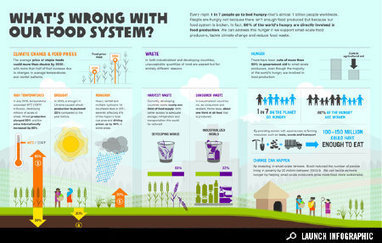
Globally there are a billion people who go hungry. Supporting small-scale food producers and tackling climate change can reduce that number.
Scoop.it!

The internet was all abuzz about SOPA and PIPA and proved a worthy foe against government oppression by quashing the bills before they could get too much momentum. There is outrage now about CISPA, the latest aromaticity that Washington has put f ... If you prefer information as an infographic this one does a good job explaining CISPA.
Scoop.it!

Why are some people trustworthy while others cheat and lie, some generous and others coldhearted louts? Part of the answer may lie in the hormone oxytocin. In an excerpt from The Moral Molecule, Paul J. So what does this have to do with technology? Read the article and you will see a mention of Twitter and Facebook...and more!
Scoop.it!

Every year thousands of Americans keep the memory alive by reenacting Civil War campaigns and battles. Photographer Richard Barnes used period techniques to make authentic-looking images that include glimpses of the modern world. This site has a wide range of materials about the Civil War. The featured article discusses Civil War Battlefield Art. There is an art gallery, a photo gallery, a timeline from the Civil War to Civil Rights as well as an article on Civil War Battlefields.
Scoop.it!

What do we know about how schools learn and what do we know about how students are taught in schools? This is the first chapter (of an unknown number) that begins: "Schools are word-based. The first things young students learn are the ABCs and how to read. This usually begins with a flashcard showing the letter “A” and a picture of a red delicious apple. There have always been visual reinforcements for words, especially in the formative years. As students advance, the pictures gradually diminish and the words increase." There is discussion on how much students know through visual images long before they begin to read at the age of ~5 as well as a discussion about the "explosion of visual language that changed the life of almost every child" in the 50s. This chapter raised a number of points that I hope to see explored in more detailed as more is published.
Scoop.it!
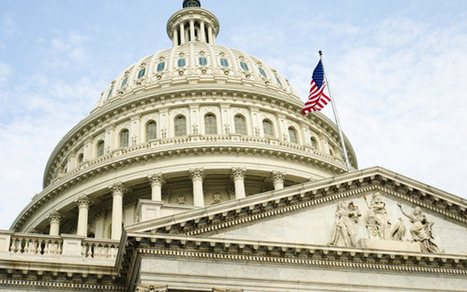
An amended version of CISPA passed the House this week. Here's what you need to know about its future. On the surface one might not question CIPSA. The bill states that private businesses may share cybersecurity information other private businesses and the U.S. federal government. But...there are two (at least) sections that have raised issues for many. Quoting from this article "would allow CISPA to be used in any case where national security is deemed at risk — a potentially broad category. The second would protect any business that shares cybersecurity information from lawsuits — including suits from users who think their private information may have been shared without justification." Read on for more information. |
Scoop.it!

"No longer relegated to experimental programs, digital games are becoming much more commonly used in classrooms across the country, according to a survey by the Joan Ganz Cooney Center released today." ...some more statistics from the study: * Nearly 70 percent said that “lower-performing students engage more with subject content with use of digital games.” The article discusses reasons for using games in class as well as issues involved. There are also a series of videos featuring case studies and links are available.
Scoop.it!

edX is a 'transformational partnership in online education'…Harvard and MIT ‘will collaborate to enhance campus-based teaching and learning and build a global community of online learners…(edX) courses (will) feature video lesson segments, embedded quizzes, immediate feedback, student-ranked questions and answers, online laboratories, and student paced learning’ and it will be open source.
Scoop.it!

So what is the 10,000 Year Clock...the"timeframe of the clock is equivalent to the time from the first people’s use of pottery until now." Starting with this premise the world has changed dramatically, and given the "accelerating pace of technological innovation"...the next 10,000 years will be more so...There are "design specifications behind the 10,000 Year Clock" and using these specifications this article explores where education where go. Specific areas explored include durability, self-sustaining and evolutionary. "The point of the Clock is to revive and restore the whole idea of the Future, to get us thinking about the Future again, to the degree if not in quite the same way that we used to do, and to reintroduce the notion that we don’t just bequeath the future—though we do, whether we think about it or not. We also, in the very broadest sense of the first person plural pronoun, inherit it." (Michael Chabon, 2006)"
Scoop.it!

From
visual

Jamie and the Food Revolution team want to change the way people eat by educating every child about food, giving families the skills and knowledge to cook again, and motivating people to stand up for their rights to better food...
Scoop.it!

Refrigerators and fireplace mantles might still be covered with children’s projects, but more and more, those projects are finding a home online. That’s just one of the purposes for the launch of DIY.org, a site that allows kids to upload photos of their projects and share it with their friends, family, and the public.
Scoop.it!

From
mashable
Online gaming among tween girls is on the rise, as more are turning to the web to take quizzes and participate in role-playing challenges. "A new report by tween gaming platform GirlsgoGames.com found that about 50% of tween girls between the ages of 8 and 12 are turning to the Internet for entertainment and social gaming. In addition, the amount of time tween girls spend playing games each month has more than doubled over the last year, from 38 minutes a month to 1 hour and 18 minutes." If you would like to read the report, The State of Online Gaming Among Tween Girls in the U.S. Q1 2012 go to http://www.spilgames.com/wp-content/uploads/2012/05/StateOfGamingTweenGirls_US_Q1_2012.pdf ;
Scoop.it!

College was designed to prepare students for a 20th-century economy, and it’s not catching up fast enough to the realities of the modern world. How can we overhaul the entire system?
Scoop.it!

This piece was inspired by a heated discussion I had with a man who believes that teachers have an easy job. Please feel free to share it with others if you agree with the message. Although published in 2010 the sentiments of this piece still ring true.
Scoop.it!

Developing information literacy skills is perhaps the most important issue in 21st Century Learning and yet the struggle to do so is an uphill battle. We asked our friends in the library world what...
Scoop.it!

"'The future is here,' William Gibson once quipped. 'It’s just not evenly distributed.' Gibson, the sci-fi writer who coined the term 'cyberspace' back in 1982, could easily have been describing the state of technology in today’s K–12 classrooms. Sure, there are lots of stories about schools adopting the very latest digital devices...But stories like these don’t represent what’s happening in most of our nation’s schools. In fact, the distribution of technology in our classrooms remains radically uneven..."
Scoop.it!

"I’ve said it before; I’ve never taught a perfect lesson...I want to know what works and what doesn’t. Like my students, I thrive on feedback. So evaluate me, please. But let’s lay down a few ground rules. * I teach children, not targets or standards, so please don’t walk into my classroom expecting to see me teaching a specific skill at an exact moment in time. That’s not how it works here...."
Scoop.it!
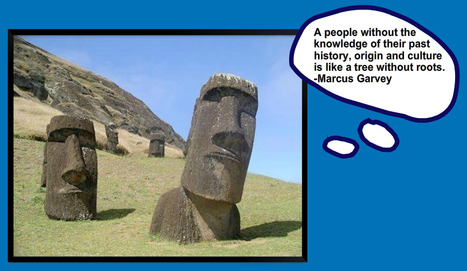
Who says that learning has to be lame? Take the boring out of those old Social Studies books add in cool stories, links, and videos, and you get Go Social Studies Go. Currently there are 6 sections: Global Religions, History (ancient, medieval, 19th & 20th century, colonial, American), World Geography, Choose Your Own Adventure (The Underground Railroad and Immigration with more to be added), History Legal Files (the Trial of Marie Antoinette with Brown vs Topeka Board of Ed. to be added soon), Cool Sites (a Scoop.it site by Go Social Studies Go), and Teacher Resources (a wikispaces site). It appears that additional information will be added. If you teach social studies check this site out, and share it with others! |





