 Your new post is loading...

|
Scooped by
Beth Dichter
July 26, 2012 8:41 PM
|
"It is not uncommon for many of us to have thoughts and ideas rustling around in our heads with the inability to get them out onto paper. This is referred to as a creative barrier or block, which most of us have become all too familiar with at one time or another. This graphic is filled with tips that will help you in getting out of your creative rut and back into the swing of things."
|
|
Scooped by
Beth Dichter
July 26, 2012 4:02 PM
|
According to the Buck Institute for Education a project is meaningful when it fulfills two criteria. The students “must perceive it as personally meaningful, as a task that matters…and a meaningful project fulfills an educational purpose.” This PDF provides 8 essential components to create meaningful projects. Each is explained using an example of a project with suggestions on how to make the project more robust. * Significant Content * A Need to Know * A Driving Question * Student Voice and Choice * 21st Century Skills * Inquiry and Innovation * Feedback and Revision * Publicly Presented Project
|
|
Scooped by
Beth Dichter
July 25, 2012 8:23 PM
|
Intel has released a video of the classroom of the future. Do you think this is what the future will look like in education? Would you like to teach in this type of classroom?
|
|
Scooped by
Beth Dichter
July 25, 2012 2:37 PM
|
Here is an idea of one way to use infographics in your classroom. The specific infographic shown looks at Gross Domestic Product (GDP) and levels of English speaking citizens in a country. It appears that the higher levels of English speaking citizens, the better the GDP. Using infographics is a great way to helpe students raise questions that lead to deeper understandings. To see questions that might be raised with this specific infographic click through to the post.
|
|
Scooped by
Beth Dichter
July 24, 2012 1:00 PM
|
Information can be useful--and even beautiful--but only when it’s presented well. In an age of information overload, any guidance through the clutter comes as a welcome relief. That’s one reason for the recent popularity of information graphics. This post includes 10 steps to help you create an infographic, beginning with gathering data and ending with releasing your infographic to the world.
|
|
Scooped by
Beth Dichter
July 24, 2012 10:47 AM
|
Maria Popova's Brain Pickings has once again shared information about rules for great stories, this time from Barnaby Conrad (author). He responded to the cartoon strip above with six rules. The first is "Try to pick the most intriguing place in your piece to begin." You may see the other five at her website, and there are also links to advice on writing by Kurt Vonnegut, David Olgilvy, Henry Miller, Jack Kerouac and John Steinbeck.
|
|
Scooped by
Beth Dichter
July 23, 2012 8:29 PM
|
"From peeking at a neighbor’s test in school to sneaking a second helping of dessert when no one’s looking, everybody seems to cheat a little every now and then. In fact, if you’re like most people, statistics show that you’ve probably already fibbed a time or two today. Lying and cheating have been an ugly little fact of life for a long time, but today’s generation of students and young professionals show a startling trend in attitudes toward cheating: The average young person doesn’t just admit to lying and cheating more often than previous generations, they also often believe that lying and cheating are a necessary fact of life..." For more information check out the infographic.
|
|
Scooped by
Beth Dichter
July 23, 2012 2:42 PM
|
"In Connecticut, first-graders load up toy cars with different amounts of mass, or stuff, and send them racing down ramps, rooting for their favorites to travel the farthest. In Texas, middle school students sample seawater from the Gulf of Mexico. And in Pennsylvania, kindergarten students debate what makes something a seed." Are these students following the "scientific method" as the learn to make sense of the natural world? According to Gary Garber, a physics teacher at Boston University Academy "The scientific method is a myth" and "was invented by historians and philosophers of science during the last century..." Is there only one way to 'do science' or are there multiple paths and routes one can follow? This article explores these issues, looking at the practices of science, the upside of mistakes, practicing science at school, and how scientists use the practices of science.
|
|
Scooped by
Beth Dichter
July 22, 2012 7:20 PM
|
"Common myths about education data - its definition, its novelty, what it takes to make it useful - keep us stuck in place when it comes to driving systematic, scalable improvements in students' outcomes. Defusing those myths is critical to achieving progress for teachers and kids."
|
|
Scooped by
Beth Dichter
July 22, 2012 9:55 AM
|
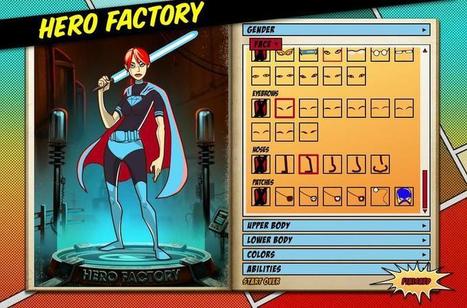
The Daring Librarian provides more than 20 sites where you can create fun avatars. Tips are provided on how you may save your picture. And not all are sites, the first one, Futurama Head-in-a-Jar Creator is an app for the iPhone and iPad (free). Many of the sites suggested have examples of avatars (with instuctions) so you get an idea of what is possible. Have fun and play!
|
|
Scooped by
Beth Dichter
July 21, 2012 9:11 PM
|
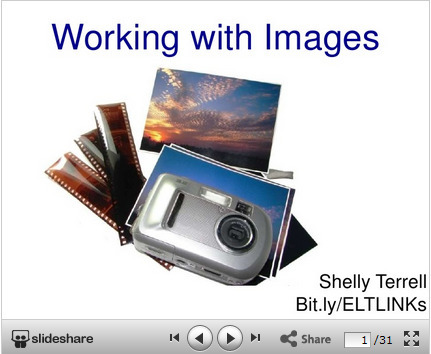
This post contains resources to "help learners visualize their learning, lesson ideas, and more!" As well as a the Working with Images SlideShare, there is A Pearl Tree of More Resources (with links to sites with images) as well as Juliana's Bookr, a book created in Pinpanpum (http://www.pimpampum.net/).
|
|
Scooped by
Beth Dichter
July 21, 2012 4:37 PM
|
Google has many ways to search, and one way that many folks are not aware of is the small camera icon that allows you to drag in or upload an image (or paste in a URL) and have the search be for the image.
There are additional features also available. You may choose a color palette to minimize the number of images shown and also search by date, size, type of image and more. This post provides additional details as well as screen shots to help you out.
|
|
Scooped by
Beth Dichter
July 20, 2012 7:59 PM
|
We often talk about the need to have students create a portfolio of their best work. Have you considered creating a portfolio of your work? There are many tools available today that you may use to present your accomplishments. This post will help you explore some of the ins and outs of creating a portfolio of your work.
Questions you will need to reflect on include “Where should I create this portfolio?” Possibilities include blogging platforms, websites, and digital resume tools.
You may also want to include your teaching philosophy, samples of your best work (lesson plans, assessment tools, presentations, etc. Samples of student work are also important.
Have you received grants, awards, provided professional development, published work? If so consider including these also.
The creation of a portfolio is a great way for you to reflect on your career to date and determine some new avenues you might like to explore.
|
|
|
Scooped by
Beth Dichter
July 26, 2012 8:07 PM
|
Complex text is a key component of the Common Core. Why? To make sure that students entering college are "ready to read college-level texts independently." This post dicusses how the Common Core measures complex texts with three aspects: Qualitative, Quantitative, and Readers and Tasks, providing information on each aspect. It also notes that the Commone Core is still a work in progress. As we move to the adoption of the Common Core standards this post helps to provide a better understanding of complex text.
|
|
Scooped by
Beth Dichter
July 26, 2012 10:21 AM
|
This is Part 3 of a four part series. In this post Step 6 and 7 are presented. Step 6 suggest that you include an advance organizer to help students apply their past knowledge and connect it to their new knowledge. A wide range of suggestions are provided as well as recources to help you with Advance Organizer. Step 7 discuses how to incorporate formative learning and assessment. There is a discussion on formative assessments as well as a wide variety of additional resources. Links to the first two posts in this series in in this post (and they are also posted in this Scoop.it).
|
|
Scooped by
Beth Dichter
July 25, 2012 7:55 PM
|
Twelve of the Pixar's Rules for Storytelling illustrated through the use of Legos...this may pull students into a discussion that might not happen with the infographic which lists all twenty-two.
|
|
Scooped by
Beth Dichter
July 25, 2012 2:07 PM
|
Google just added an interactive calculator to its search results that works on desktop and mobile browsers. Along with basic buttons this virtual calculator includes standard trig functions, exponents plus buttons for pi and e. Not only can you push the buttons, but you may also do calculations via a voice search.
|
|
Scooped by
Beth Dichter
July 24, 2012 12:37 PM
|
"Memory learning catches a lot of flack these days. Informed educators are often quick to write off rote memorization as an unnecessary and even harmful exercise, instead preferring to teach creativity and problem solving. While we agree that creative, analytical lessons are a great way to learn, it’s worth pointing out that memorization can still play an important role in learning, no matter your age. Read on to find 10 great benefits of memorization in school and beyond."
|
|
Scooped by
Beth Dichter
July 23, 2012 9:03 PM
|
If you have not had a chance to check out Dan Meyer and his method of teaching math please take the time and check out the links in this post. Not only is there a talk he gave at TED called 'Math Class Needs a Makeover' (embedded in the post) there is also a link to his to his '101 questions' site, where the community may pose problems and ask questions. He also has a Google Spreadsheet called Dan Meyer's Three Act Math Tasks. You may find it at http://bit.ly/tpp82B.
|
|
Scooped by
Beth Dichter
July 23, 2012 3:14 PM
|
What is Connected Learning? Powerful Learning Practice has created a manifesto, "a collaborative statement on connected learning - what is is? What do we believe about it? Who is a connected learner? Why is it important?" Add your voice to the dialogue by visiting this site.
|
|
Scooped by
Beth Dichter
July 22, 2012 8:03 PM
|
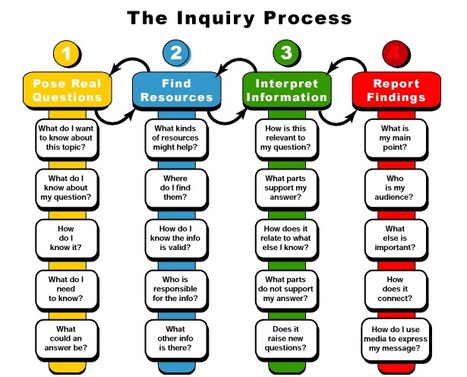
Are you interested in using inquiry based learning in your classroom but are not sure of how to implement a new program? This post discusses the importance of planning and takes you through a step-by-step look at techniques you will use to effectively implement inquiry learning. Many additional resources are provided.
|
|
Scooped by
Beth Dichter
July 22, 2012 6:56 PM
|
Data is big in education today and it appears to be the driving force behind school reform. Today I was exploring the Michael &Susan Dell Foundation and discovered a series of articles they are running that looks at 10 education data myths. This post is an overview of the series they are running. A list of the 10 education myths is below, but you may want to spend some time of this site exploring materials that are available to school districts that help teachers access and use data to plan daily lesson, help students achieve goals, have productive conversations with parents, identify trends and collaborate with collegues. So what are those myths? 1. Data = test scores 2. Data-driven instruction is a new concept 3. Data-rich is the same as data-driven 4. Software = The solution 5. Teachers are just data consumers 6. More data creates more work for teachers 7. Tools alone lead to student growth 8. Test data is a good tool for evaluating teachers 9. Classroom data is a tool for teachers 10. Data-driven instruction limits teachers creativity.
|
|
Scooped by
Beth Dichter
July 22, 2012 9:40 AM
|
Do you have any idea of how much data is created every minute? Phones, websites, applications...it is mind boggling. Check out this infographic Data Never Sleeps for more information.
|
|
Scooped by
Beth Dichter
July 21, 2012 4:53 PM
|
Natural Reader is a fantastic reader for digital text, and to my surprise I have not posted about this tool. This article, from Free Resources from the Net for Every Learner provides access to a video that demonstrates the free version. This tool works on Mac and PC, and this version provides a floating tool bar, that allows you to read text on a website. This is a tool that I would recommend to every student (and to have installed on all computers in a school).
|
|
Scooped by
Beth Dichter
July 20, 2012 10:31 PM
|
Operating on the theory that there are better ways to find great iOS apps than skimming the "top downloaded" lists on the App Store, Appsfire has published its first-ever alternative rankings that highlight the best apps, not just the ones with the... It turns out that the rankings you see the App Store are based on number of downloads, so the more downloads the higher the ranking. To get a better understanding of how Appsfire determines the Appscore you may want to check out this SlideShare, which also shows you the Top 25 Games and Top 25 Non-Games for the iPhone and iPad All Time and June 2012 at http://www.slideshare.net/appsfire/app-score-report-best-ios-apps-june-2012.
|




















Ken