 Your new post is loading...

|
Scooped by
Beth Dichter
September 6, 2012 10:18 PM
|
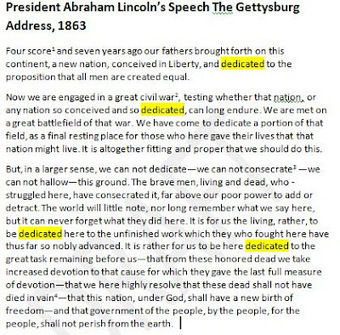
"Are you wondering where to begin to adopt the Common Core Vocabulary Standards? While there are many specific vocabulary standards clearly listed in the K-12 Language strand, it's helpful and important to look at Academic Vocabulary from the big picture view known as Shift 6. Let's unpack it." In this post Susan Oxnevad looks at the three tiers of vocabulary and discusses the need to target instruction on Tier 2 and Tier 3 words. There is a short video that provides an introducation to Academic Vocabulary as well as a look at some tools that woulr provide help for students learning Tier 2 words. Many great resources are provided.
|
|
Scooped by
Beth Dichter
September 5, 2012 9:36 PM
|
Have you checked out Learnist? It is one of the newer educational social networks. This post suggest ten ways you could use Learnist in your classroom. Although geared to high school students the ideas are useful in most grade levels. Each suggested way to use Learnist includes ideas to help you create a Learnist board for your class. Ideas for using Learnist include: * Organizing materials * Collaboration * Combatting boredom * Teach research skills Check out the post for additional ideas as well as links to some learning boards!
|
|
Scooped by
Beth Dichter
September 5, 2012 4:51 PM
|
We hope you'll find lots of valuable content and tools through these incredibly useful links for ELL educators. This list is divided into the following sections (quoted from post). * Websites - Resource tools, printalbe, and other great stuff for ELL educators are all available on these sites. * Articles and Advice - Check out resource lists, journal articles, and ideas for best practices in ELL on these links. * Organizations - Take advantage of the great opportunities and resources available from these organizations that benefit ELL teachers. * Learning Resources - Enrich your students' learning by sharing these excellent English resources that they can check out in the classroom or on their own. * Teaching Resources - With these resources, you can find great ways to communicate more effectively, explore lessons, and be a great ELL teacher. * Reference - From reference books to a pronunciation guide, you and your students will get a lot of use out of these links. * Communities and Blogs - Get help and regular feedback for ELL education from these communities and blogs.
|
|
Scooped by
Beth Dichter
September 4, 2012 10:43 PM
|
The last thing young people want is another set of rules. But these days, social media comes with great responsibility. The 12 items listed (with explanations) may provide students with an understanding that using social media irresponsibly may have a long term impact on their eduction and career. A few of the items discussed in the article include (and place do not in front of each): * Post Illegal Activities * Bully * Post Confidential Information * Lie/Cheat/Plagiarize Check out the article for an additional eight items.
|
|
Scooped by
Beth Dichter
September 4, 2012 6:37 PM
|
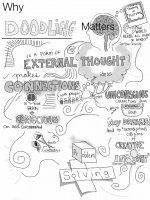
Note taking...something we want our students to do, and often it is taught as a study skill as an outline. But many of our students are visual learners. This post explores using mind maps and doodling as forms of note taking.
Research has shown that mind mapping works well "as a tool for organization, comprehension, and note-taking." Doodling also works well for many visual learners. This post quotes Temple Grandin "the world needs all kinds of minds." If a student thinks in pictures doodling allows them to visualize connections. More information on this is in the post as are links to a number of resources.
|
|
Scooped by
Beth Dichter
September 3, 2012 7:42 PM
|
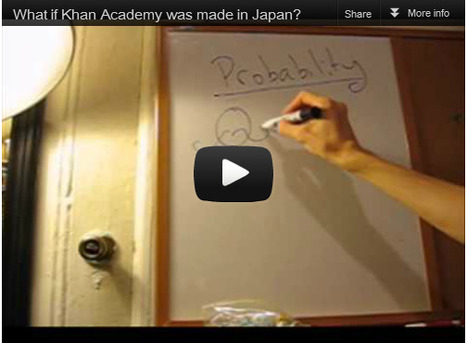
Got 13 minutes? Watch this video from Michael Pershan. There has been quite a bit of media about Khan Academy and this post takes a look at how mathematics is taught in other countries. When you compare the teaching of math in Japan to the teaching of math in the U.S. it is very different. The video explores "what the Khan Academy would like like if it came from Japan." Scott McLeod also bring up Dan Meyer (and links to his blog). If you would like to see more of the TIMMS videos (that are referenced in this video) go to http://nces.ed.gov/timss/video.asp.
|
|
Scooped by
Beth Dichter
September 2, 2012 6:10 PM
|
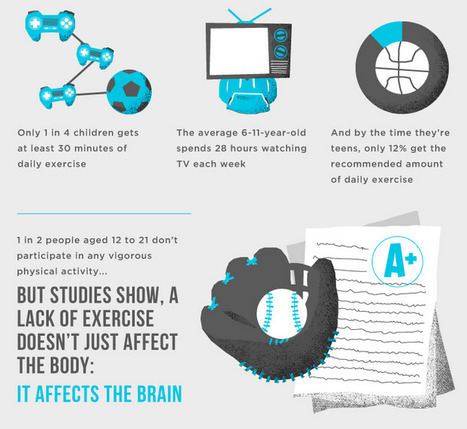
Getting the proper amount of exercise is one of the most important elements to maintaining a healthy, happy lifestyle. Only about "12% of students get the recommended amount of exercise for a healthy state of being...consider the benefits that a great workout can have on your smarts. Studies show that exercising doesn't just boost your health, it can also boost your intelligence and mental acuity. From elementary school all the way through college-level education, regular exercise is seen to improve test scores and even IQ levels. In fact, working out right before a test can aid in boosting performance."
|
|
Scooped by
Beth Dichter
September 1, 2012 10:14 PM
|
A look at how PBS LearningMedia's "vast selection of rich digital media resources provides a great opportunity for blended learning that can engage students with compelling content, and directly align curriclum to the new standars." This post looks at the four central components in the Common Core State Standards (English Language Arts and Literacy in History/Social Studies, Science and Technical Subjects) and suggests examples of media found in the PBS Learning Media materials that may be used to address the standards. Specifically it addresses the following: * Emphasisis on informational text * The focus on argument * The push for media literacy * Encouraging online collaboration and exchange of ideas Many great suggestions are provided within each of the areas listed above.
|
|
Scooped by
Beth Dichter
August 31, 2012 6:36 PM
|
"Advice, evaluation, grades—none of these provide the descriptive information that students need to reach their goals. What is true feedback—and how can it improve learning?" According to Grant Wiggins, feedback "is information about how we are doing in our efforts to reach a goal." After providing this definition and a number of examples the reader will see that two types of feedback have been shown. He uses this information to show that the type of feedback provided is critical and then proceeds to give "feedback essentials" with a description and information on each essential. These include: goal-referenced, tangible and transparent, actionable, user-friendly, timely, ongoing, and consistent. Additional information is also provided as well as a look at Feedback vs. Advice and Feedback vs. Evaluation and Grades. With the new school year starting this article will give you much to think about when it comes to providing feedback for your students.
|
|
Scooped by
Beth Dichter
August 30, 2012 9:43 PM
|
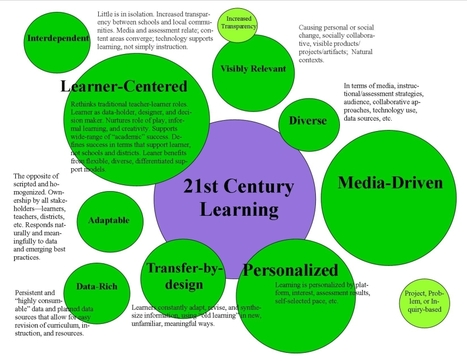
What does it mean when you say 21st century learning? This post lists nine characteristics of 21st century learning and provides a rationale. What makes this notable is "the absence of technology. There is very little about iPads, social media, 1:10 laptops, or other tech-implementation. In that way, it is closer to the 'classic' approach to 'good learning' than it is the full-on digital fare we often explore." The nine characteristics are in the diagram above and listed below: Learner-centered, Media-driven, Personalized, Tranfer-by-Design, Visibly Relevant, Data-Rich, Adaptable, Interdependent and Diverse.
|
|
Scooped by
Beth Dichter
August 30, 2012 6:40 PM
|
Good design - what is it and how does it impact our classroom? This post explores the principles of design, providing many ideas on how we might incorporate them into our classroom, stating "Well designed classrooms and educationa plans can have a positive impact on educational outcomes." Twenty-five design principles are listed with an explantion and how you might incorporate it in your room.
|
|
Scooped by
Beth Dichter
August 29, 2012 9:28 PM
|
"Polarization has come to public education, big time. If it persists, at the end of the day we all are going to lose." John Merrow looks at how polarized education has become in this post. He provides statistics such as (all quoted): * Half of our kids get no early education; * 22% of our children live in poverty, and; * 25% have chronic health conditions like asthma or obesity. He follows this discussion with seven ways that "we have become polarized about education." A few of the ways include: * We are polarized about accountability. * We are polarized about the role of technology. He then asks that we think about four words (which you will find in his article) and asks that we look at the need to move beyond polarization. This article has made me look more deeply at many issues confronting education.
|
|
Scooped by
Beth Dichter
August 29, 2012 4:08 PM
|
Educator Jessica Wise and her cohorts have come up with a compelling Ted-Ed video on how novels throughout history have helped shape real-world events. "Reading and stories can be an escape from real life, a window into another world -- but have you ever considered how new fictional experiences might change your perspective on real, everyday life?" Looking at a wide range of books, including 'Pride and Prejudice', 'Harry Potter' and 'The Hunger Games', "learn how popular fiction can spark public dialogue and shape culture." If you have not yet had a chance to check out TED-Ed, check out this video. Many other great videos are also available through TED-Ed.
|
|
|
Scooped by
Beth Dichter
September 6, 2012 6:23 AM
|
Between the cat images and celebrity garbage the Internet actually manages to boast educational potential. Considerable educational potential, in fact. A list of 28 ways to use Twitter in the classroom provides ideas that could be used in many grade levels although all ideas are not appropriate for all grade levels.
|
|
Scooped by
Beth Dichter
September 5, 2012 8:01 PM
|
If your school is considering using Edmodo or blogging this year this post may help you decide which tool is the best. Mr. G has experience using both tools in his school and shares insights in terms of what he sees as the best features in both, showing not only a "clear difference in usage but also...how beneficial they can both be."
|
|
Scooped by
Beth Dichter
September 4, 2012 10:55 PM
|
America spends a lot of money on education, and the announcement of the 2013 budget plan is no exception. This infographic looks at the cost of education, comparing the U.S. to other countries in terms of funding, graduation rates, and much more. You may find yourself surprised with some of this data.
|
|
Scooped by
Beth Dichter
September 4, 2012 6:53 PM
|
Paul Hamilton has created a new website that focuses on Universal Design for Learning (UDL). To quote his intro: "This site hosts information about Universal Design for Learning, and shares free and low-cost digital tools
that facilitate a UDL approach to learning, as well as tools to support learners with access challenges." You will find information on UDL, a section on access as well as sections on representation, expression and engagement (the cornerposts of UDL), and handouts.
This website is a work in progress, so be sure to return periodically to look for new ideas!
|
|
Scooped by
Beth Dichter
September 3, 2012 9:13 PM
|
Ask your students to imagine themselves at an assembly in June. All of their classmates, teachers, staff, even parents are there. What would happen if you asked students to "create their end-of-the-year legacy" the first week of school, and you had them review the legacy at the end of each grading period? This post explores these questions, and discusses the writing component as "one of the most poerful and efficient social-emotional and character deveopment interventions you can do for grades 5-12." The post discusses concepts that will need to be taught as well as questions you may want to use for discussion.
|
|
Scooped by
Beth Dichter
September 3, 2012 2:27 PM
|
Teachers may spend their days imparting knowledge to others, but that doesn’t mean they should stop learning themselves. A look at 50 resources for teachers to continue their growth as learners and educators, split into the following sections: * Essential Resources - sites "filled to the brim with articles, resources, and learning materials for teachers" * Courses and Workshops - sites to check out for professional development courses/workshops (free and for a fee) * Field Specific - if you are looking for "professional development materials specific to the area in which you teach" check out this section of the post * Skill Building - are there specific skills you need to learn for your classroom? These may help you out. * Groups and Organizations - more offerings of professional development resources for teachers * Social - ways to "reach out to other teachers and educational professsionals"
|
|
Scooped by
Beth Dichter
September 2, 2012 11:07 AM
|
Schools are now driven by data...but not all data is good data. This post looks at 10 ways the data by be problematic. It is not suggesting that you dismiss "data as a valuable teaching too, but understanding its limits in pursuit of better assessment design and data extraction practices, especially in the form of data-friendly curriculum and instrutional design." A list of 10 ways data "can sabatoge your teaching" is provided with explanations. The list includes: * The assessments are "bad" * Assessment is infrequent * Depth of Knowledge isn't factored * Inflexible curriculum that resists data "absorption" For more information click through to the article.
|
|
Scooped by
Beth Dichter
September 1, 2012 9:52 PM
|
An infographic that looks at how technology is used from an early age through college. It begins with looking at how many children can "operate a computer mouse" between the ages of 2 - 5 and finishes with looking at students use of social media, with quite a few stops in between.
|
|
Scooped by
Beth Dichter
August 31, 2012 6:27 AM
|
Are students today digital natives? And if they are, what does that mean? "Unlike the teachers and parents who have watched technology slowly phased into modern culture over the past three decades, today’s students have beten immersed in the digital era since birth." But does this mean thaty they have mastered all things digital? Will they approach 'all things digital' with enthusiasm? "In our experience, if students are not able to find answers to an Internet search in the first few results pages, they say “I can’t find it,” instead of adjusting their search, or reexamining the results in depth." This post explores this issue and provides some interesting perspectives on how to approach tools that may be new to them. A worthwhile read if you work with students and have noticed that they may become frustrated with tools that do not "instantaneously" gratify them.
|
|
Scooped by
Beth Dichter
August 30, 2012 7:50 PM
|
A librarian shares there experience with starting a ereader lending program. This is a detailed article that looks at the planning, research, determiniation of grade levels, cost, permissions, accessibility, teacher needs and more. Using a combination of words and images (see image above and there is another cartoon titles 'Travis's Excellent Adventure: The Devices' as well as a look at pros and cons of ereaders. Links to additional resources are also in this article.
|
|
Scooped by
Beth Dichter
August 30, 2012 7:42 AM
|
More schools and districts are going to the cloud...but what does that mean? This infographic provides some information about the benefits of being cloud-based as well as some of the issues that may arise. It also lets you know some of the suites available to educators in the cloud, other helpful cloud tools and looks at cloud adoption rates.
|
|
Scooped by
Beth Dichter
August 29, 2012 6:13 PM
|
What is EPIC-Ed? "Epic-ed [is] a national online community of practice, [which] offers a collaborative place where all educators can benefit from the opportunity to interact with others who are in the process of digital transition." They define digital transition as "the process of gradually moving away from a teacher-centered environment to a learning-centered environment." This page links you to their resources which includes the sections shown in the image: the four Cs, mobile learning, personalized learning, digital citizenship, highly connected educator and success story. A lengthy list of resources by category is also provided. A key component of EPIC-Ed is the digital transition cycle, which has four phases. The cycle may start from any of these phases: Vision, Plan, Implement, Assess. For more information on the digital transition cycle: https://www.epiced.org/page/digital-transition.
|



























When you are reading non-fiction in groups, here are some tools to help your students unpack Tier 2 and 3 words as they discuss their understanding and choose strategies to improve comprehension.