Your new post is loading...

|
Scooped by
Beth Dichter
August 29, 2012 6:22 AM
|
Richard Byrne shares a number of tools he uses in the classroom when using "documentary videos and new clips." How do you have students dicuss what they have seen? Pen and paper does not provide "immediate feedback" but the tools he suggests have that ability. Each of the tools listed below is discussed and an explanation is provided for each tool with some hints on how to use it. The tools included are: * SynchTube * Watch2gether * Vialogues * TED-Ed
|
|
Scooped by
Beth Dichter
August 28, 2012 5:58 PM
|
Are you looking for high quality lessons (using Common Core Standards) for math and ELA? LearnZillion took their team of "amazing teachers" and has posted close to 2,000 lessons online at no cost.
You may search for math lessons by typing in key word as well as grade level, domain and standard. ELA lessons may be searched by topic (grammar and idioms, phonics, reading, writing) as well as as well as grade level, strands and stanards. Lessons may include videos, slides and lesson commentary.
|
|
Scooped by
Beth Dichter
August 28, 2012 6:22 AM
|
"English language learners fall into two categories — native speakers and those pursuing it via ESL/EFL instruction (or self-instruction!). But both demographics can build up their skills, no matter their age or proficiency, through game-based learning. The Internet, in its infinite providence, does not disappoint when it comes to hosting effective resources for teaching and reviewing the core components of the English language. Here’s a few particularly useful games or, more accurately in most cases, suites of games." There is a wide range of games suggested and you should be able to find ones available for students from elementary school through high school.
|
|
Scooped by
Beth Dichter
August 27, 2012 9:40 PM
|
A high school student's plate isn't just filled with classes, but also tons of extracurriculars. Turn to your phone or tablet to manage the load. Here are ten apps that might help a high school student with homework and studying. Not all are free but all have value.
|
|
Scooped by
Beth Dichter
August 27, 2012 6:00 AM
|
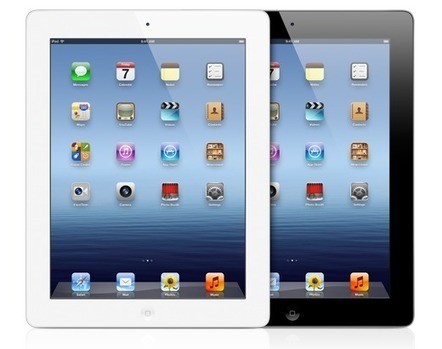
iPads are "wondrous little devices capable of enchanting learners for hours, to get the learning results you’re likely after will take planning, design, and reflection." This post discusses four areas of instruction and instructional design that will help you integrate iPad in the classroom. The four areas are each followed by three bullet points. See each area below, with one of the bullet points listed. Click through to the article for more information. * Curriculum is Adaptive (as in less rigid). There are "Learning pathways, embedded differentiation and personalization, culturally and cognitively responsive tasks and work that honors constructivist thinking and doing over passivity and compliance." * Instruction is diverse (as in less uniform). "With access to a nearly infinite number of digital domains, instruction will have to adapt in parallel, including peer-to-peer, student-to-student, school-to-school learning; mastery-based learning via apps such as the Khan Academy." * Assessment is Frequent and Formative (as in less intermittent and summative). "A climate of assessment that yields simple data digestible to all stakeholders–including the teacher." * Integrated with Relevant Communities (as in purely academic, or forced, awkward audiences–for the love of everything, please no more letters to the principals). Digital, Physical, Local, Global
|
|
Scooped by
Beth Dichter
August 26, 2012 9:26 PM
|
"Rhyme ‘n Learn is math and science taught by mnemonics. A mnemonic is a learning aid. It uses word associations like rhymes so that a term or fact is easier to recall later. An example of a mnemonic is “In fourteen hundred ninety two Columbus sailed the ocean blue.” I learned that in 3rd grade. Thanks Mrs. Erbach. Rhyme ‘n Learn was created by me, Joe Ocando. I’ve taught math and science to students of all ages and discovered that many find it difficult to memorize hundreds of new terms and facts. I also found that rote learning is boring and not very effective for long term retention." Currently there are 14 math raps and 11 science raps available.
|
|
Scooped by
Beth Dichter
August 26, 2012 8:55 PM
|
Chock-a-doc is "full of great documentaries." You may search by topic, title, or explore by catetories such as nature, education, philosophy, health, history and more (currently 30). With a diverse selection of over 2,000 documentaries this is a great site to check out when you want to know you need a documentary film.
|
|
Scooped by
Beth Dichter
August 26, 2012 8:17 AM
|
What makes the iPad brilliant is that it caters to all different intelligences. In fact most apps touch upon all different types of intelligences. I've tried to match all of my favorite educational apps with their corresponding intelligences. This post will provide links to iPad apps that are looked at using Gardner's Multiple Intelligences. It is important to remember that many apps may link to a variety of the intelligences. She also quotes Daniel Willingham "Children do differ in their abilities with different modalities, but teaching the child in his best modaility doesn't affect his educational achievement. What does matter is whether the child is taught in the content's best modality." Each multiple intelligence is represented in the full image. Click on the app icon to see in the App Store.
|
|
Scooped by
Beth Dichter
August 25, 2012 8:12 PM
|
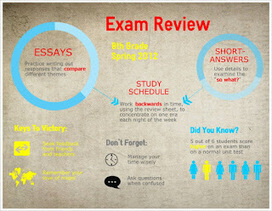
Are you interested in seeing some infographics created by students using the tool Easel.ly. This post not only share some infographics created by 4th and 8th grade students using Easel.ly it also explains the parameters that were set as well as hte goal. Students were able to learn to use Easel.ly in one period, and the "only instruction given to each class was a sample infographic of what needed to be included." Additional links to other resources is also provided, including a link to a page that includes additional tools you might use to create infographics as well as links to a wide range of infographics based on subject.
|
|
Scooped by
Beth Dichter
August 24, 2012 11:59 PM
|
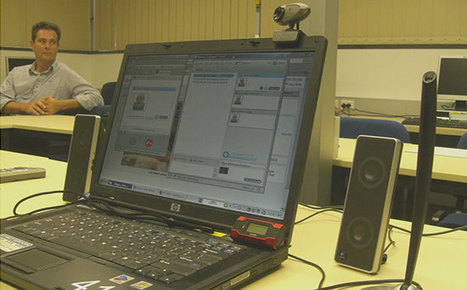
Skype, the free, ubiquitous VOIP downloadable, offers some unique opportunities for tech-savvy teachers to get their students learning in exciting new ways. Find ideas on how to use Skype to: * Collaborate * Communicate * Connect * And tools to help you do it!
|
|
Scooped by
Beth Dichter
August 24, 2012 9:29 PM
|
An infographic that looks at the current state of student access to digital learning devices released by Digital Learning Now. (Scroll down the pdf to see the complete infographic.) "The Digital Learning Now! Smart Series is a collection of interactive papers that will provide specific guidance for policy makers and educational leaders regarding adoption of Common Core Standards and the shift to personal digital learning." To see the complete report: http://digitallearningnow.com/wp-content/uploads/2012/08/DLN-Smart-Series-Paper-1-Final.pdf.
|
|
Scooped by
Beth Dichter
August 24, 2012 7:15 AM
|
As we look at Web 2.0 tools we must consider if we can use them with our students in the school. Many school have policies about social media websites, but one we often run into is the need for students to have email addresses. This list provides 20 Web 2.0 sites that do require a student email address to create an account. There is one additional piece of information that we also need to check and that it the policy of the site for students under the age of 13. I have not checked all these sites to see if students under 13 are allowed and the post does not mention this fact...so if you work with students under 13 make sure to check their policy. The list is wide-ranging from sources that are great for finding educational resouces to bookmarking/annoting websites to creating animated videos and more. Some may require a subscription for educators.
|
|
Scooped by
Beth Dichter
August 23, 2012 7:55 PM
|
Wesley Fryer has published a book, "Playing with Media: Simple Ideas for Powerful Sharing." This website provides information in 15 areas such as Interactive Writing, Narrated Slideshow/Screencast, Simulation and Visual Notetaking. In each area he provides a definition, a description of the workflow, links to tools and student examples. If you are considering trying some new tools check out this website for ideas!
|
|
|
Scooped by
Beth Dichter
August 28, 2012 9:47 PM
|
What will the new assessment tests look like when we move to testing on computers? Christopher Lehman explores this issues, noting that "there are loads of questions swirling around the development of these tests. My aim in this post is specifically to make sure you are aware of what is ahead, and more importantly, to suggest that you help your school keep an eye on what matters most — your students’ learning." He provides a look at what "technology-enhanced" items may look like on the new tests, including a link to a site where you may intereact with the test items. (Link to this site is http://pages.uoregon.edu/kscalise/taxonomy/taxonomy.html) There are also links to addtional computer-based assessments. After sharing this information Lehman asks us to consider an essential point - "our students' learning" and sharing some of the issues that computer-based testing may raise. This article provides much food for thought.
|
|
Scooped by
Beth Dichter
August 28, 2012 6:25 AM
|
In 2010 Professor Dylan Wiliam took over a year 8 classroom at Hertswood College and tested six simple ideas that transformed the quality of the class' education. Not only are these "tricks" worth looking at you will find a link to a documentary that is on YouTube and is worth watching.
|
|
Scooped by
Beth Dichter
August 27, 2012 9:47 PM
|
"Studies show that music has a strong effect on your mood levels and emotions, and also on how you think and your general intelligence. The music you listen to can have a profound effect on your test scores and your ability to quickly process information. And if you’ve ever played an instrument, studies show that you’re already ahead of the curve. Playing an instrument is a great way to test out your creative thinking and push your brain to process information in a new way. The following infographic takes a look at the notion that whether you’re listening or playing, a little music can go a long way."
|
|
Scooped by
Beth Dichter
August 27, 2012 8:41 PM
|
A look at some "big-picture ideas" that may help you think about ways to bring new tools and innovations into your classroom. Each idea (listed below) provides a link to more information. * Infuse passion into learning * Try something new * Consider the flipped classroom model * Tap into students' ideas * Consider the future school day
|
|
Scooped by
Beth Dichter
August 26, 2012 9:52 PM
|
A short clip from "the new HBO series The Newsroom...three minutes on education in the United States." Be aware that this clip contains some curse words, and notice the shift at about 2:10. Quoting from the post: The United States provides free education to every one of its citizens. This is an amazing right. Young people and parents in some third world countries fight for this right. So when did education become more about the test scores than about the learners’ passions? (Read on for additional questions that are raised providing opportunities for one to think and question about what education could be.)
|
|
Scooped by
Beth Dichter
August 26, 2012 9:05 PM
|
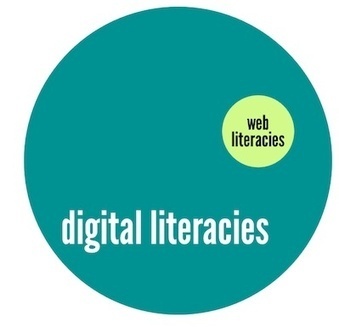
Digital literaces and web literacies - are they distinct from one another, or does one live within the other? This post looks at eight "essential elements of Digital Literaries: 1. Cultural; 2. Cognitive; 3. Constructive; 4. Communicative; 5. Confident; 6. Creative; 7. Critical and 8. Civic." After a brief discussion the concept of Web Literacies are addressed, with five elements being recognized: Exploring, Authoring, Connecting, Building and Protecting. The conclusion is that Web Literacies are a component of Digital Literacies. For additional information you may want to check out a video, Mozilla Web Literacies (and their relation to digital literacies): http://www.youtube.com/watch?v=9M_NOvqVn9I&feature=youtu.be.&nbsp.
|
|
Scooped by
Beth Dichter
August 26, 2012 11:39 AM
|
A new study indicates that musical instruction for just a few years during childhood can have long-lasting benefits... This post looks at a study published in the Journal of Neuroscience that finds that "just one to five years of experience playing music as a child was associated with an improved cognitive ability in processing complex sounds as a young adult." This study supports the need for public education to provide music education, "[Along with] earlier research, we infer that a few years of music lessons also confer advantages in how one perceives and attends to sounds in everyday communication situations, such as noisy restaurants." For more information click through to the article.
|
|
Scooped by
Beth Dichter
August 25, 2012 8:48 PM
|
So many apps are available for Androids, iPhones and other smartphones...so how to choose. This post provides "the very best smartphones apps that can help students this back-to-school season." The apps are oganized in the following categories: * Productivity & Organization * Reading & Writing * Reference * Safety * STEM To find a teacher's edition of the 50 Back-to-School Smartphone Apps: http://www.teachthought.com/technology/50-back-to-school-smartphone-apps-arranged-by-category/.
|
|
Scooped by
Beth Dichter
August 25, 2012 8:00 AM
|
"The iPad and other gesture based tablets have capture the minds and fingers of many in education. Whether its in pre-K or senior classes these intuitive devices are making changes to how teaching and learning occurs in the classroom." Andrew Churchill has provided links to websites that have information on iPads in many areas, including a list of apps broken down by curriculum area, by learning areas, the iPad as a multimedia tool and many more. Excellent resouces for the novice and experienced user!
|
|
Scooped by
Beth Dichter
August 24, 2012 10:10 PM
|
Larry Ferlazzo provides "a short and simple list of multimedia resources that would be useful for introducing students to the value of charts, graphs and infographics and what they mean."
|
|
Scooped by
Beth Dichter
August 24, 2012 7:41 PM
|
How much food do Amerians waste each day, month or year? The answer is way more than we thought. Here is some information that could make a great lesson this year. The National Resource Defense Council issed this research this year...and it turns out we have "a whole lot of leftovers." Why? Perhaps because of the "inefficiencies in the supply chain. As food moves from farm to fork (and then to the landfill) there are inefficiencies at many points." For more information and links to a variety of resources click through to the article.
|
|
Scooped by
Beth Dichter
August 23, 2012 9:51 PM
|
Do you know how quickly a computer today could crack your password? This site will tell you. Type in your password and it will tell you how quickly it might be hacked.
Many folks have simple passwords or they never change them. It is a good idea to change your password periodically and to make passwords that combine upper and lower case letters, numbers and symbols.
|