Your new post is loading...

|
Scooped by
Beth Dichter
September 14, 2012 9:25 PM
|
"Looking for a fresh way to create rich educational presentations? Meograph helps users create and share uniquely dynamic interactive projects, incorporating Google Maps and Google Earth to generate a story time line, which can be enhanced with images, video clips, text, audio narration, and links for more in-depth information." This is in Beta release, but you may sign up for an account. Currently it only works in Chrome but they say that versions for Firefox and Safari will be available.
|
|
Scooped by
Beth Dichter
September 13, 2012 9:33 PM
|
"Surviving as a teacher isn’t easy. Between the sheer work load, diversity of tasks, brutal pace, and seemingly divergent initiatives pulling you in a thousand directions, education can break even the most noble spirits. But it doesn’t have to be that way. Below are ten tips to keep you ticking when things get tough." The post also suggests that as teachers we need to find the balance between the needs of our learners and content. For some great suggestions check out this post!
|
|
Scooped by
Beth Dichter
September 13, 2012 7:53 PM
|
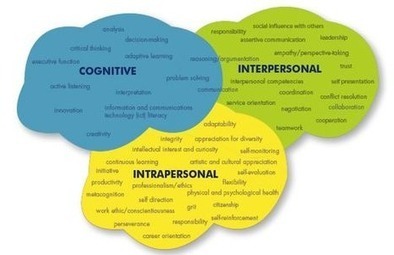
What is "deeper learning"? The National Research Council of the National Academies of Science released a report, Transferable Knowledge and Skills Key to Success in Education and Work. This report "calls for efforts to incorporate 'Deeper Learning' into curriculum." This post explores the three domains of competence that are discussed in the report: cognitive, intrapersonal and interpersonal. Each is defined and the question is raised, can deeper learning be taught? The post provides a great overview and here is the link to the full report: http://www7.nationalacademies.org/bota/Deeper_Learning_Report_Homepage2.html.
|
|
Scooped by
Beth Dichter
September 12, 2012 8:14 PM
|
Google is offering a course on Power Searching. This course was offered over the summer and provides an opportunity to help you become a better search. "This is an online, community-based course showcasing search techniques and how you can use them to solve real, everyday problems. Dan Russell, a senior research scientist at Google, will cover topics that will help you: * Find just what you’re looking for, faster * Get right to the most credible sources * Solve even the most challenging questions You can find additional information and register by clicking through to the site.
|
|
Scooped by
Beth Dichter
September 12, 2012 7:16 PM
|
Wikipedia's stated goal to be a neutral fact-based encyclopedia has enabled it to accumulate an incredible amount of useful information. But what happens when it is your work that you are trying to correct? And have you heard of citogenesis? An interesting article that looks at why some teachers do not believe that Wikipedia should be used in the classroom.
|
|
Scooped by
Beth Dichter
September 11, 2012 9:30 PM
|
A list of guiding questions we might want to be asking ourselves and other teachers including: * What can we do to increase the cognitive complexity of students' day-to-day work so they are more often doing deeper thinking and learning work? * What can we do to better incorporate digital technologies into students' deeper thinking and learning in ways that are authentic, relevant, meaningful, and powerful? Read on for an additional five questins and feel free to comment by adding new questions or suggesting changes to current questions.
|
|
Scooped by
Beth Dichter
September 11, 2012 7:38 PM
|
Have you asked yourself what the experts, teachers and students are saying about using gaming in your classroom? Here are 50 videos that look at gaming in education. When you look at gaming in education you look at "board games, video games, even active outdoor games...all have an important place in education." To learn more check out the list (with short descriptions) and choose which ones will help you learn more.
|
|
Scooped by
Beth Dichter
September 10, 2012 9:29 PM
|
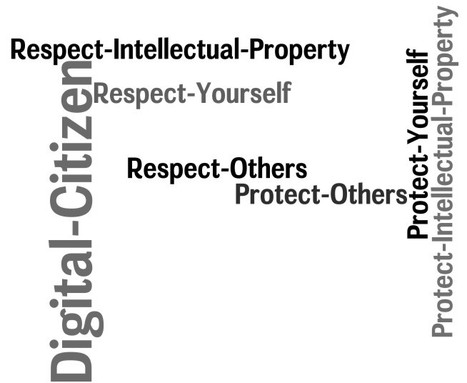
"Education Alberta (Canada) has published a Development guide for Digital Citizenship Policy. This is an extensive document which includes some of my work (Andrew Churches) and that of my esteemed colleague Dr Jason Ohler. This is a great resource and well worth downloading and working through. It is about 80+ pages so you do need to put aside a little time to do this." I would second what Andrew Churches says above. This is a great resource if your are interested in Digital Citizenship Policy. To go directly to the pdf: http://education.alberta.ca/media/6735100/digital%20citizenship%20policy%20development%20guide.pdf.
|
|
Scooped by
Beth Dichter
September 9, 2012 8:39 PM
|
What should the goals of gifted education be? Perhaps the goals of all education forall children... “Rather than portray the needs of gifted students as being unique, we suggest weaving them into the general education tapestry. To accomplish this, we would revise the chief goal of gifted education to be the chief goal of all education: to ensure that all students receive the education appropriate for them at any given time by maximizing the match between individual students’ educational experiences with their individual educational needs.”
|
|
Scooped by
Beth Dichter
September 9, 2012 5:23 PM
|
"The highly talented and highly artistic Giulia Forsythe, recently shared this “Visual Diary” that she created for the “How We Measure” chapter of Now You See It. On a scale of 1 to 10…just kidding! But this image really does knock my socks off!"
|
|
Scooped by
Beth Dichter
September 8, 2012 5:15 PM
|
Rocket21 is a free web resource to help support tweens (defined as youth ages 9 - 15) "to explore their interests, passions and future careers with real-life professionals." According to an article on Mashable (http://mashable.com/2012/09/07/rocket21) the site, which works as an open forum will provide "an opportunity for kids to explore their dreams with some of the brightest minds in the world.” The website will allow students to (quoting from the Rocket21 website): * Learn about 21st century jobs and pursuits * Connect with experts from a wide range of professions * Explore the evolving range of options with STEM disciplines * Gain an insider's view of careers ranging from engineers to musicians to teachers * Take responsibility for exploring their own choices and futures If you work with tweens this site is worth checking out. There are links applicable to members (as in students), educators and parents. If a child is under 13 the parent must confirm their registration.
|
|
Scooped by
Beth Dichter
September 7, 2012 6:31 AM
|
Labor Day has come and gone and we might ask if our students understand the history of this day. What is the true meaning? This post uses a variety of infographics to help students learn about Labor Day (and in the process about infographics). Do you students that "Labor Day is considered the "working man's holiday," or that the term "labor" by definition means exhausting, hard, physical work"? The post includes links to additional infographics as well as some other resources.
|
|
Scooped by
Beth Dichter
September 6, 2012 10:34 PM
|
A primer on some of the best free tech tools for teachers. Richard Byrne recommends 12 "awesome EdTEch tools" and provides an alternative resource (in all but one case) since some may be blocked. Great tools as well as ideas on how to use them in your classroom!
|
|
|
Scooped by
Beth Dichter
September 13, 2012 10:27 PM
|
Today the U.S. is polarized, yet this post by John Merrow states "I have found something that unites Republicans and Democrats: neither party talks about poverty, despite our current epidemic of child poverty and its consequences for the life chances of millions of children." Merrow continues to discuss poverty, and what he describes as its "evil twin, greed" stating that "we cannot solve on in isolation." He provides a number of statistics from the National Center for Children in Poverty, including: * 31% of white children - 12.1 million - live in low-income families. * 64% of black children - 6.5 million - live in low-income families. * 31% of Asian children - 1.0 million - live in low-income families. * 63% of Hispanic children - 10.7 million - live in low-income families. When you add in American Indian and children of other races, 30 million children live in poverty. For more information on this and to learn more about "deep poverty" and "normal poverty" as well as a look at salary differentials between the typical CEO and the typical worker click through to the article. Merrow suggest that "if we backed away from greed, we would be more open to recognize the scourge of poverty and the long term threat it poses to our nation."
|
|
Scooped by
Beth Dichter
September 13, 2012 8:57 PM
|
A look at what hapened at Plymouth South High School last year when one class "attempted to transform the traditional research process to a completely paperless one using a fresh cart of iPads." A number of goals were "outlined prior to the research process" and included (quoting from the post): * Students will crowd-source their research to a collective research group. * Students will incorporate varied media types into their research: web based text, traditional text, audio and video. * Students will work collaboratively with their teacher and classmates on their research and writing process. * Students will become proficient researching and writing in a digital environment. The post alos discusses the process of going paperles and "moving forward and going paperless."
|
|
Scooped by
Beth Dichter
September 12, 2012 8:37 PM
|
|
|
Scooped by
Beth Dichter
September 12, 2012 7:56 PM
|
There was a time when my sole purpose for living and breathing, my ultimate dream, was to sign a contract -- a contract to play professional baseball. I simply wanted the opportunity to work hard in order to create a better me for the entire team. What if you take that energy and put it in your classroom, allowing students to sign a contract? This post shares the experience of a teacher in an American Literature course who began a project-based learning assignment that provided options for the students to demonstrate their learning through a project of their choice.
For more information continue on to the article.
|
|
Scooped by
Beth Dichter
September 11, 2012 9:57 PM
|
Creativity is comprised of four factors. Just remember this equation: Creativity = Surprise + Originality + Beauty + Utility. When you read this post you will find that there are four common criteria that are often used when defining creativity: 1. Flexibility 2. Originality 3. Fluency 4. Elaboration For more information on the four criteria and information on the four factors that this post uses to define creativity click through to the article.
|
|
Scooped by
Beth Dichter
September 11, 2012 8:07 PM
|
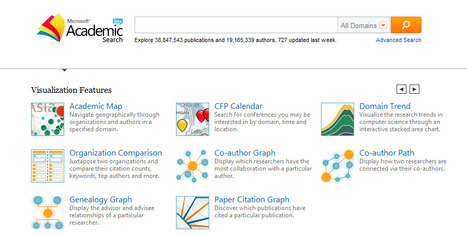
Joyce Valenza provides a look at three "relatively new options" in searching that may be new to you. She looks at Google Scholar which has a "Making New Connections" component; Microsoft's Academic Search, which "offers the added value of allowing searchers to select one or more domains or disciplines and to filter by subdomain, publication, author, source type, organization, or keyword." In addition they also have new "data visualization features that offer searchers and scholars a view of the scholarly patters and relationships, highlighting critical links that help define scientific research."; and Mendeley, " a tool for the individual researcher and the opportunity to participate in research communities to share intelligence within a field of study."
For more information on all three tools check out the article.
|
|
Scooped by
Beth Dichter
September 10, 2012 9:46 PM
|
An interesting discussion on ways to make writing an authentic experience for your students. Ideas include writing for the school newsletter, publishing ebooks, writing ne ws reports, creating textbooks for ohter grades levels and much more. Check it out for ideas and add your thoughts to the comment section.
|
|
Scooped by
Beth Dichter
September 10, 2012 9:15 PM
|
What are the 21st Century skills? According to this post, which defines them based on the Serious Play conference, the skills range "from Virtual IQ, empathy, leadership, and ethics, to collaboration, communication, innovation, entrepreneurship, global perspective, and critical thinking." The next question to ask might be how do games support these skills? This post explores these issues in more detail. After looking at 21st Century skills a breakdwon of "essential competencies for a student in the Information Age" is provided, which looks at: * Ways of thinking * Ways of working * Tools for working * Skills for living in the world For more information on this click through to the post.
|
|
Scooped by
Beth Dichter
September 9, 2012 7:40 PM
|
What makes a great teacher, and how do they treat their students in the classroom? This infographic provides a look at this and if you go to the website and scroll down past the infographic you will find many "fast facts about education and teachers in America" as well as information on great teachers, teaching from the perspective of the 2012 National Teacher of the Year and more.
|
|
Scooped by
Beth Dichter
September 8, 2012 9:18 PM
|
The Common Core State Standards may "share many features and concepts with existing standards" but "the new standards also represent a substantial departure from current practice in a number of respects." This post looks at the differences in Mathematics and ELA, providing an explanation with some details for each difference. In Mathematics the differences listed are;
* Greater Focus * Coherence * Skills, Understanding, and Application * Emphasis on Practices In English Language Arts the differences listed are:
* More Nonfiction * Focus on Evidence * "Staircase" of Text Complexity * Speaking and Listening * Literacy in the Content Area
|
|
Scooped by
Beth Dichter
September 7, 2012 9:31 PM
|
This post begins: "Can creativity be taught? If innovation is truly the key to this country’s success, then it’s time to think strategically about engendering creativity into our education system." It reviews a new book, 'Ingenius: A Crash Course in Creativity.' The author, Tina Seelig, discusses her 'celebrated Innovation Engine' which consists of 'three internal human factors and three external influences. The three interal human factors are: * Knowledge which provides fuel for your imagination * Imagination which is the catalyst for transforming knowledge into ideas * Attitude - the spark that set the Innovation Engine in motion For information on the three external influences as well as using failure to learn click through to the article.
|
|
Scooped by
Beth Dichter
September 6, 2012 11:28 PM
|
No matter how far we evolve from the little red schoolhouse, we cannot afford to sacrifice the foundation of education that is built upon the unique relationship between teacher and student. Education is undergoing a "seismic change" as more and more digital devices enter the classroom. This article looks at the digital devices and at the teacher, stating "the motherboard and the memory chip will never replace the passion and inspiration of a real-life teacher." The article points out that for new technology to work teachers must be trained effectively in the new technology. Information on the replacement of traditional textbooks with digital textbooks is also discussed. Two school districts are mentioned that saw significant improvement with state testing scores (in specific subjects) with the introducation of digital textbooks. Based on the information presented it is clear that for digital content to work well teachers must be trained. Without the training the achievment gap will not be impacted. For more information click through to the article.
|