


"If you're a student looking for supplemental education, learn how you can find affordable options online."This infographic explores options for education available online as well as places to find online courses and the benefits and issues

 Your new post is loading...
 Scoop.it! "If you're a student looking for supplemental education, learn how you can find affordable options online."This infographic explores options for education available online as well as places to find online courses and the benefits and issues No comment yet.
Sign up to comment
Scoop.it!

Refraction is "an online puzzle game for teaching fractions." To be successful you will need a knowledge of fractions. Spaceships with a variety of animals are stuck in space. To rescue them you work with lasers, bending them and using fraction concepts: "equal partitioning, addition, multiplication, mixed numbers, improper fractions, and common denominators."
Scoop.it!

Gaming in the classroom as a teaching tool is gaining popularity; however, some question whether or not it's actually effective. This infographic looks at some of the information that is known about video games. After a quick look at some statistics the infographic looks at benefits and concerns about video games and provides some resources. 
Ryan McDonough's curator insight,
July 7, 2014 5:55 PM
Covering the pros and cons of gaming, at least in the minds of some educators. I've covered the pros in depth here, so I'll review the concerns here. Some feel like violence in games can be a poor influence on impressionable children. Opponents claim that kids play games at home so why should they play them at school? Difficulty monitoring online activity; funding and resource allocation are also major reasons some are apprehensive over video games in school. Do I personally agree with them? No. But I was also raised in an environment that nurtured my love for gaming. Some of these questions should merit constructive conversations at the next faculty/staff meeting. 
Pandawami29's curator insight,
October 31, 2014 11:49 AM
This little chart shows us the pros and cons of using video games for educational purposes. Also the background is from the mario games.
Scoop.it!

Digital educational games, interactives, virtual labs are excellent resources to assist learning and raising interests for inquiry or investigation. To visualize concepts or to do experiments on computers are cost-effective and efficient. Some games even use role-playing techniques or story lines. Some games create a virtual journey which is impossible to have in real world. We just featured Zombie Plague recently and thought we should give a review on all those quality sources of science learning games. Most sites are from education institutions, non-profit organizations or sponsored by grants, they are free to play. (Simulations are not included in this post, we’ll try to make another post for them) Games for kids of all ages are listed. A great resource to help students explore science. 
Cynthia Mosley's curator insight,
June 30, 2015 6:20 PM
This site provides digital educational games that provides visual concepts along with experiment activities.
Scoop.it!
Ten tips and tricks when using iPads in a classroom!
Scoop.it!
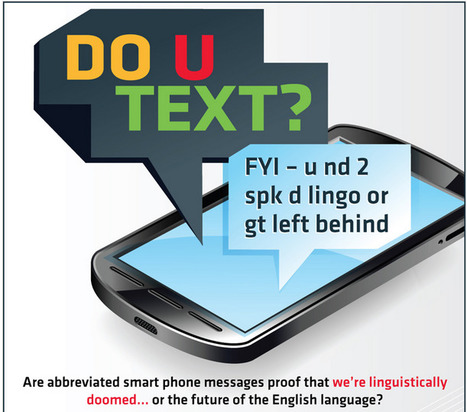
"From OMG to LOL, there’s no denying that texting has changed the way we communicate with each other. Look no further than the fact that you don’t need clarification of what OMG or LOL means as proof that our written communication is evolving." There have been a number of studies that look at how texting impacts education, but results are mixed. Do you think that "text talk" is now a "legitimate form of communication"? Will it improve our communication or negatively impact it? For more information check out the infographic.
Scoop.it!
"The following is a summary from 1,575 interviews with students, teachers and parents in the U.S., Germany and China. What we found is that students, teachers and parents agree that technology is critical to learning, but have differing opinions about how best to use it in the classroom." The information is often shown through infographics and you may find some quite surprising. 
Laura O'Brien's curator insight,
December 5, 2014 12:04 PM
Being that I was bought up in an era that had just introduced great technology, social media was not as heavily popular when I was in grade school. Therefore, I've always been curious about the role of social media in education. This is a great read.
Scoop.it!

Did you know that a new study from NortonLive shows "that 1/3 of college students find technology issues to be among their top three stressors (even more so than financial issues or studying for finals)." This infographic provides additional findings such as: * the average amount spent on technology was $760 * a laptop/desktop computer malfunction would be a "complete disaster" according to 81% For more information check out the infographic.
Scoop.it!

A while ago Edudemic published their 2012 A-Z Guide to Twitter Hashtags. This is a great resource, and now there is a new way to view it thanks to Online Courses. Check out this infographic that lets you know the most popular educational hashtags. They are categorized by color into: education, most popular according to Edudemic, technology, Higher Ed, subject specific, specific areas/roles and K-12.
Scoop.it!

This is the fourth of what will be eight posts that looks at myths about digital learning. The first three are: Myth #1: Students and teachers can find everything they want online Myth #2: Digital learning in non-linear Myth #3: The digital classroom is a playground Myth # 4 looks at"Digital learning in interactive." She begins this post with the statements 'Learning has become more and more interactive with an increased dose of engagement, no wonder we are teaching with the thing students love the most: technology.' (A quote that comes from Educational Technology and Mobile Learning.) She states that this is a myth, comparing it to the concept of a digital native and suggests that "interactive (is) probably the most over-used work in learning today." To directly link to the post: http://eskymaclj.blogspot.fr/2012/10/myth-4-digital-learning-is-interactive.html.
Scoop.it!

How would you explain blended learning? Not sure...well here is a video that will provide an explanation (about 6 minutes in length) as well as additional information covering topics such as the benefits of blended learning, what blended learning is not, and exploring the possibilities.
Scoop.it!

Are you looking for great resources to teach students how to do research online? Then check out this post. The links range from resources geared to elementary school to middle school and high school. How do you create a bibliography? Evaluate a website? Learn new search techniques? These and other skills are available in the links provided.
Scoop.it!
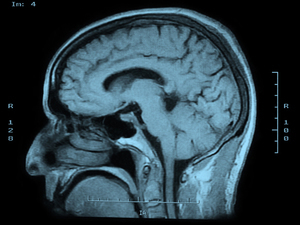
New research presented at the Society for Neuroscience meeting suggests that teens are not necessarily wired to be impulsive. Researchers are also learning more about why it's important to treat problems like depression in teens early. According to this post "The teen brain isn't broken," says Jay Giedd, a child psychiatry researcher at the National Institute of Mental Health. He says the rapid changes occurring in the brains of teenagers make these years "a time of enormous opportunity." A new perspective on the adolescent brain...click through to read the complete post. |
Scoop.it!

Are you looking for a scientific equation search engine? If so check out Symbolab, a search engine that is semantic. Richard Byrne states "rather than just searching the text of your query Symabolab attempts to interpret and search for the meaning of your query" and he suggests you think of "Symbolab as a cross between Google and Wolfram Alpha."
Scoop.it!

65% of today's grade school kids will end up at jobs that haven't been invented yet.That statement comes from the U.S. Department of Labor. Are we preparing our students "for a world that doesn't exist yet?" This infographic explores this idea and compares education today to what it may be in 2025, as well as how offices and jobs may change.
Scoop.it!
Technology and interaction - do the two go together? This post looks at how "the rise of technology...has made learning more interactive." After a short discussion this post provides links to 11 tools that may help with project-based learning. Many have free apps available. Some are browser based and others may have costs involved.
Scoop.it!

More than eight in ten Americans ages 16-29 read a book in the past year, and six in ten used their local public library. Many say they are reading more in the era of digital content, especially on their mobile phones and on computers. This report by the Pew Research Center's Internet & American Life Project examines how readers (age 16 - 29) "encounter and consumer books in different formats." There are many findings in this report and three are listed below (quoted): * 83% of American between the ages of 16 and 29 read a book in the past year. Some 75% read a print book, 19% read an e-book, and 11% listened to an audio book. * Many of these young readers do not know they can borrow an e-book from a library, and a majority of them express the wish they could do so on pre-loaded e-readers. * High schoolers (age 16 -17) are especially reliant on their library for their reading and research needs...College age-adults (ages 18 - 24) show interesting shifts in their reading habits compared with high schoolers. They have the highest overall reading rate of any age group...Adults in their late twenties (ages 25 - 29) exhibit different patterns when compared with younger age groups. Many more facts on reading habits, how e-content affects reading habits, and other areas related to reading are also covered.
Scoop.it!

Do you have a great idea for you classroom but you need to find a grant to make it happen? If so, check out GetEdFunding, a new site sponsored by CDWG. This post states that "currently, there are more than 750 grants and rewards on the site." The site does require registration but it is free and certainly worth checking out. To go directly to the site: http://www.getedfunding.com/.
Scoop.it!

Thinking..is there enough thinking by students, teachers, administrators and policy makers in education? Grant Wiggins states "We know more but are oddly increasingly? - thoughtless. Why?" The post makes it clear that how we understand definitions of a number of terms is critical. After a discussion on words thoughtful and thoughtless the post is split into the following sections: * What is Thoughtfulness? * A Common Thoughtless Comment * Thinking About Our Continued Thoughtlessness This article was the first of three posts. The second post can be found at http://grantwiggins.wordpress.com/2012/09/14/thoughtlessness-part-2/. The third post in the series may be accessed at Wiggins website. It is called Grit, character and academic success: thoughtlessness, part 3.
Scoop.it!

This post is written by a student and begins: Can creativity be taught? Absolutely. The real question is: “How do we teach it?” In school, instead of crossing subjects and classes, we teach them in a very rigid manner. Very rarely do you witness math and science teachers or English and history teachers collaborating with each other. Nikhil Goyal, a senior at Syosset High School then provides a look from the student viewpoint about what is and is not working in schools. A great read!
Scoop.it!

Check out five online resources on Shakespeare. The five websites are: * 60 Second Shakespeare challenge from the BBC * The Playwright Game from PBS * Shakespearean Murder Mystery * Shakespeare App * Making a Scene - blog with many ideas on how to bring Shakespeare to life in your classroom 
Antonia Atria's curator insight,
November 7, 2013 8:32 AM
Really useful information to understanding shakepeare! 
Kelly Brenner Smith's curator insight,
June 26, 2014 10:42 AM
Check out these resources for reading, understanding, and interpreting works by Shakespeare. 
Sumayya Qudrat's curator insight,
April 9, 2015 12:01 AM
different shakespeare units to use in a classroom
Scoop.it!

What happens when you tell your students to "pay attention!" More than you may think. This post explores what goes on in the brain and ways the brain pays attention. Research is shared as well as what you can do in your classroom immediately as well what you can do in the long term. You may also choose to view a video of a session "Teaching with the Brain in Mind" at http://www.scilearn.com/company/webinars/ (you will need to scroll down the page to find the link). 
Ruth Virginia Barton's curator insight,
February 13, 2015 10:37 AM
"Instead of saying to students, “Pay attention!” what you really want to say is, “Suppress interesting things!” Why? Students already DO pay attention." The point being, prolonged attention paying is a learned skill, practiced. Intersperse teaching with stand-up breaks, quick physical activity. Create "hooks' for attention - previews - and offer rewards - like homework free pass this month - for students who get it right; helps them be invested in topic
Scoop.it!

The NY Times is beginning a new feature called "What's Going on in this Picture?" This post introduces Visual Thinking Strategies (V.T.S.). "How do you make sense of what you see when you look at an image, especially if that image comes with no caption, headline, links or other clues about its origins? What can constructing meaning from an image teach you?" While V.T.S. uses works of visual art, the NT Times will be using photojournalism and hosting an online discussion. On Monday they will post an image "with no caption, no headline and no helpful link back to an article." The goal is to answer "What's going on in this picture?" based on what you "can gather from the image itself." 
Cristian David Muñoz Alvarez's curator insight,
October 3, 2015 9:48 AM
El arte de observar críticamente
Scoop.it!

Judy Willis, a neurologist & middle grades teacher, says adolescent brains learn more through interactive, interdependent group work. Did you know that "peer group influence plays an important developmental role in the psychosocial process of separation from parents"? What does this mean to teachers of middle school students? That "interactive, interdependent group work" helps middle school students "build happy, learning brains." This post will help you learn more about brain science, successful group work, how to plan for success, provides some researched-based guidelines and more. 
Devon Clarke's curator insight,
October 22, 2014 4:44 PM
When it comes to adolescents brain development in our western society today we can rely on school systems to play a large role in this. In this article is talks about how cooperative work groups in middle schools are the best ways for children to learn (Willis, 2012). I found this article to relate very closely to an academic journal I read comparing social development in pre schoolers in a values education program (Dereli-Iman, E, 2014, p.263). In the experiment of the academic journal researches found that children put into the values education program had better social development and less behavioural issues (Dereli-Iman, E, 2014, p.263). Even though this article of cooperative groups deals with middle schools students, it proves to say that cooperative learning groups gets all children involved, and forms for the greatest levels of conceptual learning (Dereli-Iman, E, 2014, p.263). In the text book Exploring Psychology in Modules, they state that day care is an area that has a huge impact on a child's development (Myers & Myers, 2008, p. 148). As Whetten stated, good quality child care is a warm and stimulations place for children, and poor child care is boring for this children making them unresponsive (Myers & Myers, 2008, p. 149). From these three articles you can see that schooling for children plays a huge role in brain development, and it is important to make sure they are in a good environment. Thought the author of this article, Judy Willis did not use a lot of scientific reasoning and proof in her article I found her findings and background to be very impressive. It would have made the article a little bit better if she would have added in some statistics to back up her reasoning about cooperative groups (Willis, 2012). A possible diverse group that would be effected through cooperative learning are kids from other countries who do not speak the foreign language. If a child was put into a cooperative group and was not able to converse with the other children it could possibly lead to negative outcomes for that student. Sources: Myers, D. G., & Myers, D. G. (2008). Exploring psychology in modules. New York, NY: Worth Publishers.
Willis, J. (2012, September 14). Brain Research: Adolescents Learn More in Cooperative Groups | MiddleWeb. Retrieved from http://www.middleweb.com/2847/how-to-build-happy-brains/ Dereli-İman, E. (2014). The Effect of the Values Education Programme on 5.5-6 year old children’s social development: social skills, psycho-social development and social problem solving skills. Kuram Ve Uygulamada Eğitim Bilimleri, 14(1), 262-268.
Ruth Virginia Barton's curator insight,
February 13, 2015 11:08 AM
Supportive middle school teaching strategies like cooperative learning, class celebrations, and community-school collaborations lower stress and increase resilience in students and create HAPPY MIDDLE-SCHOOL BRAINS, neuro-imaging shows.
Scoop.it!

With the breath of eReaders available and costs coming down what is happening in the print world? Are books becoming endangered? According to this infographic book should be with us for some time. The numbers of folks with eReaders is increasing, but many still like the "look and feel of a physical book." More information may be found in the infographic. |






