The Exploratorium has taken some of their most popular exhibits and created "Snacks" - "miniature science exhibits that teachers could make using common, inexpensive, easily available materials."
Snacks come with "easy-to-follow sections that include instructions, advice, and helpful hint" and also includes an image of the project, an introducation, list of materials, assembly instructions and more.
Although written with high school teachers in mind, Snacks are now being used by elementary and middle school teachers as well as colleges, and by teachers of art, as well as math, shop and more. They have even made their way to community groups.
If you are looking for some science experiments to use in your classroom check out Science Snacks at the Exploratorium!
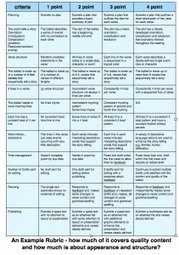
We are told that we should be personalizing instruction, but how do we know that this is happening? This post explores this dilemna and provides an example rubric that looks at issues of quality control as well as appearance and structure.
As teachers we are aware that issues of accuracy and understanding are critical. Yet our tasks are shifting, and Gleeson also brings up ten questions that we should consider that include:
* Are we expecting students to provide evidence for every fact they state in a report (and are we checking them)?
* Are we putting more emphasis on presentation and note enough on the content?
* Do our assessment rubrics give enough credit for the accuracy, depth and understanding of the information or are these factors downplayed at the expense of grammar, text structure, presentation and checklist of what requirements were met?
*Do we check for understanding of the references they use to research their topic?
An additional six questions are raised in the post. This post may raise more questions that it answers, but it draws attention to issues that we are facing in our classroom.
How do you assess 21st century skills? This post explores this issue and sugests that "the term 'assessment' needs to be examined. "At its core, assessment should be thought of as an opportunity to give feedback. Without giving students specific, targeted feedback on how they are performing these skills, students will have little opportunity to understand how to improve their level of creativity, become better researchers through increased information literacy skills, become better at collaborating with groups for project creation and problem solving, or develop good habits of mind to become self-directed learners."
The question then becomes how do we effectively assess these skills? What criteria should be used?
The post provides some suggestions as well as links to a number of resources.
The Common Core has brought the concept of college and career readiness…so, what is college readiness? This infographic explores this question. It looks a traditional factors that high schools and colleges value as well as performance in college courses. Key cognitive strategies, academic knowledge and skills, academic behaviors and contextual skills and awareness are also address as are what schools and students may due to foster college readiness.
Technology is a powerful tool for learning that can be used effectively to help students develop the skills necessary to succeed in school and beyond.
Susan Oxnevad provides a great visual to help understand the instructional shifts (and in fact, there are six shifts she discusses within her article). She states "Students can develop transferrable knowledge and skills as they engage in learning experiences that require them to construct knowledge. In order to facilitate these types of deep learning experiences, an adjustment in traditional instructional practices is necessary. These ideas are supported by the Common Core State Standards."
There are many places where one may go and download free audtio books. This posts lists 10 locations, providing a brief explanation for each. The sites vary with some geared to to children and others to adults. Audio books are great for students whom may struggle with reading, as well as for long drives and walks. And all these sites are legal. They host books in the public domain.
"In an increasingly knowledge-based economy, where the daily tasks required in a large number of jobs require not repetitive button-pushing but independent and complex thinking, we are often exhorted to "be creative" or "use some creativity." Which would be fine, if creativity were a little dance one could do on command like a well-trained circus seal. But, for better or worse, the act of creation contains a certain morsel of irreducible mystery. It's intuitive and holistic, rather than analytical and linear (which is the gear we're usually in when we're struggling to get work done).'
This post provides a list of eleven factors that impact creativity, each with an explanation. Some of the factors are: shame, ego, politics, collaborators and deadlines. For more information click through to the post.
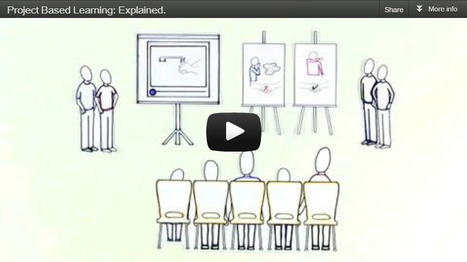
Have you wondered what Project-Based Learning? Are you interested in watching a short video by Common Craft, a well know organization that creates short animated films that discuss the key elements of the topic at hand? The Buck Institute for Education commissioned this video (and they are know for Project-Based Learning).
Why concern yourself with Project-Based Learning? A key reason is that projects help promote 21st century learning including collaboration, communication and critical thinking skills.
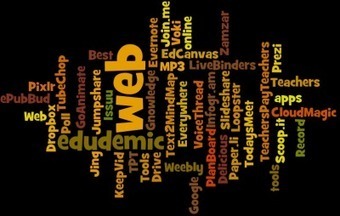
A slideshow of the "30 Best Web 2.0 Tools" that contains many popular tools. Most are free (although a few have costs involved) and chances are there may be one or two that are new to you. "Each slide...contains the name, description, link and screenshot of what each tool looks like and does."
Have fun exploring and bringing a new tool into your classroom.
This shows you multiple sites, and web 2.0 tools. It is very handy to have in case you want to explore different ways to present things on the computer.
this pin talks about a useful way to keep all teacher related items in folders. a good way to store homework and student assignments in a beneficial way
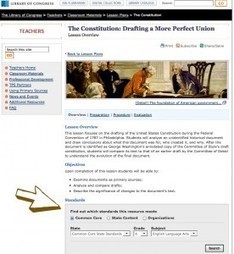
The Library of Congress (LOC) "has made its already fabulous teaching resources–designed to inspire analysis, critical thinking, and the value of working with primary sources–more findable for teachers by aligning them to the Common Core State Standards (CCSS)." This post, by Joyce Valenza, provides a great in-depth look at how to Search by Standards and also suggests some of the other tools available at the LOC.
"In December, 2011, Ian Waitz, MIT’s Dean of Engineering, launched the MIT-K12 project, driven by a series of questions: How can we change the perception of the role of engineers and scientists in the world? What can MIT do, right now, to improve STEM education at the K12 level? What if MIT became a publicly accessible “experiential partner” to the country’s K12 educators? What if MIT students generated short-form videos to complement the work those educators are already doing in their classrooms and homes?"
Some products of the work that answers these questions are now available on this website. The videos explain STEM questions and are sorted by grade level as well as science categories: astornomy, biology, chemistry, earth science, engineering, physics and transportation. MIT continues to be very supportive of education and brings out new tools we can use in our classroom. This site is in the beginning stages, and will accept proposals for videos that you would like to see created. Much more information is available at the site.
Making videos? Young people do it all the time, I need a class please. I can push record, but there are other things to consider, like presentation and content. Right?
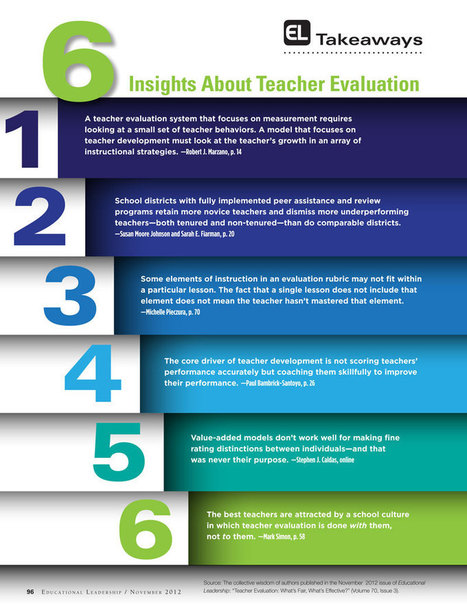
The November issue of Educational Leadership will "focus on the theme of 'Teacher Evaluation: What's Fair? What's Effective?'" For a sneak peak check out the infographic. Six insight are provided that look at teacher evaluation.
Topic 2: I hope this infographic is helpful, because it does a really nice job of breaking down the teacher evaluation process into six big ideas. It focuses on using the evaluation as a process for teacher growth, instead of oversight and punitive measures.
"TeachEm is a free and user friendly digital tool that allows users to capture YouTube content, organize it, and add time stamped flashcards to guide the learning. It's simple, smart and efficient which makes it a good tool for busy teachers interested in implementing a Flipped Classroom instructional model."
As a teacher you can sign up for a free account (and create your own school). You create a class, put in links from videos you have selected (or search through TeachEm) and put in flash cards with that are associated with specific times of the videos. Classes may be public or private.
For more information and ideas on how to use TeachEm in the classroom click through to the article, or go directly to TeachEm at http://teachem.com/.
The Smithsonian asks and answers questions about science, art, history and culture, exciting the learning in everyone, every day.
The Smithsonian has recently launched a new website seriouslyamazing.com which “poses questions and answers to show people how it can be an exciting resource for discovery and learning.”
They have created " seven quirky characthers to symbolize the questions the Smithsonian asks and answers every day:
* The Wild represents the diversity of the animal kingdom * The Mash-Up stands for the ways people share culture * The Green reflects the wonder of the natural landscape * The New is where technology and creativity collide * The Masterpiece embodies artistic expression * The Storyteller is about America, its people and the tales they tell * The Discoverer explores our world and the universe
Take some time to explore this site. You may discover many new resources available at the Smithonian!
Pew Research has just published a study that looks at how teens do research in the digital world. They survey was done "in collaboration with the College Board and the National Writing Project." Below are a couple of the key findings (quoted).
* Virtually all (99%) AP and NWP teachers in this study agree with the notion that 'the internet enables students to access a wider range of resources than would otherwise be available,' and 65% agree that 'the internet makse today's students more self-sufficient.'
* Fewer teachers, but still a majority of this sample (60%), agree with the assertion that today's technologies make it harder for students to find credible sources of information.
This links to the overview. If you would like to see the full report (online or download as a pdf) click on this link:
Plimoth Plantation has a new website that allows students to explore the first Thanksgiving that took place in 1621. According to the Teacher's Guide "We were surprised at what we learned!"
It also provides goals as well as historian skills such as "separating fact from fiction, identifying and analyzing primary resources, making educated guesses using cultural cues, and considering multiple points of view." The website is rich with resources. Check it out and see if you can separate the "fact from the fiction."
Google just keeps adding new tools...or you discover something that you never knew they had...such as a "massive library of free lesson plans." Perhas one of the best things about these plans is you have multiple wasy to sort them. You can sort by Google product, or by subject or by age. The post provides additional details as well as samples of a few lesson plans.
Artificial intelligence (AI) is no longer just in the realm of science fiction. Today we see it in areas where we may not be aware that AI is assisting us, such as "intelligent sensors that help us take perfect pictures, to the automatic parking features in cars" and more.
So what does this mean to education? The potential exists for AI to change education in significant ways. This post explores 10 specific ways (listed below). For more detailed explanations on each click through to the post.
* Artifical intelligence can automate basic activities in education, like grading.
* Educational software can be adapted to student needs.
* It can point out places where courses need to improve.
* Students could get additional support from AI tutors.
* AI-drive programs can give students and educators helpful feedback.
* It is altering how we find and interact with information.
* It could change the role of teachers.
* AI can make trial-and-error learning less intimidating.
* Data powered by AI can change how schools find, teach and support students.
*AI may change where students learn, who teaches them, and how they acquire basic skills.
Artificial Intelligence can change education by being able to automate the basic activities of teachers, such as grading and essay-marking. In addition to this, the AI can interact with students and adapt their studies to fit their needs, as well as providing feedback to teachers about student performance and potential faults in courses.
Using A.I. to assist education is a great idea. A.I. can direct the course of learning to a more effective method, and can be done personally, so that none miss out. However, this may reduce the role of a teacher to that of a communicator, translator, or interpreter for the student, as no two minds work the same.
Once again this contains great information for chemistry teachers. I think this is an excellent resource for engaging students and also trying to create new interest in chemistry. It has videos on a variety of the visually interesting and engaging chemistry experiments and their reactions. I will definitely use this resource in my classrooms at the beginning of and throughout the year to help generate interest and maintain engagement with my students.
Where are we when you look at open source textbooks? This infographic explores the situation and the solution, as well as sharing locations where you may find open source materials. (You might also do a search on OER in this Scoop.it for locations).
Given finances of schools I think that open education resouces (that's the OER referred to above) will become more common...but that is my personal opinion.
Many bloggers now have Pinterest boards and this post provides links to 20 boards that look at education technology. All boards are curated by teachers, admins and others whom have an interest in education. Some may lead you to blogs you may not have seen before. The post provides a link to the board as well as a short description of of items being curated.
In an effort to help curate the massive amount of Pinterest boards about education technology, you can use the following list as a jumping off point to start your Pinterest journey.
"Can ICT redefine the way we learn in the Networked Society? Technology has enabled us to interact, innovate and share in whole new ways. This dynamic shift in mindset is creating profound change throughout our society. The Future of Learning looks at one part of that change, the potential to redefine how we learn and educate. Watch as we talk with world renowned experts and educators about its potential to shift away from traditional methods of learning based on memorization and repetition to more holistic approaches that focus on individual students' needs and self expression." An engaging video that may raise more questions for you as a teacher, and about how we educate our students. There is also a short trailer for it at http://www.youtube.com/watch?v=Qmnv3Ecq_wE.&nbsp.
Are you looking for a source to publish reports, presentations, newsletters, school magazines online? Youblisher might be right up your alley. You can quickly create a publication with flippable pages at no cost in three easy steps:
When we hear of flipping the classroom we think of videos at home and students doing "homework" at school, but what if we looked at whom tends to ask questions in the classroom? Is it the students or the teacher? This article poses this question, "what if the students asked the questions?" The post states "It’s a bit like the Socractic method flipped on its head. Socrates wandered around Athens asking questions to get at a deeper truth. Since then philosophy and law teachers have used questions as a way to get students to think more deeply, rather than giving them the information directly."
So how do you change your classroom so the students are the ones asking the questions? They suggest four rules and with two of them provide a number of examples. Rule 1 is: * Ask As Many Questions as You Can (Gives License to Ask). They then discuss four stumbling blocks with suggestions on how to deal with them.
To get content containing either thought or leadership enter:
To get content containing both thought and leadership enter:
To get content containing the expression thought leadership enter:
You can enter several keywords and you can refine them whenever you want. Our suggestion engine uses more signals but entering a few keywords here will rapidly give you great content to curate.


 Your new post is loading...































good practical examples to start a class or use as a prompt .....i have only used a couple so far
Un recursos muy interesante.