 Your new post is loading...

|
Scooped by
Beth Dichter
April 24, 2013 9:47 PM
|
"At the end of the day, teaching is about learning, and learning is about understanding.And as technology evolves to empower more diverse and flexible assessments forms, constantly improving our sense of what understanding looks like–during mobile learning, during project-based learning, and in a flipped classroom–can not only improve learning outcomes, but just might be the secret to providing personalized learning for every learner."
|
|
Scooped by
Beth Dichter
April 23, 2013 9:30 PM
|
"This Earth Day, we’re celebrating something close to our hearts, engineers. Whether it’s a towering aspen or a tiny mushroom, nature has plenty to teach us. We're taking a look at six of our favorite outdoor innovators to see how we can follow their lead and treat the earth better."
|
|
Scooped by
Beth Dichter
April 22, 2013 10:23 PM
|
Recently, I've been spending quite a bit of my time researching how to use Pinterest in the classroom in a way that is meaningful and relevant. I've posted a couple of articles about Pinterest befo...
|
|
Scooped by
Beth Dichter
April 21, 2013 7:28 PM
|
What are the stages of technology in learning, and how can these stages be used as a framework for improving learning?
|
|
Scooped by
Beth Dichter
April 19, 2013 9:40 PM
|
"Habits of Mind are dispositions that are skillfully and mindfully employed by characteristically intelligent, successful people when they are confronted with problems, the solutions to which are not immediately apparent. When we draw upon these mental resources, the results are more powerful, of higher quality, and of greater significance than if we fail to employ those habits."
|
|
Scooped by
Beth Dichter
April 18, 2013 9:14 PM
|
Hey, teacher! Got an iPad? Then you've got a toolbox that you can fill to help you be an even better teacher! Spend some time with this infographic to discover how your iPad can be your handy assistant.
|
|
Scooped by
Beth Dichter
April 18, 2013 7:38 PM
|
The Tynker Learning Platform, which uses its own visual programming language, is focused on bringing better STEM education tools into classrooms
|
|
Scooped by
Beth Dichter
April 17, 2013 7:44 PM
|
|
|
Scooped by
Beth Dichter
April 16, 2013 1:23 PM
|
|
|
Scooped by
Beth Dichter
April 15, 2013 11:22 PM
|
"...the following list of apps from Sam Gliksman can be considered for both teachers and students, and an excellent foundation slew of apps for any 21st century teacher. From GoodReader and Slide Shark to Printopia and Air Display, all fill different niches of 21st century learning, and the many possibilities the iPad affords."
|
|
Scooped by
Beth Dichter
April 14, 2013 11:15 PM
|
"Curiosity is the engine of intellectual achievement—it's what drives us to keep learning, keep trying, keep pushing forward. But how does one generate curiosity, in oneself or others? George Loewenstein, a professor of economics and psychology at Carnegie Mellon University, proposed an answer in a classic 1994 paper, "The Psychology of Curiosity."
|
|
Scooped by
Beth Dichter
April 14, 2013 10:32 PM
|
|
|
Scooped by
Beth Dichter
April 12, 2013 10:29 PM
|
"Upon the requests of several readers of Educational Technology and Mobile Learning, I recently started a series of guides on how to effectively use some Google services in education. These guides are very simple and well illustrated with explanatory screenshots."
|
|
|
Scooped by
Beth Dichter
April 24, 2013 8:17 PM
|
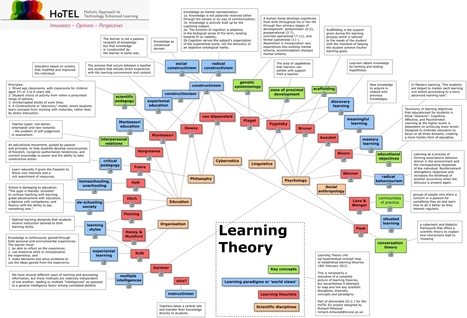
This Concept Map, created with IHMC CmapTools, has information related to: Learning Theory, zone of proximal development The area of capabilities that learners can exhibit with support from a teacher., Montessori constructivism, Lave & Wenger...
|
|
Scooped by
Beth Dichter
April 23, 2013 9:05 PM
|
"Writing will always be important, but weaving text, images, sound, and presentation together can give students more and different ways to express themselves. Easy-to-use online tools allow students the opportunity to create multimedia projects that demonstrate knowledge and develop useful skills. Check out these new three tools on the scene."
|
|
Scooped by
Beth Dichter
April 22, 2013 10:16 PM
|
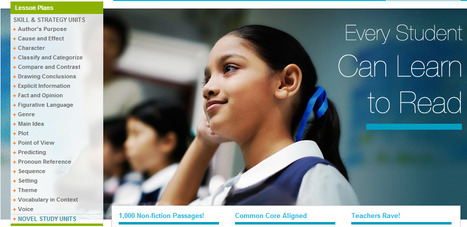
"ReadWorks is a free service that has cataloged hundreds of lesson plans and more than one thousand non-fiction reading passages aligned to Common Core standards. With a free ReadWorks account you can search for lessons and reading passages by grade and skill. In your account you can create digital binders of the lesson plans and reading passages that you want to use."
|
|
Scooped by
Beth Dichter
April 21, 2013 5:54 PM
|
|
|
Scooped by
Beth Dichter
April 19, 2013 9:15 PM
|
"Two-and-a-half years ago, at a meeting in Cambridge, leaders of 42 of America's top libraries and research institutions decided that the time had come to buildsomething together. But what was that thing?" And "that thing" is now launched... the Digital Public Libary of America!
|
|
Scooped by
Beth Dichter
April 18, 2013 8:54 PM
|
If you're not convinced that standardized testing is the best way to measure knowledge, try critical assessment techniques.
|
|
Scooped by
Beth Dichter
April 17, 2013 9:20 PM
|
Rather than making young people wade through incomprehensible strings of words and numbers, writing code in Hopscotch consists of dragging and dropping different cute characters and running scripts on them.
|
|
Scooped by
Beth Dichter
April 16, 2013 3:26 PM
|
|
|
Scooped by
Beth Dichter
April 15, 2013 11:47 PM
|
If you’ve got a story to tell, there’s never been a better time to find ways in which to enrich your work with digital storytelling.
|
|
Scooped by
Beth Dichter
April 15, 2013 4:39 PM
|
"Question: Very often, students will think they understand a body of material. Believing that they know it, they stop trying to learn more. But, come test time, it turns out they really don't know the material. Can cognitive science tell us anything about why students are commonly mistaken about what they know and don't know? Are there any strategies teachers can use to help students better estimate what they know? Answer: There are multiple cues by which each of us assess what we know and don't know. But these cues are fallible, which explains why students sometimes think that they know material better than their classroom performance indicates."
|
|
Scooped by
Beth Dichter
April 14, 2013 10:56 PM
|
|
|
Scooped by
Beth Dichter
April 13, 2013 11:27 PM
|
|


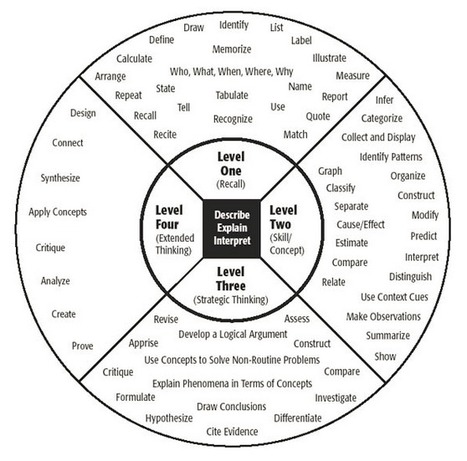



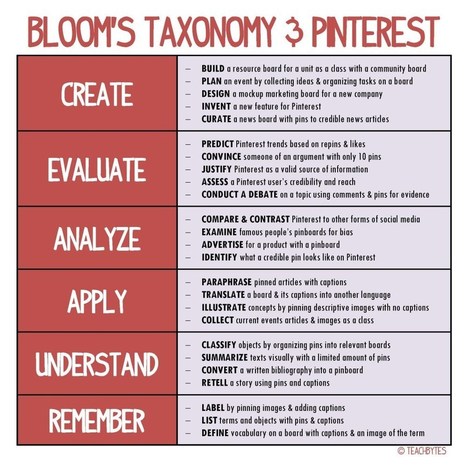


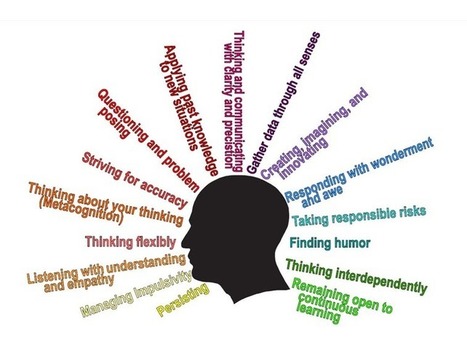



















There are many taxonomies that one may use in education, and this post from TeachThought provides a look at six alternatives. Read the post to learn more about the following taxonomies:
* TeachThought Simple Taxonomy
* Six Facets of Understanding by Wiggins and McTighe
* Marzano and Kendall's New Taxonomy
* A Taxonomy of Significant Learning by Dr. L. Dee Fink
* Depth of Knowledge by Norman L. Webb
Based on publications from CRESTT that discuss the testing being designed by PARCC and Smarter Balanced (the two consortiums designing tests for Common Core) it is worth checking out the Depth of Knowledge since the tests are based on the four levels in this taxonomy.