



A new report released today reveals the results attempting to answer the question: do digital games and simulation help students studying science, technology, math, and engineering achieve better learning outcomes?

 Your new post is loading...
 Scoop.it! A new report released today reveals the results attempting to answer the question: do digital games and simulation help students studying science, technology, math, and engineering achieve better learning outcomes? No comment yet.
Sign up to comment
Scoop.it!
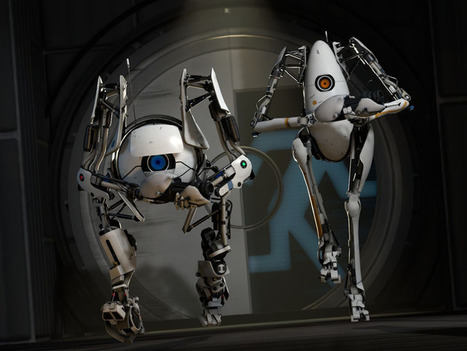
“No TV until you finish that level.” Can you imagine? Recent research shows that video games, once considered public school enemy number one, might just be one of our greatest assets in delivering an effective education.
Beth Dichter's insight:
If you are considering implementing some game-based learning next year, or you would like read about why game-based learning is being used in classrooms check out this post. A wide range are discussed including: * How game-based learning works * The hidden learning that may take when playing games * Results of a survey from teachers whom use game-based learning in their classroom * The potential drawbacks 
Nancy Jones's curator insight,
June 19, 2013 10:03 AM
I strongly believe this is a valuable tool for certain types of learning. 
Ryan McDonough's curator insight,
July 7, 2014 8:02 AM
Providing the pros and cons of game-based-learning, they portray gaming in a positive light. The value of gaming is stated throughout, pinpointing engagement factors and citing statistics to back up their claims. As an avid gamer myself, I don't need stats to prove anything. I know how addicting they can be. If kids can learn when they don't even realize they're learning, it is referred to as "hidden learning". That's the key. If games like Portal can be played without kids thinkng they're educational games, then that's good news for parents and educators alike. The fact of the matter is Portal is a very challenging puzzle game that requires careful planning and attention to move up levels.
Scoop.it!
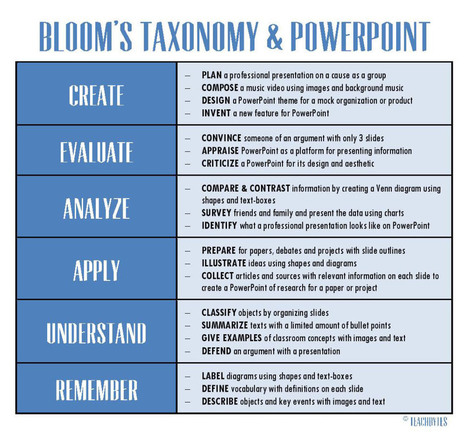
I would wager a guess that the majority of teachers uses PowerPoint as a way to present information and lecture in class. In fact, PowerPoint has been under a lot of flack lately for being tired, d...
Beth Dichter's insight:
Take a new look at PowerPoint after you view this table that helps you think about new ways you might use PowerPoint in your classroom. Find ideas on how you might connect Bloom's Taxonomy with PowerPoint in the table created by Aditi Rao. 
Sue Blough's comment,
June 21, 2013 4:23 PM
This article is relevant to idea of engaging students in multiple ways and multiple intelligences. Good food for thought.

Alfredo Corell's curator insight,
June 23, 2013 7:47 AM
New ways we might use PowerPoint in our classroom.
Scoop.it!

"Somewhere between a PowerPoint presentation and a full-fledged video is the audio slideshow. Creating audio slideshows can be a good way to add meaning to slides that otherwise might not mean much without a presenter. Here are some ways that students can create audio slideshow."
Beth Dichter's insight:
Are you looking for new tools that students may use to create slideshows that may also include audio? Richard Byrne has come up with five recommendations. The names are below and more information is available in his post. * Narrable - currently this site does not have educator accounts, but the FAQ states "excited that teachers are using Narrable in the classroom and we're working closely with educators to develop features and accounts specifically for your needs." * UTellStory - this site does offer a free account. If you want an educator account (which allows for 50 student accounts) there is a fee. * Present.me - they also offer a free account, or education account (not free) * Hello Slide- free accounts are available as well as paid * Animoto - there is an account for educators that is free as well as paid accounts
Scoop.it!
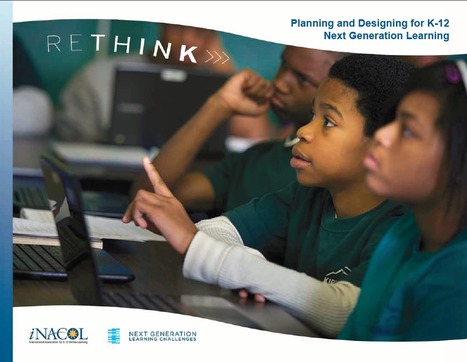
"Are you a forward-thinking educator interested in starting an innovative K-12 next generation learning program, initiative, or school…or moving your current program to the next level? If you are, you have probably been looking for that one-stop resource to help you start the planning and designing process. Well, look no further!"
Beth Dichter's insight:
iNACOL (the International Association for K-12 Online Learning) and NGLC (Next Generation Learning Center) have partnered and published a resource that will help you: * Understand what next generation learning is * Gain a working knowledge to help you design an approach that will work for your school * Understand how to insure quality and have continued improvements Why design a new toolkit? "To be prepared for life and work today, students need their learning to be personalized, flexible, interactive, engaging, relevant, self-paced, constantly-informed, collaborative, responsive, supportive, challenging but achievable, and available." The link above will take you to a page that provides a great overview (and to a website that has additional information you may want to explore). To go directly to the pdf file to download click on this link: http://net.educause.edu/ir/library/pdf/NGT1303.pdf.
Scoop.it!
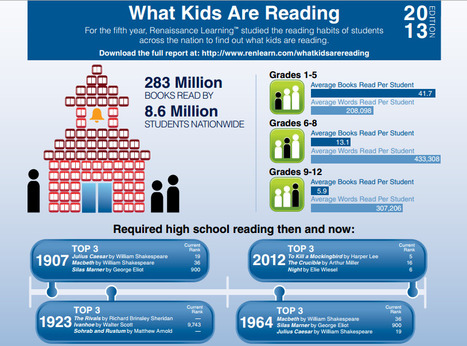
"Have you ever wondered why students choose the books that they do? Renaissance Learning explored this question in the fifth-edition What Kids Are Reading report, which lists the top 40 books read by students in grades 1-12 in the 2011-2012 school year. Rankings are based on the Accelerated Reader database, the largest of its kind, which houses reading records for students who read 283 million books."
Beth Dichter's insight:
This post links to a page that will provide you access to the full report, the infographic (part of which is above), and a report summary. The full report also includes: * Caldecott and Newbury winners from 1922 to present * A selection of the Common Core State Standards exemplars There have been many shifts in reading over the last 100 years, and one shift is that the complexity of required reading has decreased. To learn more check any of the resources found through this link. If you prefer an oral version from NPR you can listen to (or read) a short piece aired on June 11th, 2013 called "What Kids are Reading, In School and Out" at http://www.npr.org/blogs/monkeysee/2013/06/11/190669029/what-kids-are-reading-in-school-and-out.
Scoop.it!

"..considering eight ways of looking at intelligence—eight perspectives provided by the science of learning. A few words about that term: The science of learning is a relatively new discipline born of an agglomeration of fields: cognitive science, psychology, philosophy, neuroscience. Its project is to apply the methods of science to human endeavors—teaching and learning—that have for centuries been mostly treated as an art. As with anything to do with our idiosyncratic and unpredictable species, there is still a lot of art involved in teaching and learning. But the science of learning can offer some surprising and useful perspectives on how we guide and educate young people. And so: Eight Ways Of Looking At Intelligence."
Beth Dichter's insight:
What are the eight ways? The short version is listed below, but the post provides longer descriptions as well as links to additional information. * Situation can make us smarter. They can evoke or supress our intelligence. * Beliefs can make us smarter. Think of mindsets as in growth mindset or fixed mindset. * Expertise can make us smarter. Deep knowledge does make a difference. * Attention can make us smarter. Resisting the urge to multitask and staying focused on the task is important. * Emotions can make us smarter. Our emotional state impacts how we think and act. * Technology can make us smarter. We need to learn when technology can help us, and when to put it away. * Our bodies can make us smarter. The physical state of our body impacts our ability to learn. * Relationships can make us smarter. A sense of belonging can make a difference. This post may challenge how you look at intelligence. Check it out! 
Carlos Fosca's curator insight,
June 11, 2013 4:37 PM
Las situaciones que vivimos diariamente, nuestras creencias, la experiencia que acumulamos, la capacidad de atención, el sentimiento de la esperanza que albergamos, son algunos aspectos que pueden mejorar nuestra inteligencia. La tecnología también nos puede hacer más inteligentes o más “tontos”. Estudios del cerebro han encontrado que cuando usamos herramientas, incluyendo dispositivos electrónicos, nuestra mente los puede asociar como una extensión de nuestro cuerpo. Sin embargo, utilizar la internet precisamente como parte de nuestro cerebro para almacenar hechos, sin la necesidad de retenerlos mentalmente, puede atrofiar habilidades clave para la sociedad del conocimiento. El pensamiento crítico, la capacidad de resolver problemas, el trabajo colaborativo y la creatividad, entre otros, no pueden emerger en el “disco duro” de un cerebro humano vacío de contenidos. 
Tony Meehan's curator insight,
July 15, 2014 4:26 PM
interesting article highlighting the evidence that intelligence is not a fixed entity but is something that needs to be nurtured and helped grow in all of us. The evidence from the fields of cognitive science, psychology, philosophy, neuroscience combine to create the science of learning. As educators we have to get to grips with the complexities of learning and we can only do this by gaining a deeper understanding of these fields and how they help us reframe our approaches to teaching and learning.
Scoop.it!
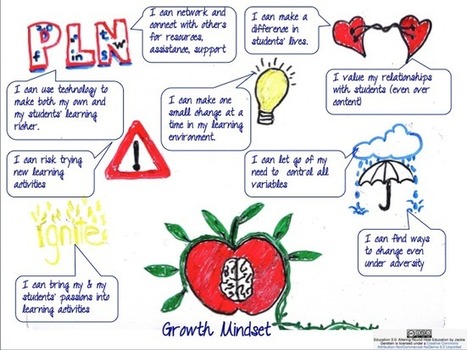
"What follows is my Ignite talk for ISTE 2013. It was rejected by the selection committee. As I already conceptualized the talk and think it is such an important topic, I am disseminating my text and slides via my blog and Slideshare. First, Education 1.0, 2.0, and 3.0 are described. Later, I discuss the consequences of Education 1.0 vs Education 3.0 on learners (and educators!) especially those that do not fit the mold of Education 1.0."
Beth Dichter's insight:
Thanks go to Jackie Gerstein for sharing this presentation so we may learn more about the shift from Education 1.0 to Education 2.0 to Education 3.0. The slides are available on her blog as well as a link to Slideshare. Additional links to information are available as you read through the text in the post.
Scoop.it!

"Under His Hat is the home of the Lincoln Collection Digitization Project, a thematic online-education resource about the United States' 16th President, Abraham Lincoln...[The site] uses primary source materials from the more than 52,000 Abraham Lincoln and Lincoln-era artifacts and documents known as the Lincoln Collection. These primary source materials are presented in thematic groupings to bring Lincoln's history to life for a global audience."
Beth Dichter's insight:
If your class will be studying Abraham Lincoln check out this great resource that provides primary source materials using the themes listed below. * Paying the Price * Mr. Lincoln's Desk * Lincoln and the Frontier * Lincoln and the War Part 1 * Lincoln and the War Part 2 * Iconic Lincoln * Lincoln the Politician * Personal Lincoln The resources include hands-on activities, critical thinking activities, references and more. Each item has a Suggested Classroom Activities page that may be downloades and some of the items include a video presentation and/or a podcast.

Michele Alvarez's curator insight,
June 10, 2013 3:22 PM
This will be a great resource to go with "Chasing Lincoln's Killer" by James L. Swanson and the ELA6 CCSS :) Thanks for sharing!
Scoop.it!
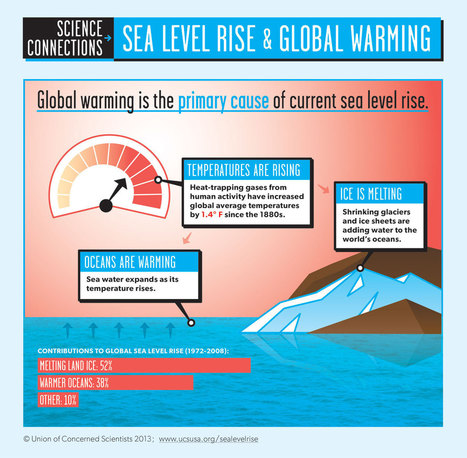
Sea level is rising -- and at an accelerating rate -- largely in response to global warming.
Beth Dichter's insight:
What is causing the sea level to rise? Where are the "hot spots" where the sea will rise the fastest? How quickly is land ice melting? These and many other questions related to sea level rise and global warming are shared in this infographic created by the Union of Concerned Scientists. There are also links to two additional resources. One is called "Causes of Sea Level Rise: What the Science Tells Us" and the other discusses the methodology and assumptions made in the creation of the infographic. It is also possible to download the infographic in sections. There are four facts discussed in the infographic: * Global average sea level rise has increased 8 inches since 1880... * Global warming is the primary cause of sea level rise. * Sea level rise is accelerating. * The choices we make today will determine how high sea level rises this century, how fast it occurs, and how much time we have to protect our communities. 
Vloasis's curator insight,
June 8, 2013 3:48 AM
Projections will vary on this, but it doesn't take a general consensus to see that it's happening. 
Keith Thorogood's curator insight,
June 18, 2013 3:21 PM
What is causing the sea level to rise? Where are the "hot spots" where the sea will rise the fastest? How quickly is land ice melting? These and many other questions related to sea level rise and global warming are shared in this infographic created by the Union of Concerned Scientists. There are also links to two additional resources. One is called "Causes of Sea Level Rise: What the Science Tells Us" and the other discusses the methodology and assumptions made in the creation of the infographic. It is also possible to download the infographic in sections. There are four facts discussed in the infographic: * Global average sea level rise has increased 8 inches since 1880... * Global warming is the primary cause of sea level rise. * Sea level rise is accelerating. * The choices we make today will determine how high sea level rises this century, how fast it occurs, and how much time we have to protect our communities
Scoop.it!
This is a quick introduction to the SAMR Model, developed by Dr. Ruben Puentedura. It is not meant to be an in-depth view of the model. For more information,...
Beth Dichter's insight:
A short overview on the SAMR Model. If the SAMR Model is new to you this is worth watching, and you may consider sharing it with other teachers in your school.
Scoop.it!

"Our students are currently taking their final exams. During the past few weeks, we've wondered often about the distinctions between "studying," "reviewing," and "reminding" -- since theoretically, the students have already learned all of this information earlier in the year."
Beth Dichter's insight:
This post explores an interesting issue, should final exams be a "review" or should we think of them as a way to "provide a thematic culmination of the year's "big picture" ideas...(giving) kids a few "ah ha!" moments to realize how much they've learned over the course of their semesters. Exam review should be an exercise in how to internalize information and produce new connections." There is also a short video embedded in this post, "How to Generate Good Ideas" that provides "five ways to foster understanding." Take some time to think about how you view final exams...and what might happen if you shift that perspective a bit. 
Amanda's curator insight,
July 1, 2013 4:15 PM
This article talks about final exams and the methods we use to srudy for them. Rather then just memorizing what you need to know just to forget it down the road if you use more creative ways to study it will stick with you longer.
Scoop.it!

"When we search, we often first reach for Google–and rightfully so. But by using Google students and teachers are unwittingly bending to the will of webmasters who are experts at SEO (search engine optimization), which can mean that you find what they want you to find rather than what you really need. So what to do? Thankfully, there are options for 21st century learners..."
Beth Dichter's insight:
To Google or not to Google...that is the question. I fall on the side of teaching students how to use other search engines for a number of reasons including tracking and filter bubbles. This post explores seven academic search engines. |
Scoop.it!

Learning outcomes v. Learning objectives. Is there a difference? what do you think? I suggest that learning outcomes give students a destination to reach for, an expectation to achieve. Learning ob...
Beth Dichter's insight:
This post provides an image that looks at what we should consider as destination points for our students as they work on learning objectives. Have you consider using project-based learning and having that be an objective? How about a gamification objective? A few others are described in this infographic as are words to consider for the learning outcome.
Scoop.it!
Beth Dichter's insight:
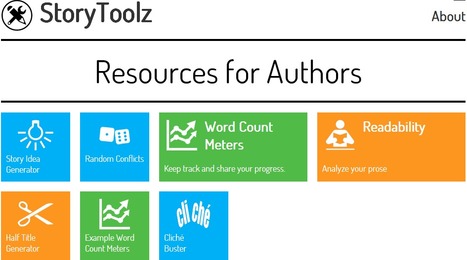
StoryToolz provides seven resources to help authors. * The Story Idea Generator "picks a random conflict from each of the Internet Public Library's list of 7 plots, 20 plots, and 36 plots." * Random Conflicts combines "the Internet Public Library's list of 7 plots, 20 plots, and 36 plots" and "randomly presents 10." * Word Count Meters allows you to keep track of and share your progress. * Readability - This tool analyzes your text. It will tell you the reading level (based on a number of different indexes); sentence information, including the number of characters, words, paragraphs and more; word usage; and sentence beginnings (type of word). * Half Title Generator - Select from a list of beginnings and then for ends of a title and see what comes up! * Example Word Count Meters - show actual word counts of existing projects as well as the goal * Cliche Buster - Reviews your text and lets you know if it finds any cliches. This tool would most likely work best with students in middle school, high school and college. Students might also use it as a tool to check their story before having a peer edit the story. 
Corey Durward's curator insight,
July 21, 2013 8:55 PM
StoryToolz is a nice ensemble of useful tools for writers. Writers who are struggling to come up with ideas for their prose will like the story starters - random idea generators for plots, conflicts and titles. StoryToolz also provides tools that will analyse your work, identify clichés in your writing, and evaluate its readability.
Scoop.it!

"Social Media, Social Life: How Teens View Their Digital Lives is the latest research report from Common Sense Media's Program for the Study of Children and Media. We surveyed over 1,000 13- to 17-year-olds nationally to understand how they perceive social media (like Facebook and Twitter) affects their relationships and feelings about themselves."
Beth Dichter's insight:
Common Sense Media published this resear.ch in June 2012. Some of the information may suprise you. The link is to the research paper. To view the infographic click on this link: http://www.commonsensemedia.org/teen-social-media-infographic. 
Steph Alexandra's curator insight,
August 25, 2014 7:28 PM
"For the vast majority of teens, social and other digital communications media are a daily part of life."
Again, this statistic report shows the popularity of public profiling among teens from 13-17 years. 91% of teens have experience using social media, and 51% of teens use a social networking site daily. With such statistics we can consider the social pressures and influence that virtual communication and public profiling has on the younger generation. Though this article doesn't look at the positives and negatives of social media interaction for this particular age group, it is clear to see that having an active public profile on the web is common, if not expected of the younger generation, for the purpose of communication and web literacy.
In understanding how a younger generation operates and interprets public profiling, is to gain a better understanding of web systems, their function and purpose, and of the direction of today's society. 
Amethyst Mayer's curator insight,
December 27, 2014 3:50 AM
This article provides insight obtained by research, on how teenagers in America perceive and use the internet regarding social media. 
Erica Laing's curator insight,
December 29, 2014 1:21 AM
Very interesting study on how teens view their social media accounts and online identity.
Scoop.it!
From
neomam

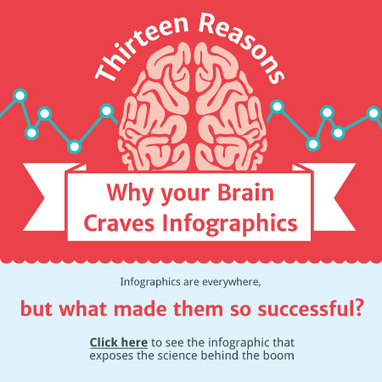
Enjoy our HTML 5 interactive infographic that exaplains why infographics are so successful
Beth Dichter's insight:
Have you wondered why infographics have taken off over the years? This interactive infographic shares "13 reasons why your brain craves infographics." It also provides links to 17 resources. Below are two reasons that are shared...click through to the interactive resource to learn the rest! * Did you know that "people following directions with text and illustrations do 323% better than people following directions without labels." (The research was specific to labels on medicine and looked at comprehension rate of text only labels and labels with text and pictures." * What helps us recall information. This infographic says that people remember "10% of what they HEAR, 20% of what they READ, 80% of what they SEE and DO." 
Audrey's comment,
June 16, 2013 2:01 PM
This is absolutely true, we process visual information so much faster. Have a look at the learning material at: http://www.homeschoolsource.co.uk
Scoop.it!
Beth Dichter's insight:
Are you considering implementing blended learning? If you are check out this new infographic from Digital Learning Now that looks at implementation process.
Scoop.it!
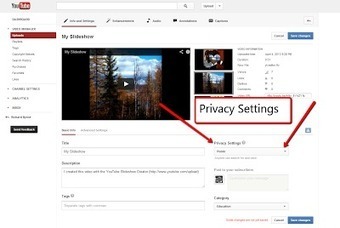
"When most people think about YouTube they think sharing videos and or about all of the videos they can discover. Most people don't think about the useful editing tools that are built into YouTube. The YouTube video editor has some useful features for teachers and students."
Beth Dichter's insight:
Explore 8 editing tools built into YouTube: * Create a YouTube photo slideshow * Create slow motion videos * Use annotations to create a series of linked videos * Blur faces in your videos * Stabilize shaky footage and/or add color/light filters * Add captions to your video * Add a music track to your video * Hide your video from public searches Richard Bryne has provided directions on how to to the first four items, and has a screen shots to help you with the final four. Have fun this summer and create some videos to use with your class!
Scoop.it!

"As teachers, it is essential that we make the process of providing feedback a positive, or at least a neutral, learning experience for the student. So what exactly is feedback? Feedback is any response from a teacher in regard to a student’s performance or behavior. It can be verbal, written or gestural. The purpose of feedback in the learning process is to improve a student’s performance- definitely not put a damper on it. The ultimate goal of feedback is to provide students with an “I can do this” attitude."
Beth Dichter's insight:
Providing feedback to our students is critical to their learning, and this post provides 20 tips on how to provide feedback that will help move improve a student's performance. Three of the tips are listed below. For more information on those three, plus 17 more, click through to the post. (Text below is quoted from the post.) * Feedback should be educative in nature. Providing feedback means giving students an explanation of what they are doing correctly AND incorrectly. However, the focus of the feedback should be based essentially on what the students is doing right. * Ask the four questions. Providing answers to the following four questions on a regular basis will help provide quality feedback. These four questions are also helpful when providing feedback to parents: What can the student do? What can’t the student do? How does the student’s work compare with that of others? How can the student do better? * Concentrate on one ability. It makes a far greater impact on the student when only one skill is critiqued versus the entire paper being the focus of everything that is wrong. 
Nick Allsopp's curator insight,
June 11, 2013 5:26 PM
this is based in higher education, are there points that are transferable to other sectors of education? 
Liza Zamboglou's curator insight,
June 12, 2013 9:37 AM
Good post outlining 20 tips on how to provide feedback that will help improve a student's performance. 
ColbyccSSS's curator insight,
June 17, 2013 11:15 AM
Valuable information for new instructors like myself
Scoop.it!

"Explore the home of human ingenuity online. Find out about our objects, arts projects and medical collection, play educational games and discover climate science. Plus check out our blogs, a tabloid history of science and the latest contemporary science news from the Antenna team."
Beth Dichter's insight:
If you are looking for science games check out the Science Musuem (in London) and their online games. A few are listed below and many more may be found on their website. * Ouch, a new game, allows you to "wage war on pain". * Rizk - In a world not too different from our own a Plant lies sleeping...can you manage the threats to its survival? A look at climate change. * Thingdom - Choose your Thing, nurture your Thing, then take the mating challenge and breed new Things. Learn more about DNA Many of the games have links to additional resources on the website. The initial page that is linked to also has links to many other resources available online, including a Codebreaker Challenge; Museum Objects - a selection from their curated objects (over 200,000) organized by gallery; Brought to Life, a site that explores ~18 themes including Birth and Death, Medical Traditions, and Controversies and Medicine; Climate Science and many more.
Scoop.it!
Beth Dichter's insight:
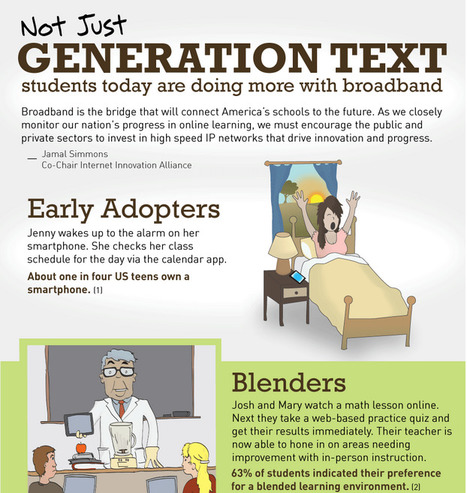
If you were to sort students into six categories based on how they use mobile technology what categories would you come up with, and what evidence would you use to support these categories. In this infographic the Internet Innovation Alliance provides the six categories and provides some data (with links!).
Scoop.it!

These seven great audio and video tools for teachers and students can make your classroom and curriculum a whole lot more vivid and engaging.
Beth Dichter's insight:
This post provides some great audio and video tools that you might consider using with students. We know that students are engaged when multimedia comes into the classroom...and what better way to engage them than to have them become creators through the use of multimedia. Learn about tools such as: * Matterhorn, a free tool that "enables teachers to create recordings of lectures and classes." Are you thinking of flipping your class? If so you should check out this tool. * Jing - another free tool that allows you to capture what is happening on the screen of your computer and then share it with others. How about having students demonstrate ways to solve math problems, and post them online? * Splicd - Is that YouTube video too long? Determine which section you want and grab that specific section. Save it to your hard drive and you ready to go...without taking time to fast foward to the necessary section. * UJam - Another free tool this one allows you to create and remix music and film. Three more tools are listed in the post so click through to check them out!
Vloasis's curator insight,
June 8, 2013 3:52 AM
Some nice resources here and I'm curious to try a couple.
Scoop.it!

Mobile learning is here to stay. In fact, it's going to be one of the only options for learning pretty soon. This new presentation tells you why.
Beth Dichter's insight:
If you were to change the title of this post to 'Is Mobile Learning Inevitable" the slideshow embedded in the post would most likely lead you to say yes. Check out the slideshow to see how the growth of mobile has shifted the playing field and projections for PCs vs Mobile in 2017. Learn about some of the fundamental changes taking place in the marketplace. Think about how this may impact future decisions in your school regarding mobile learning. 
Greenwich Connect's comment,
June 7, 2013 3:34 AM
here is one side of the mobile learning debate. It is on our agenda over the next 12 months to ensure the university sees and participates in both sides of the debate and makes some informed choices
Scoop.it!
Welcome to a series that is must read for any PBL or STEM educator. It will include information to reflect and build upon as you consider both PBL and STEM. Best of all, it will finish with over ...
Beth Dichter's insight:
This is the final post in a series of five that explored STEM, PBL, and the Common Core and it focuses on resources for Project Based Learning units. "By searching through STEM subjects in these sites’ databases or directories you can come up with a PBL unit to use, remix, or possible implement a lesson from." An extensive list of resources is provided with short descriptions so you have a sense of what you may find. |









To what extend do digital games boost students' test scores in STEM? According to the preliminary data released by SRI "students at the median in the control group (no games) could have been raised 12 percent in cognitive learning outcomes if they had received the digital game." (From an analysis of 77 peer-reviewed journal articles K-16 in STEM.)
And it turns out that simulations may create a larger impact.
Take a look at this post and see where gamification may be heading in the future!