


Today DLN, iNACOL and Getting Smart launched a myth busting paper focused on online learning as part of the DLN Smart Series.

 Your new post is loading...
 Scoop.it! Today DLN, iNACOL and Getting Smart launched a myth busting paper focused on online learning as part of the DLN Smart Series. No comment yet.
Sign up to comment
Scoop.it!
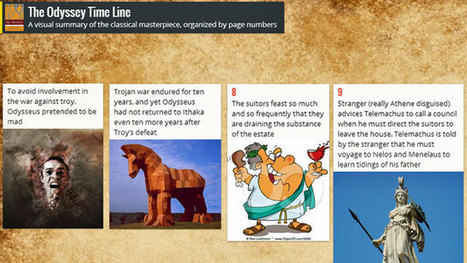
Web-based tools continue to proliferate, giving teachers more to add to their arsenal, but it can be hard to determine which resources are worth spending time exploring.
Beth Dichter's insight:
This post presents 13 free web tools selected by "Adam Bellow, founder of EduClipper, and Steve Dembo, Online Community Manager for Discovery Education." Each has a brief explantion and provides suggestions on how to use in the classroom. Below is a list of four of the tools. * Ipiccy * The Noun Project * BigHugeLabs * Padlet For more information on these tools plus 9 more click through to the post. 
Kristi O'Neil's curator insight,
July 12, 2013 1:17 PM
Definitely going to have to check some of these suggestions out. Knowledge is power. 
Thays Miranda's curator insight,
November 15, 2014 12:52 PM
First of all, basic information about web tools.
Scoop.it!
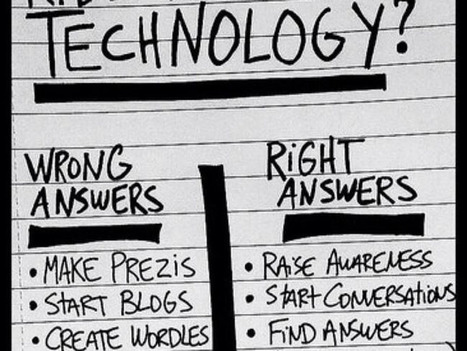
"So much in learning is subjective, which makes sense because so much in life itself is also subjective, and we learn in order to live. So it’s natural. Grey areas abound–the usefulness and quality of the Common Core Standards. The importance of curiosity in learning. The evaluation of technology in learning. The utility of letter grades. (And alternatives to letter grades.)"
Beth Dichter's insight:
What is the best way to use technology in your classroom? We know that students like to use technology but are they using it constructively? Are you using technology constructively? This post explores these issues, not ing that there are some right and wrong answers in how technology should be used? I believe that technology is a tool, a tool that can be used to reinforce, enhance and extend the curriculum; a tool that allows students to use critical thinking skills; to find answers to questions. Check out the graphic that accompanies the discussion of this topic and consider how you will be using technology in your class. 
Diego Sánchez's curator insight,
July 10, 2013 8:15 AM
Technology is a tool, not a learning outcome...
Scoop.it!
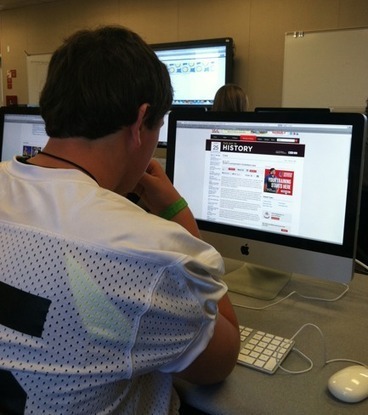
Students today are hyper connected to information, but do they know how to research? Nope.
Beth Dichter's insight:
Do your students know how to research, to evaluate websites? The Common Core states that college and career ready students should be able to (quoted from the standards): * Gather relevant information from multiple print and digital sources, assess the credibility and accuracy of each source, and integrate the information while avoiding plagiarism. * Draw evidence from literary or informational texts to support analysis, reflection, and research. In this post Caitlin Tucker provides a link to a Google form to use with students to demonstrate "their ability to analyze the credibility of resources." She also includes a "silent screencast" that shows the process of making a copy of the form for you to use.

Jaime Parker's curator insight,
July 10, 2013 2:22 PM
I have a friend who teaches English courses at the college level and this is her biggest complaint. She says that the students simply do not know how to research. They don't know how to use databases or how to evaluate websites which seems so crazy to me. I'm not sure why these skills aren't being taught or integrated into every content area. Perhaps too much time is being spent preparing students for standardized testing.

Mayra.Loves.Books's curator insight,
July 10, 2013 7:07 PM
What to expect when librarians are being cut everywhere or stretched so thin to covel 4 schools in one week?
Scoop.it!
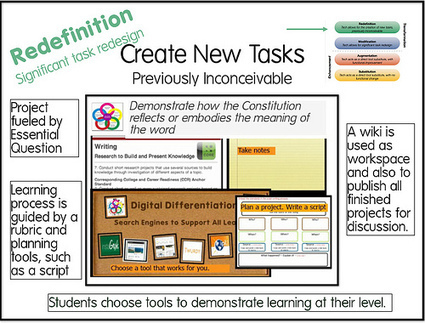
The SAMR model is a useful tool for helping teachers think about their own tech use as they begin to make small shifts in the design and implementation of technology driven learning experiences t...
Beth Dichter's insight:
The SAMR model is one tool to use. The letters stand for Substitution, Augmentation, Modification. Redefinition. This post explores how you can use the SAMR model in the classroom, with the focus on the US constitution and connect the project to Common Core. At each step of the SAMR ladder Susan Oxnevad provides "Dr. Puentedura’ Questions and Transitions for guidance." (Dr. Puentedura is the creator of the SAMR model). The SAMR model is a great tool to use with teachers new to technology. It provides a scaffolding that will assist them as they gain new technology skills. This lesson provides a great overview and could be modified for lessons in other disciplines.
Scoop.it!

From
dedwards

THE STARTING POINT? It is interesting to reflect how this simplification of iPad key tools has changed in a relatively short space of time. iWork suite aside, you could purchase the above apps for ...
Beth Dichter's insight:
One look at how iPads may be used in the classroom with suggestions of apps to use. Some additional apps are suggested in the post with explanations on why you might choose to use them. All to often when rolling out new tools teachers become overwhelmed. This diagram was developed with the author stating: "The point is that less than 15 apps can be a starting point for learning, with the substitution of applications based on the learner’s needs and educator’s requirements." 
Nicole Kotoski's curator insight,
April 1, 2014 10:56 PM
Ipads are a great tool to use in the classroom when they are used correctly. Just using the IPad does not mean that we are integrating technology into our classes we need to use it as a tool in learning. A tool that supports students to think creatively and to collaboratively. Apps are plentiful and using the SAMR model as educators we will be able to integrate the right apps into the classroom. Just using keynote does not mean that we are allowing our students to design the wheel, we have taken a step into integrating technology but we have not taken a leap. We have modified a task that students have done previously. Dependent on learning goals and achievement and learners own abilities will depend on the apps you use. I will certainly be taking the SAMR model into consideration when using apps in the classroom. 
Karen Barlow's comment,
April 11, 2014 6:44 AM
ipads are a great tool to incorporate the higher levels of the SAMR model into learning. The best part is that it is easy and the payoff particularly when you get to the modification and redirection levels. Whilst it is easy to use ipads as a substitution and augmentation they are an easy and great way to incorporate interactive tasks into learning.
Scoop.it!

"This infographic flyer was created to put important digital footprint information in one place in a graphically pleasing format. Take a look and let me know what you think."
Beth Dichter's insight:
If you are discussing digital citizenship with your students this infographic is worth checking out. It combines a variety of resources, including a number of videos, best practices to create your digital identity (beginning at age 13), using social media to show your voice and much more. 
Ra's curator insight,
July 6, 2013 12:18 AM
Positive ways for young people to look at building their online profile plus reasons for being "real".
Scoop.it!

109 Common Core Resources For Teachers By Category
Beth Dichter's insight:
TeachThought asked readers to take a survey and many requested resources for Common Core. This is their first post that provides a wide range of resource for English, Math and Science. Each section is split into three sections: Articles, Journals and Videos...so if you are looking for some resources that have been vetted this might be a good place to begin.
Scoop.it!

Posting too much information could lead to undesirable consequences such as identity theft. Trend Micro found that 1 in 3 people know someone who became victims of identity theft.
Beth Dichter's insight:
How many social networks are you a member of? How often do you answer questions that request your date of birth, your school, your hometown...questions that may seem innocuous but may also be answers to security questions on other sites. This infographic looks at the following social networks: Facebook, Twitter, Google+, Mixi, Sina Weibo, Tumblr. Linkedin, and Pinterest. It will allow you to see how each of these sites falls in the areas of: privacy settings, contact details, connections, birth date, employment, location and name. It also provides information about the potential backlash of providing personal information including identity theft, social engineering, and damaged reputation as well as some statistical information. To learn more about the risks of sharing information online check out this post, or go directly to the infographic at: http://blog.trendmicro.com/trendlabs-security-intelligence/the-risks-of-posting-in-social-networks/ 
Roberto Ivan Ramirez's curator insight,
July 16, 2013 7:38 PM
La importancia de reflexionar de manera cuidadosa y crítica sobre los pros y contras del uso de las redes sociales actualmente, es parte de una cibercultura que como sociedad tendremos que afrontar las consecuencias de no poder prevenir a tiempo ni a los usuarios ni a las instancias y organizaciones promotoras de estas herrmientas digitales sociales. Es necesario hacer campañas de difusión masiva para no caer bajo los controles mediáticos de las corporaciones y grupos criminales que pueden hacer mal uso para detectar personas y controlarlas mentalmente hablando. 
Sarah Salavert's curator insight,
March 5, 2016 8:18 AM
This article exhibits the danger of posting his life with everyone, on a social networks #socialnetworks #private #public #influence
Scoop.it!
In this series, Joy Lin tackles six superpowers and reveals just how scientifically realistic they can be to us mere mortals. Lesson by Joy Lin, animation by...
Beth Dichter's insight:
Do you teach science? If so take a look at this series which looks at superpowers and explores them. The six videos explore Flight, Immortality, Invisibility, Super Strength, Super Speed and Body Mass. These are many great videos on TED-Ed that are available and we know our students are engaged when they watch videos. Take some time to explore the videos at TED-Ed and consider using them in your classroom. This link goes to the introductory video. If you want to see the series click on this link: http://ed.ted.com/lessons/if-superpowers-were-real-flight-joy-lin
Scoop.it!

"Due to the interest of my post The Other 21st Skills, I decided to individually discuss each of the skills or dispositions I proposed that are in addition to the seven survival skills as identified by Tony Wagner. This post focuses on resiliency. The first post focused on Grit: The Other 21st Century Skills. Some would categorize Grit and Resiliency as the same skill, but it is my belief they are involve two different, but interconnected, skill sets. While grit focuses on persistence, resilience is about bouncing back in the face of challenges and/or failure."
Beth Dichter's insight:
Jackie Gerstein continues to discuss "the other 21st skills" addressing resilience in this post. As you read this post think about your students. Do you provide them with opportunities to grow these skills/dispositions? Research in this field shows that teachers make a difference. Below are a few of the points from the post. * All individuals have the power to transform and change * Teachers and schools have the power to transform lives * It’s how teachers do what they do that counts * Teachers’ beliefs in innate capacity start the change process As you read through this post think about your classroom, your students, and ask yourself if there are new ways you might help your students build their resiliency. As always additional information as well as links to resources are available by clicking through. 
Kaylin Burleson's curator insight,
June 30, 2013 2:43 PM
We must not forget that in order to accomplish the four Cs it takes timer and effort. One must not be afraid to try and try again if needed to succeed.
Scoop.it!
Beth Dichter's insight:
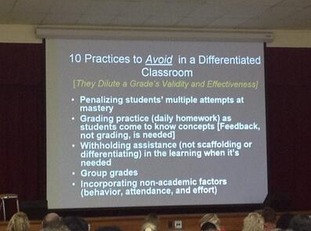
A great find from Larry Ferlazzo but what are the other five? A bit of research led me to a presentation by Rick Wormeli "Fair isn't always Equal: Assessment and Grading an a Differentiated Classroom" and sure enough the other five were located in the presentation. The are listed below: * Assessing students in ways that do not accurately indicate students’ mastery (student responses are hindered by the assessment format) * Grading on a curve * Allowing Extra Credit * Defining supposedly criterion-based grades in terms of norm-referenced descriptions (“above average,” “average”, etc.) * Recording zeroes on the 100.0 scale for work not done To check out the full presentation (and it is a long URL): http://www.vashonsd.org/mcmurray/science/justin/Resources/Wormeli/Annual_Wormeli_Fair%20Equal.pdf.
Scoop.it!

"Top students aren’t made, they’re born. After effortlessly absorbing whatever the teacher throws at them, they spout it back on tests and watch the A’s come rolling in. They have exceptionally high IQs, making it next to impossible for the rest of the class to compete with them. They’re the ones who leave exams early and breeze through the most complex material in the syllabus. They are eggheads, nerds, geeks, and their success is the result of innate talent and ability."
Beth Dichter's insight:
Do you believe the attributes above are what is necessary for top students or do you think these are misconceptions? Stephanie Weisman, author of "The Secrets of Top Students", interviewed 45 other "outstanding students – including Rhodes scholars, Goldwater scholars, Fulbright recipients, a National Spelling Bee Champion, and students in top law and medical schools – on how they achieved academic success." (She was also a top student and she discusses the challenges she had in school in this post.) The answers the students gave might surprise you. What is most important? * Hard work * Sacrifice For more information on this please click through to the post. |
Scoop.it!

"Learning to read starts with being exposed to great books. Reading should be fun and intimate. The Internet has become such a rich resource that software is rarely needed any longer and I guess this could be the only exposure a child has to books, but I sure hope not! Part of learning to read is the intimacy that comes from sharing a good book. Not just reading it but discussing it, talking about the pictures, relating it to your life."
Beth Dichter's insight:
Are you looking for great online resources that support reading? This post shares 14 websites as well as reading resources for the iPad. * Bitesize, a site in the UK, "offers reading games and lessons on a variety of topics. The KeyStage 1 site has lessons on phonics, spelling, alphabetical order, and rhyming words. The KeyStage 2 site has lessons on deductions, poetry, dictionary and finding information." * Read To Me offers books read aloud as well as lesson plans for teachers to use. This site has a great introductory video with students explaining how to use the site. An additional 12 sites are listed. If you work with struggling readers or ESL learners you may find some great new resources.
Scoop.it!
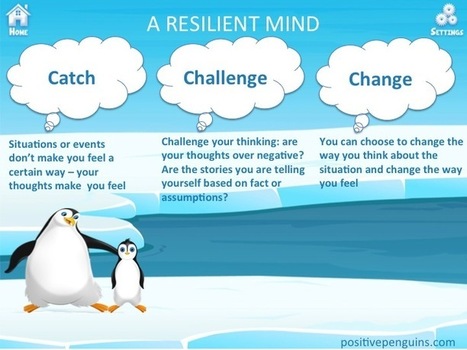
"Do you foster an anxious mindset or a resilient mindset in your children or students? The USA is currently the number 1 most anxious country in the world with 27% of the population living with anxiety and depression. In Australia 20% of the population experience a mental illness in any year. In the UK 1 in 4 people will experience some kind of mental health problem in the course of a year and about 10% of children have a mental health problem at any one time."
Beth Dichter's insight:
This post discusses an app for the iPad or iPhone that helps students understand their feelings and how their mind works. There are three parts to this strategy. * Catch - Students learn to identify thoughts that impact how they feel * Challenge - Students learn to challenge their thoughts, asking if they are based on assumptions, facts, perhaps overly negative * Change - Students choose to change the way they think There is a table within the post that provides Do's and Don'ts for each of the three C's listed above. Consider posting the image as well as the table within the post "to help teach children to identify the exact nature of their thoughts, unpack and challenge those thoughts and stories and change how they feel." 
Chloe Parsons's curator insight,
November 3, 2013 2:37 AM
This is a really interesting post, in the way that it not only informs you about anxiety, but also shows ways to cope. The 'Catch, challenge, change' stratergy has been created to help children and young adults relistically- think about their thoughts- "What am I worrying about?" Challenge your thoughts- "Is this definately going to happen?" "What will happen if I do do it?" And change thoughts- "What can I do to make myself feel less anxoius? Talk to someone?" I believe that once you know about certain disorders, they become less scary. Helping children and young adults learn and understand anxiety, even if they dont experience anxiety themselves, is an important step to teaching kids to understand themselves and people around them.

Jennifer Colin's curator insight,
October 24, 2015 6:20 PM
This is a great resource for helping students build resilience, especially those who have previously experienced trauma. Taking the time to show them how they can think about and handle what happens to them in a more positive way can be life changing in children. This could be integrated into any subject matter; it doesn't need to be limited to the school counselor; in fact, doing so would be a disservice. As I future school leader it is my goal to ensure that students are receiving as well-rounded of an education as possible--and not just academically-speaking. We should be addressing the whole person, and that includes helping them be socially, emotionally, and mentally successful as well.
Scoop.it!
Beth Dichter's insight:
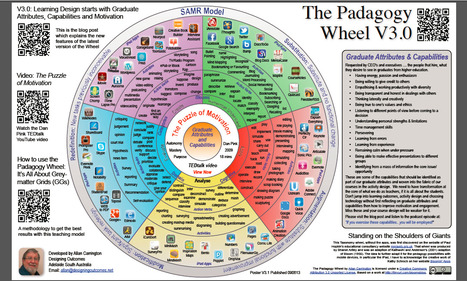
This latest iteration of the Padagogy Wheel has all apps hot linked to the iTunes preview page and other sources. It also includes some QR codes that will take you to some additional resources including Graduate Attributes and Capabilities, a video of Dan Pink presenting "The Puzzle of Motivation" at TEDtalk, and a link to a post on his website that describes how to use the wheel. To go directly to the Padagoy Wheel (as a downloadable pdf file):
Scoop.it!

Students with two parents operating in supportive roles are 52% more likely to enjoy school and get straight A’s than students whose parents are disengaged.
Beth Dichter's insight:
This infographic plus post explores the effect of parental involvement in academic achievement and it will probably come as no surprise that students whom have parents that are more engaged in school do better. The post states "The influence of parental involvement on a student’s academic success should not be underestimated. While brain power, work ethic, and even genetics all play important roles in student achievement, the determining factor comes down to what kind of support system she has at home." 
Krystina Grant-Ray's curator insight,
July 11, 2013 12:30 PM
Teach our children should be a priority daily...no matter your income level
Scoop.it!
Beth Dichter's insight:
Turnitin has released a report that details the "plagiarism spectrum" and also provides examples of each. This post links to an infographic that provides the 10 types of "unoriginal work" (with examples), the frequency of each type of work, how problamatic each is, and then lists them from the highest to the lowest based in the scores (frequency and problematic) as well as including the original work and the work submitted. Students often struggle with understanding what plagiarism is. This infographic provides a great tool to use with your students to help them identify how easy it is to plagiarize. We then need to teach them what they need to do! 
Paula King, Ph.D.'s curator insight,
July 18, 2013 10:33 PM
Good for coaching learners on what not to do. 
Sherry Weaver's curator insight,
July 22, 2013 6:04 PM
Plagiarism is often difficult for students to understand beyond the 'Cloning' stage. This infographic may help demonstrate the slippery slope.
Scoop.it!

Hola: Una infografía sobre el proceso socrático. Un saludo
Beth Dichter's insight:
This infographic provides a great visual for students learn the Socratic method of questioning" * Clarification * Probing Assumptions * Probing Rationals * Questioning Viewpoints * Probing Consequences * Questions on the Question Each section includes a number of questions that might be asked. 
Audrey's comment,
August 9, 2013 7:31 AM
I agree Teri. It encourages reading and encourages students to be in charge of their learning.
Audrey's curator insight,
August 9, 2013 7:39 AM
Using the Socratic process the educator is a tutor. The process encourages evaluative and analytical thinking.
Scoop.it!
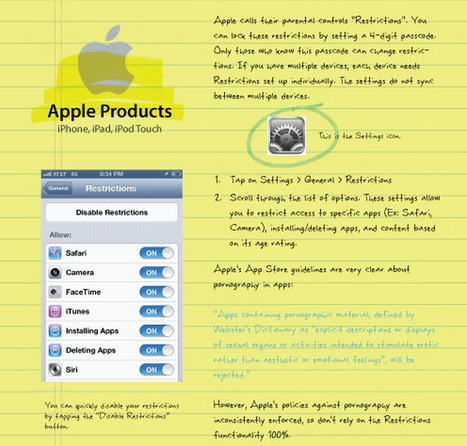
A quick, non-techie Cheat Sheet for Parents.
Beth Dichter's insight:
This link will take you to a page where you can download this booklet that looks at how to keep children safe online. Specifically it covers Netflix, YouTube, Apple Products, Google and Instagram. 
Cath Parker's curator insight,
July 8, 2013 6:43 AM
You need to give your email address to be able to download internet safety tips on Instagram, minecraft, Google and more. 
Carol Thomson's comment,
July 16, 2013 6:45 AM
a bit too geared to the US but I think I can use this to design something more UK friendly. Thanks.
Scoop.it!
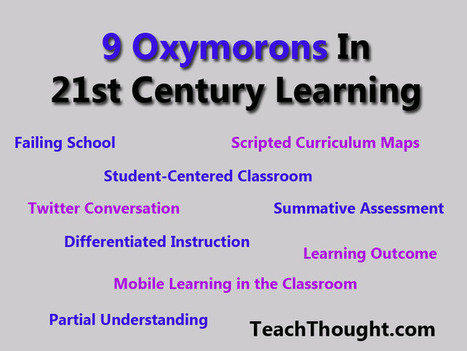
"As 21st century teachers, we have to put up with a lot. Constantly changing expectations. Move academic targets. Constant waves of new technology. Changing sources of professional development. It certainly keeps one day from being the same as the next, but it also creates the opportunity for us to contradict ourselves. Well, not you specifically, but as an industry. And after awhile, our collective vernacular is piled high with oxymorons–or oxymoronish–phrases that need tending to."
Beth Dichter's insight:
A look at how "21st century learning vernacular" has created some oxymorons such as: * Scripted Curriculum Maps * Student-Centered Classroom * Partial Understanding Each of the oxymorons has a short description. What are your thoughts on this? Do you believe that these are oxymorons? Can you think of other 21st century vernacular that describe education that are oxymorons?
Scoop.it!

"The only reason not to reward the best and brightest for their achievements is to avoid punishing the rest for their shortcomings... Programs for the gifted and acts like NCLB are classic catalysts of what social scientists call the Matthew Effect. Coined by sociologist Robert Merton, the Matthew Effect derives its name from a verse in the New Testament (Matthew 25:29)...and roughly translates to, “Those who are successful are most likely to be given the special opportunities that lead to further success, and those who aren’t successful are most likely to be deprived of them."
Beth Dichter's insight:
This post explores the Matthew Effect in detail, providing the background to be able to understand how this impacts our classrooms today. After the introduction the post is split into three sections: * How The Labels You Place On Your Students Affects Their Performance * How Early Experiences Determine A Student's Academic Career * The Matthew Effect In The System * Abandon the notion that it is the best and brightest who rise effortlessly to the top. * For every “talented” student you provide with a superior experience, provide a “less talented” student with an opportunity as well.Each point has additional information that provides a more in-depth explanation.As you reflect on your teaching are there students who may fall into the Matthew Effect? Do you have additional ideas that would be helpful to share?
Scoop.it!

From
www
The American Association of School Librarians has just released "The 2013 Best Websites for Teaching and Learning foster the qualities of innovation, creativity, active participation, and collaboration. They are free, Web-based sites that are user friendly and encourage a community of learners to explore and discover."
Beth Dichter's insight:
This newly released list from the AASL is split into six categories: * Media Sharing * Digital Storytelling * Manage and Organize * Social Networking and Communication * Content Resources * Curriculum Collaboration Each category is also aligned to standards for the 21st century learner (geared to librarians but you will find similar standards within Common Core). Each resource is described and includes suggested grade levels as well as a tip. A few of the resources are listed below. You may also access the lists from 2009 - 2012. * QuadBlogging * Youngzine * LitPick * MyHistro * Easel.ly 
Claudia Robinson's curator insight,
July 7, 2013 12:43 PM
Great sites that make tech engaging for students...sharing, collaborating, and sites to help with organization, plus much more.
Scoop.it!

Factors that disrupt student academic performance include weak responses to data, work outside of the students' ZPD, and little depth of knowledge.
Beth Dichter's insight:
After a discussion of the "reality of learning in 2013" this post described 10 factors that disrupt education. It does make note that the factors are subjective and it also states that they "are meant to help identify the most common barriers to student achievement." What are the 10 factors? A few are listed below. * Student disorganization * Teacher Lack of Content or Pedagogical Knowledge * Lack of Transitions Between Macro and Micro Views of Content As many of us prepare for a new school year or for those of us teaching now these 10 "disruptors" are important to recognize. In doing so we will become better teachers.
Scoop.it!
"Many stories and events related to people with disabilities never make it into the history books or shared public memories. Familiar concepts and events such as citizenship, work, and wars become more complicated, challenge our assumptions about what counts as history, and transform our connection with each other when viewed from the historical perspective of people with disabilities, America’s largest minority."
Beth Dichter's insight:
This website from the Smithsonian provides a historical look at disabilies. You will find the following categories as well as posters and the ability to see the site in Spanish. * Disability and History * People * Place * Technology * Citizens Why teach about disability? The website states that the history is important because it "deepens understanding of the American experience and reveals how complicated history really is. In addition, when history comes through artifacts, distinct themes emerge—for example, the significance of place, relationships, and technology—that are less apparent when only books and words are used." 
Susan Daniels's comment July 1, 2013 9:45 PM
I love history, especially the little know facts. History shapes who we are today and enlightens us on how to move forward. Thanks for this scoop!
|









Digital Learning Now issued their 8th white paper in their Smart Series, Online Learning: Myths, Reality and Promise. This paper looks at online learning and addresses the misconceptions that arise for teachers, students and the educational system.
In addition to the white paper you may also download an Executive Summary and an infographic.
The infographic addresses ten steps necessary to start an online program, including:
* Clarify goals
* Get to know your state people
* Consider partners
* Leverage online learning tools and capacities to blend schools
You may access the information from this link or go directly to Digital Learning Now and access all the materials in this series to date at http://www.digitallearningnow.com/dln-smart-series/.