


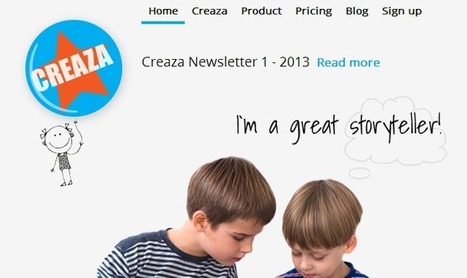
These web-based applications will have you creating animations in no time.

 Your new post is loading...
 Scoop.it! These web-based applications will have you creating animations in no time. No comment yet.
Sign up to comment
Scoop.it!
Beth Dichter's insight:
What is the real story of Christopher Columbus? Perhaps not what you think. This infographic provides a different look at Columbus and his legacy. The information was gathered from "A People's History of the United States" by Howard Zinn and "Lies My Teacher Told Me" by James W. Loewen.
Scoop.it!
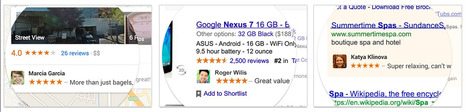
Google announced on Friday that it is pulling a Facebook. Google is making a change to its terms of service that will allow it to monetize the reviews, comments and "+1"s its users have doled out around the Web.
Beth Dichter's insight:
If you are concerned about Google's plan to use your endorsements (think +1's) to advertise then you may want to know how to opt out of this new plan. This post will walk you through the steps. Since many students also have Google accounts you may want to share this information with them.
Scoop.it!
Beth Dichter's insight:
Have you had people ask you why you choose to use infographics in your classroom? This presentation is by Mia MacMeekin, who has created many great infographics (some of which have been posted on this Sccop.it). The best way to access this is in PDF format. This file is quite large so here is a direct link to it: http://anethicalisland.files.wordpress.com/2013/10/rscon-presentation-22.pdf
Scoop.it!

"Anyone can type a word or phrase into the Google window and hope for the best. Some even use quotation marks, or use autocomplete to their advantage. But how about putting a dash before a word to exclude it from your search? Or using the tilde–like a boss–to search for synonyms for a term as well?"
Beth Dichter's insight:
Check out this infographic that provides seven tips to make you a better searcher...a couple of these may be new to you! 
Mary Cunningham's curator insight,
October 13, 2013 12:07 PM
I'm not sure why googling well is a "boss" attribute but the hints are good. I am trying them now!
Scoop.it!

"A new global report (pdf) by the Organization for Economic Cooperation and Development finds that Americans rank well below the worldwide average in just about every measure of skill. In math, reading, and technology-driven problem-solving, the United States performed worse than nearly every other country in the group of developed nations."
Beth Dichter's insight:
The statistics in this report are eye-opening. It shows that Americans have trouble with words, numbers and technology-driven problem solving. In all areas "the United States performed worse than nearly every other country in the group of developed nations." This post provides five graphs: * Literacy Proficiency Among 16 - 65 Year Olds * Numeracy Profiency Among Adults * Profiency in Problem Solving in Technology-Rich Environments Among Adults * Profiency in Problem Solving in Technology-Rich Environments Among Young Adults * Problem Solving Profiency Among Younger and Older Adults You will also find a link to the full report from the OECD (which is 466 pages in length) so if you want more information it is readily available.
Scoop.it!

This week’s Learnist feature highlights digital field trips, travel writer Tyler Wilcox and others, as they take us to some of the best museums in the world.
Beth Dichter's insight:
With field trips costing money that is often difficult to come by finding a resource that provides you with virtual field trips is a great resource! So let your students know they will be climbing on a virtual bus and possibly going across the country (or to a completely different country) to learn. Museums discussed in this post include: * The World's Most Amazing Museums * The World's Best Natural History Museums * The Best Children's Museums And more. Take the time to click through and see if there is a journey for you and your students. 
Tracy Shaw's curator insight,
October 9, 2013 1:52 PM
Unfortunately, the first link won't load at school --
Scoop.it!

"What’s the key to effective learning? One intriguing body of research suggests a rather riddle-like answer: It’s not just what you know. It’s what you know about what you know. To put it in more straightforward terms, anytime a student learns, he or she has to bring in two kinds of prior knowledge: knowledge about the subject at hand (say, mathematics or history) and knowledge about how learning works. Parents and educators are pretty good at imparting the first kind of knowledge. We’re comfortable talking about concrete information: names, dates, numbers, facts. But the guidance we offer on the act of learning itself—the “metacognitive” aspects of learning—is more hit-or-miss, and it shows."
Beth Dichter's insight:
As teachers do we emphasize what we want students to learn, or do we focus on how they should go about learning and the necessary skills? This post focuses on these issues looking at current research. It also provides two sets of questions, one where "Students can assess their own awareness by asking themselves which of the following learning strategies they regularly use..." and the other "a series of proactive questions for teachers to drop into the lesson on a “just-in-time” basis—at the moments when students could use the prompting most." Another great article by Annie Murphy Paul that provides much food for thought. 
Phil Turner's curator insight,
October 8, 2013 6:49 PM
A question of study rather than memorising ... how a student of a topic goes about constructing meaning and negotiating understanding.
Mary Cunningham's curator insight,
October 13, 2013 12:13 PM
This is a great article about ensuring that students understand the mechanics of their own learning.
Scoop.it!

"Reaching students emotionally may seem like a red herring, but maybe it’s not. Inspired by Justin Tarte’s recent—and excellent–post on making a difference in the lives of others around you, I immediately thought of the legacy teachers leave in the minds (and hearts) of students. If and how you will be remembered by students may sound like a bit of an ego trip, but the truth of the matter is, if you’re not making any kind of an impression, they’re probably not learning."
Beth Dichter's insight:
This post provides 18 ways to reach students in your classroom, beginning with curiousity and including model macro behavior and be human. In addition you may watch a five minute video clip from the Dead Poets Society.
Mary Cunningham's curator insight,
October 13, 2013 12:15 PM
Legacy and impact - making connections and developing relationships are important keys to successful teaching and learning.
Scoop.it!

Wondering how to get your students to use and analyze primary sources instead of their beloved Wikipedia? Here are some great resources for primary sources.
Beth Dichter's insight:
This post provides links to 10 Learnist boards that provide access to a wide variety of primary documents including: * The British Library * The Relationship Between Primary and Secondary Resources (helps teach Common Core 6-8.RH.9) * Primary Sources for the Science Classroom * Citing Textual Evidence Many more boards are available through the post.
Scoop.it!
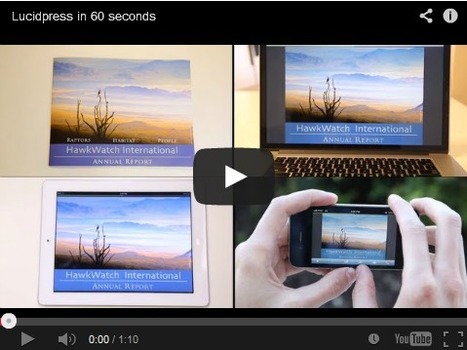
"Lucidpress is a slick new service from the same team that developed Lucidchart. Lucidpress is a slick tool for collaboratively creating multimedia documents."
Beth Dichter's insight:
Richard Byrne has explored Lucidpress, a new tool from the creators of Lucidchart (which is one of the best deals around for educators for creating mindmaps) and states "I look at Lucidpress as being the best of Apple's Pages and the best of Google Documents combined into one slick service." Like Lucidchart this tool is built for collaboration. The site states “receive feedback from coworkers…collaborate with anyone on any browser, anywhere. With live chat, document presence, and commenting, you’ll never have to compile scribbled feedback…” Educators will be pleased to hear that free accounts are available. To go directly to the video click through to Richard Byrne's post. To go directly to Lucidpress: https://www.lucidpress.com.
Scoop.it!

Boys have been falling behind girls in academic performance and attainment. Are our boys failing, or are we failing our boys?
Beth Dichter's insight:
For years we have hear "no child left behind" but what do the stats say about the boys? This infographic looks at some of the issues that may be affecting the boys coming through the education system. Are we leaving them behind? 
Miro Svetlik's curator insight,
October 4, 2013 8:35 AM
This is so nicely outlined, except the male/female teacher part which I this is a little bit exagurated and impacts more the boys are already missing a father figure at home. The final point is to give much more detailed attention to individual boys in the learning process and as well empower teacher to do so.
Scoop.it!
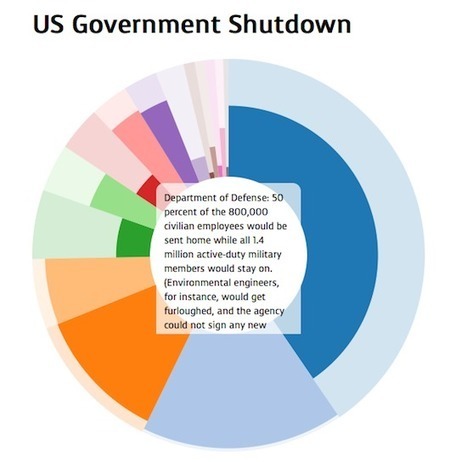
"The shutdown of the United States government began today. With no plan of action from either political party, there is consequently no easy lesson for teachers to share with their students."
Beth Dichter's insight:
Are your students asking questions about the shutdown of the US government? Are you looking for some excellent resources to help them understand what is going on? ASIDE has put together a number of resources to help you out. Check out this article where you will find * A short video from the BBC titled U.S. Government Shutdown in 60 Seconds * An interactive tool "US Government Shutdown" visualization (you may use your mouse and roll over different departments to learn the impact of the shutdown * An infographic "Who Goes to Work? Who Stays Home" from the NY Times * An infographic that asks "How Would a Government Shutdown Affect Your Life?" * A slide show from USA Today that catalogs the "Government Shutdown by the Numbers" and quite a few more. Many students are interested in this and this article notes that their questions were mostly on "blame and healthcare." You may find different questions in your classroom with this robust list of resources. 
Nat Sones's curator insight,
October 2, 2013 8:13 AM
Shutdown is the ultimate failure of government. This seems not to have passed unnoticed exactly, but being missed as it gets covered in all sorts of other statements, facts, data and reactions. By shutting down, by neglecting their duty (not to mention wasting vast, unbelievable amounts of resource doing so), the US government has betrayed its people, and allowed political brinkmanship and the primitive desire to 'win the argument' to undermine the whole point of it.
If, that is, you believe that the point of government is to protect people, nurture civilisation and direct growth. If you believe that the point of government and the purpose behind politics is to further the careers and feed the egos of politicians, however, it's fine!
This material shows in crystal clarity how the shutdown is affecting US society and people. A good clear way of seeing the shocking neglect of duty that this represents - by all sides. Reaching consensus is the duty of politicians; not fighting to the death. Because the politicians never have to actually pay any price - others do that for them.
|
Scoop.it!

There a lot of great resources out there about connected learning. Pulling it all together, here's a quick overview. ~Mia
Beth Dichter's insight:
This infographic provides a great look at connected learning. Learn about connected learning as a way to engage students and values involved with using it. Short and sweet!
Scoop.it!

"Blended learning programs that incorporate proven educational software such as Rosetta Stone increase access and also address issues of cost effectiveness in the 'new normal' economy."
Beth Dichter's insight:
Take a look at this infographic that discusses next generation of language learning might entail. This infographic provides a preview of a white paper to be released in the next week titled "The Next Generation of Language Learning". The sections in the infographic include: * Why a second language is important * Design principles next-gen language learning * Blended language models 
Drora Arussy's curator insight,
October 18, 2013 8:43 AM
The one thing that almost everyone can agree on is that multiple languages are important. My grandparents all spoke at least 4 langauges and they were not overly educated - it is the price of functioning in a multi-ethnic world and isn't it wonderful? The how is what we need to focus on - how to fund, how to teach effectively, how to integrate technology effectively...
Scoop.it!
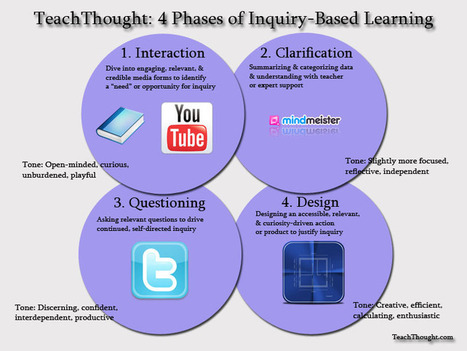
"According to Indiana University Bloomington, Inquiry-based learning is an “instructional model that centers learning on a solving a particular problem or answering a central question. There are several different inquiry-based learning models, but most have several general elements in common..."
Beth Dichter's insight:
This indepth post explores inquiry-based learning. The four phases are: 1. Interaction - Big Idea: Dive into engaging, relevant, and credible media forms to identify a “need” or opportunity for inquiry 2. Clarification - Big Idea: Summarizing, paraphrasing, and categorizing learning with teacher or expert support 3. Questioning - Big Idea: Asking questions to drive continued, self-directed inquiry 4. Design - Big Idea: Designing an accessible, relevant, and curiosity-driven action or product to culminate and justify inquiry Each of the four phases also includes information on tones, student indicators, teacher indicators, appropriate questions and apps. There are also 4 questions for student-based reflection and ten adjustments you may make as a teacher to adjust to teaching inquiry-based learning. There are many forms of teaching that incorporate inquiry-based learning including project-based learning, blended learning, and challenge-based learning. You may find your students more engaged in the learning process if you include some components of inquiry-based learning in your classroom.
Scoop.it!

What do we and don't we know about the brain? It used to be that we thought we knew it all. Well, maybe not all. But, over the last couple decades new research reveals and debunks some of our previ...
Beth Dichter's insight:
One image with six facts about learning and the brain. As educators these are six facts that are useful to know as we work with our students.
Mary Cunningham's curator insight,
October 13, 2013 12:05 PM
This is part of the post on infographics as well, but is interesting enough to have a link just in its own.
Scoop.it!

While the schools may look different from the outside, they most definitely share a common purpose—to give ALL students the opportunity to learn in a Deeper Learning environment. And the schools are...
Beth Dichter's insight:
Getting Smart has published an infographic that not only looks at deeper learning and provides an overview but also provides links to 20 schools across the US which have put deeper learning into practice. Learn about strategies that promote deeper learning, deeper learning competencies and click through to the schools (located in 13 states) to learn more from their websites. To access these sites you must download the pdf version of this infographic, available on the site or by at this address: http://gettingsmart.com/wp-content/uploads/2013/10/FINAL-Deeper-Learning-Infographic.pdf
Scoop.it!

Ideas for Instructional Strategies for classroom use
Beth Dichter's insight:
You may choose to go directly to the infographic on Instructional Strategies Ideas or you may want to check out the post that provides examples, definitions and more information at http://www.fortheteachers.org/instructional_strategies.htm#.UlYC7BD4ugR As For The Teachers blog states "Because you can never have enough strategy ideas in your teaching toolbox…"
Mary Cunningham's curator insight,
October 13, 2013 12:11 PM
I could paper my entire office with good infographics! This is a good collection of ideas and reminders on good instructional strategies! 
Mounds View High School's curator insight,
January 16, 2014 12:19 PM
Ideas that you could implement in your classroom tomorrow.
Scoop.it!
Beth Dichter's insight:
Disconect Search is a new tool that works with most search engines (including Google, Bing, Yahoo, DuckDuckGo and Blekko) in Chrome and Firefox and allows you to keep your information private. If you are concerned about issues of tracking this new tool will help you keep your search information private. There is a short video that explains the process on the site. There is also a short article about Disconnect on TechCrunch. Below are two quotes from this article. “Your searches are anything but private,” he noted in a statement. “Search engines, and even websites and Internet service providers, can save your searches and connect them to your real name through your user accounts.” AND “Even if you never log in to an account, search engines and many websites typically save your searches and connect them to an IP address, which can allow companies to uniquely identify your computer.”
Scoop.it!

Schools across the country are looking at new online ways to integrate and analyze information about their students. But privacy advocates remain wary.
Beth Dichter's insight:
There is so much data being collected on students today and the question is now being raised on some school districts about how much of this data should be shared. This article discusses InBloom, a business that has support from Microsoft and the Carnegie Corporation of New York to help store data and personalize learning. The article explores one school district where parents are rasing concerns about the amount of data that may be stored ( up to 400 fields) as well as issues of security and how data from elementary school may follow children. This is an issue that all schools will need to address in the future. To learn more about the issues involve click through to this article.
Scoop.it!
This film was developed by sportscotland to help young athletes understand what 'talent' is and how you can get good at sport - it's more of a choice than yo...
Beth Dichter's insight:
Thanks to Larry Ferlazzo for sharing this video. Although geared to sports it is a great video to show students when talking about growth mindset. 
Dillon Fury's curator insight,
September 10, 2014 12:29 PM
Its all about heart in sports! The one with the will to win will do so and the right mindset is the most important part!
Scoop.it!
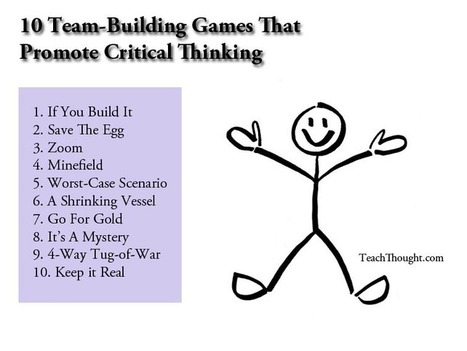
"One of education’s primary goals is to groom the next generation of little humans to succeed in the 'real world'... Students must be engaged and cooperation must be practiced, and often. The following team-building games can promote cooperation and communication, help establish a positive classroom environment and — most importantly — provide a fun, much-needed reprieve from routine."
Beth Dichter's insight:
Team building exercises are a great way to teach skills and change things up in the classroom. The list of ten seen in the image above are described in the post. Some of the skills learned or reinforced are communication, problem solving, and trust. For more information and to learn how to play the game click through to the post.
Scoop.it!

Many studies show that engaging in reciprocal back-and-forth conversations gives children a chance to try out language for themselves, and also gives them the sense that their thoughts and opinions matter.
Beth Dichter's insight:
This post explores research that show that rich conversation is an important component of children learning. It also notes that children only less than 15% of their time at school. Therefore a key part of learning rich conversation is parents. "A study by researchers at North Carolina State University, Brigham Young University and the University of California-Irvine, for example, finds that parental involvement—checking homework, attending school meetings and events, discussing school activities at home—has a more powerful influence on students’ academic performance than anything about the school the students attend." For more information on this as well as links to additional studies click through to the post.
Scoop.it!

From
visual

Children can learn problem-solving skills using methods similar to the ones scientists employ to prepare them for opportunities in their professional
Beth Dichter's insight:
This infographic looks at science,specifically the value of teaching students science from a young age because of the many skills that are developed. These skills include developing questions, collecting evidence, forming decisions, constructing information and communicating. It also discusses the FERA cycle, as in: * Focus * Explore * Reflect * Apply The infographic then explores how STEM has the ability to impact her choices throughout her lifetime. This infographic was created by the Smithsonian and provides great information throughout (including a more detailed explanation of the FERA cycle). 
Ruth Virginia Barton's curator insight,
February 13, 2015 11:30 AM
Excellent infographic about learning science through critical-thinking and student-directed inquiry |





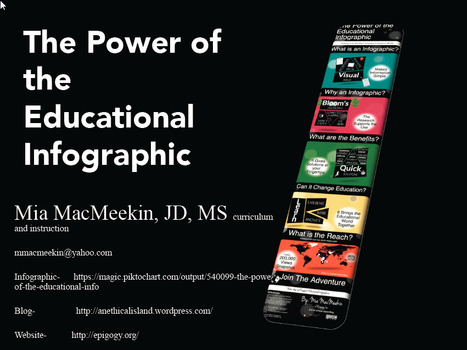




Are you looking for some web-based tools for students to use to create animations? This post will provide you with nine ideas (and I will add a tenth). Have fun exploring!
* EWC Presenter
* Make Web Video
* Vcasmo
* GoAnimate
* Powtoon
* Mixeek
* Prezi
* Empressr
* Creaza
* And one more that is not listed is Moovly. Here is the link: http://www.moovly.com/