Eclectic Technology
230.9K views | +6 today
Eclectic Technology
Tech tools that assist all students to be independent learners & teachers to become better teachers
Curated by Beth Dichter
Your new post is loading...
Scooped by Beth Dichter
January 29, 2014 9:55 PM
Scoop.it!

Infoviz Education: Animated Visualizations for Kids

Infoviz Education: Animated Visualizations for Kids | Eclectic Technology | Scoop.it

"We love infographics. We love animation. And we’re all for engaging kids in creative education. So today we’re looking at three educational infoviz animations that shed light on complex or important issues in beautifully art-directed ways that make little eyes widen and little brains broaden."

Beth Dichter's insight:

If you are looking for three great infographics that are animated this post is for you.

The first video is 'How to Feed the World' and explores "the science behind eating and why nutrition is important." The suggested ages are 9 - 14.

The second video, 'The Story of Stuff' is a fascinating look at "the entire materials economy." This is a longer video (just over 20 minutes) but it provide a great base for a classroom discussion. If you  click  through to their website you will find many other videos that have been created including 'Story of Bottled Water', 'The Story of Solutions' and 'Story of Electronics.'

The third video is 'Meet the Elements,' a "wonderful animated journey across the periodic table."

There is a fourth video but it is not necessarily appropriate for students (at least younger students). This one is a reinterpretation of LIttle Red Riding Hood.

If you know of some great videos for teachers to use share them by leaving a comment!

No comment yet.
Scooped by Beth Dichter
January 28, 2014 9:28 PM
Scoop.it!

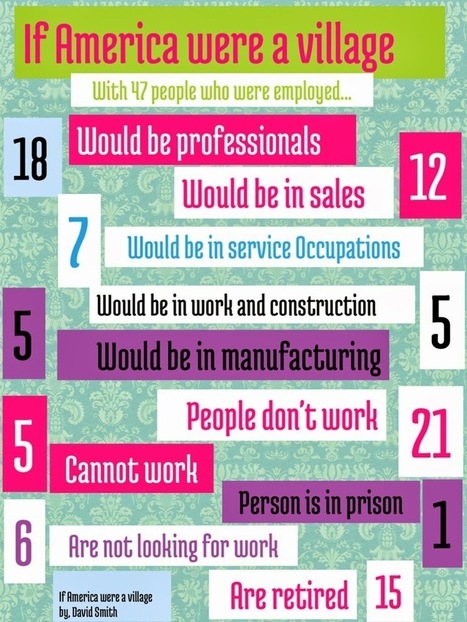
If The World Were ... An Infographic

If The World Were ... An Infographic | Eclectic Technology | Scoop.it

"With the plethora of infographics in the media, it's important for our learners to understand how to design information. We continue to incorporate the creation of infographics as part of our curricula to help them do just that."

Beth Dichter's insight:

Check out this idea of one way to have your students create infographics. Using two books, 'If the World were a Village' and "If America were a Village', students were assigned a "specific aspect to address."

If having students create infographics is new to you this post provides some great ideas that you might use with your class.

The Rice Process's curator insight, January 29, 2014 7:34 AM

Designing visual representation of information is more than translating words to pictorials.  The construction involves filtering the information, drawing relationships, revealing patterns and representing the information as meaningful content. 

Scooped by Beth Dichter
January 27, 2014 9:58 PM
Scoop.it!

Atlas of the Historical Geography of the United States

Atlas of the Historical Geography of the United States | Eclectic Technology | Scoop.it

"Here you will find one of the greatest historical atlases: Charles O. Paullin and John K. Wright's Atlas of the Historical Geography of the United States, first published in 1932. This digital edition reproduces all of the atlas's nearly 700 maps. Many of these beautiful maps are enhanced here in ways impossible in print, animated to show change over time or made clickable to view the underlying data—remarkable maps produced eight decades ago with the functionality of the twenty-first century."

Beth Dichter's insight:

This old atlas provides new functionality due to technology! Maps have been georectified, many are animated allowing you to see a progression over time, many are clickable providing access to data such as population demographics or crop production, and much more. Have fun exploring.

No comment yet.
Scooped by Beth Dichter
January 26, 2014 8:59 PM
Scoop.it!

5 Reasons You Should Be Teaching Digital Citizenship

5 Reasons You Should Be Teaching Digital Citizenship | Eclectic Technology | Scoop.it

"Students buzzed about the latest uproar on Instagram. Anonymous sources had posted a “questionable”–and NSFW–list for multiple public schools in our city on Instagram, leading to distraught girls, viral Twitter reactions, and an investigation.

This type of cyberbullying and reckless use of digital communication is rampant among teens, but this recent episode was only unusually due to its elevated publicity."

Beth Dichter's insight:

Do you believe that it is important to teach Digital Citizenship in school? Given all that happens online and how many of our students do not make appropriate decisions about what they are posting online, be it images or words, the need for this is evident. This post discusses "five reasons why schools should take a lead by promoting digital and social media literacies curriculum, and promoting digital citizenship inside and outside of the classroom."

The reasons include:

* The Gap is Growing - as in the gap between what students do at home and what they could do at school is vastly different (at least in many schools which do not allow mobile phones to be used).

* Digital Footprints are Easy to Leave...and difficult to erase. How easy is it to find information on your students using Twitter, Instagram or any of the social media tools used by students? How often is that information such that they would prefer that collleges not see it?

Three additional reasons are provided with discussion, all of which provide food for thought when working with students on this issue.

Samantha Stock's curator insight, January 27, 2014 6:41 PM

interesting article on working with digital natives! 

Scooped by Beth Dichter
January 25, 2014 7:06 PM
Scoop.it!

Teachit Timer - A Free Online Timer

Teachit Timer - A Free Online Timer | Eclectic Technology | Scoop.it
Beth Dichter's insight:
Thanks to Richard Byrne for this link. Teachit Timer is an online timer where you can set it so it shows the time that has gone by and time left to go. You may also select an alarm sound. This could assist with management during project time or scheduled breaks.
Progressive training's curator insight, January 26, 2014 11:55 AM

Teachit Timer - A Free Online Timer 

Rosemary Tyrrell, Ed.D.'s curator insight, January 27, 2014 1:18 PM

This is slightly better than the one I am already using. 

Charlie Dare's comment, January 28, 2014 12:08 AM
Managed to set to current time then couldnt see how to set it to time I wanted the alarm to go off ??
Scooped by Beth Dichter
January 24, 2014 10:15 PM
Scoop.it!

Infographics as Assessments for Nonfiction Reading

Infographics as Assessments for Nonfiction Reading | Eclectic Technology | Scoop.it
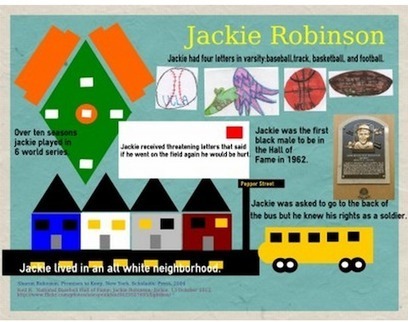
This past weekend, my step-daughter Emily, who works in the field of non-profit fundraising, asked me out of the blue, "Do you you ever teach your students about infographics?" I beamed with pride as I showed off my students' hard work.
Beth Dichter's insight:

In this post learn how a teacher took a project where students created an infographic on a non-fiction book and took it from being a "nice digital poster" and observed students whom had finished early poll their classmates and create infographics that included their new results. To quote from the post "These students had made a leap of understanding I hadn’t asked for: the images on an infographic were meant to convey data and information with the powerful impact of visual design."

Read the post to learn about the process that followed and how you might have your students create infographic in your classroom for an assessment.

The Rice Process's curator insight, January 25, 2014 11:50 AM

Infographics can be an effective assesment across the board.

Scooped by Beth Dichter
January 23, 2014 6:06 AM
Scoop.it!

History Poster Projects as Assessment Tools

History Poster Projects as Assessment Tools | Eclectic Technology | Scoop.it
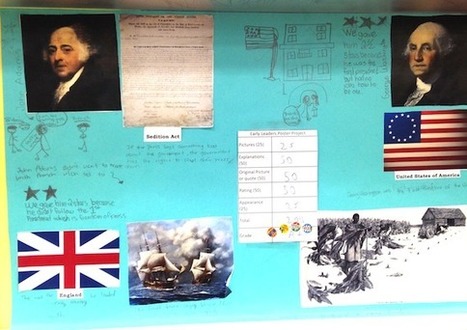
Non-traditional tests, like Aaron Brock's 8th gr. history poster project, can help inner-city students build evaluative skills needed for new state assessments.
Beth Dichter's insight:

As the Common Core testing approaches and academic rigor is stressed it is great to have alternative ways to assess our students and that is teaching them skills that will be required in Common Core testing. This post provides a detailed look at how one teacher crafted a poster to assignment that required their students compare and contrast two leaders (unit Early American Leaders), exlaining whom they believed was the best leader and the worst leader, and providing a ranking for each level (explaining their ranking) as well as information from the text to support this. Many more details are provided in this post and you might also allow students to expand on the resources they utilized (as the Common Core will require that students look at more than one resource on a topic and then craft an answer to a problem). You might also have students create an infographic out of this work if you want to engage them online.

Kate Erricker's curator insight, January 24, 2014 5:18 AM

Could this approach also work for comparative poetry analysis and Literature study? 

Scooped by Beth Dichter
January 22, 2014 4:55 AM
Scoop.it!

The health hazards of sitting

The health hazards of sitting | Eclectic Technology | Scoop.it
We know sitting too much is bad, and most of us intuitively feel a little guilty after a long TV binge. But what exactly goes wrong in our bodies when we park ourselves for nearly eight hours per day, the average for a U.S.
Beth Dichter's insight:

This infographic looks at the health hazards of sitting...a common practice in most schools for most students. According to the information most adults also sit for an average of 8 hours per day.

What are the side effects of doing this?

Learn about Organ Damage, Muscle Degeneration, Leg Disorders, the Mortality of Sitting, Trouble at the Top, Bad Back, as well as the right way to sit and what the experts recommend.

You may also download it as a pdf.

KreuzFit's curator insight, January 22, 2014 1:08 PM

My advice: get up, stand up, move. Every hour for just a couple of minutes.

Scooped by Beth Dichter
January 20, 2014 9:10 PM
Scoop.it!

How sugar affects the brain - Nicole Avena

How sugar affects the brain - Nicole Avena | Eclectic Technology | Scoop.it

"When you eat something loaded with sugar, your taste buds, your gut and your brain all take notice."

Beth Dichter's insight:

The more I look through TED-Ed videos the more I find that are useful to use with students. This one explores how sugar affects the brain. As always there are a series of questions you may use after viewing the video as well as additional resources and an online forum question. And if you are interested you can flip the video for your use.

Lori Wilk's curator insight, January 20, 2014 10:54 PM

I do my best to avoid sugar 

Scooped by Beth Dichter
January 19, 2014 2:54 PM
Scoop.it!

Visualizing Text: The New Literacy of Infographics

Visualizing Text: The New Literacy of Infographics | Eclectic Technology | Scoop.it
Infographics are modern, written artifacts about collected resources in a dynamic, visual format. Infographics should be viewed as complex, standalone texts, not simply a text feature or graphic element.
Beth Dichter's insight:

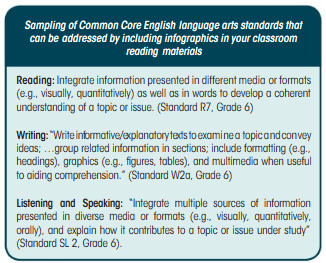
This paper looks at digital literacy, specifically how infographics can be used to meet Common Core standards. A well designed infographic will have:

* A Purpose

* A Style

* Evidence

* Format

The paper also includes a section "How can I teach comprehension with infographics?" This section includes two infographics and has the students critique them using the following questions:

* What is the author's purpose or question?

* What evidence supports the author's claim?

* What are the strongest elements of this design?

* How could the design be improved?

You could use these same questions and have students in your class critique their infographic and their classmates.

And last but by no means least they provide a list of locations where you can create an infographic.

Infographics support reading comprehension and writing skills. They also allow students to strengthen their critical thinking skills and synthesis skills.

niftyjock's curator insight, January 19, 2014 7:12 PM

I often get very bored with infographics, but these techniques will help me not only read them better but have a go at c reating my own

Greenwich Connect's curator insight, January 20, 2014 7:28 AM

Slightly overblown tone, presumably to help what is a useful overview of infographics sound more "academic" - read between the lines for what students should think through and how they should approach their own infographic production

Kerri Schaub's curator insight, January 20, 2014 8:10 AM

Visualizing is a powerful multisensory technique. 

Scooped by Beth Dichter
January 18, 2014 8:32 PM
Scoop.it!

Turning Struggling Students into Superheroes: Comic Books as Teaching Tools

Turning Struggling Students into Superheroes: Comic Books as Teaching Tools | Eclectic Technology | Scoop.it
Drawing from personal experience, graduate student Michael Strom demonstrates the tremendous teaching power of comic books and graphic novels, and how we can use these as literary tools to reach our struggling students.
Beth Dichter's insight:

Comic books have been around for some time but not necessarily used in schools. Yet if you walk into most school libraries you will find students reading graphic novels or graphic textbooks. This post explores reasons to include comic books/graphic novels as tools for your students. Links are provided to four resources that provide you with great materials:

* Comic Book Classroom

* The Graphic Classroom

* The Comic Book Projects

* Reading with Pictures

There are many great graphic novels available for students that will teach them content. For more information on utilizing them in the class check out and the resources listed above. They contain a variety of resources including access to free lesson plans and materials.

Kerri Schaub's curator insight, January 19, 2014 8:45 AM

My middle school students are hooked on graphic novels. So glad to see them reading. #mersd #Orton-Gillingham #reading

Audrey's curator insight, January 21, 2014 4:14 PM

Brilliant.  I absolutely agree.  Can be particularly helpful for foreign students learning English.

Lena Leirdal's curator insight, August 30, 2014 4:42 AM

Coming across the reluctant reader in the classroom in not uncommon. This is a link to a excerpt from a graduate thesis about using graphic novels and comics to teach struggling male readers. I tried teaching graphic novels in my own classroom this spring, and even though I thought it went quite well, I still have to become a bit more acquainted and comfortable with the genre. I will most definitely give it another try this year!


I find inspiration to do so in Michael Storm´s point that "we need to teach young boys that literacy still is the ultimate adventure, and they too have the chance to be the hero".

Scooped by Beth Dichter
January 17, 2014 5:35 AM
Scoop.it!

How Students Can Create Animated Movies to Teach Each Other

How Students Can Create Animated Movies to Teach Each Other | Eclectic Technology | Scoop.it
In addition to learning our content and curriculum standards, today's students also need to be able to do the following effectively: collaborate with one another, synthesize ideas, create content, ...
Beth Dichter's insight:

Have you seen an RSA Animate video? Are you interested in learning how to make one or better yet, have your students make one? This post provides an in-depth look at how to go about have your students create an animated video that provides them with the opportunity to  practice 21st century skills (quoted from post below):

* collaborate with one another

* synthesize ideas

* create content

* communicate ideas clearly

* use technology

This activity is designed to have your students create content, providing you with materials to use in future classes as well as helping your current students understand the materiial.

The author, Jordan Collier, provides a detailed five-day plan. Day 1 would have you dividing students into groups of three, assign them a section of a chapter in a textbook, and determine the key facts that need to be taught. To read about how to assist them with this and the tasks for Day 2 - 5 click through to the post.

María Dolores Díaz Noguera's curator insight, January 18, 2014 7:46 AM

Great one

Eduardo Wegman's curator insight, January 19, 2014 10:29 AM

Collaboration is the key for future society development

Scooped by Beth Dichter
January 15, 2014 9:52 PM
Scoop.it!

Google Improves Image Search Tools Menu

Google Improves Image Search Tools Menu | Eclectic Technology | Scoop.it

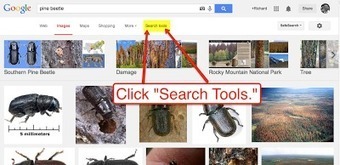
"Thanks to a Tweet from Matt Cutts, the head of the webspam team at Google, I learned that the tool bar in Google Images now includes "usage rights." Now instead of having to open the advanced search menu you can just click the "search tools" menu and select "usage rights" without leaving the search results page."

Beth Dichter's insight:

Google has just made it easier to find the 'usage rights' of images. Richard Byrne has assisted by providing us with a quick tutorial that show just what to do, in two steps!

No comment yet.
Scooped by Beth Dichter
January 28, 2014 9:52 PM
Scoop.it!

Framework for Professional Development: SAMR Template & Infographic

Framework for Professional Development: SAMR Template & Infographic | Eclectic Technology | Scoop.it

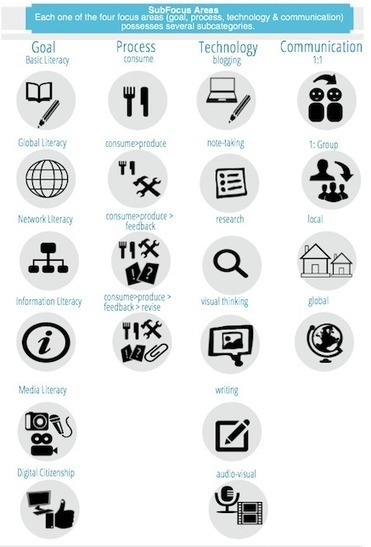
"My colleague, Silvana Meneghini, and I have been working on developing a Professional Development framework for embedding technology use and modern learning litercies based on Ruben Puentedura's SAMR model.

The template consists of 4 Focus Areas. Each stage of the SAMR model consists of 4 focus areas in the template, that support vision, planning, and evaluation in activity and task design as well as a professional development framework."

Beth Dichter's insight:

If you are considering using the SAMR model to design lesson plans/units you should consider checking out this post. There is a very detailed template that helps you walk through the steps and consider how to best design your lesson/unit. The template is detailed and you may download it as a pdf. An example is included.

Many are turning to the SAMR model as a guide to integrate technology into their curriculum. If this model is new to you search this Scoop.it or type SAMR in your favorite search engine and you will find a wide variety of resources.

No comment yet.
Scooped by Beth Dichter
January 27, 2014 10:18 PM
Scoop.it!

How to Tap Into Kids’ Creative Confidence

How to Tap Into Kids’ Creative Confidence | Eclectic Technology | Scoop.it
OpenIDEO "How might be inspire young people to cultivate their creative confidence?" That was the challenge posed by OpenIDEO several months ago:
Beth Dichter's insight:

This post provides the winning entries into the OpenIDEO challenge providing a wide variety of ways to inspire creative confidence in teens. Winning entries include:

* SelfStyle -  "We’re creating a platform where teens create their own identity by acting on their most positive impulses. A place that encourages compassionate and generous behaviors..."

* The Play Portal - "An online platform that structures creative learning opportunities through games. It’s a community that strays from thinking of games as a means for accomplishing our educational goals, to education as a means for accomplishing the goals of children."

An additional seven winning entries are in the post with links to additional information.

Kirsten Macaulay's curator insight, January 28, 2014 5:32 AM

Great visual of inspiring creative confidence.

Audrey's curator insight, January 28, 2014 5:21 PM

Excellent ways to encourage learning and all of this can be accomplished from home, curated by Audrey for www.homeschoolsource.co.uk

Ruby Day's curator insight, February 14, 2014 4:05 PM

want to try this with my class, thanks for sharing :)

Scooped by Beth Dichter
January 26, 2014 9:17 PM
Scoop.it!

Read Like A Detective - Infographic (Student Version)

Read Like A Detective - Infographic (Student Version) | Eclectic Technology | Scoop.it
Get kids to engage with what they’re reading on a deeper level: to ask questions about what they notice, and to answer those questions based on what’s in the text.
Beth Dichter's insight:

The Common Core require that we get students engaged with reading on a deeper level. This infographic on Close Reading is designed for students and provides suggestions for students to follow: Look for Clues, Ask Questions, Make Your Case, and Prove It. . There is also a version available for teachers that has additional details. Both may be downloaded. To find the one for teachers go to http://www.weareteachers.com/hot-topics/topics-in-education/understanding-close-reading-download-our-infographic-now

Ness Crouch's curator insight, January 28, 2014 2:09 PM

I have to print this!!!!

Scooped by Beth Dichter
January 26, 2014 7:34 PM
Scoop.it!

Instructional Design Series Introduction - YouTube

How do you design courses? Are you using sound instructional design principles? Are your courses effective? Are they appealing? Check out this series to lear...
Beth Dichter's insight:

If you are looking for some short (1 - 2.5 minute) videos that explain sound instructional design principles look no further. Currently there are five videos available in this series (and all five are on the playlist that is accessed at this link). The concepts covered are:

* Instructional Design Series Introduction

* Instructional Design Episode 2 (discusses sound instructional design

* Instructional Design Episode 3: The Models

* Instructional Design Episode 4: Dr. Robert M. Gagne

* Instructional Design Episode 5: Learning Outcomes

If you look at the videos available from Epigogy you will also find a series on Online Discussions (currently 3 videos: Overview, Building Community and Give Students a Voice). It appears that new videos will be added.

Linda Hegarty's curator insight, January 27, 2014 5:41 AM

very good videos

Catherine Bellino's curator insight, January 30, 2014 12:24 AM

Effective, efficient, appealing... cela ressemble aux paramètres de l'utilisabilité ! Ce qui confirme l'intérêt d'une démarche "d'ergonomie pédagogique".

Catherine Pascal's curator insight, February 28, 2014 9:04 AM

Essentiel "ergonomie" et "espace" 

Scooped by Beth Dichter
January 24, 2014 10:37 PM
Scoop.it!

SearchReSearch: A new feature on Google Search Results Page

SearchReSearch:  A new feature on Google Search Results Page | Eclectic Technology | Scoop.it

"Google just launched a really great addition for the Search Results Page (SERP). 
For most sites, there is now a gray "site information" target next to the green URL."

Beth Dichter's insight:

Google now provides information on sites when you do a search (with a caveat...this is not yet happening with all sites but does seem to show up with with sites that are larger). Although some may know these sites for many students this information may help them determine the validity of the site. Hopefully this feature will continue to pushed out to assist students in evaluating websites.

Scooped by Beth Dichter
January 23, 2014 9:44 PM
Scoop.it!

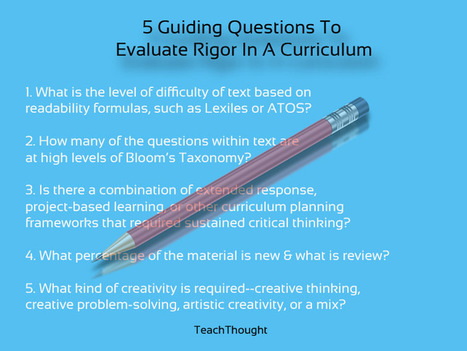
5 Questions To Evaluate Curriculum For Rigor

5 Questions To Evaluate Curriculum For Rigor | Eclectic Technology | Scoop.it
Beth Dichter's insight:

Where do we begin when we want rigor to be a component of our courses?

With standards - if your state is using Common Core they have been recognized as rigorous...so what comes next?

With curriculum - if using a text is it rigorous? If creating your own have you thought of rigor as you created your curriculum. This post will help with that as it provides 5 guiding questions for you to ask to evaluate the rigor in curriculum...as well as an example.

Kirsten Macaulay's curator insight, January 24, 2014 4:36 AM

Good start. Also relevance to the student.

Leslie Minton's curator insight, January 24, 2014 7:52 AM

Rigor across curriculum content, not just a particular subject matter is essential to effective teaching and learning. It is knowing what rigor is in order to determine if it exists.

Nancy Jones's curator insight, January 24, 2014 8:59 PM

This iactually the second article of a series . This is a  word used frequently, but it's definition varies.  I  think rigor need to also differentiate , say, reading levels so each learner is challenged from the level they are currently at. Rigor does not mean, "one size fits all!"
Scooped by Beth Dichter
January 22, 2014 8:59 PM
Scoop.it!

Teachers: Don’t Miss These 2013 Graphic Novels

Teachers: Don’t Miss These 2013 Graphic Novels | Eclectic Technology | Scoop.it
One of our missions here at CBLDF is promoting the use of comics and graphic novels in schools -- hence our publications Raising a Reader! How Comic & ...
Beth Dichter's insight:

Graphic novels...do you think they have a place in school? The Comic Book League Defence Fund (CBLDF) has recently published an article on ten graphic novels that could be part of the curriculum. This post includes descriptions of the ten graphic novels and you might also want to check out some of the materials available through this website, such as a free publication "Raising a Reader! How Comics & Graphic Novels Can Help Your Kids Love To Read!"

No comment yet.
Scooped by Beth Dichter
January 21, 2014 8:35 PM
Scoop.it!

OpenEd - Largest K-12 OER. Quarter Million Common Core Videos and Games.

OpenEd - Largest K-12 OER. Quarter Million Common Core Videos and Games. | Eclectic Technology | Scoop.it
Largest collection of K-12 videos, games and assessments for all Common Core State Standards, flipped classroom LMS. All open source and Open API.
Beth Dichter's insight:

OpenEd has a very large collection of resources, including K-12 videos, games, and assessments aligned to the Common Core. They combine machine based learning recommendations with subject matter experts to determine which resources will be provided.

* Search for videos, games and assessments by keywords or subject.

* Browse Common Core Math and ELA, Next-Gen Science and more

* Create playlists of resources to share with students and teachers

* Create a course in OpenEd and share it with your students

This resources continues to add materials and is worth checking out.

No comment yet.
Scooped by Beth Dichter
January 20, 2014 3:59 PM
Scoop.it!

170 Online Ebooks for Young Kids

170 Online Ebooks for Young Kids | Eclectic Technology | Scoop.it
All my favorite ebooks! Some of the ebooks are from YouTube. I use Safeshare to remove the ads and suggested videos from YouTube. Read more about Safeshare.tv here. The newest e-book webmix: Ebook ...
Beth Dichter's insight:

This post will lead you to five Symbaloo's (a website that allows you to create webmixes that are all active links). There you will find eBooks geared to younger readers (or listeners). The topics of the Symmbaloo's are:

* Read to Me - a webmix of 16 read aloud

* National Geographic Kids - 37 non-fiction magazines for kids. Audio available and will read the words to the kids

* B&N Storytime Online - 16 Classic Books read by the author of the book

* Ebook #1 - 23 Books read by actors

* Ebook Set 2 - 35 online books from various sites

* Starfall Books - 42 themed books from Starfall

Each of the webmixes are linked to Symbaloo. These mixes are great to use at school with students or to send home so parents would be able to use them with their children.

Ness Crouch's curator insight, January 22, 2014 2:16 PM

A series of Symbaloo sets which link to a variety of ebooks. I will be looking into this with our ipads :)

Teresa Pearl's curator insight, January 30, 2014 6:20 PM

As a special ed teacher, I am constantly looking for ebooks that will read to my lower readers. This is a great article with links for 5 other pages with ebooks.

Brette Ridings Callaway's curator insight, June 2, 2015 10:03 PM

This is a great site that with links to eBooks.  I especially like how the author provides information about each site, how he uses it, and what the eBooks can do.  This is very user friendly for teachers to explore and learn more about eBooks available on the web.

Scooped by Beth Dichter
January 19, 2014 8:46 AM
Scoop.it!

Free Ebook - Digital Storytelling With Comics

Free Ebook - Digital Storytelling With Comics | Eclectic Technology | Scoop.it

From creating simple comic strips to planning long stories, Storyboard That is a tool that has a bunch of potential uses in the classroom. I recently put together a PDF of five projects that your students can complete with Storyboard That.

Beth Dichter's insight:

Richard Byrne has created an eBook that provides step-by-step directions on creating a simple comic using the free version of Storybard That. You will find information on how to create the following projects:

* Project #1 - Crafting Fiction Stories with Comics and Crafting Short Stories with Comics

* Project #2 - Telling True Stories with Comics

* Project #3 - Turning Comic Strips into Movies

* Project #4 - Book Trailer Comics Videos

* Project #5 - Publishing Multimedia eBooks

Storyboard That also has a premium version (which costs money) and this version allows you to create and manage student accounts for your classroom. If you plan on using comics as a tool for students to demonstrate their understanding you will also find screenshots on how to do this in the eBook.

No comment yet.
Scooped by Beth Dichter
January 17, 2014 11:01 PM
Scoop.it!

The Other 21st Century Skills: Books for Kids

The Other 21st Century Skills:  Books for Kids | Eclectic Technology | Scoop.it
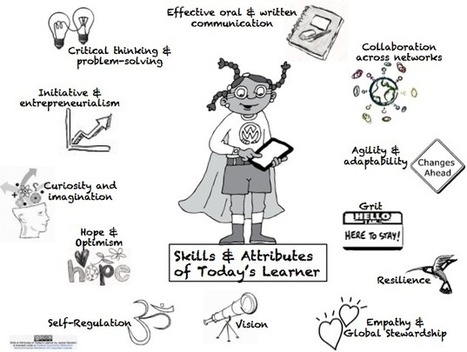
I have been discussing and blogging about The Other 21st Century Skills Many have attempted to identify the skills important for a learner today in this era of the 21st century (I know it is an ove...
Beth Dichter's insight:

In this post Jackie Gerstein provides a great list of books that you could use to teach children about the skills and attributes that they need to learn. She states " Children’s books, as they are written and presented as stories, have great potential to explain these often abstract concepts.  There is also evidence that the brain processes stories differently and more powerfully than facts and lectures."

The stories are divided into sections:

* Grit

* Resilience

* Hope & Optimism

* Vision

* Self-Regulation

* Empathy & Global Awareness

There is also a list of books suggested by Tony Wagner in the areas of Critical Thinking and Problem Solving, Collaboration and Curiosity and Imagination.

Although geared to children some are appropriate for older students.

Kerri Schaub's curator insight, January 19, 2014 8:47 AM

The forgotten, but essential, skills! #mersd #studentengagement

Scooped by Beth Dichter
January 16, 2014 9:42 PM
Scoop.it!

50 Resources to Use Animation as a Teaching Tool

50 Resources to Use Animation as a Teaching Tool | Eclectic Technology | Scoop.it
Beth Dichter's insight:

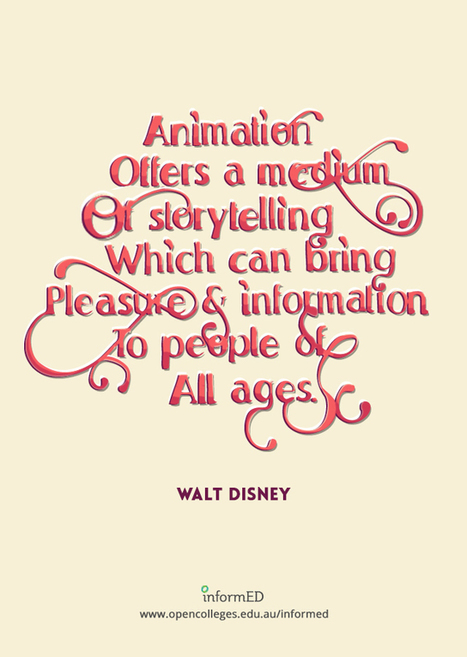
Have you asked yourself how can I combine education and animation "together to teach students everywhere, everything they ever wanted to know"?

This post provides resources in two areas:

* Resources for "creating original animation or using animation tools to create lessons"

* Resources for "animated lessons that are already completed and set to share"The first list has seventeen tools many of which are free. In the second list you will find thirty-three resources and the majority are free. 
carldowse's curator insight, January 17, 2014 4:39 AM

It's useful that two different approaches and types of resource are offered here - definitely worth exploring as animation appeals to most learners - busy executives included!

Louise Robinson-Lay's curator insight, January 17, 2014 5:23 AM

Create your own animations for your classes using these tools.

Tonya D Harris's curator insight, January 27, 2014 5:49 PM

List of recommended resources to" purchase" for amination teaching tools under $50 and some are free. Good source for ideas you can use.