


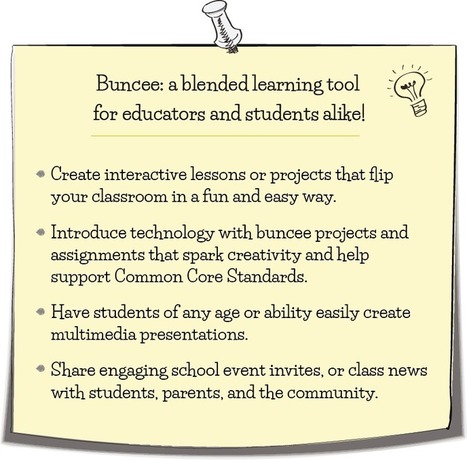

Buncee is fun and easy web tool for educators and students to create and share engaging multimedia presentations, interactive lessons, digital stories, and more

 Your new post is loading...
 Scoop.it! Buncee is fun and easy web tool for educators and students to create and share engaging multimedia presentations, interactive lessons, digital stories, and more
Beth Dichter's insight:
Buncee is a new tool that allows you (or your students) to create presentations...think of it is a digital canvas. There is a free version and it allows you to create a 2 slide presentation. There is also an edu version available for a cost. To read a post that provides additional information check out http://ilearntechnology.com/?p=5230
Scoop.it!

There are a lot of great tools out there that have more than one use. One of my favorite tools is Google's Tour Builder, a Google Maps infused interface that allows the user to create tours. But di...
Beth Dichter's insight:
Have you explored Tour Builder (from Google)? Evan Scherr states "Tour Builder gives students an interactive way to present their learning in a way that is a lot more engaging than a PowerPoint or Prezi presentation." This post provides four on how you might use Tour Builder in your classroom, as well as an example that you may check out. These examples include * Creating a multimedia letter based on historical events (or perhaps a book) * Using Google Trends and Google Maps. The suggestions here is to look at a trend based on a specific word and find out where it is is popular and is not popular and explore the reasons for this. * Exploring a favorite city, where each student adds their city to the map * Use it to have students create Lit Trips In addition to these suggestions he includes additional ones in other academic areas and shares the many types of multimedia that may be integrated into a Google Tour. 
Rocio Watkins's curator insight,
February 18, 2014 2:14 AM
Taking presentations to the next level!!! #21stCenturyClassroom 
The Morpho Institute's curator insight,
February 18, 2014 8:49 AM
This would be a fantastic tool for our educators to use to create a video tour of their Amazon experience!
Scoop.it!
"Most teachers and current textbooks offer varied approaches to the material to be learned so the teaching can be brain-compatible with the varied student learning styles. It is only logical that respect for these individual learning styles be incorporated into assessment forms."
Beth Dichter's insight:
What types of assessments are best to use, that allow students to demonstrate what they know? Five suggestions are provided (and more depth may be found in the post). * Option 1: Open-Book & Take-Home Tests - but this is not the type of open book test you might think of at first. You want your students to "synthesize disparate facts and perspectives to construct new knowledge." * Option 2: Student-Made Tests - have students submit questions and rewrite/rephrase to have students show higher order thinking skills. This suggestion also includes a section on How My Students Create And Study For Their Own Exams. * Option 3: The Complexity & Diversity Of Project-Based Learning -Think about projects that will let students show mastery of new knowledge. * Option 4: Written Response–Or Rather, The Pre-Writing -This may seem like an odd choice but read the description in the post to understand the reasoning. * Option 5: Ask A Question - Not just any question but one that will require students to think beyond the book. This section moves you from a question that is topic based to one that will show understanding. 
Christopher Resetar's curator insight,
February 13, 2014 12:00 PM
Like other comments on this scoop, I really like this article, especially items #1 and #2. I really like those options because they are unconventional options that I still think would provide an appropriate level of challenge for the students as well as provide an alternative form of just a simple pencil and paper exam. I think option #1 is more feasible for elementary school because it would allow students to work on skills that are more age appropriate like consolidation of information and looking for quality source material. 
Ruby Day's curator insight,
February 14, 2014 3:45 PM
Sounds like some great ideas to stimulate critical thinking 
Audrey's curator insight,
March 5, 2014 6:51 PM
All 5 assessment methods involves students leading the learning. Asking the students questions based on their reading of the topic helps their analytical skills and allows them to be in charge of their learning.
Scoop.it!
Beth Dichter's insight:
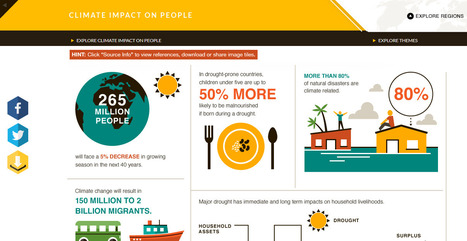
This interactive website allows you to explore climate change from the following perspectives: * By region (and it is global so you click on the location you want to begin) * By theme (and there are seven themes): - Food Security - Food Emissions - Climate impact on production - Climate impact on people - Adaptation - Mitigation - Policy and Finance Quoting from Larry Ferlazzo's post Big Facts is "intended to provide a credible and reliable platform for fact checking amid the range of claims that appear in reports, advocacy materials and other sources. Full sources are supplied for all facts and figures and all content has gone through a process of peer review." This is an open access resource. Much more information may be found at the site. (And think about checking out Larry Ferlazzo's post at http://larryferlazzo.edublogs.org/2014/02/08/very-very-impressive-new-interactive-site-on-climate-change/ 
No Planeta B's curator insight,
March 11, 2014 7:20 PM
EXCELLENT interactive resource on #climatechange ! Take a special look at the #LATAM section and food resources.
Scoop.it!
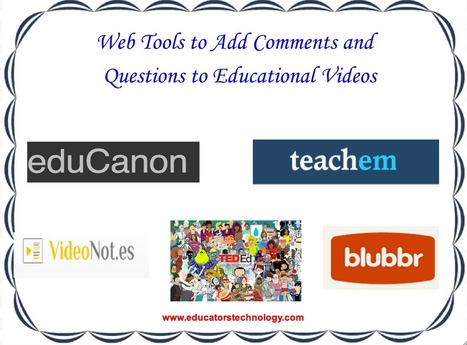
"If you are looking for web tools to create video lessons or platforms to help you flip your classroom , the tools below are probably what you need."
Beth Dichter's insight:
Are you considering flipping your classroom or incorporating video lessons? Are you looking for tools that will help you insert questions this post will share five tools with you: * eduCanon * teachem * VideoNot.es * TED-Ed * blubbr 
Rosemary Tyrrell, Ed.D.'s curator insight,
February 10, 2014 12:30 PM
I've only used eduCanon, which is a good tool, but I couldn't get the embed code to work in our Sakai LMS. It only requires a paid version to use short answer questions. 
Drora Arussy's curator insight,
February 11, 2014 8:22 AM
Imagine the possibilities - I can't wait to start playing! What a great way to reinforce language at home! 
Ness Crouch's curator insight,
February 23, 2014 4:36 PM
I've not heard of some of these tools. I'd like to create more videos so I'll have to try these out.
Scoop.it!

"This past week I taught a few classes on infographics and decided to update the page by adding a section called "Teaching With Infographics". It is important for your students to make sure that they evaluate any infographics they are using, by making sure the author/creator has cited their references. Misinformation on the web exists. Have students read these tips to make a better infographic."
Beth Dichter's insight:
The Media Specialist has recently updated her information on teaching with infographics. This post provides many great resources including a post on tips to make better infographics, an in-depth video on teaching with infographics, a series of videos that detail how to use Piktochart to create infographics, and many other resources. If you are considering having students create infographics check out this post for resources. 
The Rice Process's curator insight,
February 9, 2014 10:35 AM
Very helpful and great tips to follow. 
Claudia Estrada's curator insight,
February 23, 2014 2:56 PM
Working with info graphics has become an important skill now a days because new generation reads better images with less text. Helping students to become good users of it is developing 21st. century learners.
Scoop.it!
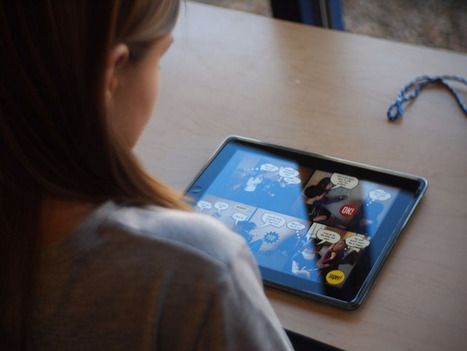
"Like thinking, reading in the 21st century is different than in centuries past, endlessly linked in an increasingly visible web of physical and digital media forms. So in this context of media abundance, what does the modern, 21st century look like? How can we appeal to their interests?"
Beth Dichter's insight:
This post provides more than the 10 strategies to reach our students, it begins with a look at: * Media Design in the 21st Century * What it Means to be Authentic * Media as Schema * What "21st Century" Literature Teachers Do and then moves on to the 10 strategies. Several of the strategies are below (quoted from the post). Click through to the post to read more. * Use combinations of media–classic and modern together, leveraging one against the other * Allow students to pick media while you pick themes and standards * Insist all writing “leaves the classroom” and is published–then design units accordingly
Scoop.it!
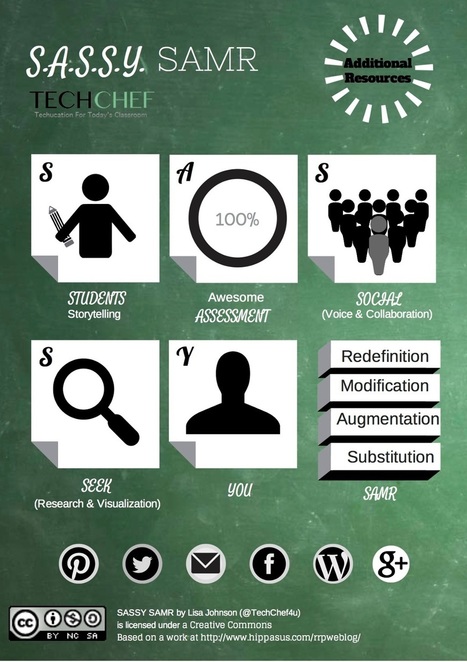
Beth Dichter's insight:
This infographic has many ThingLinked activities and resources. To get to them click through to the post. The infographic includes five pieces of support material, including over 60 SAMR examples and resources. There are also four questions that may help you determine if the technology is an enhancement or transformative. One is below. * Does the technology/tool allow for collaboration (e.g. within a school, district, state, nation, globe, experts, PLN)? This post is chock full of information as well as introducing the new acronym SASSY (see infographic above).
Scoop.it!
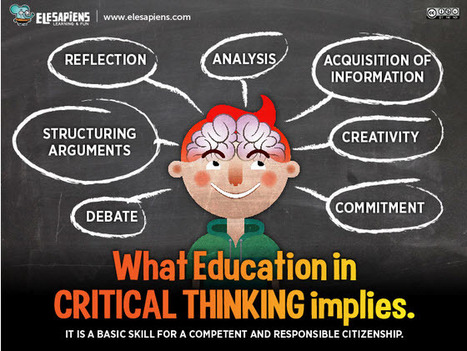
"Critical thought is a cognitive process that proposes the systematic analysis of information, opinion and statements that we accept in our daily life as valid or true. It is a basic skill for a competent, free and responsible citizen."
Beth Dichter's insight:
How do we teach students to become critical thinkers? This post provides a visual as well as a more detailed list of the seven components that students need to learn: * Reflection * Analysis * Acquisition of information * Creativity * Commitment * Debate * Structuring arguments In addition five values that critical thinking promotes: * Humility * Courage * Responsibility * Commitment * Respect What do you think? Do you agree that these are key aspects to teach our students to be critical thinkers or is there a component missing? Do you believe that the values are an integral component? How do you teach critical thinking in your classroom? 
María Dolores Díaz Noguera's curator insight,
March 18, 2014 8:35 AM
Critical Thinking: Educating Competent Citizens 
Susan Walker-Meere's curator insight,
November 9, 2014 12:49 PM
I would add: Trans-disciplinary thinking; systems thinking for sustainability. Most people can not see the forest through the trees so miss the larger connections of the impacts that action, goods & services have on both environmental systems and human systems. 
Willem Kuypers's curator insight,
November 16, 2014 3:48 PM
La pensée critique, une competence clé du 21ème siècle avec tant d'information qui nous arrive.
Scoop.it!
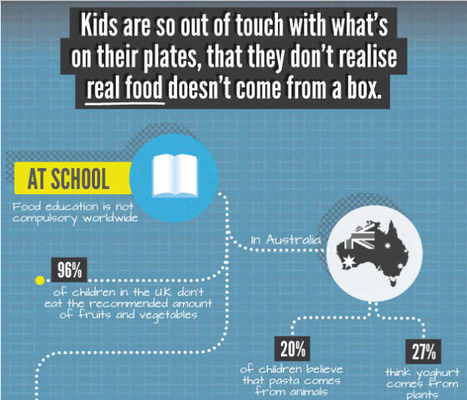
This image takes a look at how important it is to educate kids about food choices and eating healthy. So many kids don't know that real food doesn't come out of a box. Keep reading to learn more.
Beth Dichter's insight:
It is amazing how little many students know about food. This infograhic shares statistics from across the world and some may come as a surprise. How often do Americans eat fast food? Does yoghurt come from plants? These questions and many more are answered in this visual. Take some time to explore this post and see if you could create a lesson or two to help our students why and how to make better choices when choosing what to eat.
Scoop.it!
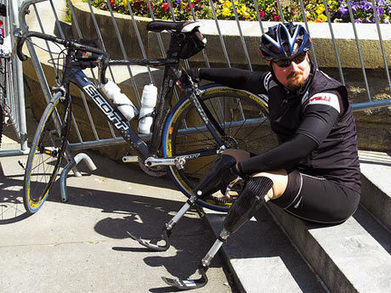
Can you predict academic success or whether a child will graduate? You can, but not how you might think.
Beth Dichter's insight:
Vicki Davis has a great post that provides a wealth of resources on grit and ways you might incorporate the teaching of grit into your classroom. Sections include: * Why Grit is so Imporant? This last section provides 10 ideas on how you can teach grit in your classroom with many resources including videos, books, a grit test and more. Do you teach grit in your classroom? Is this something you think your students need to be better prepared? If you are looking for some great resources and to educate yourself about grit click through to the post. 
Lori Wilk's curator insight,
February 2, 2014 10:35 AM
The ability bounce back and move forward when life hits hard is so important to our success.This article shares the importance of resilience and we should teach this skills to others.
Scoop.it!
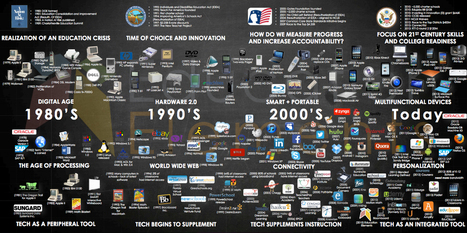
For the first time in our history, we see personalization of learning for each individual student as a reality. With new technologies growing at a breakneck pace, we’re excited to work with our schools to see what this decade will become.
Beth Dichter's insight:
This infographic looks at both technology and education over the last four decades. Are there connections between these two themes? Take a look and see what was going on in the 1980's, 1990's, 2000's and today. This infographic provides geat depth in these two areas, noting that the: * 1980's was the Age of Processing, the beginning of the Digital Age and a time when tech was a peripheral tool. * 1990's was Hardware 2.0, the World Wide Web came into being and a time when tech begins to supplement. * 2000's was the move to connectivity, to an age of sharing and portable devices and technology supplements instruction. * Today - Perhaps this is yet to be written but a few years in we see multifunctional devices, personalization and technology as an integrated tool. What would your students think of this chart? What conversation might arise in faculty meeting or with sharing this with the PTO or other stakeholders in your community? It does provide food for thought.
Scoop.it!
Beth Dichter's insight:
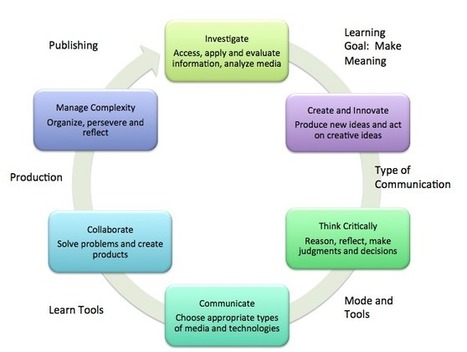
If your goal is to teach 21st century skills you need to define the skills and the decide how to teach them. And if your goal is to use multimedia you have already set some parameters. This post explores one way to organize the skills with the ability to create multimedia. The specific skills are: * creativity and innovation * critical thinking * information fluency * collaboration * communication * managing complexity * mulitcultural literacy For more information click through to the post. 
James Rush's curator insight,
July 22, 2015 4:42 PM
Going further requires a plan and process; gaining wisdom requires it begins with a healthy respect of the Lord Jesus.
|
Scoop.it!
"In this video, Laura Candler shares how to use a Multiple Intelligences survey she created for upper elementary and middle school students."
Beth Dichter's insight:
Thanks to Cool Cat Teacher Blog to bringing this video to my attention. If you know about Howard Gardner's multiple intelligences and you would like to introduce them to your students this video will explain how Laura Candler created a survey form for students to fill out (and she provides a copy to you) as well as how to have students score themselves. She clearly states that the survey is not scientific or diagnostic, but it may show students where they have strengths. In addition to the survey you may also access materials from her website to help you teach about multiple intelligences. Here is the link to go directly to her website to print out the survey, but it worth the time to watch the video and hear her explanations.
Scoop.it!
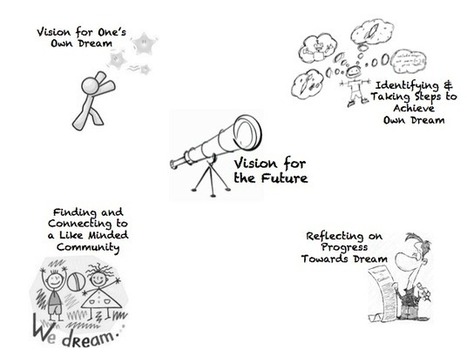
"Having a vision for the future is an natural extension of Hope and Optimism, another 21st century skill I proposed. A vision for the future enhances hope and optimism. To clarify, having a vision for the future is identifying and taking steps toward fulfilling one’s dream. It goes beyond and is qualitatively different than identifying what one wants to be when one grows up or thinking about college. It is about dreams."
Beth Dichter's insight:
As we look at education today ask yourself does the process support students ability to dream their vision? Do we promote a vision of the future as they move through the school system (and think K - 16)? This post explores these issues and provides resources to help you explore them. Find a link to Seth Godin's book Stop Stealing Dreams (What is School For?). Check out a video where students share their dream of the future. Consider the guiding questions provided to help your students think about the future (and see two answers from students in Grades 5-6). There are many resources to help you and your class think about this issue and how it relates to the 21st century.
Ruby Day's curator insight,
February 14, 2014 3:51 PM
From my experience foundation level (bridging to degree and below) students who have a clear sense of direction (vocational) are generally more motivated and engaged than those who don't know who they are, what types of vocations they are suited to and how to get there.
Scoop.it!
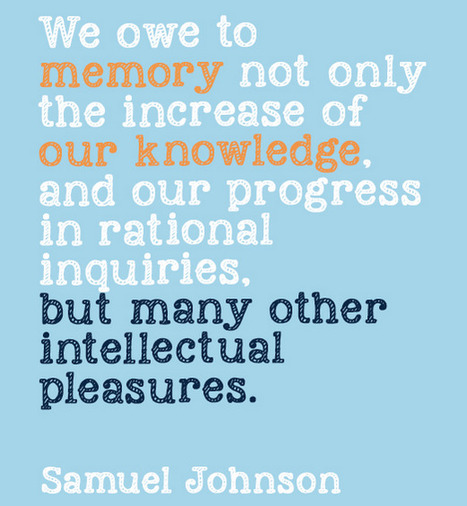
"Do you really know something if you can’t remember it? I had a conversation with a fellow educator on this subject one semester, and we both came to the conclusion that knowledge relies almost exclusively on a student’s ability to remember what she has learned. Proof of knowledge comes from demonstration of knowledge; if you can’t recall a fact, then for all intents and purposes you never learned it. But where does that leave intelligence?"
Beth Dichter's insight:
This post notes that working memory plays a critical role in academic success. There is a detailed section that share the science behind working memory. This section is followed by 10 suggestions on how you could work with your students to increase their working memory. Two of the suggestions are: * Chunking * Interacting images In is likely that we have students in our classes with poor working memory. One of the suggestions is The Automated Working Memory Assessment that they state may be used by a teacher. What would happen if we were able to learn that a struggling students needs to increase their working memory and had tools to assist them to learn how to do this? Would they become more successful? This is a post you may want to share with others in your building.
Scoop.it!
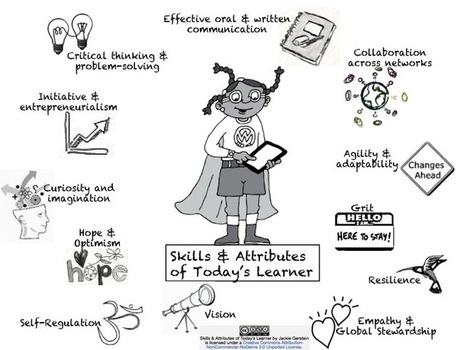
Many have attempted to identify the skills important for a learner today in this era of the 21st century (I know it is an overused phrase). I have an affinity towards the skills identified by Tony...
Beth Dichter's insight:
Jackie Gerstein reviews the skills identified by Tony Wagner as well as six additional skills and attributes she believes learners need today. She then looks at a recent Gallup Poll that looks at Americans expectations of schools today. Quoting from the post: "While student success may depend on mastery of content in core subject areas such as math and reading, it also depends on more than knowledge of core content. Critical thinking, creativity, communication, and other soft skills, as well as student physical and social wellbeing, are also necessary for future success in higher education and in the workplace. Americans Say U.S. Schools Should Teach “Soft” Skills" The post continues and explores how the other 21st century skills may be classified as social-emotional skills and how the growth of these skills may positively impact students in other areas. As always Gerstein has provided a post that pushes boundaries and provides a variety of resources. 
Gary Harwell's curator insight,
February 10, 2014 11:35 PM
It seems like a normal thing to do. These are needed SKILLs our students need to have.
Scoop.it!
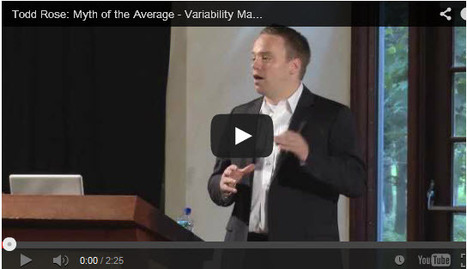
"When’s the last time the deficit model of viewing student performance really irked you? Just thinking about it can be quite enraging. Here’s why: Students end up being placed along a bell curve (hope this doesn’t induce a headache) to decipher how on target they are—how close to the “average” learner. And this is deciphered basically by looking at their test scores…then placing them along this line of doom."
Beth Dichter's insight:
The myth of average may be a new concept to you but if you listen to the short video clip by Todd Rose you will get an idea of what this issue is, and there is a link to a TEDx talk in the post (a longer presentation on 'Project Variability and the dangers of “averaging” learners.' Additional resources are also available in this post including a new Universal Design for Learning book that may be found online. For more information click through to the post.
Scoop.it!

"As we’ve discussed 7 myths about rigor, and the characteristics of rigor in curriculum, the final component is rigorous assessment. There are (at least) three aspects of rigorous assessments."
Beth Dichter's insight:
The three aspects that are discussed in this post are: * Appropriate * Purposeful * Promotes understanding The discussion on 'Appropriate' includes a variety of suggestions that help demonstrate how rigor is embedded in the assessment. In some cases the assessment is also related to each level of Bloom's Taxonomy. What does 'Purposeful' mean? Reflect on the standards you are teaching. What type of thinking are you asking your students to do? What is the final product that will demonstrate their understanding? 'Promotes understanding' ties into all the areas but also consider how to make this an authentic learning experience as you design a rigorous assessment. Several examples are included.
Rosemary Tyrrell, Ed.D.'s curator insight,
February 8, 2014 1:16 PM
We've been talking a lot lately about "authentic" assessment. Here are the three statements discussed in this post. 1. The Assessment Is Appropriate 2. The Assignment Is Purposeful 3. The Assessment Promotes Understanding
Ness Crouch's curator insight,
February 8, 2014 5:53 PM
Rigourous curriculum and assessment is important. These three points are ones that we are continuously focus on. A good read, 
Daniel Rimmereid's curator insight,
March 25, 2014 8:35 PM
This is a great resource that really describes clearly and concisely what makes a great assessment but it took it one step further by talking about rigor. The first point is that good assessments need to be appropriate. This talks about how the assessment needs to be about what students learned but more importantly it needs to talk about and address what the students learned in a challenging way. If the assessment is too easy then students will not be truly assessed on the material and thus the assessment will be weak. The second point is that assessment needs to be purposeful. It is good for your students to finish an assessment and for them to clearly see what they have produced from that assessment. The third point is that the assessment should allow students to come away with some deeper form of understanding on the topic. I think something that I have taken away from this article is that assessment can be a great tool for deepening students understanding and really giving them something to be able to look back and know that they have accomplished something.
Scoop.it!

"Our new infographic is called Teachers Don't Work Hard Enough? THINK AGAIN!. What do you think? Let us know in the comments below!"
Beth Dichter's insight:
What does a teacher do during a day, or over the year? This infographic explores the life of a teacher and the many roles we play.
Scoop.it!
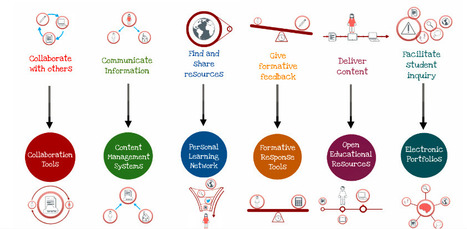
"...using technology does not necessarily make a teacher effective. I am going to repeat that, because I want this to be very clear: technology is not pedagogy. I actually learned that lesson the hard way. I spent my first two months as a teacher building a paperless, hybrid-online, flipped classroom using Moodle, and marching students through standards by having them click through links and complete digital quizzes and activities."
Beth Dichter's insight:
What comes first? Pedagogy or Technology? This post explores this issue. It also includes a great visual "Let's stop talking about teaching with technology, and let's start talking about learning." The visual is in Google Docs and you can download it at: https://docs.google.com/drawings/d/1FjgMrO6d_3B6NBFLhteCjP5EGWaZymOYIRrWtJLt8PY/edit The visual shown above is also used in a free online course you may want to check out. For more information on the course: http://www.edtechchallenge.com/ 
Viljenka Savli (http://www2.arnes.si/~sopvsavl/)'s curator insight,
February 14, 2014 4:24 AM
Here is a nice example of evolution of a teacher approach to ICT :)
Scoop.it!

"It’s been four years since I first published my “Taxonomy of Reflection.” My interest in reflective thinking is rooted in a simple but powerful statement by Donald Finkel who wrote that teaching should be thought of as “providing experience, provoking reflection.” (Teaching with Your Mouth Shut)."
Beth Dichter's insight:
We often hear the words "life-long learners" in education and are told that we want our students to be "life-long learners." This post suggests that we want our students to be "agile, fluid learners." In this post 44 reflective prompts are shared. These prompts include: * 6 Macro prompts merging reflective thinking with Bloom's taxonomy * Prompts for students, teachers and principals The image above provides and example. To read through all the prompts click through to the post. 
R Hollingsworth's curator insight,
February 5, 2014 8:38 AM
Love the title: "Teaching with your mouth shut" 
Sue Alexander's curator insight,
February 5, 2014 9:40 AM
Fantastic resource, especially if you take time to really reflect on the sample questions posed.
Scoop.it!
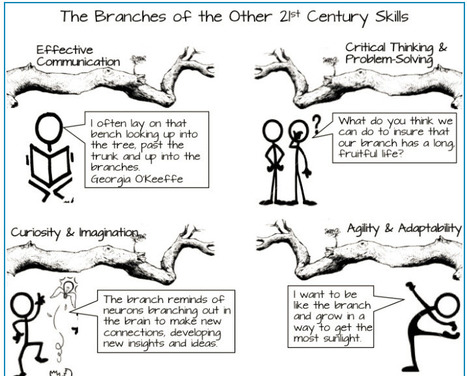
Many have attempted to identify the skills important for a learner today in this era of the 21st century (I know it is an overused phrase). I have an affinity towards the skills identified by Tony...
Beth Dichter's insight:
This great visual shares Jackie Gerstein's look at the 21st century skills suggested by Tony Wagner. Along with the four listed above, effective communication, critical thinking and problem solving, curiosity and imagination, and agility and adaptability learn a bit more about: * Collaboration across Networks * Initiative and Entrepreneurship * Grit and Perseverance * Resilience * Hope and Optimism * Vision for the Future * Empathy and Global Stewardship * Self Regulation Gerstein has written more on each of these areas and links to her work are also available on this post. 
Saberes Sin Fronteras OVS's curator insight,
February 3, 2014 12:00 PM
Y si los profesionales de la política lo pensaran mejor, también empezarían según aquel viejo dicho sapiencial: "sólo sé que no sé nada" -- y por tanto .... A APRENDER Estos consejos para los que aprenden, lo necesitan para sobrevivir, en el ámbito de lo económco, valen tambien para los profesionales (?) de la política
Gary Harwell's curator insight,
February 3, 2014 11:14 PM
Makes good Sense with the overall picture of where we are and where we are going.
Scoop.it!
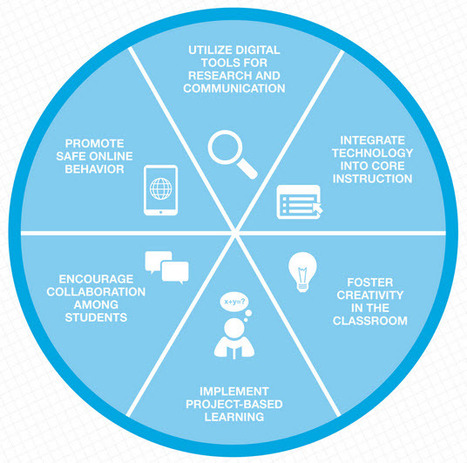
Today's students need 21st century skills to succeed in our increasingly digital world. Infographic on preparing students for 21st century success.
Beth Dichter's insight:
This infographic provides a range of information including: * A look at the various skills students are expected to master * Definitions of the 21st century skills * Identifying skills strengths * A look at assessments and current trends * How to bridge the gaps
Scoop.it!
Game designers have mastered certain tricks that make games so addictive that people can’t stop playing them. Here are the top five secrets that game designers know, and some tips on how you can use these same game dynamics to make learning in your classroom as addictive as gaming.
Beth Dichter's insight:
As teachers what can we do to make our classes more exciting for students? We know that many will sit in front of a computer or game console and play for hours, and when they do not succeed the first time, or the tenth time or the fiftieth time they keep trying. How do we get them to perservere in the classroom when they are not successful? This post explores this, providing five "secrets of game design" that might make a difference in your classroom. The five secrets are listed below but click through to the post to learn more about them. * The Appointment Dynamic: Be Here At This Time, Get a Prize * The Failure Dynamic: Fail Early, Fail Often * The Flexibility Dynamic: Provide Multiple Paths to Success * The Progression Dynamic: Scaffold and Recognize Progress * The Construction Dynamic: Build Something That Matters |









Looks like a great presentation tool with plenty of possibilities for classroom and school library use. However, the free educators' account only offers two slides... Not so great!