



UPDATE: On June 23, the U.S. Supreme Court effectively upheld the Environmental Protection Agency's authority, under the Clean Air Act, to regulate carbon and

 Your new post is loading...
 Scoop.it! UPDATE: On June 23, the U.S. Supreme Court effectively upheld the Environmental Protection Agency's authority, under the Clean Air Act, to regulate carbon and No comment yet.
Sign up to comment
Scoop.it!

From
ed

In June 1776, a little over a year after the start of the American Revolutionary War, the US Continental Congress huddled together in a hot room in Philadelphia to talk independence. Kenneth C. Davis dives into some of the lesser known facts about the process of writing the Declaration of Independence and questions one very controversial omission.
Beth Dichter's insight:
Here is a TED-Ed video that is applicable to this weekend (at least in the United States). There are some important facts that many of us do not know about the Declaration of Independence and this video presents them in an accessible format. Take four minutes of your day and find out if you know the facts shared in this video.
Scoop.it!

The poster explains the rules associated with the various types of Creative Commons license visually and helps you pick the right license for sharing your work.
Beth Dichter's insight:
Teaching students about Creative Common licenses helps them to understand issues of plagiarism. What if we have students create an image, or publish a piece of their writing and also have them pick the correct license. We help students become creators and we teach them a new skill. The poster relies on visuals to help students understand the various types of licenses available. Consider posting a copy of this in your classroom.
Scoop.it!
There are several types of eLearning courses, but if you want to create an effective one, then there are some ideas you need to follow every time. Cr
Beth Dichter's insight:
Are you interested in creating an eLearning experience for your students, or are currently teaching online, but would like some tips to make your course more effective. This post provides 12 tips that will help you get started (or improve what you may have). Below are four of the tips. Each is explained in more detail in the post. * Understand your audience - To keep your audience engaged, you must understand their needs. Who are they? What do they require? * Don't overload it - It is easy to add more information to a course, but this may overload your students. Be careful about how much is included and consider breaking information into smaller modules so that students can be more successful. * Interaction to engage learners - Make sure that you design your course so it is interactive. Clicking quickly from one page to another may not help students learn the information. Encourage engagement through the use of quizzes, videos, and other interactive activities. Much more is included in the post, and you will also find a link to a free e-book called Engage the Unengaged: How to Create More Engaging eLearning Courses. 
Gary Harwell's curator insight,
July 11, 2014 12:41 AM
We have to make that jump and actually put a course together. Not only for our program, but for us to learn some new skills that will be invaluable to our careers in the future.
Scoop.it!

From
www
"The 2014 Best Websites for Teaching & Learning foster the qualities of innovation, creativity, active participation, and collaboration. They are free, Web-based sites that are user friendly and encourage a community of learners to explore and discover."
Beth Dichter's insight:
Yesterday I posted the top choices from the American Association of School LIbrarians (AASL) on the best apps for 2014. Today they listed the top websites in the following categories: * Media Sharing * Digital Stories * Manage & Organize * Social Networking & Communication * Content Resources * Curriculum Collaboration As you review the websites you will find one or more standards that are addressed by the websites. Although I know many of the websites, there are some that are new to me that I look forward to exploring. Below are several that I have used and really like, or are ones I have checked out and will be using in the future. Are you looking for new tools and want ideas on how to use them as well as examples and links to learn more about the tool. Check out Remix-t, a site from the University of Notre Dame, that is chock full of great ideas and resources. Although this site is geared to college teachers the resources and examples will provide you with great ideas and you will be able to modify them for your classroom. You will find in under Content Resources. Mixed Ink is a new site to me. It allows you to create a group of students who will write together. They may comment and evaluate the submissions and each students' writing will show up in a different color. This looks like a great site, esp. for schools that are not using Google apps. There are many more that I will be exploring. Do you have a favorite website? Share them in the comment section and let us know why it is a favorite of yours. 
Murielle Godement's curator insight,
July 3, 2014 1:54 AM
Annuaire (partiel et) commenté par catégorie. 
Rosemary Tyrrell, Ed.D.'s curator insight,
July 3, 2014 1:01 PM
the American Association of School LIbrarians (AASL) listed the top websites in the following categories: * Media Sharing * Digital Stories * Manage & Organize * Social Networking & Communication * Content Resources * Curriculum Collaboration
Scoop.it!
Beth Dichter's insight:
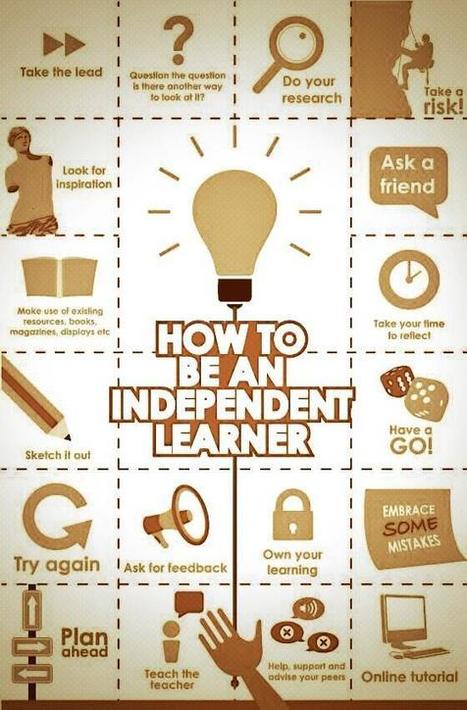
Here is a great poster that you may want to share with students. It provides eighteen ideas on how a student may become more independent. A few of the ways are listed below: * Question the question. Is there another way to look at it? * Help support and advise your peers. * Sketch it out. * Own your learning
Scoop.it!

Do a little research and you'll discover that a big fat "if" has been placed out in front of the old adage "practice makes perfect." Practice makes perfe
Beth Dichter's insight:
When does practice make perfect? The current research in this area provides some guidance. Below are the sections you will find in this post: Practice make perfect: ...if you overlearn ...if it is spaced and regular ...if you make mistakes ...if it is deliberate ...if you have natural talent ...if you have a sharp memory ...if you get an early start ...if you have good genes ...if you practice with a partner ...if it reflects your intelligence Each of this areas are discussed within the post and in many cases there is at least one link to additional information.
Scoop.it!
Check out these great, brief videos that offer quick introductions to getting started with numerous different tech tools and resources for teaching and
Beth Dichter's insight:
Summertime...a time to recharge and to think about what we might do in our classrooms next year (at least for the folks who are now out of school). Have you been considering learning some new tech tools? This website is a great place to start. They have short tutorials on nine "emerging tech tools" and more will be added. The tutorials include: * Create a Flipped Lesson with TedEd * Easily Create Private Digital Online Content Discussions with Tackk * Using Movenote to Create Custom Video Lessons * Create Powerful Lessons in Minutes with Blendspace * Remind 101 - A Free Tool for Text Messaging Students Two more tools are available and you might want to bookmark this site as they will continue to add new tools as they become available.
Scoop.it!
Beth Dichter's insight:
It is always interesting to read rules of writing that are written by authors. This list of 8 rules comes from Neil Gaiman, an author that some students may recognize. It also lets students know that published authors go through the writing process in a similar way to students.
Scoop.it!

"For those many kids who choose not to read books, for those kids who are news junkies, for those kids who choose to focus on nonfiction, for those kids who read everything anyway, and for those kids who are motivated by regular, tangible rewards, Newsela’s Free Summer Reading Challenge may be just the thing to engage students with the world, while attacking potential summer reading slump."
Beth Dichter's insight:
If you haven't had a chance to check out the website Newsela this may be a great opportunity to take a look at it and share it with students (if you have an easy way to access them). Newsela provides news at five reading lexiles, from Grade 3 or 4 through Grade 12. When you log in there will be a choice of articles to choose from. After reading you may choose to take a quiz. Although this challenge has started you may still sign up. The post provides additional details and links to the website. 
Lisa Norris's curator insight,
July 5, 2014 2:15 PM
Excellent source of informational articles relevant to the world and students in upper elementary grades.
Scoop.it!
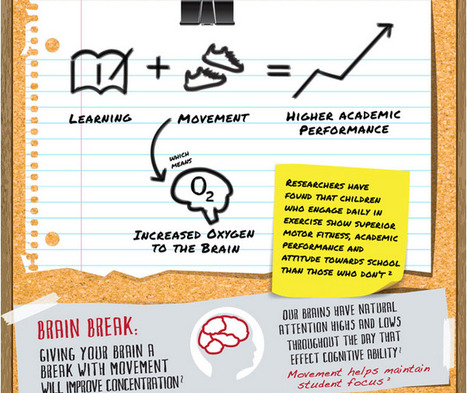
"Sitting is a learned behavior, passed on through tradition and adults, and today’s sedentary lifestyles are affecting our youth and their classroom performance. Studies show that more activity throughout the school day improves health and academic outcomes."
Beth Dichter's insight:
Our students sit most of the day. Yet research tells us that activity is beneficial, that movement throughout the day improves academic outcomes. This infographic shares information on this subject and includes a list of resources.
Scoop.it!
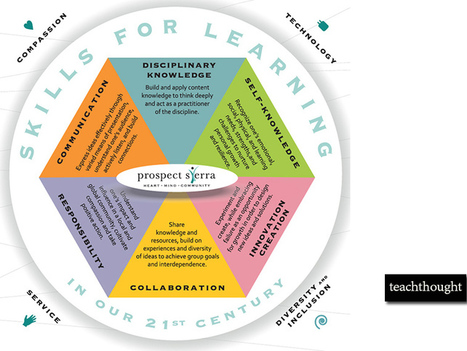
"We recently discovered the Bay Area’s Prospect Sierra School’s interesting learning model that prioritizes 6 ideas for learning in the 21st century. There is, of course, no single “best” way to pursue “21st century learning”–nor any learning at all for that matter. But seeing the way other inspired educators pursue the idea can teach each one of us a lot. In this model, we appreciate the inclusion of self-knowledge, as well as moving past the idea of content to true disciplinary knowledge–seeing knowledge in context and application."
Beth Dichter's insight:
This post shares another visual that provides one model of learning in the 21st century. Specifically, it prioritizes six ideas: * Disciplinary Knowledge - "Build and apply content knowledge to think deeply and act as a practitioner of the discipline" * Self-Knowledge - "Experiment and create, while embracing failure as an opportunity for growth in order to design new ideas and solutions." * Innovation Creation - "Recognize one’s emotional, physical, and learning needs, strengths, and challenges to nurture personal growth and resilience" * Collaboration - "Share knowledge and resources, building on a diversity of ideas and experiences to achieve group goals and interdependence" * Responsibility - "Understand one’s impact and influence in a local and global community; cultivate compassion, and take positive action" * Communication - "Express ideas effectively through varied means of presentation; understand one’s audiences, actively listen; and build connection" Additional information on each of these six ideas is included in the post.
Scoop.it!

Students are more likely to engage with a unit of study they've co-created. Matt Levinson suggests an eight-step example for how the history classroom.
Beth Dichter's insight:
How can we get students more engaged in units of study? What if we design our class so that they have ownership from the beginning of the unit? This post explores this issue, and although the focus is on social studies you could use the same steps in other curricular areas. What are the steps? 1. "Partner students and have them do a speed search on the topic." What can they find in 12 - 15 minutes? Let them generate a list of interest. 2. "Decision by debate." Change partners. Allow them 3 minutes to discuss and rank the topics by interest. 3. "Main characters." Switch partners again. In history you might be looking at key individuals, or key battles in a conflict. There are five more steps that will help students learn to collaborate, analyze perspectives, co-create with you (as the teacher your job is to make sure that all key areas are covered and help create the framework as well as providing additional input where necessary), and more. This type of process allows the students to be engaged and have their voices heard from the beginning....a win-win situation in the classroom. 
Heather MacDonald's curator insight,
June 25, 2014 7:52 PM
Designing anything is only worthy if the "end user" has input. This is a brilliant adaptation of that design philosophy. And how can you resist the power in the eyes of this little girl?! |
Scoop.it!

"Of the many eLearning theories that influence the practice, three of them are used by professionals on a daily basis...Practice and theory actually goes hand in hand. This is true not only in instructional design but in any other field or discipline. Theory, far from crippling your practice, will actually help you improve the quality of your eLearning material. While a learning theory won't answer all of your design problems, it offers clarity throughout your process and directs you toward finding solutions."
Beth Dichter's insight:
Learn more about three learning theories of instructional design in this post: * Constructivism * Cognitivism * Behaviorism Why? Each theory looks at "HOW" students learn. Understanding the theories helps you design activities that will help learners move forward in their learning process. The infographic provides a definition for each of the theories and then provides ideas on what each theory helps the learner practice. As with most infographics from SHIFT's eLearning Blog, this post also provides additional information on each of the three theories as well as links to additional resources. Explore this post to better understand why these theories are important to all teachers, in online learning, blended learning and face2face situation. 
Progressive training's curator insight,
July 4, 2014 10:32 AM
A Quick, No-Nonsense Guide to Basic Instructional Design Theory 
Lina Heaster-Ekholm's curator insight,
July 10, 2014 4:41 PM
Great graphic and good general overview
Scoop.it!
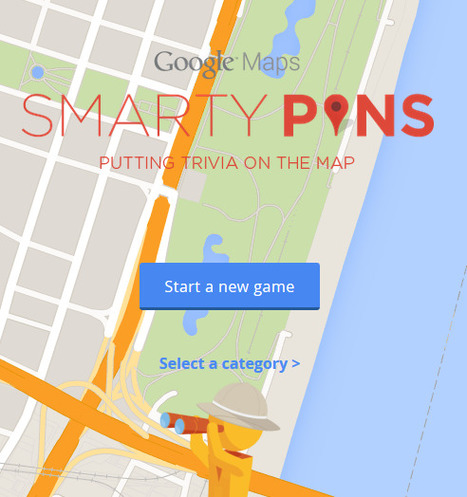
Smarty Pins is a Google Maps based geography and trivia game.
Beth Dichter's insight:
Google has just released a new game called Smarty Pins: Putting Trivia on the Map. It uses Google maps and allows you to pick a category and then pin the map with the correct answer (as in location). The closer you get to the correct location, the more "miles" you have. You can gain miles by answering quickly, but the clock ticks down. Featured topics on this day included March Madness and World Cup Trivia. The other topics to choose from are: * Arts and Culture * Science and Geography * Sports and Games * Entertainment * History and Current Events For students who like trivia this would be a good game. It might also be used as a classroom activity with groups playing when you need a break.
Scoop.it!

Different students have different ways of learning, and this is absolutely true for literacy. Jules Daulby, whose wheelhouse includes SEN and English teaching, discusses how a certain amount of pupils are best learning with their ears...
Beth Dichter's insight:
This post begins: "In order to be an effective reader, two skills are required:
The post also provides access to an interview with Dr. Keith Stanovich who "argues that reading improves ‘crystallized intelligence’ and compares children who do not learn to read with those who do, by using ‘the Matthew Effect’ analogy." The question remains, how do we help students whom do not read well, who have difficulty decoding text? We need to seriously consider the options, which include aural text (as in text that is read to students). This issue is close to my heart. We want our students to be successful, yet we do not provide tools that are readily available to all who would benefit from them. This post looks at resources that are available in England for struggling readers. I will add a number of resources that are available in the US, and others may add resources for their countries in the comment section. The question that each of us must answer is should we advocate for our students who are struggling with their reading skills to be able to use TTS (text-to-speech) programs that provide them with the ability to listen to the text and understand the text, without necessarily relying on their decoding skills? Do we give them the opportunity to level the playing field? By providing students with access to text that meets their learning style, we have given them the opportunity to be successful. Today there are many free (or low cost) tools available that allow students to have text read to them. In the US two key players that help provide text to students (think books) with diagnosed reading disabilities are Bookshare, which provides free access to many books as well as TTS software and Learning Ally, which has many resources for students with dyslexia but may also require a membership fee. Additional sites to check out are Natural Voice Reader, which will read digitized text directly from a website and Rewordify, which will simplify the text. Do you know free (or low cost) tools that help struggling readers? Please share them in the comment section.
Scoop.it!
Beth Dichter's insight:
Carol Ann Tomlinson has recently published the 2nd edition of her book Differentiated Classroom: Responding to the Needs of All Learners. The infographic above (which may be downloaded as a pdf) provides a great visual that helps you understand what is differentiation, and what is not differentiation. You may also read a copy of Chapter 1 of this book by clicking HERE. The need differentiate our instruction is critical for many students. This poster will assist you by providing a quick look at best practices that we should be using with our students. The first chapter provides an overview and is called What is Differentiated Classroom? 
Nancy Jones's curator insight,
July 3, 2014 1:06 PM
some interesting infographics in connection with a new book by Carol Tomlinson
Scoop.it!
Beth Dichter's insight:
This pdf is split into two sections. The first section is titled "What Do You Want To Do?" and it has two sections: * If You Want To... which then provides websites or apps you might choose to do a specific task. * If You Have Students To... which then provides websites or apps that would assist them in accomplishing the task. It also turns out that there is a Symbaloo that has been created by the author. You will find the pdf file in the Symabloo as well as links to the many suggestions you will find in the pdf. Here is the link to the Symbaloo: http://www.symbaloo.com/mix/techtoolsfor2014 
Gilles Le Page's curator insight,
July 4, 2014 5:47 AM
Très bonne idée, ce tableau croisé ! Reste à le traduire en français pour le disséminer se façon efficace .... pa trop le temps ces jours-ci, dommage.
Scoop.it!

From
www
"The apps recognized as Best Apps for Teaching & Learning are of exceptional value to inquiry-based teaching and learning as embodied in the AASL's Standards for the 21st-Century Learner."
Beth Dichter's insight:
Are you interested in apps that "foster the qualities of innovation, creativity, active participation, and collaboration" and that are user friendly? Check out the winning apps from the American Association of School Librarians in five categories. In each category there are five apps listed. All the apps work on iOS and 10 of them will with Android. Grade levels vary from K through Grade 12 and each has a brief explanation. * Books * STEM * Social Studies * Content Creation Although not all schools have iPads there are many students who may own one. Consider sharing the apps appropriate for your grade level and content area with students, even if you are not able to use them in your classroom.
Scoop.it!

The link from the title takes you to a page that no longer exists. Please use this link instead: http://elearninginfographics.com/competency-based-education-learning-infographic/
Beth Dichter's insight:
As Common Core comes into play, you hear more and more people talking about competency education. A competency education allows students to progress at their speed. Students must demonstrate mastery of content, which are based on objectives. Teaching truly becomes more personalized when you consider competency education. This infographic explores competency education, comparing it to traditional education in three areas: curriculum, class completion, and average time to graduate. Additional sections include: * What a competency-based experience looks like * The most common competency fields of study * Benefits of competency based education learning * Where to find competency based education Although this infographic is published by a college the information is applicable to K-12 education. 
Aus Nurse Educator's curator insight,
July 6, 2014 6:25 PM
Nursing education, at pre and post graduate level, is largely founded in competency based education. This infographic is a great overview of this process and the benefits of implementing competency based assessment.
Scoop.it!
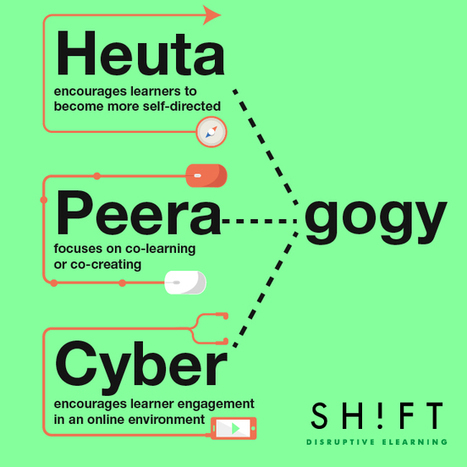
These three "gogies" of effective online learning will help you get a clearer picture of learning and eLearning in the digital age.
Beth Dichter's insight:
More and more we hear discussions about digital learning. This post explores three concepts that may be new to you. Heutagogy is the study of "self-determined" learning. If you think of an online instructor "as a coach, a mentor or a facilitator," as someone whom encourages the learner to be self-directed you have the concept of heutagogy. In our classroom this could take place if we provide our students an opportunity to work on a project where they will have the lead and we will work as a coach. Peeragogy or paragogy allows learners to leverage "their own expertise." This allows students to work together in small groups and with older students (and adults) it "increases the potential for transfer of learning and as well as encourages sustained engagement among students." Cybergogy is a new concept for me. The post describes it as "the awareness that face-to-face learning strategies may not apply to distance education and virtual media." These three "gogies" of online learning may also apply in a classroom where there may be projects where students are engaged in self-directed learning. The post also provides link to additional resources that look at these three "gogies." 
Julie Lindsay's curator insight,
September 1, 2014 7:03 AM
We need to be considering multi-pedagogical learning as a consequence of integrating technology with learning. 
Raquel Oliveira's curator insight,
December 1, 2014 7:09 AM
#avancee 3 conceitos sobre a aprendizagem do seculo XXI 1- HEUTA- encoraja os aprendizes a serem auto-direcionados 2- PEERA- foco em co-aprendizagem e co-criacao 3- CYBER- Encoraja engajamento dos aprendizes no ambiente de aprendizagem on line.
Scoop.it!

"How long can you reasonably expect your students to pay attention during your lessons? Some psychologists claim the typical student’s attention span is about 10 to 15 minutes long, yet most university classes last 50 to 90 minutes. Students’ attention levels vary widely based on factors like motivation, emotion, enjoyment, and time of day."
Beth Dichter's insight:
What are the best methods of keeping our students engaged in the lessons we teach? This post explores this issue, and provides 15 suggestions at the end of techniques you may want to incorporate into your class. But first, it explores what science has to say on this issue. They begin by looking at what is known about the attention span of students, and suggest that this is disagreement on this issue. Is it 4- 5 minutes, 10 - 15 minutes...they note that there is not clarity on this issue. The next section looks at attention and active learning. It may come as no surprise that during active learning, such as demonstrations and questions, as opposed to lecturing. The post also looks at how technology impacts learning (click through to learn more) and then there are 15 tricks. Four are below. * Use props or visuals. * Write a challenging question on the board. * Divide target skills into manageable subskills. * Stress relevance and concreteness.
Rosemary Tyrrell, Ed.D.'s curator insight,
June 29, 2014 2:48 PM
15 great tips for engaging student attention. Well worth a read. 
KCenter SKEMA's curator insight,
July 15, 2014 11:25 AM
Grande question pour les enseignants surtout maintenant avec les "distractions" qui se multiplient
Scoop.it!
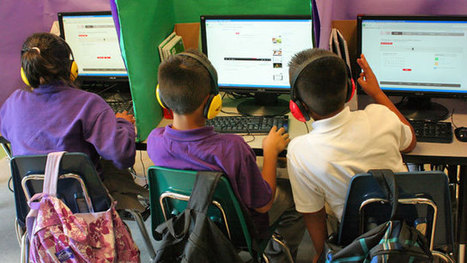
The way kids interact with computers and software -- and the support they get from adults -- is more important to improve learning outcomes than merely having access to the technology, study finds.
Beth Dichter's insight:
Research continues to tell us that providing students with digital devices does not lead to improved learning outcomes. The question that needs to be looked at is what else needs to be done? The researchers were interested in seeing if the introduction of computers would "close the opportunity gap." Unfortunately this is not what happened. Here is one sentence from the post: "They select different programs and features, engage in different types of mental activity, and come away with different kinds of knowledge and experience." There is much more information found in this post. The way the students use the computers were very different between the two groups as was the interaction of the adults with the children. This post brings up one question for me. More and more schools are moving to a one-to-one initiative. Are these schools providing teachers with the necessary professional development for them to effectively teach their students? Will we be able to overcome the obstacles that were found in these two very different libraries in our schools, or will we see a difference between our students who have access at home and those who do not?
Scoop.it!

"While we think highly of incorporating maker education “back into” the school environment, leadership should never have let it go to begin with for the sake of test preparation."
Beth Dichter's insight:
What would happen if you created an entrepreneurship program to engage students in your school? A program that would "demonstrate raw critical thinking that pushes kids out of their comfort zones to engage with material, design what they want, and try to market it to the hilt?" Why create an entrepreneurship program? This post describes many of the reasons why this is a good idea. Students have to come up with an idea which is not always easy, and then figure out how to make the idea a reality. They must learn that honest criticism is a tool that allows one to grow. There are many life lessons that are shared in this work, as well as many projects from this year. In addition you will find a variety of resources that may help you create an entrepreneurship program for your school!
Scoop.it!

"Pearson sent us this report recently–Exploring the Learning Curve. The big idea here is the changing skill needs for students globally. It is based on this idea of an index–a Global Index of Cognitive Skills and Education Attainment. The report explains:
Beth Dichter's insight:
As this post states, the image shown above has been in the media quite a bit over the last few weeks. It shares the eight cognitive skills that students need (based on the research). As you review them you will notice that these are inline with the skills recommended for 21st century learning. In addition to these skills the report also shared six lessons. Three are listed below. * Lesson 1: The OECD estimates that half of the economic growth in developed countries in the last decade came from improved skills. * Lesson 2: In recent years it has become increasingly clear that basic reading, writing and arithmetic are not enough. The importance of 21st century non-cognitive skills – broadly defined as abilities important for social interaction – is pronounced. * Lesson 3: Making sure people are taught the right skills early in their childhood is much more effective than trying to improve skills in adulthood for people who were let down by their school system. But even when primary education is of a high quality, skills decline in adulthood if they are not used regularly. Click through to the post and read the other three lessons. Consider your students. Do you think your school is meeting the lessons and the skills? Do you think the US is meeting these lessons and skills? If you click through to the actual report you can see a table that shows the Overall Index Rank and Score of the 39 countries involved (plus Hong Kong) as well as the Cognitive Skills Rank and Score, and the Educational Attainment Rank and Score for the years 2012 and 2014. 
Audrey's curator insight,
July 10, 2014 2:28 PM
These would seem to correlate with Thomas Friedman's "The world is flat" idea. Basically we need to value and respect all human beings as those people at the bottom of the tree last century wont always be there:
Emotional intelligence (feel things from others point of view). Communication (learn to speak another person's language). Problem-solving (Listen to and understand someone else's pain and joy); Team-working (the ability to liaise with others as humans who feel pain, cry, hurt just as you do).
Basically the emphasis seems to be on humanity as one rather group rather than the superficial differences. The idea is for human beings to leave the savannah. Curating for www.homeschoolsource.co.uk |








If you are looking for a visual that looks at the new rules surrounding carbon emission and at what each state may have to do and how others are perceiving the new regulations you should check out this visual. You may scroll down the page (first click through to the site) or you can view it as a slideshow.
This visual would be great to share with students as it is designed as a cartoon (with many panels). It is easy to understand and describes where carbon emissions come from (in the US) as well as the impact this may have on countries outside the US.