


Published by The Atlantic Magazine, March 14, 2016
Fifty years ago, hundreds of thousands of Cubans immigrated to the southern tip of Florida. Now, the city has to teach a new generation how to thrive in a bilingual economy.

 Your new post is loading...
 Scoop.it! Published by The Atlantic Magazine, March 14, 2016
Fifty years ago, hundreds of thousands of Cubans immigrated to the southern tip of Florida. Now, the city has to teach a new generation how to thrive in a bilingual economy. 
No comment yet.
Sign up to comment
Scoop.it!

Published by the CTMirror, February 22, 2016 With hundreds of students in low-performing districts already being taught by a revolving door of substitute teachers because schools cannot find enough qualified teachers, the state's largest producer of teachers in high-need subject areas might have to close its summer program.
Scoop.it!

Published by The Atlantic Magazine, October 27, 2015 Nearly one in four U.S. public-school children speak a language other than English at home. What’s the best way to accommodate ELL students in the classroom?
Scoop.it!

Published by EdSource, October 22, 2015 Researchers studying a group of California school districts are highly critical of the state’s system for providing services to English language learners in a report released this week. Citing disparities in results and strategies among districts, professors from Stanford and other universities called for creating common, statewide criteria for determining who English learners are and for determining when they no longer need extra help. They also recommend:
Scoop.it!

Published by the San Diego Union-Tribune, October 18, 2015 Demand for dual language teachers is on the rise.
Scoop.it!

Published by Business Wire, September 17, 2015 A new study reveals that Spanish-primary-language parents in the U.S. wish to raise their children bilingually. It indicates pediatricians can play an important role in fostering bilingualism among children.
Scoop.it!

Published by KPBS, September 17, 2015 The former Marine and bilingual rapper tours the U.S. to promote bilingual learning with hip-hop and reggaeton beats.
Scoop.it!
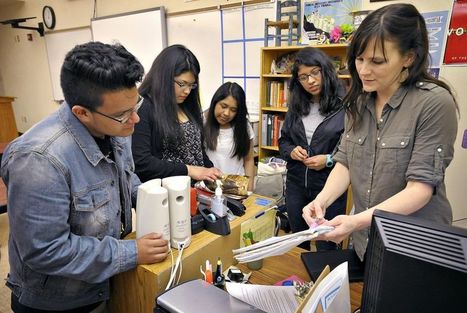
Published by the San Francisco Chronicle, September 10, 2015 Bilingual education is typically seen as an educational program for limited English-proficient students. [...] in November 2016, California voters will decide if they will act on a growing body of research that strongly suggests dual language instruction is a superior approach for all students. Seventeen years ago, Californians passed Proposition 227, which severely limits use of the home language in educating language-minority students and greatly reduces the number of students receiving bilingual instruction. In the country as a whole, however, where bilingual education generally remains an option, the reading achievement gap has decreased by nearly a grade level in fourth grade and decreased slightly in eighth grade. A recent long-term study from Stanford University found that limited-English-proficient students enrolled in bilingual programs since elementary school were, by high school, more likely to be deemed proficient in English compared with similar students who had been in all-English programs. A comprehensive review of 63 studies found that bilingualism is reliably associated with cognitive benefits such as increased control over attention, working memory, and both abstract and symbolic representation skills. A study from UC Irvine found that fluent bilingualism is associated with decreased likelihood of dropping out of high school and increased probability of obtaining a higher-status job and higher annual earnings. Bilingual education can also play a role in reducing discrimination and strengthening intergroup relationships, identity and self-esteem. Researchers from the U.S. and Canada have found that white, English-speaking children who participated in Spanish bilingual instruction were more likely to choose Latino children as potential friends compared with their white, English-speaking peers, who, though in multiethnic classrooms, did not take part in bilingual education. More than 40 percent of the state’s 6.2 million public school students speak at least one of 60 languages other than English at home.
Scoop.it!

Published by The Californian, July 24, 2015 Salinas City School District investing in expansion of its dual language immersion program. The Academy symbolizes a marked growth in enrollment and interest among parents and educators in dual language immersion classes in the district. It also reflects the district’s investment and belief in the success of these programs. Dual language immersion differs from what Californians have known as bilingual education, Pritchard said. In the past, “bilingual education classes were really just for students who were learning English.” Now those classes are called transitional language programs with the goal of moving English Language Learner children into all-English instruction. “The majority of our English Learners are in structured English immersion with primary language support,” explains Pritchard. On the other hand, dual language immersion is a bilingual program open to all. The goal is to turn out fluent bilingual, biliterate achievers equipped to compete in a multilingual global market. “People are valuing the fact that having two languages is an asset,” said Pritchard. “People are saying, ‘Yeah, my kid needs to have that skill.’ ”
Dual Language Education of New Mexico's insight:
...
Scoop.it!

Published by Framinghm.wickedlocal.com, July 7, 2014 FRAMINGHAM – Parents whose children's first language is Spanish are urging the school district to provide bilingual education at Fuller Middle School.
Scoop.it!

Published by New America EdCentral. June 29, 2015 States' "English-Only Laws" promised to support DLLs' linguistic development. Their failure is provoking a response.
Scoop.it!

Published by The Times of India, July 3, 2015 The United States is now the world’s second largest Spanish-speaking country in the world after Mexico, with more Spanish speakers than in Spain, according to a new study by Instituto Cervantes.
Scoop.it!

Published by the Dallas Morning News, June 12, 2015 My daughter’s experience shows that children who speak a language other than English or Spanish in the state may be falling through the cracks.
|
Scoop.it!
Published by Chalkbeat Colorado, March 9, 2016
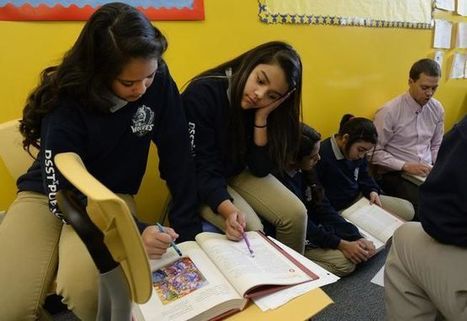
The Republican-controlled board voted 4-3 along party lines to require kindergarten through third grade students in dual-language and bilingual programs who take mandatory reading tests in Spanish to also take one reading test in English a year.
The change to a rule governing the READ Act, a four-year old early literacy law, angered those who say it creates an unfair burden on English learners and won’t advance the cause of creating strong readers.
In approving the revision, the board majority went against the wishes of the state’s largest school district, prominent education groups, specialists who work with English learners and the primary sponsors of the READ Act. Passed with bipartisan support, the 2012 law uses tests to identify significant reading deficiencies and help students improve.
Scoop.it!

Published by the Topeka Capital-Journal Online, February 4, 2016 Families who support the continuation of bilingual Spanish-English education at Whitson Elementary School urged the Topeka Board of Education on Thursday evening not to cut the program.The board is considering whether to phase it out over several years, leave it intact, or modify it to more closely mirror the instructional approach being used at Scott Dual-Language Magnet Elementary.Sixth-grader Ryleigh Abrams, a Landon Middle School student who completed the Whitson program, delivered her plea to the board in Spanish and English.
Scoop.it!

Published by NPR Florida, October 26, 2015 Most of the students at Royal Palm Elementary in Miami have Spanish-speaking families.
Scoop.it!

Published by the Bend Bulletin, October 19, 2015 ODE wants to see more of these dual immersion programs. In 2013 it awarded grants to seven districts — including $120,000 to Bend-La Pine Schools — to help launch or scale up programs. It will award a second round next month to established programs; some of that money could go toward helping bilingual teacher candidates move through the certification process, according to Martinez. For now, the state is taking a piecemeal approach to the teacher shortage. ODE is working with the state’s teacher licensing agency to reduce barriers for non-native English speakers to earn teaching credentials. Earlier this year the Higher Education Coordinating Commission, which directs funding for Oregon’s public universities, approved a new funding model based on degree completion rather than enrollment that would give more money for programs in high-demand fields, including bilingual education. The state has also helped districts hire foreign language and bilingual teachers from overseas, including 13 teachers from Spain and 11 from Mexico this year.
Scoop.it!

Published by U.S. News & World Report, October 16, 2015 Two weeks from now, thousands of teachers, researchers and policymakers from across the country will descend on Albuquerque, New Mexico, where they'll attempt to solve one of the most pressing but often overlooked issues in education today – the shortage of bilingual teachers. "There's been a lot of talk, but our K-12 education system has not paid close enough attention to the need to increase resources to ensure we have teachers who can provide that," says David Rogers, the executive director of Dual Language Education of New Mexico, a nonprofit that works with low-income communities to close achievement gaps.
Scoop.it!

Published by the Huffington Post, Ocober 13, 2015 Growing demand for bilingual teachers, fed by increasing numbers of Spanish-speaking public school students, is forcing local school districts to get creative in their recruiting. A major target for their efforts is Puerto Rico: the teachers, already U.S. citizens, don’t require a visa if they decide to leave the island and its struggling economy to go work on the mainland.
Scoop.it!

Published by Education Week, September 10, 2015 A Migration Policy Institute report finds that children of immigrants are more likely to form "positive connections with the larger U.S. society" when schools view the students positively.
Scoop.it!

Published by Chalkbeat Indiana, July 27, 2015 Experts who work with Indiana’s growing population of English language learners say that taking the seemingly simple step of learning the correct spelling and pronunciation of students’ names is critical to helping them adapt to what is often a drastically different environment from what they knew in their home countries.
Scoop.it!

Published by Oregonlive.com, July 16, 2015 The Multnomah Education Service District is organizing a team of developers to create state work samples in 9 additional languages. Qualifying Oregon students can meet graduation requirements by completing assignments in their native language.
Scoop.it!

Published by The Desert Sun, July 2, 2015 Educators from around the world gathered in Palm Springs this week to discuss strategies to help students become bilingual and biliterate. The 23rd annual conference of the Association of Two-Way and Dual Language Education drew more than 1,400 educators, the largest number yet, a spokeswoman said.
Scoop.it!

Published byAllGov California, July 3, 2015 At stake are billions of dollars restored to school systems by the state in 2013-14 (post Great Recession) when the Local Control Funding Formula (LCFF) took effect. LCFF is a new initiative to get money to the neediest students, many of whom do not receive the kind of funding already directed at special education kids.
Scoop.it!

Published by the Hechinger Report, June 16, 2015 In revamping her lessons to teach the new Common Core standards, Pascuzzi has spent much of the academic year embedding more science and informational texts into her English language arts (ELA) and literacy instruction. As a bilingual teacher, she juggles the simultaneous tasks of helping her English language learners speak, read and write a new language.
|




