Your new post is loading...
What would you do if you thought you had a solution that would make a high-quality education freely available to anyone with a computer or cell phone, help instructors build new teaching skills and get credit for their accomplishments, and also greatly reduce costs for schools, families and students? You’d want to tell the world! That is just what the nearly one hundred videographers who entered the “Why Open Education Matters” video competition, co-sponsored by the U.S. Department of Education, spent part of this summer doing. Here are the top three winners: Click headline to view the videos--
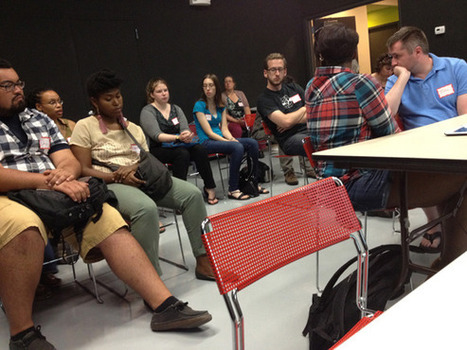
When PIFVA (Philadelphia Independent Film and Video Association) put out the calls for a dialogue on creating a 2,100 square foot, three floor Media Arts Hub and coworking space, located over PhillyCAM’s office at 7th and Chestnut, Coordinating Director Caroline Savage was not sure how the organization would frame its role in the process or who would come to the conversation. But after the three floors buzzed with emerging and established media makers at two recent meetings, she embraced the potential for PIFVA’s catalytic role in the process. “My instinct right now is that PIFVA could be the driver based on mission and so much of the conversation was about projects, incubators, networking and sharing. All part of our mission. I see the ‘working professionals’ as a smaller contingent, not to be omitted, however. So, I feel that PIFVA will be involved in this development as a founder/leader,“ Savage said. The space at PhillyCAM will be the site of two upcoming trial sessions that are free to anyone interested in trying cowork. They'll be held on Wed., July 18 and Aug. 1 from 2-6 p.m. Click headline to read more--
More jobs these days require high level skills such as accessing information, solving problems and working collaboratively. These skills — along with communicating effectively and analyzing data and evidence — are highly relevant in the workplace and in the community, said Renee Hobbs, founder of the Media Education Lab at Temple University and professor in the School of Communications and Theater. "Today, the ability to be a knowledge worker is fundamental to the U.S. economy," she said. But today's students need training if they're going to become tomorrow's knowledge workers. In the white paper Digital and Media Literacy: A Plan of Action, Hobbs outlines 10 steps to strengthen digital and media literacy. The Aspen Institute commissioned the paper to move the digital and media literacy recommendations of the Knight Commission on the Information Needs of Communities in a Democracy from a plan into action. Click headline to read more and access hot link to white paper--
Our unique combination of exhibition space and production facilities provides a public forum for the development and discussion of artistic practices involving interactivity, networked and remote connection, and the interface of the physical and the virtual. We reach out to our members and public through our diverse programming, including: --Exhibitions --Hands-on workshops --Professional development workshops --Panel discussions --Artist talksInformal gatherings, a.k.a. Open Labs --Axon, our weekly e-newsletter Our programs support electronic art from conception and construction to exhibition and discussion. We explore the impact of technology on the social, political and cultural aspects of contemporary life and encourage audiences to see anew their relationships with interactive artworks. InterAccess is Ontario's only gallery and production facility devoted exclusively to electronic media art. Click headline to access InterAccess' website--
Tablets and smartphones -- and users' infatuation with them -- continue to pummel the PC market. Worldwide PC shipments were flat this past quarter, just like they were for the previous six quarters before that, according to a report out Wednesday from the research firm Gartner. PC shipments globally totaled 87.5 million units in the second quarter of 2012. That is a decline of 0.1 percent from the second quarter of the previous year. "In the second quarter of 2012, the PC market suffered through its seventh consecutive quarter of flat to single-digit growth," Mikako Kitagawa, principal analyst at Gartner, said in a written statement. "Uncertainties in the economy in various regions, as well as consumer's low interest in PC purchases, were some of the key influencers of slow PC shipment growth." Kitagawa noted that despite analysts' and PC makers' high expectations for ultrabooks, which are thin and light laptops with long battery life, not enough were sold in the second quarter of this year to have an impact on the market. Click headline to read more--
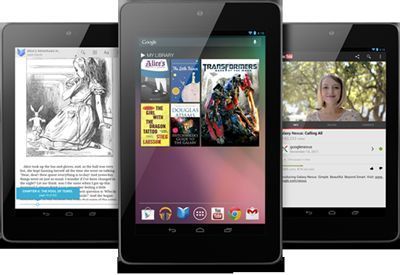
Google didn’t surprise anyone when it announced its $199 8GB Nexus 7 tablet in late June; rumors of the small slateleaked on a weekly basis for months prior. What may surprise many consumers, however, is the overall experience of the 7-inch tablet, especially when compared to competitors in this price range. Will the Nexus 7 be the “standard” for future tablets smaller than the iPad but bigger than a phone? After using a review unit for nearly two weeks, I think so, even though the Nexus 7 isn’t without a few minor flaws. Click headline to read more--
Welcome to the official web site of Access Sacramento, community media for Sacramento County! With so many great stories to tell and more than 4 million visits per year, bookmark this site and check back for the latest on all our region’s many activities and opportunities. We are “making a difference, one story at a time” and we invite you to join your neighbors and become a “digital storyteller” here at Access Sacramento. All the tools and training are here to help you “voice” or to promote the mission of your organization reach a potential audience of 265,000 Sacramento County households. Want to find out more? Click headline to access Access Sacramento's website--
The thought that everyone should learn to write software is gaining steam. Even New York City Mayor Michael Bloomberg promised to learn to code this year. (It’s unclear if he’s followed through, but Bloomberg was a computer science major so he probably still knows his way around a keyboard.) The thinking is that if all the people who use software actually understand how to buildsoftware, everyone’s better off. FreeCause, a Boston-based arm of Rakuten, a Japanese e-commerce company, is teaching all 60 employees JavaScript as part of an effort to narrow the tech divide, according to a recent Boston Globe story. “I thought that this would facilitate more efficiency, bring our teams closer together and ultimately make our company perform better,” FreeCause CEO Michael Jaconi told the Globe. Click headline to read more and access hot links--
Amherst Media is a dynamic, community driven, non-profit, public access information, communication & technology center in Amherst, MA. We run Public Access, Educational & Government television channels, have an amazing archive of online videos, host regular workshops, are an Apple Authorized Training Center, broadcast Public Service Announcements and much more. Amherst Media is just 90 minutes from Boston, 50 minutes from Hartford, and 50 minutes from Brattleboro, a quarter of a mile from Amherst’s Amtrak station, and half a mile from downtown Amherst's many shops, restaurants and other attractions. We have plentiful free parking. Click headline to access Amherst Media's website--
A multidisciplinary, multicultural arts center, Intermedia Arts supports a broad spectrum of artists, with a particular focus on voices you are unlikely to hear anywhere else. Our Queer Voices reading series is the longest running GLBT literary series in the nation. Our multimedia festival, B-Girl Be: A Celebration of Women in Hip-Hop, is the first of its kind worldwide, showcasing and celebrating the contributions of women to a revolutionary art form. Our annual performance series, Indigenous Voices, (co-presented with Pangea World Theater), explores First Nation issues of identity and human rights; and our youth media programs allow at-risk youth to create films and TV shows about issues in their lives and communities. We are a nationally recognized leader in empowering artists and community leaders to use arts-based approaches to solve community issues. Our leadership program, The Creative Community Leadership Institute, is one of only a few programs in the country to provide comprehensive, professional-level training and support for local community-engaged artists and community developers. Led by a core faculty of four of the leading thinkers in the field of community cultural development, Intermedia Arts’ Creative Community Leadership Institute has trained over 62 of the Twin Cities’ most active community artists, organizers and developers. We come to the art from the issue, focusing on the impact an artist or organization can have on a community. We are multi-lingual and many-cultural, empowering artists and young people to tell their stories, in their own words and ways. Then we gather the community to listen, to see and to respond. Click headline to access Intermedia Arts' website--
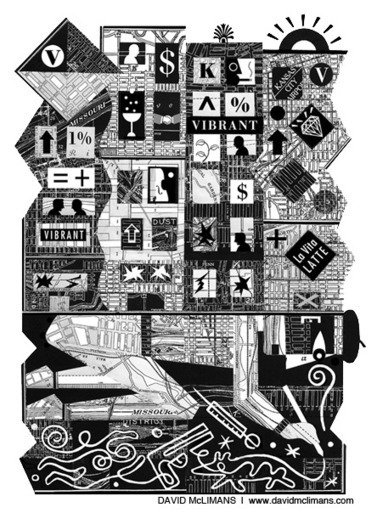
My hometown is vibrant. Its status as such is certified, official, stamped on both sides. There was a time, though, when it wasn’t, when my friends and I would laugh at Kansas City’s blandness: its harmless theater productions, its pretentious suburbs, its private country clubs, its eternal taste for classic rock. We called it “Cupcake Land,” after a favorite Richard Rhodes essay from the eighties. The city knew nothing of the bold ideas of our robust generation, we thought: it had virtually no music subculture; it was deaf to irony; hell, it actually tried to drive out of business the last surviving club from its jazz-age glory days. Maybe that was the sort of criticism everybody made of their Midwestern hometowns back then. Well, those hometowns have certainly turned the tables on us today. Our enthusiasm for music is a dead thing now in these post-alternative decades, a mere record collection that we occasionally cue up after one Scotch too many to help remember the time when art seemed to matter. But Kansas City doesn’t need any reminders. The place fairly quivers with vitality now. It is swarming with artists; its traffic islands are bedecked with the colorful products of their studios. It boasts a spectacular new performing arts center designed by one of those spectacular new celebrity architects. It even has an indie-rock festival to call its own. And while much of the city’s flowering has been organic and spontaneous, other parts of its renaissance were engineered by the very class of civic leaders we used to deride for their impotence and cluelessness. At that Kansas City indie-rock festival, for example, the mayor himself made a presentation this year, as did numerous local professionals and business leaders. Besides, as everyone knows, cupcakes are cool nowadays, like yoga or something—the consummate expression of the baker’s artisanal vibrancy. Click headline to read more--
AMP's aim is to be a supportive hub, connecting creatives worldwide with resources, information, and (most importantly) others like them, sharing ideas and resources to better navigate the complex international art world. AMP was, in large part, inspired by my touring musician friends, both here in Los Angeles and in other parts of the world. I saw that many musicians in LA, while in the heart of the entertainment industry, longed to tour Europe, yet didn't know how to begin. Most also assumed that because they had no money, they couldn't even consider it. At the same time, I saw that some European friends would happily trade places - and apartments and connections - for a week or two of opportunity in another part of the world. It seemed the most sensible and useful thing in the world that these people should be able to connect, and so in a frenzied 4-month period - from conceptualization to website debut, including the gathering of all of my creative connections, as well as making this website (by myself, with no money or training) - AMP was born. The vision starts with the assumption that we live in an increasingly global culture, in which many artists need to travel. It can be ridiculously expensive to pay for many aspects of travel, including flight and lodging, and less than fulfilling - not to mention rather cold, lonely and boring - to try to navigate a new culture where one has no connections and no idea of where to find the creative people and places - which are often underground, away from tourist centers, and are never on any map. There has to be a better way. Click headline to access AMP's website--
At the Boston Harbor Islands pavilion on Boston’s Rose Kennedy Greenway, brightly lit screens beckon the late-night wanderer, long after the visitor center has closed. Take a closer look, and waves made by individual bar graphs appear, a bit like the sound readout on old stereo systems. The thick, undulating brush strokes are all based on thousands of pieces of data, collected over a season in the vast archipelago – the height of the tides, the speed of the winds, even the flights of bees. The electronic portrait is part of the burgeoning phenomenon of digital art, where the canvas is an LED screen. The visual muscle of digital art all but announces a potential transformation in public art in the city. It could make graffiti bombing and innovative artists like JR, with his giant eyes on the facades of the favelas, seem quaint by comparison. The pied piper for digital art is not a world traveling Frenchman but a friendly, full-bearded Bostonian, George Fifield, founder of Boston CyberArts. Based in the burgeoning arts community in the Jamaica Plain section, Fifield identifies video art on urban screens as a worldwide phenomenon, from Times Square to Bucharest to Seoul, where a media mural as big as a football field lights up the urban environment. Click headline to read more, watch video clip & view pix--
|
As the Minnesota Intelligent Rural Communities (MIRC) initiative winds down, demonstration communities are taking time to reflect on what has happened in their community as a result of added focus on broadband and broadband projects in the area. Each community will go through this process looking at what’s happened, lessons learned and plans for the future. One of the public benefits of federal funding for a project link this is the opportunity each community has to share what they have learned and the opportunity that other communities have to glean from their lessons. And so today I’m pleased to share notes from Windom (Actually I have notes to share all week. I’ll add this preamble to each for historical context – but each day will be a new community.) Here are the highlights from Winona… Click headline to read more--
The Knight Commission on the Information Needs of Communities in a Democracy was a blue ribbon panel of seventeen media, policy and community leaders that met in 2008 and 2009. Its purpose was to assess the information needs of communities, and recommend measures to help Americans better meet those needs. Its Report, Informing Communities: Sustaining Democracy in the Digital Age, was the first major commission on media since the Hutchins Commission in the 1940’s and the Kerner and Carnegie Commissions of the 1960’s. In the digital age, technological, economic and behavioral changes are dramatically altering how Americans communicate. Information is more fragmented. Communications systems no longer run along the same lines as local governance. The gap in access to digital tools and skills is wide and troubling. This new era poses major challenges to the flow of news and information people depend on to manage their complex lives. Click headline to access the Knight Commission website--
We will be hosting a Q&A at this showing with the director Lameron, and the emcee, Fantom! The demoscene is an electronic art subculture which began in Europe in the late nineteen-eighties, whose participants include programmers, graphic artists, animators, musicians, electrical engineers, and more. @party is a local demoscene event, or demoparty, a collaborative electronic art festival where people meet and participate in a variety of competitions which allow them to demonstrate their technical and artistic skills. In addition to competing, attendees at demoparties socialize, network, learn from each other, and sometimes collaborate onsite on last minute entries. Hungarian studio Flame Film recently completed a documentary intended to introduce people to the scene's remarkable technical accomplishments and productive artistic community. You can view the trailer and the opening sequence below. This is a montage from the beginning of the film which includes some memorable moments in demos over the history of the scene, presented in chronological order: Click headline to view the two video clips--
Advocating on behalf of its members is a priority for ISTE (the International Society of Technology in Education). But in a rapidly changing landscape overshadowed by a continually contracting economy, even large organizations must retool their strategy. In a press briefing at ISTE’s annual conference in San Diego, outgoing CEO Don Knezek and incoming ISTE CEO Brian Lewis discussed what’s ahead for the organization and specifically addressed library media specialists/school librarians, as well as the recent FCC proposal on digital literacy. Click headline to read more--
The recent death of Rodney King reminds us of many things, not least of which is how important technology can be in the pursuit of justice. The videotape of the beating of King by Los Angeles police in 1991 challenged our nation to take seriously claims from communities of color that they experience police brutality routinely. Fast forward to the 21st century and we can point to repeated examples where new forms of technology provide evidence in the brutal deaths of young black men-- Oscar Grant (cell phone video), Derrion Albert (cell phone video), and now Trayvon Martin (cell phone call). When Trayvon's parents wanted justice for their son they turned to new media, mounting an online petition through Change.org to pressure prosecutors to charge George Zimmerman with his death. Sadly, it seems we still need new media to aid in our pursuit of the killers of, in particular, young people of color. As the 2012 election approaches it is important to realize how young people, especially youth of color, are using new media to amplify their voices in the political realm. While we know Obama'a 2008 campaign used social media to reach and mobilize young voters, we are less familiar with innovative ways youth of color are circumventing political elites and engaging in a new form of politics called participatory politics. That's the term researchers in the MacArthur Foundation Research Network on Youth and Participatory Politics use to describe acts such as starting a political group online, circulating a blog about a political issue, or forwarding political videos to friends. Like traditional political acts they address issues of public concern. The difference is that participatory acts are interactive, peer-based, and do not defer to elites or formal institutions. They are also tied to digital or new media platforms that facilitate and amplify young people's actions. Click headline to read more--
Founded in late 2010 by Avichal Garg, Spool is a mobile application available on the App Store, which allows you to save video and other contents for future reference. Soon before the acquisition, Spool had informed users that their services were closed down and advised them to save their content directly to their devices and computers, or to other services. “We started Spool to make content easy to consume on a mobile device. To accomplish this, we built some very sophisticated technology and developed a deep expertise in mobile software development,” Spool said in a blog post on Saturday. “We are proud to announce that today we will be pursuing our vision as a part of Facebook.” It is also not clear whether Mark Zuckerberg will use the technology developed by Spool or if he’s simply recruiting the mobile team. Yet, it would seem that Zuckerberg is more interested in the skills of Spool’s developer to monetize mobile content rather than technology. While Spool is shutting down its innovative bookmarking service, users can check out alternatives to Spool to store their content. Although there are plenty of services available, apps like Pocket, Instapaper and Readability offer the closest in terms of functionality and usability. Click headline to read more and access hot links--
The Boston Cyberarts, their Special Projects, Axiom, ATNE & Festival, which is the first and largest collaboration of artists working in new technologies in all media in North America, encompassing visual arts, dance, music, electronic literature, web art, and public art. Click headline to access Boston Cyberarts' website--
The new millennium has ushered in an era of continually evolving technology, fast-paced communication, and the rise of opportunity – and power – among the historically disenfranchised. Few appreciate this phenomenon and all it means more than Lauren deLisa Coleman, socio-economic digital analyst, consultant, entrepreneur, and author of the e-book RISE OF THE SMARTPOWER CLASS: Navigating the New Digital, LeaderfulEra. In her e-book, Coleman detailed the importance of not just reading articles online, but reading the ensuing user-generated comments to gauge the uninhibited opinions of individuals and thus society as a whole. In Coleman’s words, “Comment sections are a fascinating place to witness the emerging attitudes of the modern era.” To deconstruct this phenomenon, Coleman analyzed news stories on everything from Kim Kardashian to last year’s near government shutdown in an effort to study the impact of the new digital age and the rise of what she has branded as the SmartPower class. According to Coleman, this class is “a specific and growing tribe of hip, young (though not exclusively) neo-humans who are self-determinant, socially conscious and use tech extensions to explore and express the creation of a new power dynamic.” Click headline to read more--
CMAP, Community Media Access Partnership, is a non-profit tax-exempt public, education and government access media center that serves Gilroy, Hollister and San Juan Baustista.Funding.
CMAP is a partnership with the communities that it serves, including Gavilan Community College. Although it is housed at Gavilan Community College, it is a separate non-profit organization.
Click headline to access CMAP's website--
In this multimedia, fast-paced technology, and visual age we have forgotten something! How to read. I remember being at home reading a book on Saturday afternoon when it rained outside. We did not have Wii but we had Atari. We used to go outside and play. Now an increasing number of our kids are medically obese. It seems that we have lost our way. Governments are making decisions about our schools and our children. Budget cuts trump new books needed in the classroom. Rezoning seems to determine whether our children can get a quality education. Literacy R.O.C.K.S! will change the perception of reading in the world today. We will remove the shame brought on by being "illiterate". Reading can be a trip that can be taken by simply turning the pages. The key to having that feeling starts at home. As parents we are responsible for instilling the desire in our children. We are responsible for teaching them before school and after school. Students, you are responsible for your learning. . I also promise to be more confident, more disciplined and more willing to help my friends, neighbors, and family to make improvements in the area of literacy. So lets join forces and "read a book and think about it!" On this website you will be able to obtain tools to increase interest in reading with your children. This website will provide information for youth mentoring and life skill training. Literacy R.O.C.K.S Project has been designed to empower human beings through spiritual upliftment using the power of the written word. This website will provide tools to build healthy family relationships around literacy. Hopefully we can enlighten you to important and emergent need to teach our kids how to read. Studies have shown students start falling behind in the third grade when it comes to reading. We must read to our children at home. Enjoy your experience and remember: Literacy R.O.C.K.S! Click headline to access website--
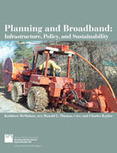
Planners have mostly been absent from the research, planning, and development of broadband infrastructure, which has been driven instead by the provider companies, large-scale users (e.g., health care, education, and entertainment), major technology research institutions, innovation centers, technology experts, and federal agencies. In turn, many of these players have not seen broadband as a public planning issue — even when they recognize the public policy implications of broadband infrastructure. Given the importance of broadband speed and access to individual and communitywide economic competitiveness, planners can no longer afford to sit on the sidelines. The public sector will increasingly become a critical partner with private-sector providers in assuring that our networks serve the entire nation, transcending purely market-driven criteria. Click headline to access APA website and link to order a copy of the report--
These were the graphics I used for my presentation on Virtual Subjectivity at the Boston Is Watching event about Second Life art at the Boston CyberArts Festival. Clicking on slides 4, 6, 7, 11, 13 will take you to video on the web). If you click the last slide, you can see the "trailer" for the screwball comedy about SL relationships that I've been working on, which was not part of the presentation yesterday. The gist is this: people are the important part of a virtual world--they make the art, they make the world, and a project like Brooklyn Is Watching is a nexus for like-minded folks to find each other, collaborate, and create virtual subjectivity, which is ultimately something we do together. William Gibson called cyberspace a "consensual hallucination" (in 1984 in Neuromancer) and that holds up as a great definition. Click headline to view the slide show of the presentation and download trailer--
|