Your new post is loading...
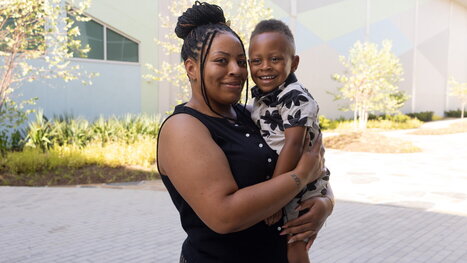
A Trump administration proposal would change access to Head Start for children experiencing homelessness and the kind of care they would receive if they do get in.
The nation’s first successful circulating library was established almost 300 years ago by Benjamin Franklin in Philadelphia. As a librarian who researches and writes about library history in Pennsylvania, I was delighted to see the American Library Association’s efforts to celebrate its 150th anniversary this year, while making several mentions of Pennsylvania. The ALA highlighted its 1876 founding in Philadelphia; how Pittsburgh philanthropist Andrew Carnegie funded the construction of more than 1,600 library buildings throughout the United States; and Scranton’s Henry and Edith Carr, who attended and maintained records about the ALA’s early conferences for nearly 50 years. But these stories just scratch the surface of how Pennsylvanians have contributed to American libraries and librarianship.
A multi-billion-dollar federal program that helps schools and libraries afford broadband internet is under review by the Trump administration, leaving education officials and advocates worried about potentially significant cuts.
The E-Rate program provides about $3 billion annually for internet access and telecommunications to more than 100,000 schools and 11,000 libraries across the country. It is the fifth-largest stream of federal funding for schools nationwide, according to the Schools Superintendents Association (AASA). The Federal Communications Commission said it is reviewing “whether the program should be narrowed or otherwise reoriented to reflect the extent to which its connectivity objectives have been achieved.” The agency is accepting public comments until Oct. 13, which it will take into account when it crafts a proposal.
Researchers learned that the brains of jazz musicians engrossed in spontaneous, improvisational musical conversation showed activation of brain areas traditionally associated with spoken language and syntax, areas that are used to interpret the structure of phrases and sentences. In short, jazz improvisation activates brain areas associated with spoken language. Dr. Charles Limb and his team also studied the brains of rappers the results paralleled previous imaging studies with jazz musicians. These studies helped me frame syntax as the structure of an AI interaction and semantics as the meaning, interpretation, and human context behind it. AI prompting and prompt engineering is largely the syntax side of AI. Assessing whether or not the prompt or AI-generated content is relevant or meaningful is the semantic side. Humans (not machines) can better understand why the user wants the content and what it represents. Human-centered AI brings the sides together: Syntax structures the interaction; semantics situates the interaction in human meaning, context, culture, and intent. This distinction is important because it shows the necessity of diverse human guidance, literacy and ethics in AI development. This brings me to avant-garde jazz maverick Sun Ra who, in my opinion, helped create a blueprint for Afrofuturism 3.0.
Report MIT’s Ad Hoc Committee on AI Use in Teaching, Learning, and Research Training August 13, 2026 1. Introduction This report is a call to action. Through five intense months of meetings, research, and outreach across the MIT community, the Ad Hoc Committee on AI Use in Teaching, Learning, and Research Training sought to understand the role of generative AI in the life and educational mission of the Institute and recommend how to navigate its challenges and opportunities. In January 2026, Chancellor Melissa Nobles, Provost Anantha Chandrakasan, and Faculty Chair Roger Levy charged us1 specifically to: - Assess current AI use at MIT.
- Identify innovations in teaching and student assessment.
- Propose an AI use policy.
However, what we learned as a group quickly convinced us that the Institute community, particularly the faculty, must tackle a set of deeper questions about the structure, meaning, and value of an MIT education in an era in which AI is one of several factors complicating the Institute’s mission. Our committee consisted of undergraduate and graduate students, faculty from every school, and staff from relevant units, including the MIT Libraries and the Teaching and Learning Lab. Though we brought to the assignment a broad range of experience and no fixed thesis, our brief but intense explorations led us to a strong shared view. In this report, we: - Highlight key aspects of the current educational landscape at MIT.
- Share eight principles we relied on and that we hope will guide the Institute in the work ahead.
- Recommend immediate and long-term actions for both instructors and the administration.
As an institution deeply identified with the birth of AI and known for its distinctively rigorous, hands-on education, designed to produce graduates unafraid of the world’s hardest problems, MIT has a unique role to play in this moment. We believe it also has a responsibility to lead. We hope our report can help the Institute lean into the spirit of Mind, Hand, and Heart as it continues to define and foster the highest-quality residential education – of humans, by humans, in support of human flourishing, and for the betterment of humankind. Eric Klopfer, co-chair Sam Madden, co-chair On behalf of the Committee on AI Use in Teaching, Learning, and Research Training
CMy time at Price Elementary School was short but I will never forget one eventful encounter I had in second grade. The teacher, whose name escapes me, attached number lines to our desktops. The number line is a tool that helps students visualize number sequences and illustrates strategies for counting, comparing, adding, subtracting, multiplying, and dividing. I frequently used this tool to complete math problems. One day, I arrived for what we had been told was a test and my number line was gone. I immediately went into panic mode. My heart was racing and my body was shaking. I pleaded for the teacher to give me the tool for the test but she refused. For the next three years, I excelled other classes, but I stopped trying to do well in math.lick here to edit the content. Using a number line longer than peers is completely normal and acceptable for learners building confidence. As an adult and educator, it’s clearer to me what happened in second grade. I was not ready to stop using the number line, especially for a test. I felt as if I was being set up to fail. I did well at analyzing, evaluating, and synthesizing information (critical thinking) but struggled with computation for years. Teachers commented about it in my report cards. Doing math operations and critical thinking are closely related, but they involve different levels of thinking. Math operations focus on carrying out procedures, while critical thinking focuses on deciding what to do, why it makes sense, and whether the result is reasonable.
Five newspaper publishers in New York City agreed in 1846 to pool resources in order to speed the delivery of news about the U.S. war with Mexico using a pony-express relay through Alabama to a telegraph office. Those beginnings gave birth to an organization that in many ways became the backbone of the news industry. The AP claims some 4 billion people, nearly half of the world’s population, see news produced by the company on a typical day. Many don’t realize that. For most of its history, the AP has effectively been a utility, providing material for other news outlets to print, broadcast or carry online, its journalists largely anonymous. AP reporters weren’t even identified with bylines until World War I. But the company has chronicled the nation’s big moments for much of the 250-year history of the American republic. Although horses long since gave way to the internet, the journalism remains. Here are some stories behind the stories the AP has chronicled.
As schools send children home for the summer, we need to recognize a frightening fact: This could be the last year of public schooling the way we’ve known it. Donald Trump’s new school funding scheme, pushed through as part of the One Big Beautiful Bill Act, will kick in during the middle of the next school year, in January 2027. It’s going to create a financial tsunami for public schools. The real tragedy is that there’s no mystery to it: We already know what will happen, because the scheme is not really new at all. It brings us back to the bad old days, to the failed and inadequate divided school budgets from before the Civil War. Trump’s plan brings back the devasting problem that our modern public school systems were designed to fix. As schools send children home for the summer, we need to recognize a frightening fact: This could be the last year of public schooling the way we’ve known it. Donald Trump’s new school funding scheme, pushed through as part of the One Big Beautiful Bill Act, will kick in during the middle of the next school year, in January 2027. It’s going to create a financial tsunami for public schools. The real tragedy is that there’s no mystery to it: We already know what will happen, because the scheme is not really new at all. It brings us back to the bad old days, to the failed and inadequate divided school budgets from before the Civil War. Trump’s plan brings back the devasting problem that our modern public school systems were designed to fix. The new program has been called a national voucher system, but in fact it is more like a private school subsidy. Here’s how it will work:
The agreement could mark a turning point for public policies on social media precisely because it addresses the architecture of the platforms themselves. There are good reasons to be skeptical about how much impact Meta’s latest legal settlement will have on the tech giant. After all, the social media giant has survived scandals, congressional hearings and regulatory fines before, usually without much lasting damage. A court-approved settlement worth up to US$18 billion sounds enormous, but Meta can afford it: It’s equivalent to roughly just 8.5% of Meta’s entire 2025 revenue. The bigger story is not the money. It is that governments are beginning to regulate how social media platforms are actually built. The settlement could mark a watershed in social media policy precisely because it reaches into the architecture of the platforms themselves, demanding that companies also make changes to safeguard children against harms.
When ChatGPT was released in the fall of 2022, the scale of the impact it could have on K-12 schools appeared obvious. Not only could the chatbot fulfill many class and homework assignments in response to simple prompts, but children and teens had the digital fluency to adopt the technology much faster than their teachers. The New York City Department of Education was one of the first educational bodies in the United States to act on what many perceived as the threat OpenAI’s new product posed to schooling: in January 2023, it blocked access to ChatGPT on district devices and networks. The nation’s largest school district made the decision shortly after the second largest, Los Angeles Unified School District, banned the chatbot in December 2022. Other districts across the country soon followed suit, including Seattle, Baltimore, and Oakland, California.
Washington, D.C. – The American Library Association responded with disappointment to an announcement by the current Federal Communications Commission Chairman, who proposed reversing the FCC’s 2024 decision to authorize E-Rate funding for Wi-Fi hotspots checked out by public library patrons for internet access at home. ALA President Sam Helmick said, “ALA has advocated for the FCC's new hotspot program because we know our communities need them. Students, adult learners, jobseekers, seniors, and rural residents all need high-speed internet, even after the library closes in the evening. “Libraries have offered hotspot lending for a decade, and their experience proved transformative for people facing emergency situations. While libraries and schools are working hard to bridge digital learning gaps, Chairman Carr is tossing out the bricks of those bridges. Withdrawing the opportunity for people to check out Wi-Fi hotspots from their library is a step backwards.
A federal judge has ruled that the Trump administration violated the constitutional rights of international students in seeking to deport them for their pro-Palestinian activism and criticism of Israel. The ruling is the result of a lawsuit filed by The Stanford Daily, the student newspaper at Stanford University, which claimed that some of its writers on student visas declined to report on topics related to Israel and Palestine, or requested their published articles be removed from the paper’s website, for fear of deportation.
Without congressional action to reverse the SNAP cuts, children will lose critical food benefits that help families keep hunger at bay. Millions of children across the United States are at risk of losing access to free school meals due to the unprecedented federal nutrition aid cuts that President Donald Trump signed into law last summer. The 2025 Republican budget law enacted the largest cuts to the Supplemental Nutrition Assistance Program (SNAP) since its inception more than six decades ago. The cuts have already pushed SNAP enrollment to its lowest level in 17 years, with roughly five million people—including 1.5 million kids—losing aid. Because school districts across the US use SNAP participation rolls to automatically sign children up for free school meals, kids who lose federal aid are at risk of also losing access to free school-time meals.
|
Federal data shows many borrowers who aren't paying their loans went to private, for-profit colleges — schools that often market to low-income students and rely on federal financial aid for revenue.
I predicted its decline 25 years ago. Today, the U.S. has serious problems, but our rivals have even bigger ones. Is America an empire? That was the question on the minds of many U.S. citizens 25 years ago, in the wake of the September 11, 2001, terrorist attacks on the United States. And it is a question being asked again today, as the war with Iran drags into its seventh month, and Donald Trump continues to fantasize about annexing Canada and Greenland—to say nothing of the application of the “Donroe Doctrine” and the “Trump Corollary” in Venezuela and (coming soon) Cuba. In the years after 9/11, a standard left-wing interpretation was that Osama bin Laden and his suicidal hijackers had struck a blow against American imperialism in the Middle East. Surprisingly, some neoconservatives within the George W. Bush administration agreed. “We’re an empire now,” an unnamed “senior adviser” to President Bush told journalist Ron Suskind in 2004, “and when we act, we create our own reality. And while you’re studying that reality—judiciously, as you will—we’ll act again, creating other new realities, which you can study too, and that’s how things will sort out. We’re history’s actors. . . and you, all of you, will be left to just study what we do.” This was not the official line, of course. “We’re not an imperial power,” said President Bush in April 2005. “We’re a liberating power.” In his brilliant new history of the modern Middle East, The Cauldron, Simon Sebag Montefiore shows the ambivalence Americans have always felt about their imperial role in the region. At the height of the 1973–74 Arab oil embargo, Henry Kissinger threatened to seize the Saudi oil fields. He was bluffing. Nearly 30 years later, partly on Kissinger’s recommendation, Paul Bremer found himself installed as Grand Poo-Bah in charge of the Coalition Provisional Authority in Baghdad. It was May 2003. Within seven months he had to admit, in an email to his wife: “We are already halfway out of [here]. . . . We are not ready for empire!” And yet, and yet. There’s just something about unleashing a storm of steel against the Persians, as the United States has this year, that does seem kind of empire-y.
The UN has passed a non-binding resolution to endorse the Equal Earth Projection, a map which more fairly represents the true size of the Earth’s landmasses. The current commonly used projection, called the Mercator Projection, greatly exaggerates land towards the north and south poles, which makes Africa look much smaller. In the Mercator projection, countries near the north and south pole can be anywhere from two to 14 times their true size. In the Equal Earth projection these distortions are minimised, making Africa look larger in comparison. We asked Jack Swab and Derek Alderman, cartographers and geographers who study the social and communicative power of maps, to explain what’s going on.
TRAVERSE CITY, Mich., Aug. 25, 2026 (GLOBE NEWSWIRE) -- Michigan Broadband Services (“MBS”) today announced an agreement to acquire substantially all assets associated with the Educational Access Network (“EAN”) from Northern Michigan University (“NMU”). The EAN assets include licensed 2.5 GHz Educational Broadband Service spectrum covering portions of 41 counties, Nokia AirScale radio equipment deployed across more than 70 tower sites, licensed microwave facilities and related network infrastructure. Michigan Broadband intends to upgrade the current network from 4G LTE to 5G, expand fiber and microwave backhaul, and increase the network’s speed, capacity, reliability and geographic reach. The acquisition will combine the EAN’s wireless platform with Michigan Broadband’s fiber network, which now spans more than 2,500 miles across northern Michigan.
Abstract Using artificial intelligence (AI) in local journalism is more likely to yield civic benefits if it begins with the culture and needs of the community. AI should be used not simply to reproduce traditional journalism more efficiently but to improve residents’ lives by providing useful information and enhancing local representation. Those hoping to use technology to “save” local journalism should shift the discussion about AI in local news away from efficiency and replacement, and toward highlighting the concerns and observations of community members. Drawing on theories of service journalism, civic AI, and political accountability, I argue that adopting AI tools in local journalism should go hand in hand with implementing more equitable, civically-focused, participatory forms of journalism. This approach is exemplified by the “Documenters” program from City Bureau in Chicago, which pays regular residents to take notes at government meetings and uses those notes as the basis for local news. Using several recent examples and a chatbot trained on Documenters’ notes, I show how these participatory approaches offer several concrete civic benefits that AI and traditional journalism alone cannot provide. The AI-assisted journalism of tomorrow should not look like a propped-up version of the stories, narratives, institutions, and inequities of the past. AI should shape and accelerate journalism’s transition, which is already underway, into a force for promoting civic empowerment and political accountability.
This past spring, Canvas, the learning management system software I use to teach courses at Rutgers University, was hit by a global security breach that affected thousands of colleges and universities. The company that operates Canvas rolled back features while it addressed the breach. The timing of the hack couldn’t have been worse. For several days, software rollbacks prevented students from accessing course materials and kept instructors from proctoring exams and uploading final grades during the last weeks of the spring semester.[1] Two weeks before, the infrastructure Rutgers owns failed when the university’s data center lost power for most of a day, and nearly all our cloud-based software systems, from course registration to payroll and financial aid, were inaccessible. The campus-wide wireless internet networks and Rutgers’ Clinical Research Data Warehouse were also impacted.[2] For students, staff, researchers, and faculty at a university serving tens of thousands of people, most work stopped due to the outage. I teach archives, digital curation, and public interest technology to graduate students training to become public librarians and archivists. I work at one of the oldest (and largest) public research institutions in the U.S. The word “public” means many different things today, and we can see these differences depending on how it’s applied and by whom. Public can mean the way that Benjamin Franklin’s post office meant public: a service any person could use to reach any other person. Public can also mean a resource held in common, funded collectively by a geographically connected community, open to whoever walks in the doors, the way we might understand our local libraries. Public can also mean the ways that corporate firms serve people online. For platform owners like Elon Musk and Mark Zuckerberg, public means the online “town square” that millions of Americans use every day and that firms can reconfigure at will. Importantly for the computing services sector, the modifier public in “public cloud” does not mean public ownership, or universal access, or public governance with obligations to act in the public interest. So, when I ask how public the public cloud really is, I’m asking us to think about which definition applies to our computing infrastructure, and at the same time, I am pointing to how dependent our institutions have become on this technology to meet obligations to their stakeholders.
Los Angeles, Cali. (September 10, 2026) — Connected Nation (CN) today announced that Netflix is supporting the national nonprofit's attempt to earn a GUINNESS WORLD RECORDS™ title for the “longest internet literacy live stream.” Netflix joins more than 25 national and international organizations participating in “25 Hours. One Connected World,” a global event aimed at expanding access to digital skills training and raising awareness of the Digital Divide. "Every community deserves the chance to connect, learn, and be entertained by great stories – and that starts with reliable access to the internet," said Gina Haspilaire, Vice President of Open Connect Partnerships and Infrastructure, Netflix. "We've long worked to strengthen internet access and quality for our members, and we're proud to support Connected Nation in bringing this world record attempt to life, shining a light on the importance of turning access into opportunity for communities across America."
For years, the Nevada Museum of Art has been collecting photographs by artists whose work puts the environment, our culture’s addiction to nuclear and fossil fuel, construction booms, and degradation of desert landscapes front and center. Altered Lands and the Anthropocene, on view in Reno through September 20, is a beautiful installation across the second floor that causes visitors to stop, look, and contemplate what it took to record such tour de force images. It’s all part of the museum’s massive Into the Time Horizon exhibition. Take a walk through the galleries in our Flickr album.
Today, plush toys aren't just stuffed — they're stuffed with artificial intelligence, and new research from the University of Washington reveals that when these "smart" toys start chatting, kids quickly go from curious to frustrated to outright hostile. We’ve come a long way from Lincoln Logs and Hot Wheels that couldn’t talk to us. Today, plush toys aren’t just stuffed — they’re stuffed with artificial intelligence, and new research from the University of Washington reveals that when these “smart” toys start chatting, kids quickly go from curious to frustrated to outright hostile. Claims of “smart” toys date back decades, from 1960s talking dolls like Chatty Cathy to 1990s sensor-packed plushies like Microsoft’s ActiMates Barney and Furby. But generative AI marks a major shift.
As students and teachers return to elementary, middle, and high schools in the United States over the next month, they are unlikely to find consistent, clear rules about what kind of artificial intelligence-powered programs they can use to help complete or deliver their coursework. The rapid rise of AI for generating text and images—paired with the natural desire of most kids to get homework done as fast as possible—has left teachers and school administrators scrambling to develop policies for how the technology should be integrated into education. Ahead of the 2026-27 academic year, many school districts have adopted a cautionary approach to the technology, establishing guardrails and promoting AI education but shying away from specific, system-wide rules about which programs can be used, delegating in-classroom decisions to individual teachers and leaving at-home use largely untouched. Others have failed to approve any guidelines at all.
Jason Atta Kwei Arday was a British academic and author who was a professor of sociology of education at the University of Cambridge from 2023 to 2026. Yesterday, thousands of mourners dressed in black filled London’s Trafalgar Square to memorialize Arday who died amid weeks of media scrutiny over claims of plagiarism in his academic work, falsifying research, and fabricating elements of his personal and athletic background, including wide-ranging claims about his medical history, publishing record, and charitable fundraising achievements. Also, yesterday a video for Erykah Badu and The Alchemist’s “Witch Doctor” was released on YouTube in anticipation of an album release later this month. ’Cause a witch is just a medium And a medium like the media
And you eat it up, what they feedin’ you
That’s witchcraft (Mm), that’s witchcraft (Mm)' It was Badu’s comparison between witch and media that made me think about Jason Arday, who was the recent victim of a witch hunt that (in modern times) refers to the searching out and deliberate harassment of those with unpopular views. The scandal broke out only when a philosopher of biology Nathan Cofnas published a lengthy Substack post dragging all of the plagiarism accusations into full public view. Cofnas “scholarship” makes a correlation between race and intellect. In a meritocracy, he wrote, “Blacks would disappear from almost all high-profile positions outside of sports and entertainment.” Cofnas’ agenda was to discredit Arday even before the verdict was out about whether or not Arday was cleared of the charges. John Moores University, which awarded his doctorate, said it had cleared him of plagiarism.
Cultural heritage is under attack in the United States. The National Historic Preservation Act’s Section 106 regulation, which balances economic development and historic preservation, has been rewritten to leave historic places in the path of the wrecking ball at the federal government’s whim. Developers contend that a new regulation is required because the Section 106 process is too slow, too unpredictable, and too costly. They argue that locking up lands from oil and gas extraction, timber interests, and mining costs jobs and denies the country needed resources. But they’re wrong. Section 106 does not cost jobs, money, or time. Allowing the public to comment on what happens on public land is not to be deplored but celebrated. Most importantly, once destroyed, cultural and historic sites are irretrievably lost, and all of us diminished. While currently playing out in the United States, fights about heritage are not unique to America. Battles between development and preservation play out across the globe—in countries rich and poor, autocratic and democratic, and new and old. Some of these struggles escalate into loud, contentious, take-no-prisoners pitched battles.
|