Your new post is loading...
Most schools in Massachusetts now have AEDs. But ownership is not the same as access, writes Courtney Desy. “If the device is locked in the nurse’s office or in a different building across campus instead of on the field, you lose valuable time that could be the difference between life and death.”
As one Vermont college finishes its last semester, an estimated 442 others may be in trouble. They're not the last students around the country who will suffer such disruption. A new estimate projects that 442 of the nation's 1,700 private, nonprofit four-year colleges and universities, with a combined 670,000 students, are at risk of closing or having to merge within the next 10 years.
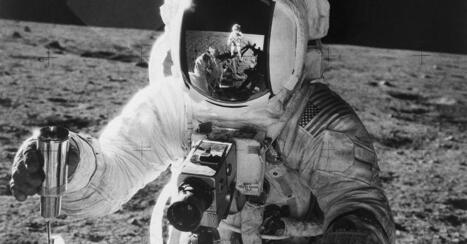
A photography expert explains how a photographer makes artistic decisions that an AI algorithm or robot can’t replicate. In early April 2026, the Artemis II mission captivated me and millions of people watching from across the world. The crew’s courage, skill and infectious wonder served as tangible proof of human persistence and technological achievement, all against the mysterious backdrop of space. People back on Earth got to witness the mission through remarkable photos of space captured by astronauts. Images created and shared by astronauts underscore how photography builds a powerful, authentic connection that goes beyond what technology alone can capture. As a photographer and the director of the Rochester Institute of Technology’s School of Photographic Arts and Sciences, I am especially drawn to how these photographs have been at the center of the public’s collective experience of this mission. In an era when image authenticity is often questioned and with the capabilities of autonomous, AI-driven imaging, NASA’s choice to train astronauts in photography has placed meaning over convenience and prioritized their human perspectives and creativity.
During the mission's loop around the moon, the crew took geological observations of places of interest on the lunar surface using their own eyes and snapping thousands of photos of the surface.
. During the 15th century, the Iberian Peninsula at the western end of the Mediterranean Sea became the focal point of European efforts to reach the riches of Asia by a sea route, rather than depend on the dangerous, costly and time-consuming ancient trade routes through the Middle East. Tiny Portugal emerged as the original leader of this effort. Lacking a coast on the Mediterranean, it was not surprising that the Portuguese sought a route to the East by rounding the tip of Africa. The most influential figure in the rise of Portuguese maritime strength was Henry the Navigator, who marshaled experts and information to found an empire. Neighboring Spain was slower to respond to the challenge due in large part to disunity. Regional kingdoms vied with one another for supremacy, but sometimes joined forces to confront the Moors (North African Muslims who had occupied portions of Spain since the early 700s). Unification took a major step forward in 1469 when Ferdinand of Aragon married Isabella of Castile; their two kingdoms were formally joined five years later, which provided Spain with the most dynamic monarchy in Europe. The Moorish presence was ended in early 1492, when the stronghold of Granada fell. Ferdinand and Isabella, known as the Catholic kings, celebrated the victory in part by expelling the Jews from Spain. This move earned high marks from the pope, but dealt a severe economic blow to the nation. The defeat of the Moors also freed the monarchs to support exploratory ventures, including those of Christopher Columbus. The four voyages of Columbus (between 1492 and 1504) served to open the door to European exploration, colonization and exploitation of the New World, although Columbus himself never set foot in North America. By the time the English began active colonization, the Spanish had already explored large portions of North America, especially in the South and Southwest.
The farthest journey in human history concluded Friday evening when NASA’s Artemis II astronauts returned to Earth after a flight around the moon. The crew’s Orion space capsule named Integrity splashed down in the Pacific Ocean off the coast of San Diego shortly after 5 pm Pacific Time, marking the end of a 10-day, more than 695,000-mile voyage beyond the far side of the moon and back. The four-person crew of Artemis II—commander Reid Wiseman, pilot Victor Glover, mission specialist Christina Koch, and mission-specialist Jeremy Hansen—traveled a greater distance from Earth than anyone has before, reaching 252,756 miles from our home planet. “We most importantly choose this moment to challenge this generation and the next to make sure this record is not long-lived,” said Canadian astronaut Hansen as the crew passed the previous record of 248,655 miles set during Apollo 13.
In 1760, a Black child around 10 years old arrived at the Swedish royal court as a “gift” to the queen. Adolf Ludvig Gustav Fredrik Albrecht Couschi, who became known as Badin (derived from the French for joker or prankster), later held titles including chamberlain, court secretary, ballet master and civil servant. He is thought to have been born into slavery between 1747 and 1750 in the former Danish colony of St Croix (now part of the US Virgin Islands), where he was “owned” by Christian Lebrecht von Pröck, who took him to Denmark. He was “received” by Gustaf de Brunck, a Swedish councillor of commerce, who later “donated” Badin to Queen Louisa Ulrika. When Badin died, he left behind diaries, a vast book collection, private letters and an autobiography offering a window into his life in 18th- and 19th-century Stockholm.
On April 6, 2026, a federal court granted the Trump Administration’s request to withdraw its appeal of a federal judge’s earlier ruling that struck down the Administration’s dismantling of the Institute of Museum and Library Services.
As media consolidates into fewer hands, there are more channels with fewer voices and community media becomes more essential. Pick up your phone and you can access more media than any generation before you. News channels, streaming services, podcasts, social media, the options never end. It looks like we have more choices than ever. But here’s what that picture hides: a small number of large corporations are making most of the decisions about what you see, hear, or read. What gets covered. How stories get told. Whose voices get heard and whose get ignored. The number of channels keeps growing. But the number of people in control keeps shrinking. This has been happening for a while, but it’s speeding up.
So far NASA’s Artemis 2 has been spectacularly successful and today, the four astronauts – as well as the Artemis 2 Orion spacecraft itself – became the most remote Wi-Fi users of all time as Artemis 2 just a few minutes ago broke Apollo 13’s 55-year old record for longest distance from Earth. If you’ve been following the live streams from aboard Moon-bound Artemis 2 over the past few days, you’ve probably discovered – like me – that the four astronauts look decidedly happy, comfy, and busy in their far-flung home. NASA says the Orion capsule is about the size of two minivans (60% larger than Apollo in terms of volume) and like any other acceptable home away from home, this Orion capsule (named ‘Integrity’ by the astronauts) comes with everyone’s favourite technology – and that’s Wi-Fi.
The first images from Artemis II reveal what the moon looks like just 7,000 km from the surface—and confirm that NASA is ready to return to Earth’s satellite.
To celebrate the 100th birthday of its most acclaimed Picasso painting – and its own 25th birthday – the Tate Modern decided to commission a team of creative curators and designers to create an innovative experience and new lens through which to view an artist who seems to define 20th-century modernism. Theatre Picasso uses a proscenium-like stage, tiered seating, and a big screen to give everyone a backstage pass to view The Three Dancers and nearly 50 other works by the master himself. It’s all on view through April 12, 2026. How do you create a fresh viewpoint on Picasso?
Artemis II remains on course for its lunar flyby as the crew shares historic photos of Earth, tests key systems for future lunar missions, and attempts to fix the toilet. On day six of its mission, Artemis II is closing in on the far side of the moon. Meanwhile, the historic journey has not been without fascinating and curious stories, from the images and videos that its four crew members have shared with the world to the inevitable unforeseen events—including a tricky toilet situation. A few hours before the crew begins its lunar flyby, here's how things are going on Artemis II.
|
Faculty at the oldest college in the country are debating whether to limit the number of top grades issued to undergraduates. Harvard faculty are debating a controversial plan to overhaul the school’s grading system. The goal: make “A”s meaningful again. For years, Harvard has been known for handing out a lot of them. In the 2024-2025 school year, more than half of all grades awarded to undergraduates were “A”s, according to a university report, up from just a quarter two decades before. Not even an “A-minus” — just pure “A”s. Tenured government professor Steven Levitsky says “A”s have practically become an expectation on campus. As a result, he’s often swayed to give higher grades for borderline cases.
The Bloemencorso Bollenstreek, one of the best-known flower parades in the Netherlands, began Saturday in Noordwijk, drawing more than 1 million spectators amid growing criticism over pesticide use in flower cultivation. The event, first held in 1947, attracts both domestic and international visitors. The parade features large floats decorated with spring flowers traveling through five villages in the Bollenstreek before arriving in Haarlem later in the evening, Omroep West reports. The floats will be displayed Sunday on the Grote Markt. Spectators praised the craftsmanship and scale of the event. “It’s beautiful, all artworks. Everyone is enthusiastic,” an 84-year-old visitor told NOS in Voorhout. Another added, "How much work they put into those floats is unbelievable. How many hours must go into that?”
This summer, America will celebrate its semiquincentennial — 250 years since the country declared its independence from Britain. This milestone will rightly honor the giants of the American founding — Washington, Jefferson, Adams, Madison, Hamilton and Franklin. But amid the tributes to these great men, we should also remember a largely forgotten figure whose early stand for liberty and the rights of the colonists helped define the American cause: James Otis. Though largely forgotten today, Otis played a pivotal role in the intellectual and legal resistance to British rule. Born in 1725 in the Massachusetts Bay Colony, Otis was a Harvard graduate and lawyer who became one of Boston’s most respected legal minds. His moment came in 1761, when he took on a case that would shape the future of American political and constitutional thought. That year, Otis represented 63 Boston merchants challenging the legality of the writs of assistance — general search warrants that allowed customs officials to search homes and businesses without specific cause. These writs were deeply unpopular, seen by many colonists as an affront to their rights as British subjects.
Higher education is especially reliant on computers and phones, but accessibility for people with disabilities has often been forgotten. A new federal rule could change that.
Over the course of the 240 years that separated Giovanni da Verrazano’s voyage of exploration in 1524 and the dismantling of New France in 1763, the French left their mark on the North American territory in a variety of ways. Through their manner of clearing and dividing the land, establishing villages and cities, building a network of roads and trails, and developing the territory with varied types of construction, they transformed and adapted environments according to their needs. Setting out from a few small colonized areas mainly found along the St. Lawrence River in the 17th century, the French journeyed through a large part of North America. On the eve of the British conquest, New France extended from Hudson Bay in the north to the mouth of the Mississippi in the south, and from Acadia in the east to the foothills of the Rockies in the west. Pushing ever further west and south to find a constant supply of fur, the French deployed a whole network of alliances with the most influential Aboriginal tribes, economic and military alliances that enabled them not only to contain the English on the Atlantic seaboard for over 150 years, but also to ensure the survival of an under-populated New France whose borders would have been difficult to defend otherwise.
Silver Dollar City will close Fire in the Hole next year, a ride many park visitors have enjoyed for years. The theme of the ride includes a vigilante group that once ruled the Taney County area of Missouri. It’s post-Civil War in the late 1800s in the Ozarks. There are no motorized vehicles, phones or email. Instead of recognizing your friends by their car, you recognize them by their horse. Greene County was the booming area in southwest Missouri, but this story takes place in a county to the south. This is the story of the Taney County Baldknobbers that played out between 1883 through 1891. If you grew up in the Ozarks, you’ve likely heard of the Baldknobbers — maybe you’re even related to one. Trish Trimble is the managing director of the White River Valley Historical Society in Forsyth, the Taney County seat. Her great-great-grandfather was an Anti-Baldknobber, and her great-great-uncle was a Baldknobber who later became an Anti-Baldknobber. Trimble explains Taney County Baldknobbers "were the professional men. They were lawyers. They were store clerks. They were mostly Union. They were mostly Republican.” Meaning — they believed in small government. According to Trimble, there were three known groups of Baldknobbers in Christian County, Douglas County and in Taney County — where the original group began. Trimble says the black-and-white horned masks that may be familiar to many local residents were worn only by the Christian County group.
In Boston’s vibrant Egleston Square neighborhood sits the Charles J. Beard II Media Center, home to Boston’s community radio station WBCA 102.9 FM. The station was created as a partnership between local nonprofit Boston Neighborhood Network Media, or BNN, and the City of Boston back in 2016. At the time, the then-Mayor of Boston Marty Walsh praised the collaboration, extending his thanks to BNN “for their partnership with the city to create another platform for civic engagement,” in a 2015 press release. BNN has gained independence over the years, but its partnership with the City continues to ground their mission to be a voice for the community, through their work which focuses on enhancing the unique culture of Boston neighborhoods that often go unnoticed. WBCA broadcasts daily from 6 p.m. to 2 a.m., featuring a diverse mix of local news, current events, talk shows and music. Segments range from discussions on education and technology to multi-language programming and sports.
A centuries-old mystery is solved as archaeologists uncover the long-lost Alexandria on the Tigris, reshaping our understanding of ancient trade routes. Archaeologists have confirmed the rediscovery of Alexandria on the Tigris, an influential city founded by Alexander the Great in 324 BC. This legendary port, long thought to be lost to time, was unearthed in southern Iraq, revealing crucial details about the ancient world’s interconnectedness. The discovery, outlined in the study Economies of the Edge, provides compelling evidence of how this strategic city bridged maritime and riverine trade routes, and serves as a powerful reminder of the complexities of ancient economies.
How can community media centers serve as laboratories for collaborative journalism? This group worked with community media center leaders nationwide, developing case studies and narratives showcasing these centers as collaborative journalism laboratories, emphasizing their role in coalition and trust building. CMCs are communication hubs primarily responsible for distributing civic news, governmental information, and public interest programs via local cable television channels. CMCs also digitally stream their community programs via locally controlled websites and third-party platforms.
The Artemis II team has experienced tech malfunctions, views like no other and moments of intense emotion, all in under 10 days. To find out all about the mission, Madeleine Finlay hears from Guardian science editor Ian Sample.
The explosion of online gambling and sports betting, as well as the advertising behind it, is attracting a growing number of young people, most of them boys.
The moon is not just a barren rock orbiting the Earth. The Artemis missions could answer the great unknowns that the satellite holds. For half a century humans thought they understood the moon: a static, airless, waterless landscape without many mysteries to solve. But orbiting instruments and robotic missions have proven otherwise. The most studied satellite in the solar system is more complex than it seems, and many fundamental questions remain open. NASA is about to return to the moon with the Artemis program. While Artemis II and III will be missions to orbit the satellite, Artemis IV will put astronauts on the surface for the first time since the Apollo era. The ambitious plan is to lay the groundwork for a sustained presence that will generate a steady stream of data and samples.
|