Your new post is loading...
WASHINGTON — A federal court order last month to effectively axe a Biden-era student loan repayment plan capped years of chaos for more than 7 million student borrowers enrolled in the program. The Saving on a Valuable Education, or SAVE, plan marked a cornerstone of the Joe Biden administration’s loan forgiveness efforts but became mired in legal challenges from several GOP-led states. On July 1, federal loan servicers will start sending notices to borrowers instructing them to enter into a legal repayment plan within 90 days, the department said. Borrowers who do not switch within the 90-day window outlined by their servicer will be automatically placed into a new plan. The agency issued guidance to borrowers in late March instructing them of the timeline and urging people to switch into a new plan. Here’s what borrowers need to know as they navigate next steps:
"CEO said a thing!" journalism involves parroting the claims of a business leader or executive with absolutely no context, correction, or challenge whatsoever, no matter how elaborate the delusion.
Louisiana has boasted a rich classical music traditional since early European exploration and settlement. Louisiana justifiably boasts of a rich classical music tradition that dates from the earliest days of European settlement, and music education was always an integral part of the state’s cultural patrimony. While little actual documentation and precious little music from the colonial period survives, it is evident that music was an integral part of eighteenth-century society in both rural and urban areas. Documentation and ongoing scholarly activities clearly indicate that the classical musical tradition was exceptional in the nineteenth century. Classical music was also a unifying element of the many ethnic groups that settled Louisiana. By the twentieth century, the strength and diversity of classical music were clearly manifested in the number of organizations that sponsored performances, offered music education, and increased documentary studies on the history of classical music in the state. Classical Music in Colonial Louisiana When Hernando de Soto and his fellow Spanish explorers traveled the Mississippi River Valley in 1541, it is reasonably safe to presume they followed the practice of singing the Salve Regina on Saturdays. Thus, not only were they the first Europeans in the region, but they also first introduced European music to what would later become known as the “vast country of Louisiana.” The more formal introduction of European music tradition into the valley began through the two crusading arms of empire in the early eighteenth century: the military and the Catholic Church.
Born in New Orleans on March 30, 1888, composer Camille Nickerson was a highly accomplished musician and scholar. Composer Camille Nickerson was a highly accomplished musician and academic especially noted for collecting and arranging Creole folksongs. Billed as “The Louisiana Lady,” Nickerson performed and lectured about Creole music while costumed in nineteenth-century Creole style. She toured in the United States and Europe from 1941 to 1960, and the US State Department sponsored her 1954 tour of France. Nickerson was born on March 30, 1888, in New Orleans. In her preteen years she joined the Nickerson Ladies’ Orchestra (the first women’s orchestra in New Orleans, directed by her father), as its pianist. In addition to leading the orchestra, William Joseph Nickerson taught music at Southern University in New Orleans, which at the time offered elementary grades through high school as well as some college coursework. Some of Mr. Nickerson’s classically trained students figured prominently in the early days of jazz: Jelly Roll Morton, Emma Barrett, Manuel Manetta, and Henry Kimball. Manetta later recalled Camille as the “greatest pianist they had around here.”
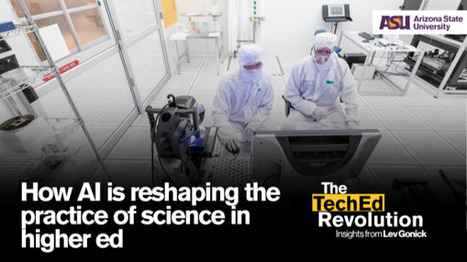
This is the 14th installment of The TechEd Revolution. AI is often described as a tool for answering questions. But in scientific work, answering questions is only part of the challenge. The deeper work lies in how questions are framed, how methods are designed, and how knowledge is produced. A new class of AI-enabled environments is beginning to reshape that process. This shift is already taking shape in how students and faculty engage in research.
One of the purported advantages of self-driving car tech is that every car can learn from one vehicle’s mistakes. Here’s how Waymo puts it on its website: “The Waymo Driver learns from the collective experiences gathered across our fleet, including previous hardware generations.” But in Austin, Waymo’s vehicles struggled for months to learn how to stop for school buses as drivers picked up and dropped off children. An official with the Austin Independent School District (AISD) alleged that the vehicles had, in at least 19 instances, “illegally and dangerously” passed the district’s school buses while their red lights were flashing and their stop arms were extended rather than coming to complete stops, as the law requires. In early December, Waymo even issued a federal recall related to the incidents, acknowledging at least 12 of them to federal regulators at the National Highway Traffic Safety Administration (NHTSA), which oversees road safety. According to federal filings, engineers with the self-driving vehicle company had “developed software changes to address the behavior” weeks before.
Florida’s public university leaders are consulting in-house and private-sector artificial intelligence experts to help formulate the state system’s approach to the technology. In a discussion at the Florida Board of Governor’s meeting Wednesday at University of West Florida in Pensacola, the board queried a Google expert and officials from Florida International University, University of South Florida, and University of Florida. The state is compiling a report about recommended AI use across the system in the “near-term,” governor Ed Haddock said. Haddock chairs the newly formed Task Force on Artificial Intelligence and Cybersecurity. “A lot of our universities have done a great job of infusing AI into the curriculum across various majors and courses so that we can teach students how to use AI thoughtfully in their work,” Board of Governors Chair Alan Levine said. The system created the task force because of “all the potential risks that do exist for us out there with the increased use of AI, but also the opportunities,” Levine said.
US Sen. Bernie Sanders on Friday rejected First Lady Melania Trump’s vision of a near-future in which artificial intelligence-powered humanoid robots do the work of human school teachers, arguing that society should instead do better by its human educators. "We should attract the best and brightest in our country to become teachers and pay them the decent wages that they deserve" Sanders said. The wife of President Donald Trump entered Wednesday’s gathering of the Global First Ladies Alliance accompanied by Figure 03, an AI-powered “general purpose humanoid robot” developed by the Sunnyvale, California-based company Figure.
The Higgins Gallery at the Cape Cod Community College knits a collaboration between art history and museum students to capture a pivotal moment in art history with a show featuring the work of one of the pioneering abstract expressionist painter, George McNeil. A unique loan from a personal collection connects the dots between abstract art, Provincetown, and museum studies students.
WASHINGTON, March 25, 2026 – The Fiber Broadband Association said fiber infrastructure is critical to closing the digital divide in Tribal communities, where connectivity gaps remain significantly higher than the national average. A new report says fiber networks can support economic growth, healthcare access, and long-term resilience in Tribal communities. In a new report titled How Fiber Broadband Can Close the Digital Divide in Tribal Communities, the group said roughly 24 percent of residents on Tribal lands lack reliable internet access, compared to about 7 percent nationwide.
Recently, seniors from the Lecanto High School (LHS) International Baccalaureate (IB) program had the opportunity to experience something few classrooms can replicate: a firsthand look at the future of space exploration. Through a special trip to NASA and the Kennedy Space Center, these students stepped beyond textbooks into a world where science, innovation and ambition converge. Participants represented both pathways within the IB program, the Diploma Programme (DP) and the Career-related Programme (CP), reflecting the breadth of opportunity available to students in Citrus County. While each pathway offers a unique approach to learning, both share a commitment to critical thinking, global awareness and real-world application. This trip brought those values to life. During their visit, students explored the Kennedy Space Center Visitor Complex, but the experience went far beyond a typical tour. They were given up-close views of launch infrastructure supporting the upcoming Artemis missions.
A gathering raised a bigger question: what if we stopped trying to save local news and started building something better for the future of community media?
Imagine a newspaper publisher announcing it will no longer allow libraries to keep copies of its paper. That’s effectively what’s begun happening online in the last few months. The Internet Archive—the world’s largest digital library—has preserved newspapers since it went online in the mid-1990s. The Archive’s mission is to preserve the web and make it accessible to the public. To that end, the organization operates the Wayback Machine, which now contains more than one trillion archived web pages and is used daily by journalists, researchers, and courts. But in recent months The New York Times began blocking the Archive from crawling its website, using technical measures that go beyond the web’s traditional robots.txt rules. That risks cutting off a record that historians and journalists have relied on for decades. Other newspapers, including The Guardian, seem to be following suit. For nearly three decades, historians, journalists, and the public have relied on the Internet Archive to preserve news sites as they appeared online. Those archived pages are often the only reliable record of how stories were originally published. In many cases, articles get edited, changed, or removed—sometimes openly, sometimes not. The Internet Archive often becomes the only source for seeing those changes. When major publishers block the Archive’s crawlers, that historical record starts to disappear.
|
School choice advocates calling the federal voucher program “free money” may be underestimating its political costs. In September 2023, Republican Florida Governor Ron DeSantis stunned school choice advocates when he kicked out four private schools from the state’s school voucher program. The schools’ offense, according to the state’s announcement, was their “direct ties to the Chinese Communist Party,” which were seen as “an imminent threat to the health, safety, and welfare of these school’s [sic] students and the public.” The alleged “ties” were not explained in the announcement.
What was surprising about the announcement was that Florida has long been regarded as being “number one in education freedom” by school choice advocates, and its largely unregulated voucher market, along with those of other states, has been described as the “wild west of school voucher expansions.”
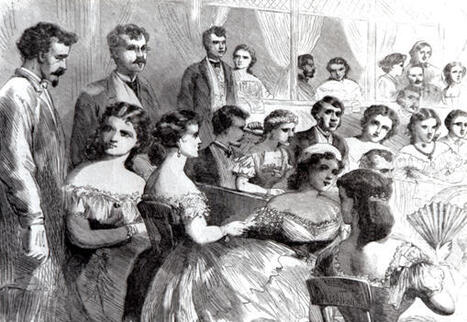
New Orleans has an almost unbroken tradition of opera that began in 1796. Indeed, the city is the birthplace of opera in the United States. The first documented ballet was presented three years later. Especially during the nineteenth century, New Orleans was also a leader in the development of theaters, boasting some of the largest and most sophisticated in the country. During the twentieth century, world wars, economic depressions, and natural disasters failed to dampen the popularity of opera and ballet in New Orleans. The state as a whole continued to develop and contribute new talent to the national and international stage. Opera in the Nineteenth-Century Louisiana The first known opera in New Orleans, André Ernest Grétry’s Sylvain, was presented on May 22, 1796, at the Théâtre St. Pierre, on St. Peter Street between Royal and Bourbon streets. Since that time, with only a few exceptions, New Orleans has had a resident company for an established opera season.
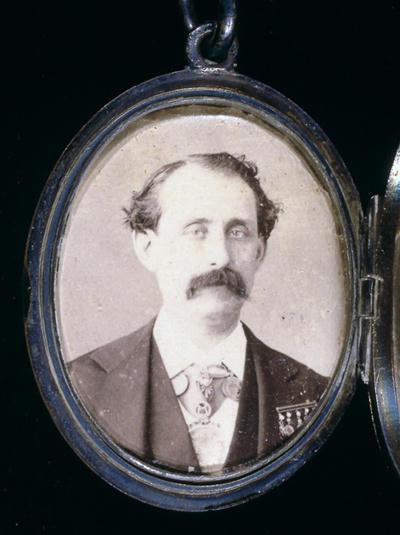
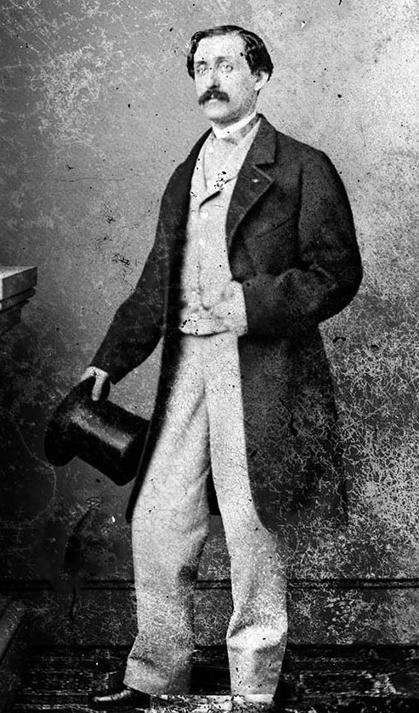
Often cited as the first American composer to gain international recognition, Louis Moreau Gottschalk wrote more than three hundred compositions and earned acclaim as a piano virtuoso. Though he spent much of his career outside the United States, renowned nineteenth-century composer and pianist Louis Gottschalk was born in New Orleans, and many of his compositions were inspired by the multicultural milieu of the city. Often cited as the first American composer to gain international recognition, Gottschalk wrote more than three hundred compositions and earned acclaim as a piano virtuoso. He uniquely incorporated diverse musical traditions—from African American to Caribbean, to South American—in his compositions. Early Life and Education Louis Moreau Gottschalk was born May 8, 1829, in New Orleans to Edward Gottschalk, a businessman of Jewish descent from London, and Aimée Bruslé, a Louisiana native of St. Dominguan descent. By 1841 it was clear that the precocious young pianist had learned all he could in New Orleans and should pursue studies in Paris. Gottschalk’s departure for Europe marked the end of his residency in New Orleans, as he would visit the city only a few weeks at a time later in life. Yet, as biographer Frederick Starr points out, Gottschalk “felt himself to be perpetually in exile from his New Orleans home, an uprooted wanderer in the best Romantic tradition.”
MinnPost reports on a mash up of students involved with civic and technology, specifically students speaking to the legislature about media literacy… March 2, [student, Mary] Jensen spoke to lawmakers in support of a proposal to create a “Minnesota Civic Seal,” a graduation credential for students who receive civics instruction in five areas, including media literacy. Students will be expected to complete a community-centered project and reflect on its “measurable civic impact.” Before she was familiarized with the seal, Jensen experienced the intersection of technology and civics firsthand.
The image of farmers clad in flannel shirts while livestock pull plows through the fields may still be foremost on the minds of individuals asked to imagine farm life. But such images may no longer reflect an industry increasingly governed by advanced technology. Even small-scale family farms have recognized the advantages of embracing technology to help make their operations more efficient and successful. Manual plows and tractors largely have been replaced by fleets of autonomous machines and precision farming technology. Experts agree that the evolution of modern farming is a case study in the application of Science, Technology, Engineering, and Mathematics. STEM is helping to address the problem of global food security and widespread climate change. U.S. News & World Report says 27 percent of new high-skills jobs in agriculture will require a STEM education. There are many ways STEM is utilized within the agricultural sector.
As a child, Nora told me, she was immediately mislabeled as a special education student simply because she hadn’t yet learned English—a mistake her parents, trusting the system, didn’t feel comfortable questioning. Nora was classified as cognitively impaired, a label that followed her for years and placed her into separate classrooms, where she often felt embarrassed, isolated, and confused. These days, Nora makes sandwiches in a deli, but she often wonders how her life might have changed if her first language, Arabic, had been treated as an asset rather than a disability. I met Nora when I worked with multilingual learners in Detroit and her story is never far from my mind every time I enter my classroom. I don’t want any of my students to be limited by a label. Stories like this play out across Michigan all the time.
After axing a Biden-era student loan repayment program, the Trump administration is threatening to kick its millions of mostly low-income beneficiaries onto the government’s most expensive plan unless they switch to a new one quickly. The Washington Post reported on Friday that the Department of Education was beginning to email the more than 7 million people enrolled in the Saving on a Valuable Education (SAVE) program, telling them they needed to change their plan within the next 90 days.
27 March 2026 – YARMOUTH, MA – A collaboration between the Brazilian Resource Center, AT&T, and Computers4People delivered 100 laptops at no cost to those who need them. Who received laptop computers? The three organizations worked together to deliver refurbished laptops to 100 people on Cape Cod. More than 300 applied and completed applications. Those who received the computer range in age from elementary schoolers to senior citizens.
The Republicans’ goal for both the existing law and the pending new one is to kill public-sector unions, which are the linchpin of virtually every Democratic campaign in the state.
Hotspot: Christopher Mitchell on Five Years of Demystifying Broadband Services for Tribal Nations Hotspot is a series of articles drawn from interviews with people across the digital equity and inclusion ecosystem. For this issue, we sat down with Christopher Mitchell, co-founder of Tribal Broadband Bootcamp, to talk about what it is, how it started, and where it's going.
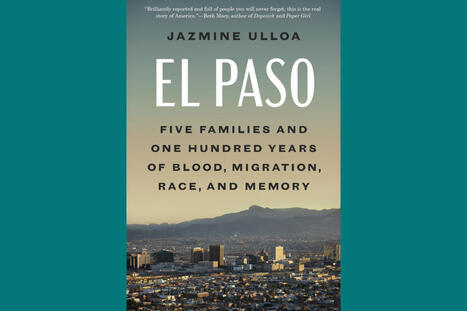
I will never forget Aug. 3, 2019, when a self-proclaimed white supremacist drove 650 miles from his home north of Dallas to a Walmart in El Paso and opened fire, killing 23 people, most of them Latino. He had written a manifesto decrying what he called the “Hispanic invasion of Texas.” What happened in El Paso seven years ago is still with all of us, yet the United States has done little to contextualize this specific tragedy — ignoring El Paso’s history or understanding of the borderlands, or any real framing for why that massacre happened in the first place. Jazmine Ulloa knew. She is a national reporter at the New York Times and a proud fronteriza. Her new book, El Paso: Five Families and One Hundred Years of Blood, Migration, Race, and Memory came out earlier this month. In it, she explains why El Paso has always been at the center of this country’s foundation and why what happened in 2019 was not an isolated act of madness but the product of a very long and very American history.
Last week, Stephen Miller—Don Trump’s wartime consigliere—met with Texas’s Republican legislators and asked them why they hadn’t passed a bill that banned undocumented children from public schools. At first glance, the answer to that question might be that in 1982, the Supreme Court ruled in Plyler v. Doe that states were legally required to pay for the elementary school education of children regardless of their immigration status. But, as Tom Oliverson, the chairman of the Texas House Republican Caucus, told The New York Times yesterday, “There’s a lot of people that believe that that ruling has some pretty faulty logic associated with it.”
|