Digital Literacy in the Library
47.1K views | +1 today
Your new post is loading...
Scooped by Mary Reilley Clark
November 7, 2016 11:49 AM
Scoop.it!

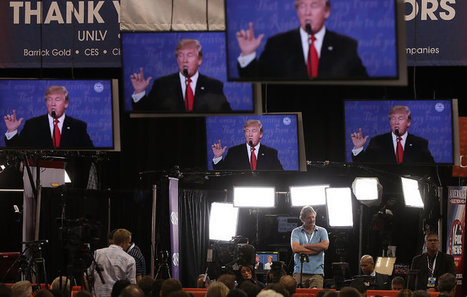
Media’s Next Challenge: Overcoming the Threat of Fake News

Media’s Next Challenge: Overcoming the Threat of Fake News | Digital Literacy in the Library | Scoop.it

Jim Rutenberg writes: "It could be Pollyannaish to think so, but maybe this year’s explosion in fake news will serve to raise the value of real news. If so, it will be great journalism that saves journalism.


“People will ultimately gravitate toward sources of information that are truly reliable, and have an allegiance to telling the truth,” Mr. Baron said. “People will pay for that because they’ll realize they’ll need to have that in our society.”

Mary Reilley Clark's insight:

I hope Mr. Baron's optimism in this quote is warranted. I've seen far too many  people sharing information about the election from what I consider biased sources. If we continue to read only what supports our political beliefs, regardless of whether the article is based on facts, we will get the government we deserve. 

No comment yet.
Scooped by Mary Reilley Clark
October 18, 2016 11:34 PM
Scoop.it!

Millennials Fall for More Tech Scams Than Their Grandparents

Millennials Fall for More Tech Scams Than Their Grandparents | Digital Literacy in the Library | Scoop.it

Marshall Honorof writes: "Even with technology, it seems that age may bring wisdom after all. A recent study suggests that old folks aren't falling for tech support scams all that often — but their grandchildren are. Millennials, far from the inherently tech-savvy caricatures as portrayed by the media, are actually somewhat gullible when it comes to calls, e-mails or popup ads claiming to offer tech support, but delivering only scams.

Mary Reilley Clark's insight:

This would be a great article to share with students! Ask their opinions first, as I'd bet they'd be surprised by the results of the study.

Martha Bongiorno's curator insight, October 19, 2016 1:04 PM
Fascinating for Digital Citizenship Week!
Scooped by Mary Reilley Clark
October 6, 2016 3:31 PM
Scoop.it!

Digital Literacy Tips: Strategies for Online Fact Checking

Digital Literacy Tips: Strategies for Online Fact Checking | Digital Literacy in the Library | Scoop.it

Wes Fryer: "Has someone you know shared an article link via email, Facebook, or another social media website that seems too outlandish to be true? Before liking, favoriting, or re-sharing the article link, did you take a few moments to fact-check it by searching online for other sources which either corroborate or refute the article’s claims? If so, congratulations! Your actions in fact-checking links suggest you have some good digital literacy skills. In this post we’ll highlight several useful, online fact-checking strategies and discuss a recent article which can be used with students to highlight this important digital literacy skill."

Mary Reilley Clark's insight:

Wes poses several good questions for a student discussion on digital literacy. I've used the DHMO and the Guinea Worm Foundation sites with students. This year, I may lead off this discussion with a sober introduction of the new Staten Island Ferry Octopus Disaster Museum.

No comment yet.
Scooped by Mary Reilley Clark
September 3, 2016 4:54 PM
Scoop.it!

8 Must-Try Creative Image Maker Tools for Class Projects

8 Must-Try Creative Image Maker Tools for Class Projects | Digital Literacy in the Library | Scoop.it
Try these 8 cool creative image maker tools on for size and have students incorporate them into dozens of PBL lessons for some extra creative visual punch.
Mary Reilley Clark's insight:

I've already played with three of these for orientation presentations. I'm not a design guru by any means, but I do want students to understand the power of good visuals in their work. I would also add Adobe Spark and PicMonkey to the list.

Sue Alexander's curator insight, September 5, 2016 2:19 PM
Oh yeah, new tools! I love Global Digital Citizen's resources.
Scooped by Mary Reilley Clark
August 10, 2016 7:22 PM
Scoop.it!

For Teenage Girls, Swimsuit Season Never Ends

For Teenage Girls, Swimsuit Season Never Ends | Digital Literacy in the Library | Scoop.it
When young women are prompted to reflect on their physical appearance, they lose intellectual strength, research shows.
Mary Reilley Clark's insight:
This certainly would make an interesting discussion. I'd love to hear from both boys and girls about this study.
No comment yet.
Scooped by Mary Reilley Clark
August 3, 2016 10:59 AM
Scoop.it!

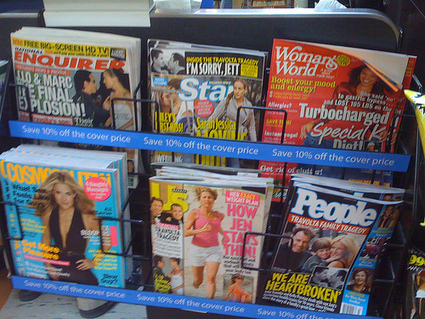
Can mythbusters like Snopes.com keep up in a post-truth era?

Can mythbusters like Snopes.com keep up in a post-truth era? | Digital Literacy in the Library | Scoop.it
The fact-checking website was launched to correct urban legends and false rumours. Now, with even presidential candidates repeating fake stories from the web, its co-founder David Mikkelson says ‘the bilge is rising faster than you can pump’
Mary Reilley Clark's insight:

I recommend Snopes to teachers and students a lot. (NB: Be aware that some of the queries on the site are not school appropriate, so always test  before you open the site on your screen for all to see!) 

GwynethJones's curator insight, August 3, 2016 11:29 AM

Share with your social studies peeps!

Scooped by Mary Reilley Clark
July 19, 2016 2:39 PM
Scoop.it!

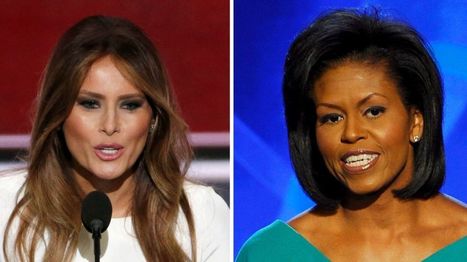
Teachers are thanking Melania Trump

Teachers are thanking Melania Trump | Digital Literacy in the Library | Scoop.it
Teachers and academics discuss plagiarism following Melania Trump's speech
Mary Reilley Clark's insight:
A teachable moment indeed!
Sandra Markus's curator insight, August 12, 2016 10:16 AM

A great example of plagiarism for Digital Literacy curriculum

Scooped by Mary Reilley Clark
June 17, 2016 11:33 AM
Scoop.it!

Why SearchResearch skills matter in education

Why SearchResearch skills matter in education | Digital Literacy in the Library | Scoop.it

Dan Russell writes: "There’s a difference between knowing that something exists, being able to find it rapidly with a moment’s worth of research, and then being able to pull together multiple sources of information into a coherent analysis. 

In particular, the research skills gap is growing.  Students (and teachers, and for that matter, employees) who are able to do rapid and accurate research on a topic have a substantial advantage in getting things done and deepening their understanding.  

What’s more, there’s an unexpected second-order effect: those that have developed and sharpened their research skills can grow those research skills over time, increasingly widening the gap from their peers who haven’t mastered that self-teaching nuance. Having research skills isn’t just an optional part of your education—they’re essential.  Especially once you know how to do the research to upgrade your research skills." 

Mary Reilley Clark's insight:

I learn so much reading Dan's blog! I'll be sharing this with teachers and students. Being able to Google a fact and being able to dig deeper to find the best resources and increase understanding is like the difference between knowing a tomato is a fruit, and knowing not to put it in a fruit salad. (Or better yet, knowing that in the United States we don't do that. In South Korea, cherry tomatoes in bingsu are a real treat!)

No comment yet.
Rescooped by Mary Reilley Clark from Daring Ed Tech
May 27, 2016 1:07 PM
Scoop.it!

Digital Citizenship: Two Perspectives on Using Social Media in Education

Digital Citizenship: Two Perspectives on Using Social Media in Education | Digital Literacy in the Library | Scoop.it
Social media plays a huge role in our lives & the lives of our students. We asked two social media rockstars for their advice on social media in education. 

Via GwynethJones
Mary Reilley Clark's insight:

Some great  pointers in here from Gwyneth and Tyler! Just to prove the point, I met Gwyneth via Twitter and now consider her one of my go-to gurus on anything middle school library related. So get out there on social media and find your tribe!

GwynethJones's curator insight, May 27, 2016 7:55 AM

My take on this topic...along with the admirable Tyler Tarver.


Was honored, always, but I feel like  I used the term "sharing cool things" WAY too many times! LOL

Scooped by Mary Reilley Clark
March 12, 2016 5:00 PM
Scoop.it!

Knowing the Difference Between Digital Skills and Digital Literacies, and Teaching Both

Knowing the Difference Between Digital Skills and Digital Literacies, and Teaching Both | Digital Literacy in the Library | Scoop.it

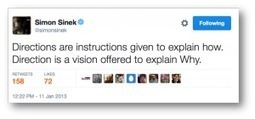
Maha Bali writes: "We often hear people talk about the importance of digital knowledge for 21st-century learners. Unfortunately, many focus on skills rather than literacies. Digital skills focus on what and how. Digital literacy focuses on why, when, who, and for whom."

Mary Reilley Clark's insight:

Maha Bali's article is worth sharing widely with anyone who needs to be nudged ever so gently into the 21st century of education. (We're 16% through it, folks!) Bali addresses the need to teach about digital skills and literacy in an authentic context, not a vacuum, and gives many concrete examples for doing that. 


I recently did a lesson on blogging with a 6th grade class. We looked at several tween and teen blogs, then reviewed good digital citizenship practices emphasizing student safety and copyright. Finally, each student created a blog on Blogger. Will they make mistakes? Probably. (When I specifically told them to keep it school appropriate, with nothing in the blog they wouldn't be allowed to do at school, and one student immediately started searching for "Call of Duty 3" images!) Will we all learn something from this? Absolutely. 

Cristin Kennedy's curator insight, March 26, 2016 12:07 PM

Maha Bali's article is worth sharing widely with anyone who needs to be nudged ever so gently into the 21st century of education. (We're 16% through it, folks!) Bali addresses the need to teach about digital skills and literacy in an authentic context, not a vacuum, and gives many concrete examples for doing that. 


I recently did a lesson on blogging with a 6th grade class. We looked at several tween and teen blogs, then reviewed good digital citizenship practices emphasizing student safety and copyright. Finally, each student created a blog on Blogger. Will they make mistakes? Probably. (When I specifically told them to keep it school appropriate, with nothing in the blog they wouldn't be allowed to do at school, and one student immediately started searching for "Call of Duty 3" images!) Will we all learn something from this? Absolutely. 

Natasha Georgiou's curator insight, March 27, 2016 12:00 AM

Maha Bali's article is worth sharing widely with anyone who needs to be nudged ever so gently into the 21st century of education. (We're 16% through it, folks!) Bali addresses the need to teach about digital skills and literacy in an authentic context, not a vacuum, and gives many concrete examples for doing that. 


I recently did a lesson on blogging with a 6th grade class. We looked at several tween and teen blogs, then reviewed good digital citizenship practices emphasizing student safety and copyright. Finally, each student created a blog on Blogger. Will they make mistakes? Probably. (When I specifically told them to keep it school appropriate, with nothing in the blog they wouldn't be allowed to do at school, and one student immediately started searching for "Call of Duty 3" images!) Will we all learn something from this? Absolutely. 

Martha Bongiorno's curator insight, October 19, 2016 1:08 PM
Maha Bali's article is worth sharing widely with anyone who needs to be nudged ever so gently into the 21st century of education. (We're 16% through it, folks!) Bali addresses the need to teach about digital skills and literacy in an authentic context, not a vacuum, and gives many concrete examples for doing that.
Scooped by Mary Reilley Clark
February 23, 2016 1:53 PM
Scoop.it!

Bridging a Digital Divide That Leaves Schoolchildren Behind

Bridging a Digital Divide That Leaves Schoolchildren Behind | Digital Literacy in the Library | Scoop.it
The Federal Communications Commission is expected to vote soon on a plan that could add subsidies for broadband Internet services in low-income homes.
Mary Reilley Clark's insight:

Students taking a longer bus route home so they can access the Internet? There's got to be a better solution than free wifi on buses! How can we address digital literacy without equitable access?

No comment yet.
Scooped by Mary Reilley Clark
December 14, 2015 11:51 AM
Scoop.it!

Markers of Quality: The Role of Librarians in Everyday Life Information Literacy

Markers of Quality: The Role of Librarians in Everyday Life Information Literacy | Digital Literacy in the Library | Scoop.it

Leslie Stebbins writes: "This all started when my teenage son reported that Adam Sandler has Ebola. He saw it trending on Facebook. I sighed inwardly and asked if he had looked at the source of the information. Being the son of a librarian he quickly said: “Yes! CNN.COM.”

Mary Reilley Clark's insight:

Lots of great things here to share (and links to explore.) I will be using Stebbins' descriptions of many Google searches as "clever marketing drivel masquerading as information." I can't wait to read her book during winter break!


No comment yet.
Scooped by Mary Reilley Clark
October 7, 2015 5:20 PM
Scoop.it!

Resources: Plagiarism and Academic Integrity

Resources: Plagiarism and Academic Integrity | Digital Literacy in the Library | Scoop.it

Trip Gabriel writes: "Professors used to deal with plagiarism by admonishing students to give credit to others and to follow the style guide for citations, and pretty much left it at that.

But [recent] cases…suggest that many students simply do not grasp that using words they did not write is a serious misdeed."

Mary Reilley Clark's insight:

There are lots of great resources here for discussions about plagiarism. We'll be adding an academic integrity statement to all of our research papers this year. 

Leslie Haas's curator insight, March 13, 2016 12:48 AM

There are lots of great resources here for discussions about plagiarism. We'll be adding an academic integrity statement to all of our research papers this year. 

Nataliia Viatkina/Наталія Вяткіна's curator insight, March 14, 2016 10:15 AM

There are lots of great resources here for discussions about plagiarism. We'll be adding an academic integrity statement to all of our research papers this year. 

Scooped by Mary Reilley Clark
November 2, 2016 2:52 PM
Scoop.it!

How the Internet Is Loosening Our Grip on the Truth

How the Internet Is Loosening Our Grip on the Truth | Digital Literacy in the Library | Scoop.it

Farhad Manjoo writes: "A wider variety of news sources was supposed to be the bulwark of a rational age — “the marketplace of ideas,” the boosters called it.

But that’s not how any of this works. Psychologists and other social scientists have repeatedly shown that when confronted with diverse information choices, people rarely act like rational, civic-minded automatons. Instead, we are roiled by preconceptions and biases, and we usually do what feels easiest — we gorge on information that confirms our ideas, and we shun what does not."

Mary Reilley Clark's insight:

What a great article to open a media literacy conversation! Have lies become institutionalized? Where do students seek information? Do they know how to check sources? 


When I look at my own Facebook feed, I am amazed at how many adults repost or share articles that are hoaxes. Just today on LM_NET, someone asked about an article that mentioned a dubious news site. I can't find any verifiable information about the site itself or who is behind it, and I feel I have decent research skills. How do we expect our students to keep up with a flow of misinformation? 

No comment yet.
Scooped by Mary Reilley Clark
October 18, 2016 4:16 PM
Scoop.it!

Who backs the site? Dan Russell on Digital Literacy

Who backs the site? Dan Russell on Digital Literacy | Digital Literacy in the Library | Scoop.it

Dan Russell writes: "An important skill to have...

... is that of knowing how to figure out who's posting this article.  

In other words, a really important skill is that of being able to figure out who's behind an article.  

Although this is something we should have learned in elementary school, it's a continuous surprise to me how often searchers DO NOT do this! "

Mary Reilley Clark's insight:

I think this is such a critical skill--we could give hundreds of examples of the lack of this most basic vetting of sites from the current presidential election! Our 6th graders recently looked at Stormfront to determine if it was a valid site for research on Martin Luther King, and many had a difficult time with the steps required to find out who was behind the site. Sharing Dan's examples would demonstrate to students there isn't a one-click answer to these questions, even for experts. 


I can't wait to share the EPA example with 8th graders when we do our social media and environmental issues project. I used to provide vetted sites for students to use, but this time, I'll give them a list of sites and make them do an evaluation to find the most informative and credible sites.  

No comment yet.
Scooped by Mary Reilley Clark
September 12, 2016 9:10 PM
Scoop.it!

These students didn’t know Bin Laden was dead. How did we get so clueless about news?

These students didn’t know Bin Laden was dead. How did we get so clueless about news? | Digital Literacy in the Library | Scoop.it

Margaret Sullivan writes: "Every bit as dead as bin Laden, it sometimes seems, is many American citizens’ basic knowledge of news. Young people, especially, get their news in isolated bursts on their phones (the experts call this disaggregation). That makes it harder than ever to tell established truth from opinion, propaganda or pure fiction.

In this fact-challenged presidential campaign, these skills are needed more than ever."

Mary Reilley Clark's insight:

So much good stuff here! Not only Sullivan's insights--be sure to check out Media Breaker Studios from The Lamp. You can create units for students, using videos and links to articles, then have students "break" the video commercials or create their own. Having students analyze a wide range of sources to determine which are reliable is a large part of digital literacy.


I can see many uses for the Media Breaker tool. Last year I did a project with a 7th grade science teacher, in which students chose topics and created persuasive presentations. We discussed this article from The Smithsonian, and students worked collaboratively to determine which emotion they wanted to evoke from viewers. (Those against fracking chose rage, while the coral reef protection and endangered species groups tried to evoke awe.)  


Using the Media Breakers studio allows for a one stop set-up for teachers. Students should enjoy exploring the Breaker Gallery of commercials and videos, too!

No comment yet.
Scooped by Mary Reilley Clark
August 12, 2016 10:42 AM
Scoop.it!

A Texting Truth Often Forgotten in Politics: Your Phone Remembers Everything

A Texting Truth Often Forgotten in Politics: Your Phone Remembers Everything | Digital Literacy in the Library | Scoop.it

Alan Feuer writes: "Douglas Rushkoff, a media theorist and the author most recently of “Present Shock,” said that, unlike in earlier eras when communications vanished, a fundamental aspect of the digital-media age was that every word a person typed on a cellphone or computer was permanently stored somewhere in a retrievable file.


“Everything we do is being remembered,” Mr. Rushkoff said. “Everything we do may as well be etched on the side of the Parthenon.”

Mary Reilley Clark's insight:

I will be loosely paraphrasing attorney Jim Thomas from now on: "You can dance like no one is watching, but you better not text (or Snapchat, Instagram, etc.) unless you want the principal to see it."

No comment yet.
Rescooped by Mary Reilley Clark from Middle School Media Lit and Critical Thinking
August 4, 2016 4:01 PM
Scoop.it!

Moving Students From Digital Citizenship To Digital Leadership

Moving Students From Digital Citizenship To Digital Leadership | Digital Literacy in the Library | Scoop.it

Terry Heick writes: "... Sylvia Duckworth recently got together with Jennifer Casa-Todd (you can also check out her blog) to illustrate an interesting twist on this idea–moving from mere “citizenship” to inspired leadership in digital spaces, using two definitions from George Couros (who has better hair than Terry Heick, so we get it).


  • Digital Citizenship: Using the internet and social media in a responsible and ethical way
  • Digital Leadership: Using the internet and social media to improve the lives, well-being, and circumstances of others.   

The idea behind the shift? A kind of empathy–moving beyond see one’s self, and moving towards seeing one’s self in the physical and digital company of others. As digital technology and social media become more deeply embedded in our lives, and more nuanced in their function, this is a shift whose time has come. The question becomes, then, what’s the next evolution of this idea?"


Via Rod Murray
Mary Reilley Clark's insight:

I spend time teaching 6th graders about digital citizenship. This switch in perspective would work for 7th and 8th graders!

Rod Murray's curator insight, December 14, 2015 10:05 AM

Food for the growth mindset thought!

Scooped by Mary Reilley Clark
July 27, 2016 4:43 PM
Scoop.it!

The ‘Ice Bucket Challenge’ Helped Scientists Discover a New Gene Tied to A.L.S.

The ‘Ice Bucket Challenge’ Helped Scientists Discover a New Gene Tied to A.L.S. | Digital Literacy in the Library | Scoop.it
A social media campaign disparaged by some as “slacktivism” raised $115 million and encouraged research.
Mary Reilley Clark's insight:

A good follow-up to this and this article about the Ice Bucket Challenge and slacktivism. I think it's recent enough that students will remember the challenge, yet there's enough perspective to debate the value of such social media campaigns. 

No comment yet.
Scooped by Mary Reilley Clark
July 12, 2016 7:30 PM
Scoop.it!

Big questions on information literacy - Ewan McIntosh | Design Thinking, Education & Learning

Big questions on information literacy - Ewan McIntosh | Design Thinking, Education & Learning | Digital Literacy in the Library | Scoop.it
What needs to change when our students can publish to a worldwide audience? How does a teacher's role change when we can bring primary sources into the classroom? How do we define literacy in a world where we must not only know how to read and write but to edit and create and publish? Some answers.. Teachers need t
Mary Reilley Clark's insight:

This is 10 years old, but still a useful framework for information literacy. 

No comment yet.
Scooped by Mary Reilley Clark
June 5, 2016 2:00 PM
Scoop.it!

Tool literacy as a new process —  NeverEndingSearch

Tool literacy as a new process —  NeverEndingSearch | Digital Literacy in the Library | Scoop.it

Joyce Valenza writes: "We need to learn how to leverage the tools on our new desks.  We need to make conscious choices about the way we manage information and communication workflow in a way that is entirely anti-worksheet.   For any of the tools we use, we need to master notions of their affordances and constraints."

Mary Reilley Clark's insight:

I had a teacher ask if I could teach her students app smashing. I explained that the project we just did with her class, using Google Slides, Google Cultural Institute, Nimbus Screenshot, and Google Hangout was exactly that. Joyce's article gives a much better explanation of how, and more importantly, why we need to a better job of thinking about the tools we use and teach.

No comment yet.
Scooped by Mary Reilley Clark
April 12, 2016 11:54 AM
Scoop.it!

The dirty little secret that data journalists aren’t telling you

The dirty little secret that data journalists aren’t telling you | Digital Literacy in the Library | Scoop.it

Christopher Ingraham writes: "The difference between my map and Pew's -- again, they both use the exact same data set -- underscores a bit of a dirty little secret in data journalism: Visualizing data is as much an art as a science. And seemingly tiny design decisions -- where to set a color threshold, how many thresholds to set, etc. -- can radically alter how numbers are displayed and perceived by readers."

Mary Reilley Clark's insight:

I'm doing presentations about infographics this month with 6th, 7th and 8th graders. The graphics in this article will be helpful in demonstrating how important it is to think about how the data in an infographic is displayed. For middle school, the phrase will be "Lies, darned lies, and statistics!" 

No comment yet.
Scooped by Mary Reilley Clark
March 10, 2016 11:27 AM
Scoop.it!


Best Way To Learn Any Subject: Curation - Content Curation Official Guide - Medium
Why is content curation so relevant for learning?
Mary Reilley Clark's insight:

Robin Good has great insight into why focused curation matters. Reading this right after Dan Russell's post about syntopical reading made me think about how I curate. In an ideal experience of curating for learning  Robin states: "...each student becomes not just a learner, but, as it should be, he becomes also a reviewer, an investigator, an explorer and a contributor to the ideas and understanding surrounding that subject."


Let's make sure we're teaching students curation as a literacy skill. It's not just bookmarking or Pinning or Scooping links, but engaging with them, directing their own learning, and maybe even adding something that helps others learn.

Gilbert C FAURE's curator insight, March 10, 2016 4:07 PM

Robin Good has great insight into why focused curation matters. Reading this right after Dan Russell's post about syntopical reading made me think about how I curate. In an ideal experience of curating for learning  Robin states: "...each student becomes not just a learner, but, as it should be, he becomes also a reviewer, an investigator, an explorer and a contributor to the ideas and understanding surrounding that subject."


Let's make sure we're teaching students curation as a literacy skill. It's not just bookmarking or Pinning or Scooping links, but engaging with them, directing their own learning, and maybe even adding something that helps others learn.

Stephania Savva, Ph.D's curator insight, March 11, 2016 12:36 AM

Robin Good has great insight into why focused curation matters. Reading this right after Dan Russell's post about syntopical reading made me think about how I curate. In an ideal experience of curating for learning  Robin states: "...each student becomes not just a learner, but, as it should be, he becomes also a reviewer, an investigator, an explorer and a contributor to the ideas and understanding surrounding that subject."


Let's make sure we're teaching students curation as a literacy skill. It's not just bookmarking or Pinning or Scooping links, but engaging with them, directing their own learning, and maybe even adding something that helps others learn.

Leslie Haas's curator insight, March 13, 2016 12:47 AM

Robin Good has great insight into why focused curation matters. Reading this right after Dan Russell's post about syntopical reading made me think about how I curate. In an ideal experience of curating for learning  Robin states: "...each student becomes not just a learner, but, as it should be, he becomes also a reviewer, an investigator, an explorer and a contributor to the ideas and understanding surrounding that subject."


Let's make sure we're teaching students curation as a literacy skill. It's not just bookmarking or Pinning or Scooping links, but engaging with them, directing their own learning, and maybe even adding something that helps others learn.

Scooped by Mary Reilley Clark
January 2, 2016 2:15 PM
Scoop.it!

App Makers Reach Out to the Teenager on Mobile

App Makers Reach Out to the Teenager on Mobile | Digital Literacy in the Library | Scoop.it
One app’s effort to understand its teenage audience illuminates the habits of a generation that is constantly connected and often anxious.
Mary Reilley Clark's insight:

Some interesting insights from the teens interviewed in the article. I'm not sure that teens today are more "sensitve to the needs of others," but I would say they are acutely sensitive about being judged on their own posts on social media.


I looked at the Wishbone app, and found most of the comments were positive. (Of course, I always wonder with any new app how much of the content comes from actual users and how much is posted by busy interns!) Wishbone does give a certain distance from judgement--the user is asking a question, and not really putting her own opinion, appearance, likes, etc., on display. As Dougherty states, it's about "your tastes, not your identity."


This article would be great for a high school discussion on social media!

No comment yet.
Scooped by Mary Reilley Clark
October 7, 2015 5:35 PM
Scoop.it!

Six easy ways to tell if that viral story is a hoax

Six easy ways to tell if that viral story is a hoax | Digital Literacy in the Library | Scoop.it

Pete Brown writes: "But news in the digital age spreads faster than ever, and so do lies and hoaxes. Just like retractions and corrections in newspapers, online rebuttals often make rather less of a splash than the original misinformation. As I have argued elsewhere, digital verification skills are essential for today’s journalists, and academic institutions are starting to provide the necessary training.

But ordinary people are also starting to take a more sophisticated approach to the content they view online. It’s no longer enough to read the news – now, we want to understand the processes behind it. Fortunately, there are a few relatively effective verification techniques, which do not require specialist knowledge or costly software.


Image via www.urbanlegends.about.com

Mary Reilley Clark's insight:

Just in time for my website evaluation/critical thinking presentation! These ideas are great to demonstrate with students. Let them use the tools and analyze different content.

ToSA Mark Van Over's curator insight, October 7, 2015 6:42 PM

A very important skill for students and adults. It's all about digital literacy!

Leslie Haas's curator insight, March 13, 2016 12:47 AM

Just in time for my website evaluation/critical thinking presentation! These ideas are great to demonstrate with students. Let them use the tools and analyze different content.