


What is a Google Hangout (GHO)? A GHO is a video conference similar to Skype. GHO allows you to hangout with other people virtually. You can have up to 10 people in a Google Hangout. What is nic...
Get Started for FREE
Sign up with Facebook Sign up with X
I don't have a Facebook or a X account


 Your new post is loading...
 Your new post is loading...
Your new post is loading...
 Scoop.it!
What is a Google Hangout (GHO)? A GHO is a video conference similar to Skype. GHO allows you to hangout with other people virtually. You can have up to 10 people in a Google Hangout. What is nic... 
No comment yet.
Sign up to comment
Scoop.it!

We are told that the students that we teach are “digital natives.” This term implies that from the time they were born, technology has played such a ...
Mary Reilley Clark's insight:
Sometimes when students say they can't find anything on their topic, they mean they can't find anything easily.
Scoop.it!
Mary Reilley Clark's insight:
Good brief summary.
Scoop.it!

"So here’s a principle for thinking in a digital world, in two parts: First, acquire a base of fact knowledge in any domain in which you want to perform well. This base supplies the essential foundation for building skills, and it can’t be outsourced to a search engine. Second: Take advantage of computers’ invariant memory, but also the brain’selaborative memory."
Mary Reilley Clark's insight:
What I tried to articulate in Digital Literacy!
Scoop.it!

By Lauren Orsini
"If you want to give your kid every opportunity to succeed, it’s hard to argue with teaching them to code. Some of the wealthiest and most influential people of our time began programming young, and who wouldn’t want that kind of future for our kids?
"Yesterday, we reviewed Hopscotch, an iPad app that teaches children the basics of any modern programming language. However, that’s just one of the many options out there. Here are six free tools to get kids excited about code. Whether she’s 5 or 15, and whether she wants to learn Ruby or Java, there’s something here just for her:" Via Jim Lerman
Scoop.it!

Mary Reilley Clark's curator insight,
May 28, 2013 12:21 PM
A great lesson to share with students--just because someone says it's not permanent, don't believe it. Think what you post may live forever online, and then decide if it's worth posting.
Scoop.it!
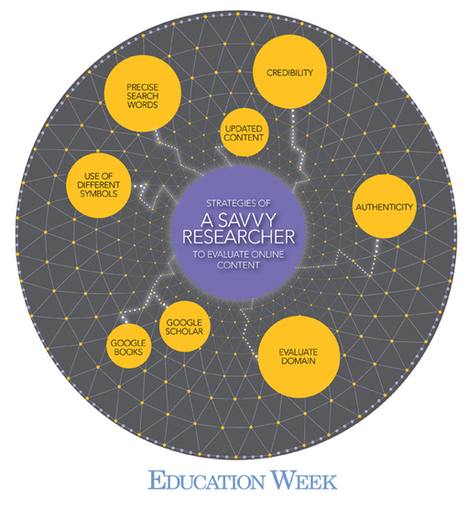
Many educators are explicitly teaching online research skills, such as how to evaluate a website's credibility, how to use precise keywords, and how to better mine search engines.
Mary Reilley Clark's insight:
Great overview. Excellent article to share with someone who doesn't see the need to help students acquire these skills.
Scoop.it!

Teaching students the importance of having and using manners is nothing new to teachers. However, what has changed is the type of etiquette kids needs today—namely, the digital kind. True, please, thank you and excuse me are still significant, but in addition to these basics, students growing up in this ever-connected, social media crazed world require much more. Concepts such as online privacy, sharing and creating a positive digital footprint through the demonstration of responsible online behaviors are just as vital. Via Jamie Forshey, Nancy Jones

Tim Hopper's curator insight,
May 22, 2013 10:52 AM
Why schools need to lead in the use of digital technologies, not be dragged reluctantly into the 21st century. 
Dean Mantz's curator insight,
May 31, 2013 4:17 PM
Thanks to Jaime Forshey for sharing this infographic addressing digital manners. It is a great example of connecting infographics to digital citizenship.
Scoop.it!

Sharing slides online can be a great way of keeping an archive of your presentations and of expanding their reach beyond those who can attend the live event. There are a few different options avail...
Scoop.it!

Common Core State Standards are calling for more focus on students reading charts and graphics, but new research shows engaging graphics can reduce students' understanding of chart data.
Mary Reilley Clark's curator insight,
May 15, 2013 12:36 PM
If this holds true, is it because we're not teaching students how to read infographics, or because the design really is distracting? I'll be interested in further research on this.
Scoop.it!
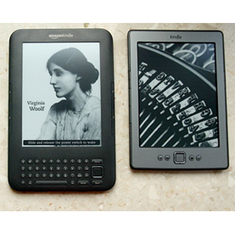
E-readers and tablets are becoming more popular as such technologies improve, but research suggests that reading on paper still boasts unique advantages Via RitaZ, NikolaosKourakos, Jim Lerman

RitaZ's curator insight,
May 12, 2013 8:00 AM
Teachers need to find a way to take advantage of the different modes of reading for different purposes in order to reap the benefits of each (and to teach our students to do so). Thanks, Adele!

Ken Morrison's curator insight,
May 12, 2013 3:12 PM
This article does a great job and helping us realize the real and perceived reasons why people feel that reading on paper is more benefitial for them. At this point in history, people do tend to remember more if they read from paper. We can often remember which region of a page we learned something even if we read it several weeks ago. We like the transition of one side of the book being heavier than the other as we progress through the pages. Book designers take great efforts to design how books look, feel and smell. Digital books are disrupting our experience and interaction with the written text. Many people are in a mental state before reading a printed text that it is more serious and meaningful. This mindset may be changing how we engage the brain and thus how much we remember.

luiy's curator insight,
May 13, 2013 5:54 PM
But why, one could ask, are we working so hard to make reading with new technologies like tablets and e-readers so similar to the experience of reading on the very ancient technology that is paper? Why not keep paper and evolve screen-based reading into something else entirely? Screens obviously offer readers experiences that paper cannot. Scrolling may not be the ideal way to navigate a text as long and dense as Moby Dick, but the New York Times, Washington Post, ESPN and other media outlets have created beautiful, highly visual articles that depend entirely on scrolling and could not appear in print in the same way. Some Web comics andinfographics turn scrolling into a strength rather than a weakness. Similarly, Robin Sloan has pioneered the tap essay for mobile devices. The immensely popular interactive Scale of the Universe tool could not have been made on paper in any practical way. New e-publishing companies like Atavist offer tablet readers long-form journalism with embedded interactive graphics, maps, timelines, animations and sound tracks. And some writers are pairing up with computer programmers to produce ever more sophisticated interactive fiction and nonfiction in which one's choices determine what one reads, hears and sees next.
Scoop.it!

Ever had a student ask you this question? Well, thanks to this fantastic flowchart from Pia, Erin and Yvette, your students can now answer that question themselves! Plus, as a blogger, this is real... Via AdinaSullivan
Scoop.it!

Yesterday, author Maureen Johnson had a great idea. She tweeted "I do wish I had a dime for every email I get that says, "Please put a non-girly cover on your book so I can read it.
Mary Reilley Clark's insight:
Great idea for media literacy!
|
Scoop.it!
http://www.youtube.com/watch?v=sTOleLEH7Ew Legacy Google Forms if you had a whole list of options you wanted students to choose from you had to copy and paste each item separately No more! The n...
Scoop.it!

Jen Cotton's curator insight,
June 20, 2013 11:41 AM
Share a little bit of this at a time to ease teachers into using Google Docs in the classroom.
Scoop.it!
School librarians can use curation as a tool to position themselves as information and communication authorities and information professionals.
Mary Reilley Clark's insight:
A great overview of why and how library staff should use curation to create a manageable information stream.

David Bevington's curator insight,
June 19, 2013 4:47 AM
School librarian - the face of the digital shift in education.
Scoop.it!

Anita Vance's curator insight,
May 30, 2013 9:54 AM
a visual aid - helpful for upper grades, or as a tutorial. Any way we can help with examining a topic and planning the search is appreciated. 
Peg Becksvoort's curator insight,
May 30, 2013 5:29 PM
Look at this from the POV of when and how you will teach research skills. Students need consistent requirements for excellence and accountability. 
johanna krijnsen's curator insight,
June 6, 2013 3:49 AM
a great tool to teach your students how to research
Scoop.it!
Mary Reilley Clark's insight:
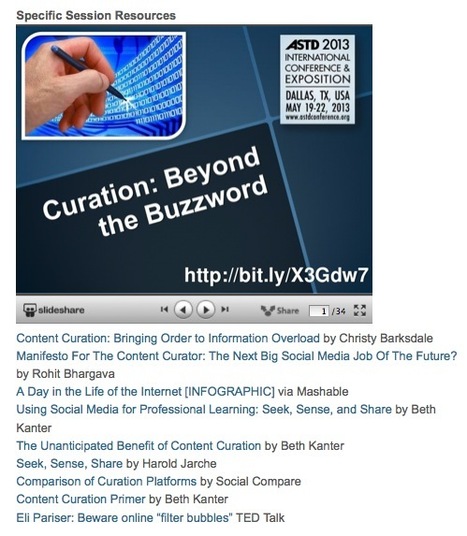
A Slideshare you can understand, even if you weren't at the lecture!

wanderingsalsero's curator insight,
May 23, 2013 8:37 PM
This is an evergreen interesting topic. I was especially intrigued with the title up above that said "Social Media Job of The Future". There might be a lot of prescience (sp?) in that choice of words. 
Dawn Adams Miller's curator insight,
May 23, 2013 11:12 PM
Anything from LnD Dave is pure hold and very practical. Enjoy' 
Susan Wegmann's curator insight,
May 24, 2013 8:51 AM
A GREAT resource for the buzzword "Content Curation." Finally!
Scoop.it!

via Edudemic How you act online is important. Not just because everything is stored, backed up, and freely available to anyone with a keyboard. But because your online reputation is actually...
Scoop.it!
Mary Reilley Clark's insight:
Constellations are a great way to present information for library staff. We can use this technique to highlight the many resources we have to offer!
Scoop.it!

COYCAULT Clémentine's curator insight,
May 16, 2013 9:20 AM
On trouve dans cette page Pinterest un grand nombre d'exemples d'E-Learning : vidéos, modules, études de cas ... Une page très intéressante pour la conception d'E-learning ! Un bon E-Learning bon pour le E-learning ! 
Sue Peterson's curator insight,
May 16, 2013 10:59 AM
I am starting to use pinterest more and more to organize visual materials and even more text-oriented material for classes. This board has a ton of different videos and image-related learning material.
Scoop.it!
How do we maximize our effectiveness in implementing the CCSS literacy standards? One key way is through debate. Here is one teacher's approach to debate.
Scoop.it!
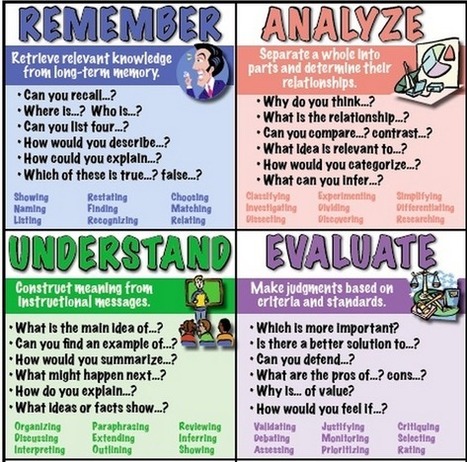
Med Kharback: I just got this poster from a fellow teacher featuring the 6 thinking skills as outlined in the revised taxonomy. As you probably know, Blooms taxonomy that was first created in the 1950s has been revised by Krathwohl and there are two main changes that appeared in this revised taxonomy: the first one is semantic in that nouns are now being replaced with verbs; and the second change relates to the order of these thinking skills. In the old taxonomy, Bloom highlighted the importance of evaluating and therefore placed it at the top of the thinking continuum, but for Krathwohl Creating is the highest order thinking skill.

Olga Boldina's comment,
June 20, 2013 1:28 AM
Thank you for rescooping! It's great to share information!

Paul Gagnon's comment,
June 20, 2013 9:30 AM
Yes it is great. Wish I had these technologies year's ago when I was in my prime so to speak.:-)

Shannon O'Connor's curator insight,
November 21, 2013 10:32 AM
The link below actually has all the slides i a larger version that can be used with a poster maker.
Scoop.it!
Mary Reilley Clark's insight:
Are you integrating technology above the line?

Kevin J. Burgam's curator insight,
September 11, 2013 10:19 AM
Sweet! I want a t-shirt that reads, "I teach above the line." |










Great explanation of all the Google Hangout features!