


Digital Literacy in the Library
47.1K views |
+1 today
How do we define it, teach it, know it when we see it?
Curated by
Mary Reilley Clark
 Your new post is loading...
 Scoop.it!
|


|
Rescooped by
Mary Reilley Clark
from SMUSD Share
July 31, 2013 3:45 PM
|
Scoop.it!
Mary Reilley Clark's insight:
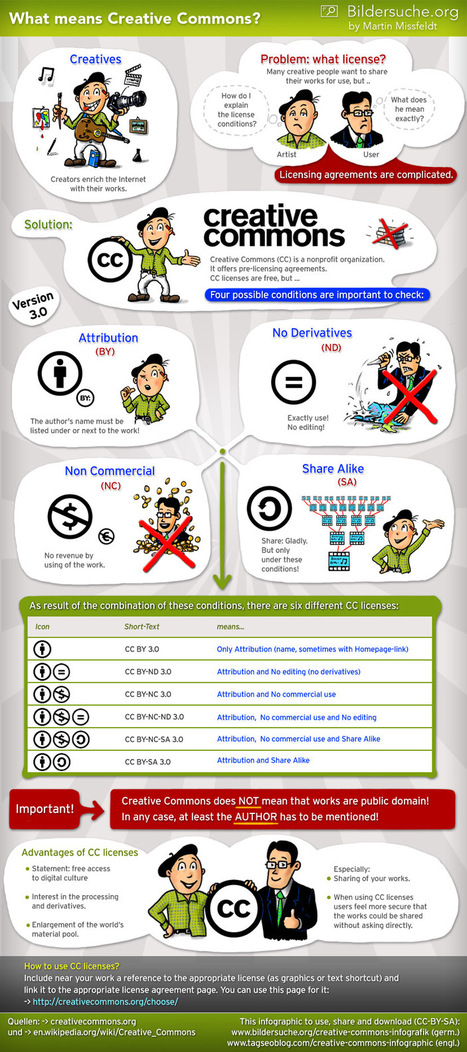
Easy to understand visual explanation of Creative Commons for students.


Nuno Ricardo Oliveira's curator insight,
July 29, 2013 5:49 AM
A Must See Graphic on Creative Commons for Students

Mindi Vandagriff's curator insight,
August 5, 2013 9:56 AM
We must teach our students Creative Commons early!

Lorena Swetnam's curator insight,
August 12, 2013 4:28 PM
great tool for teaching Creative Commons #tlchat
|
|
Scooped by
Mary Reilley Clark
July 22, 2013 10:59 AM
|
Scoop.it!

Fortunately, there are some great websites and services that take the guesswork out of finding and sorting educational video content. Here is the most updated list of some of the curated video site...
|
|
Rescooped by
Mary Reilley Clark
from Cool Tools for 21st Century Learners
July 18, 2013 12:46 PM
|
Scoop.it!

I have created an interactive graphic of the SAMR Ladder to illustrate the big picture.
Via Susan Oxnevad
|
|
Rescooped by
Mary Reilley Clark
from Curate your Learning
July 13, 2013 12:08 PM
|
Scoop.it!

"School librarians can use curation as a tool to position themselves as information and communication authorities and information professionals." (Content Curation Not an Option in Schools: Librarians To Lead the Change | @scoopit via @RobinGood
Via Barbara Bray
Mary Reilley Clark's insight:
"Curation is not an option."
|
|
Scooped by
Mary Reilley Clark
July 6, 2013 6:26 PM
|
Scoop.it!

Pamela Perry King's curator insight,
July 7, 2013 8:00 PM
GREAT PREZI!! Excellent lesson and explanation.
|
|
Scooped by
Mary Reilley Clark
July 6, 2013 6:05 PM
|
Scoop.it!
"Communication educators, armed with a host of free, easy-to-use online tools, have the ability to create dynamic approaches to teaching and learning about information and communication flow online. In this paper we explore the concept of curation as a student- and creation-driven pedagogical tool to enhance digital and media literacy education. We present a theoretical justification for curation and present six key ways that curation can be used to teach about critical thinking, analysis and expression online. We utilize a case study of the digital curation platform Storify to explore how curation works in the classroom, and present a framework that integrates curation pedagogy into core media literacy education learning outcomes."
Mary Reilley Clark's insight:
Curation defined as problem-solving, and about taking responsibility for one's information. Includes detailed teaching points about curation using Storify.
|
|
Scooped by
Mary Reilley Clark
July 2, 2013 12:01 AM
|
Scoop.it!
Zero-friction, free online mind mapping. Opensource mindmapping software. The most productive online mind map canvas on the Web. Supports Freemind mindmap import/export.
Mary Reilley Clark's insight:
There are tons of mindmapping tools, but this one lets you save your maps to Google Drive.
|
|
Scooped by
Mary Reilley Clark
June 29, 2013 1:55 PM
|
Scoop.it!

Mary Reilley Clark's insight:
Feeling a little relieved and a little disappointed that I know most of these:)
|
|
Scooped by
Mary Reilley Clark
June 25, 2013 7:10 PM
|
Scoop.it!
The word literacy finds its roots in the eighteenth-century word literatus, which quite literally means ?one who knows the letters. But it has come to refer to much more than the ability to read an...
Mary Reilley Clark's insight:
This is what we want students to understand: “…when you connect images in a fashion that creates a narrative story in a literate way, you elicit powerful responses.”
|
|
Scooped by
Mary Reilley Clark
June 25, 2013 6:30 PM
|
Scoop.it!
Dennis Grice's YouTube playlist of 4 videos he created to help students create their Google Sites.
Mary Reilley Clark's insight:
Entertaining and informative tutorials that will help students create their own Google Sites.
|
|
Rescooped by
Mary Reilley Clark
from Cool Tools for 21st Century Learners
June 21, 2013 8:13 PM
|
Scoop.it!
Mary Reilley Clark's insight:
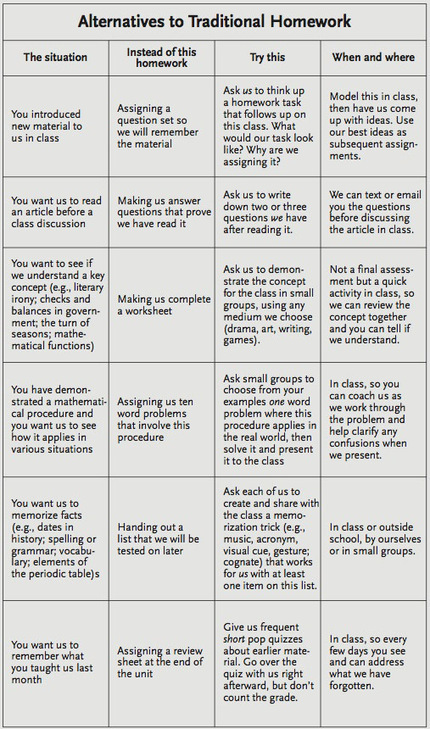
Love these ideas! I am going to tie them to Google Drive for my teachers, so they can easily see how and why to get students signed up for our district Google accounts.


Jen Cotton's curator insight,
June 24, 2013 9:50 AM
Print this and post next to the copier in the faculty workroom
|
|
Scooped by
Mary Reilley Clark
August 13, 2013 11:35 PM
|
Scoop.it!

Mary Reilley Clark's insight:
Options for those sites that are blocked, or require student emails to sign up. If you have suggestions, add to the Google doc!
|
|
Scooped by
Mary Reilley Clark
August 11, 2013 3:45 PM
|
Scoop.it!

Mary Reilley Clark's insight:
Great infographic to help students see the many facets of digital citizenship.
|
|
Scooped by
Mary Reilley Clark
July 22, 2013 11:08 AM
|
Scoop.it!

These are the tools that will transform your classroom in the fall because you’ll notice the definite threads that run throughout all these applications... real-time, collaborate and creative!
Mary Reilley Clark's insight:
A mix of tools for teachers, students and parents to use. This makes me excited to get back to work!
|
|
Scooped by
Mary Reilley Clark
July 21, 2013 10:51 PM
|
Scoop.it!

8 Ways The Librarian Of The Future Will Keep Themselves Busy
|
|
Scooped by
Mary Reilley Clark
July 17, 2013 12:08 PM
|
Scoop.it!
Mary Reilley Clark's insight:
May be too overwhelming a list for a tech introduction, but good to tuck away when someone wants to try something new!
|
|
Scooped by
Mary Reilley Clark
July 8, 2013 5:21 PM
|
Scoop.it!
From
vimeo
Keynote speech by David Lankes, with excellent examples of what school librarians do, and why.


|
|
Rescooped by
Mary Reilley Clark
from Schools + Libraries + Museums + STEAM + Digital Media Literacy + Cyber Arts + Connected to Fiber Networks
July 6, 2013 6:10 PM
|
Scoop.it!

Digital storytelling is a craft that uses the tools of digital technology to tell stories about our lives. Done properly, storytelling can be a powerful, evocative way of communicating themes and stories, often touching us in deeper ways than one-dimensional videos that rarely probe beneath the surface of people’s lives.
Via Chuck Sherwood, Former Senior Associate, TeleDimensions, Inc
Mary Reilley Clark's insight:
Solid information for telling a digital story with step-by-step instructions.
|
|
Rescooped by
Mary Reilley Clark
from Curating Tools and Information
July 5, 2013 5:24 PM
|
Scoop.it!
Mary Reilley Clark's insight:
Good stuff on the last page about essential job skills and curation skills.

Robin Good's curator insight,
June 23, 2013 5:35 AM
Elizabeth Weaver Engel and Jeff De Cagna are the authors of a small but very useful guide to Content Curation originally written for membership groups, and first published in November 2012.
The guide offers a good introduction to why content curation is so important, how it can help any organization and what are the key things to know about it for anyone who knows little or nothing about it.
From the original PDF guide, entitled "Attention Doesn't Scale: The Role of Content Curation in Membership Associations":
"Content curation provides a potential path to a new type of thought leadership, one that is more suited to a world where information is no longer the scarce resource. Focus is. Meaning is. Wisdom is.
But that type of support will require a signicant shift in our business models.
For decades, associations have been in the business of generating information.
Our challenge now is to transform ourselves into being in the business of sense-making, helping members distinguish what new information is most relevant and integrate that information into their mental categories, and meaning-making, helping them understand the implications of that new information for their worldviews."
Lots of good tips, references and relevant resources listed. Provides good foundational reference for any serious business reader.
Good intro to content curation. Resourceful. Informative. 8/10
Pass it on.
Attention Doesn't Scale (PDF) - http://www.getmespark.com/wp-content/uploads/2012/10/AttentionDoesntScale-Whitepaper-Nov2012.pdf
(9 pages)
YouTube video: http://youtu.be/IWbFI_ny9fY
(The Role of Content Curation in Associations:
Interview With Elizabeth Engel) by Brian Kelly of AssociationMaves.com
(23':41")

Stephen Dale's curator insight,
June 26, 2013 7:26 AM
With almost anyone now able to generate and publish content, finding relevance (signal to noise) is precoccupying knowledge workers everywhere. Sense-making, new media literacy and the ability to understand concepts across a wide range of disciplines are ctitical skills for the content curator in cutting through the noise to find that all important signal. Effective content curation will help us to focus and make sense of our complex and ambiguous world, to understand context and ultimately to make better decisons.
|
|
Rescooped by
Mary Reilley Clark
from :: The 4th Era ::
July 1, 2013 11:11 AM
|
Scoop.it!
From
hastac
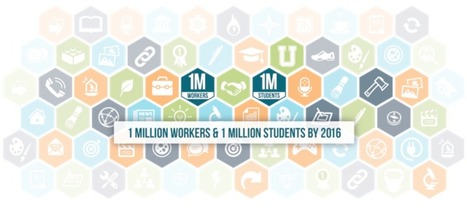
Speaking at the Clinton Global Initiative America (CGI America) meeting, an annual event of the Clinton Global Initiative that seeks innovative solutions for economic recovery, Clinton said three partners – the John D. and Catherine T. MacArthur Foundation, Mozilla, and HASTAC – have created the commitment to Open Badges. Outreach and technical assistance will be provided to help employers and universities across the country incorporate Open Badges in hiring, promotions, admissions, and credit over the next three years.
Via Kim Flintoff, juandoming, Jim Lerman
Mary Reilley Clark's insight:
Would this work in middle and high school? I have so many students who would, at least initially, be motivated to work online to earn badges. I foresee issues of authentication of work, but there is something worth exploring here.

Conversations for Inquiring Minds's curator insight,
June 30, 2013 12:53 PM
Finaally someone is thinking outside the box. In today's world some of the most knowledgeable people are self-taugt because the technology and social landscape change so quickly. Today you can get various computer science degress; however, when I started working I learned MS Dos and then Windows from the ground up. I became knowledgeable in IT because I was the youngest in the office. I became the direct link with our partner in Dallas on all things IT because there was no one else locally to do the work, eventhough I was in Seattle.
I started with a IBM Selectric and transitioned to word processing. I started merging mail lists before there was documentation on it.
I could go on but you get the point. The fact is I didn't have a degree in 90% of what I learned on the job. I was credentialed and certified in accounting and business management . . . nothing technical.
This is the corner we need. Thank you President Clinton for finding a way to certify skills so they're marketable. This truly will change the game for many, allow innovators that are ahead of the education community recognition, and reward those who go beyond their training to become indespensible. In addition, it gives additional incentive to keep skills sharp, continue innovation, and push our industries back to the top.

Jan MacWatters's curator insight,
June 30, 2013 8:47 PM
The use of badges seems to be more and more frequent. Who decides what level of knowledge a badge represents?

|
|
Scooped by
Mary Reilley Clark
June 26, 2013 5:43 PM
|
Scoop.it!

Mary Reilley Clark's insight:
Can't wait to explore and learn here!
|
|
Scooped by
Mary Reilley Clark
June 25, 2013 6:55 PM
|
Scoop.it!

Mary Reilley Clark's insight:
This looks like a thorough program for middle school.
|
|
Scooped by
Mary Reilley Clark
June 24, 2013 10:11 AM
|
Scoop.it!

cc licensed ( BY ) flickr photo shared by Walmart Corporate This past week, I worked with a small group of educators on becoming a "Networked Educator", and we had some great conversations about ho...
Mary Reilley Clark's insight:
Great insights from George Couros. We need to show real world examples to help students understand digital citizenship matters!





I use Scoop.it for things I plan on sharing, and Diigo mostly for organizing things for myself, but it is a powerful social bookmarking site. Steven Anderson explains the wonders of Diigo in this post.