 Your new post is loading...

|
Scooped by
Mickael Ruau
November 20, 2021 3:05 AM
|
In this episode, I took the chance to ask, Felix Hofmann, CEO of the Business Model Innovation Lab, a spin-off from the University of St. Gallen, a few questions about business model innovation and more! To give a bit of context the Business Model Innovation Lab is a spin-off from the University of St. Gallen, … Continue reading Discussing Business Model Innovation With Felix Hofmann [Lecture]
|
|
Scooped by
Mickael Ruau
November 20, 2021 2:45 AM
|
A business model is a framework for finding a systematic way to unlock long-term value for an organization while delivering value to customers and capturing value through monetization strategies. A business model is a holistic framework to understand, design, and test your business assumptions in the marketplace.
|
|
Scooped by
Mickael Ruau
November 19, 2021 10:34 AM
|
A few years ago Pulumi introduced code-native programming language for Infrastructure as Code (IaC), bringing it closer to the developer and their existing skillset. Fast-forward to 2021 and Microsoft and HashiCorp are playing catch-up to Pulumi and to each other. To help you choose IaC technology, let's look at IaC programming languages for short-term developer happiness and code re-use for long-term productivity.
|
|
Scooped by
Mickael Ruau
November 19, 2021 7:43 AM
|
La première partie de cette série d'articles évoque l'évolution de l'architecture et les patterns stratégiques d'architecture pour les tendances technologiques comme les microservices, le serverless et la conteneurisation. Les architectures s'appuyant sur des principes comme le couplage faible, l'extensibilité, et la programmation par interfaces seront plus résilients lors de changements majeurs de plateforme technologique. Les solutions bien conçues résistent au temps en isolant la logique métier des composants technologiques, ceux-ci devenant obsolètes tôt ou tard.
La seconde partie décrit le temps nécessaire à la stabilisation de l'architecture et certains anti-patterns comme le monolithe distribué et l'architecture "Etoile de la Mort". Il démontre le besoin d'équilibrer l'architecture et la stabilité technologique.
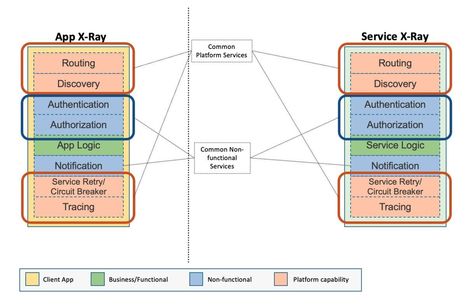
Cette troisième partie étudie l'importance des interactions entre les services dans une architecture microservices, les difficultés récurrentes des systèmes distribués, et comment des patterns d'architecture modernes comme l’orchestration de services et le Service Mesh peuvent y répondre.
|
|
Scooped by
Mickael Ruau
November 19, 2021 1:37 AM
|
Key Takeaways
There is no ‘disembodied’ technical system; it is inevitably joined to a social system because software is written by people for people and the ICT industry needs to be educated to handle that dimension as well as the technical one.
Self-governing teams are a common reaction to heightened complexity and uncertainty, one that we see as pockets of agility in an otherwise bureaucratic organisation, but this is survival mode and not sustainable.
The bureaucracies of the industrial world that are still very much prevalent in the ICT industry have been proven to be a maladaptation in the turbulent environment of the modern world with an increasingly socially demanding workforce and exponential technical complexity.
In order for a transition from a maladapting bureaucratic organisation to an adaptive team-first based organisation to work, necessary structural changes have to be made to move from autocratic values to participative democratic ones where people doing the work have to be part of its design.
An organisation designed using open sociotechnical systems theory will be a more humane one where people are more engaged, utilise technology better, and are actively participating to the organisational purpose because it is aligned with their own.
|
|
Scooped by
Mickael Ruau
November 19, 2021 12:36 AM
|
The moment that you’re talking about a person’s problems, they’re happy. If you’re there to solve that person’s problem then they’re willing to have that conversation. That’s how you get them to help. The moment you’re talking about yourself, your solution or the fourth or fifth problem on their list then you’re wasting their time. – Brant Cooper, Lean Entrepreneur Co-Author
|
|
Scooped by
Mickael Ruau
November 19, 2021 12:10 AM
|
Does it feel like you’re constantly building products, but just can’t seem to get it right? Then our Ultimate Product Management eBook is just what you need.
|
|
Scooped by
Mickael Ruau
November 18, 2021 7:42 AM
|
Points Clés
La notion de dépendance est une problématique qui, si ignorée, peut entraîner des complications au niveau de l’architecture en termes d’évolution et de maintenance.
Afin d’obtenir des solutions maintenables et évolutives le sens des dépendances doit être guidé par la valeur métier.
L’inversion de dépendance est un outil puissant pouvant être utilisé à différents niveaux d’abstraction afin de pallier le problème de dépendance
Les dépendances ne sont pas anodines et ont des conséquences pouvant impacter l’organisation.
L’objectif est de protéger le “core” métier de votre solution pour pouvoir, d’une part lui garantir une évolution rapide en minimisant les impacts, et d’autre part de produire, à moindre coût, le plus de valeur métier possible.
|
|
Scooped by
Mickael Ruau
November 18, 2021 1:03 AM
|
Recently, Stepsize surveyed 200+ software engineers from different industries to learn how codebase health impacts engineer hiring and retention.
In this article, I’ll share some of the key stats from the survey, why investing in a codebase is crucial for businesses, and questions you can ask in the interview as an engineer to learn about the company’s codebase health.
Our Findings
82% believe that lack of proper development practices affects their job satisfaction.
62% consider code quality as an important factor when choosing a new job.
51% of engineers left or considered leaving a job because of technical debt.
For 21% of engineers, excessive amounts of technical debt have been the number one reason for changing a job.
Both junior and senior developers equally consider codebase health to be an important factor when choosing a new job.
Today, hiring and retaining developers is one of the biggest challenges for tech companies. And while recruiters, hiring managers, and leaders are focusing on attracting new tech talent, they might be ignoring one of the biggest reasons they are losing them in the first place: codebase health.
|
|
Scooped by
Mickael Ruau
November 18, 2021 12:18 AM
|
Both are strategic frameworks to build companies with a long-term competitive advantage. The business model canvas is comprised of nine building blocks explaining what makes up a company’s success. The value proposition canvas is an extension of the business model canvas. It is primarily focused on developing a strong value proposition, which is among the … Continue reading Business Model Canvas Vs. Value Proposition Canvas
|
|
Scooped by
Mickael Ruau
November 17, 2021 8:10 AM
|
A number of things, really, but let me focus on two here, and a third with the next definition.
DevOps is not cloud-specific. While many companies that practice DevOps use cloud-based technologies, this has more to do with the current state of the art than with DevOps. Many companies also use DevOps principles in on-premise installations, or embedded systems, or any other kind of IT or software project.
DevOps isn’t about what tools you use. You can learn Docker, Kubernetes, Terraform, or any other set of amazing tools, and use them in a way that is completely out of line with the DevOps philosophy (more on that in a moment).
|
|
Scooped by
Mickael Ruau
November 17, 2021 7:47 AM
|
Key Takeaways
The multi-cloud journey is often a long, complex one. Adaptable tooling is key to deal with current heterogeneous systems, and accommodate future change.
Team buy in is key. The transformation will touch many organizations and require leadership and a well communicated vision to succeed.
Measure the current state of IT utilization. A successful transformation not only needs a clear vision of the future, but also a clear understanding of the present.
Cloud selection must be driven by current and anticipated business needs. This can include differentiators such as security, performance, reliability, cost for anticipated usage, etc.
Avoid large scale sudden transformation; favor incrementalism initially. The journey to multi-cloud is one of organizational learning as well as execution. Incremental transformation allows internal systems to adjust to new realities and absorb the shock of change. Later, when experience and confidence is gained with new technology and operational models, the change can accelerate.
|
|
Scooped by
Mickael Ruau
November 17, 2021 7:39 AM
|
Points Clés
La première étape pour un grand leader serait de faire preuve d'honnêteté et de s'engager à être authentique.
La création d'un environnement sûr est essentielle au bon fonctionnement d'une équipe.
L'un des outils qu'un grand leader peut utiliser pour identifier la cause racine d'un problème est la méthode des "Five Whys".
Si vous souhaitez non seulement améliorer vos compétences en matière de feedback, mais aussi rendre votre feedback plus efficace pour chaque membre de votre équipe, vous devez en apprendre davantage sur les valeurs fondamentales de vos collègues.
En tant que leader d'une équipe, vous pouvez toujours fournir un feedback honnête, qui devrait motiver et aider la personne qui le reçoit. Kim Scott appelle ce type de retour d'information "franchise radicale".
|
|
|
Scooped by
Mickael Ruau
November 20, 2021 2:47 AM
|
A solopreneur is usually (not always) a digital entrepreneur who leverages automation, work flexibility, and creativity to develop ultra-lean business models. Those can scale over the one-million-dollar revenue mark with a minimum business overhead, no venture capital funds, and mostly bootstrapped. Those solopreneurs start by mastering profitable microniches.
|
|
Scooped by
Mickael Ruau
November 20, 2021 2:35 AM
|
ContentsPorter’s Five ForcesAnsoff MatrixBlitzscaling CanvasBusiness Analysis FrameworkGap AnalysisBusiness Model CanvasLean Startup CanvasDigital Marketing CircleBlue Ocean StrategyOther strategy toolsBCG MatrixBalanced ScorecardPEST AnalysisScenario PlanningSWOT AnalysisGrowth MatrixComparable Analysis Framework Porter’s Five Forces Ansoff Matrix Blitzscaling Canvas Business Analysis Framework Gap Analysis Business Model Canvas Lean Startup Canvas Digital Marketing Circle Blue Ocean Strategy Read next: Successful Business Models … Continue reading Nine Simple Strategy Frameworks To Grow Your Business
|
|
Scooped by
Mickael Ruau
November 19, 2021 10:33 AM
|
For the longest time, infrastructure was left out of this practice. We managed servers manually in our data centers until configuration management and infrastructure as code (IaC) was introduced.
|
|
Scooped by
Mickael Ruau
November 19, 2021 4:25 AM
|
Que feriez-vous si l’un de vos principaux concurrents lançait une OPA hostile contre vous, si votre chaîne d’approvisionnement était anéantie et si votre division la plus rentable implosait – tout cela du jour au lendemain, ou presque ?
|
|
Scooped by
Mickael Ruau
November 19, 2021 12:59 AM
|
How do you handle hypergrowth? Heidi Williams, Head of Engineering at Grammarly comes on to discuss rapid scaling and how diversity can grow your business
|
|
Scooped by
Mickael Ruau
November 19, 2021 12:30 AM
|
In case you realise after the interviews that the first customer segment in your priority list does not match the criteria, start interviewing the second in your list.
|
|
Scooped by
Mickael Ruau
November 18, 2021 8:11 AM
|
Kubernetes is a major asset for modern container management and has streamlined deployment for thousands of companies. However, it is infamous for its steep learning curve. Simply put, Kubernetes is difficult to get right.
That being said, if you’re a developer trying to learn and navigate the Kubernetes iceberg, you’re in luck; there are an abundance of open-source resources to help start your K8s journey on the right foot.
Kubernetes Done Right
Although it may be tempting to take shortcuts when working with K8s, keep in mind that proper K8s will:
reduce your cloud costs by scaling your clusters efficiently
simplify the different engineering processes for your team (eg. development, testing, and releasing)
minimize security issues, such as cross-container communication
shape how traffic moves through infrastructure
prevent resource-hungry services from disrupting each other
|
|
Scooped by
Mickael Ruau
November 18, 2021 2:20 AM
|
A business model canvas is a framework to evaluate the key building blocks that make up a company from a competitive advantage standpoint. A value chain model instead focuses on how value is delivered to potential customers through a set of activities and via the company's organizational structure. Both tools can be used to assess the competitive edge of a company and how to deliver value.
|
|
Scooped by
Mickael Ruau
November 18, 2021 12:35 AM
|
Get Busy on Social Media Nine out of every 10 consumers believe businesses should take time to answer questions from customers on Facebook. But only 25 percent of companies actually do this. Facebook in particular (and social media in general) can be one of the best places to find your early adopters without having to spend a great deal of money on expensive surveys. Interact with your target market on Facebook, and you’ll quickly find your potential early adopter group.
|
|
Scooped by
Mickael Ruau
November 18, 2021 12:16 AM
|
The untested code gap kills productivity and predictability. We don’t choose where the bugs go making them easy to find; they choose their hiding places, and have no mercy on us. They flare up and put teams into fire fighting mode.
Are we are beat? Do we have to put up with buggy products and long test and fix cycles? No, we do not! We must accept that a product test strategy based on manual test is unsustainable. Unsustainable systems eventually collapse. We can’t afford not to automate much of your software test.
|
|
Scooped by
Mickael Ruau
November 17, 2021 7:49 AM
|
Key Takeaways
Developers deserve and need good documentation but in most cases, code documentation is lacking and out of date, so wary developers don’t trust it — or simply don’t create it in the first place.
The Continuous Documentation methodology is a useful paradigm that helps ensure that high-quality documentation is created, maintained, and readily available. It asserts that documentation should be treated like crucial parts of the development workflow — such as tests, or the code itself.
The two common types of documentation: Inline Documentation — usually code comments that explain a specific line or area in the code but are disconnected from the bigger picture; High-level documentation — provides the big picture like code architecture, business logic, or major decisions, but is detached from specifics of the code.
What is often missing is a third type of documentation: Code Walkthroughs. These take the reader on a “walk” — visiting at least two stations in the code — describe flows and interactions, and often incorporate code snippets.
Walkthroughs are similar to getting familiarized with a codebase with the help of an experienced contributor who walks you through the code. They can show recurring patterns, interactions between parts of the code, or explain a process that involves code in multiple repositories.
We are entering a new era for code collaboration, and a substantial breakthrough is imminent. What is changing? And more importantly, why?
This is the second part of the Continuous Documentation Manifesto, in which we called for creating and maintaining code documentation in a way that incorporates it into the ongoing development workflow. This time we are shifting focus to explain the untapped potential of an often overlooked category of documentation - Code Walkthrough Documentation - which is made possible by practicing Continuous Documentation.
|
|
Scooped by
Mickael Ruau
November 17, 2021 7:40 AM
|
Points Clés
Rassemblez l'équipe distribuée sur une seule plateforme pour promouvoir le travail asynchrone.
Établissez une source unique de vérité où les projets actuels et futurs se trouvent, à laquelle tous les membres de l'équipe peuvent accéder, se référer et partager.
Documentez les décisions de manière claire afin que les membres de l'équipe, qu'ils soient à distance ou en présentiel, puissent avoir le même aperçu de l'avancement du processus décisionnel et se rallier à la décision.
Désignez un facilitateur pour chaque rituel et permettez aux membres de l'équipe de se relayer, afin que même les plus juniors aient l'occasion de diriger.
Pour responsabiliser les équipes de développement distribuées dans un lieu de travail hybride, tirez parti des outils automatisés afin d'utiliser la méthode agile sans effort.
|














A glance at the business model patterns from the Business Model Navigator