Your new post is loading...

|
Scooped by
Mickael Ruau
November 29, 2021 12:04 AM
|
Here are some of the patterns that an organization can follow when applying test automation:
Pyramid Testing
When following the testing pyramid, there will be three automated test levels coming in before you get to the manual tests.
Automated Unit Tests
This level would be the starting point at the bottom of the pyramid. It involves a lot of test situations. These would be done separately, which shortens the execution time per block of the application code.
You get to see how the software behaves under different circumstances, try valid and invalid inputs, and also discover any unexpected behavior. Here, you can get a lot of feedback quickly.
Automated Integration Tests
In this next level, you try scenarios that involve different code components. The focus is on how these components work together and whether every call and response is spot on.
You also won’t have to run many test scenarios. At this level, things may move a bit slower since you’re mainly examining the intercommunication aspect. These test scenarios would cover APIs, methods, classes, etc.
Automated UI Tests
This would be the third level, and would also be of an end-to-end nature. You test an application with the integrations running and emulate real-life user interactions. This level would have tests running much slower since you’re testing more elaborate scenarios from start to end.
You’ll have fewer tests, covering major features, happy paths, and more. You get to discover how several components work together when needed in a typical use case.
The Ice Cream Cone (Anti-Pattern)
ice cream cone pattern test
In this pattern, the testing pyramid is inverted, so to speak. This means that a lot more of the QA team’s efforts are sucked away from automating unit tests. The same will happen for the other testing levels, though it might be to a lesser extent.
Nevertheless, the result is most of the testing is being done manually. Automated tests will largely be at UI/end-to-end tests level, and to some extent, the integration tests too. The result is a team that is stretched thin with these upper test levels. You’ll have fewer automated unit tests and move much slower in this aspect.
You may also have bugs and other random issues constantly trickling down from the manual tests, but not always being caught on time. In an agile environment, demanding frequent releases, you can’t thoroughly respond and make the necessary changes when unit tests are limited. You won’t be able to strike a decent balance between delivery speed and remainder flaws on your next release.
The Cupcake (Anti-Pattern)
Here, there’s a team for development, manual testing, and automated testing. They all work separately and each team tries to cover as many scenarios at each test level as possible. The problem is, with minimal communication, a lot of time can be wasted as teams have massive overlap in the scenarios tested.
And while there might be more automated UI and integration tests, unit tests still lag behind and there are more hands on deck for manual testing.
|
|
Scooped by
Mickael Ruau
November 28, 2021 8:23 AM
|
Selon Capgemini, 60% des entreprises ont déjà adopté les méthodes agiles ou prévoient de les mettre en place à court terme.
Mais pour la SSII, l'usage des méthodes agiles peut conduire à certains pièges : la tentation d'appliquer cette nouvelle logique à l'ensemble des projets IT, sans pour autant disposer des compétences nécessaires, ou encore celle de basculer ses experts en assurance qualité vers d'autres fonctions (R&D industrielle...) en pensant que leur expertise n'est plus nécessaire aux développements logiciels.
|
|
Scooped by
Mickael Ruau
November 28, 2021 7:36 AM
|
My conference session How to Design a Good API and Why it Matters has always drawn large crowds; on InfoQ was the third most viewed content last year. When I presented this session as an invited talk at OOPSLA 2006, I was given the opportunity to write an abstract for the proceedings. In place of an ordinary abstract I decided to try something a bit unusual: I distilled the essence of the talk down to a modest collection of pithy maxims, in the spirit of Jon Bentley's classic Bumper-Sticker Computer Science, Item 6 in his excellent book, More Programming Pearls: Confessions of a Coder (Addison-Wesley, 1988).
It is my hope that these maxims provide a concise summary of the key points of API design, in easily digestible form
|
|
Scooped by
Mickael Ruau
November 28, 2021 5:21 AM
|
Cet article présente les bases du développement d'une application modulaire. Il présente également un exemple complet d'implémentation en Java.
|
|
Scooped by
Mickael Ruau
November 28, 2021 3:49 AM
|
Pour répondre à des besoins qui changent constamment, les métiers attendent de l’IT une capacité à s’adapter en temps réel aux évolutions du business. Pour offrir cette agilité, toutes les couches du système d’information doivent pouvoir s’adapter facilement, de l’infrastructure physique aux applications, de façon à ne pas remettre en cause l’architecture tous les matins. Cette agilité de bout en bout suppose un certain nombre de prérequis. Au niveau applicatif, opter pour une approche plateforme facilite les évolutions. Il faut également une industrialisation des processus IT, du développement à la mise en production, afin d’accélérer les déploiements.
|
|
Scooped by
Mickael Ruau
November 27, 2021 9:50 AM
|
Malika Mir, DSI du groupe agroalimentaire Bel, revient sur la transformation de la DSI grâce au design thinking, sur ses enjeux data et green tech.
|
|
Scooped by
Mickael Ruau
November 27, 2021 4:59 AM
|
LE site qui vous indique si aujourd’hui est un bon jour pour la mise en production de votre site, certifiée par de nombreuses agences web.
|
|
Scooped by
Mickael Ruau
November 27, 2021 3:50 AM
|
Finding out who your customers are and what they need is an important step for building a strong startup and launching a successful business.
|
|
Scooped by
Mickael Ruau
November 27, 2021 3:10 AM
|
Customer development. I love it. Finding out what works and what not is super important and often overlooked by entrepreneurs who what to ship asap. I too want to ship asap, but I also want to ship…
|
|
Scooped by
Mickael Ruau
November 26, 2021 11:16 AM
|
At Bit, we build tools for over 100,000 developers working with components. Our tools help developers build, reuse, and collaborate on independent components to speed up development and improve…
|
|
Scooped by
Mickael Ruau
November 26, 2021 5:28 AM
|
Serverless functions are the "A" in JAMstack. However, traditional serverless functions from public clouds have poor performance, limited language and framework selections, and are generally not well suited for complex tasks such as AI inference. In this talk, we will present a new type of serverless functions, based on WebAssembly, that supports Domain Specific Languages (DSLs) specifically designed for application tasks. The WebAssembly functions are low code, very fast, and can be deployed on edge network nodes.
|
|
Scooped by
Mickael Ruau
November 26, 2021 5:17 AM
|
Faire des tests unitaires dans ses développements fait aujourd'hui partie des pratiques courantes, en particulier depuis l'avènement d'eXtreme Programming et des développements agiles… Et pourtant, malgré la maturité de l'outillage dont on dispose aujourd'hui (Junit, TestNG, Mockito, JMockit…), qui ne s'est jamais retrouvé confronté en arrivant sur un projet legacy à la fameuse ritournelle : « Les TU ? On les a désactivés, on n'arrivait plus à les faire marcher ! » ? Alors, pas si faciles les tests unitaires ? Écrire des TU est une chose, les pérenniser en est une autre… Voici 10 anti_pratiques à ne pas suivre, tirées d'expériences réelles, qui pourraient précipiter vos tests unitaires dans les oubliettes…
|
|
Scooped by
Mickael Ruau
November 26, 2021 1:13 AM
|
When one is journeying into the unknown, plans have limited value simply because one doesn't know. The bigger the plan, and the more superficially complete the plan, the greater the challenges when innovating.
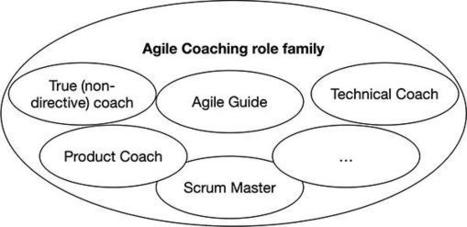
But why spend time on planning when you could get yourself a guide? Someone who has been over the same, or similar, territory before and can help you navigate the obstacles?
In truth many teams do secure the services of a guide. These people go by the name Agile Coach. However, even as the Agile Coach has become an accepted role in development teams a number of problems have built up with the role.
Conflicts in coaching
Question: should an Agile Coach present solutions?
When in the role as an Agile Coach I have spent days agonising when the organization and team expect me, their Agile Coach, to fix things. But I know, as a coach, I should help them find their own solution. Is it right for me to hold back my knowledge? Am I best serving my client by not doing what they expect me to do?
Question: When a team are content with their way of working, should an Agile Coach initiate change?
The biggest conflict in agile coaching is between the way organisations often view the coach role and the way coaches themselves see their role. Companies frequently see the coach as a change bringer, but coaches usually see their role as an enabler. In coaching terms this the difference between directive and non-directive coaching.
Many agile coaches take their lead from the earlier field of business coaching. Authors like John Whitmore and Myles Downey have long advocated a non-directive style of coaching where the coach helps the individuals resolve their own problems. Whitmore writes:
"Coaching is a management behaviour that lies at the opposite end of the spectrum to command and control. ... A skillful coach rarely provides or prescribes solutions." Coaching for Performance, Whitmore, 1992
In their work coaches often utilize the Socratic method to help coachees unlock problems and decide actions. Unfortunately, asking lots of questions, and not providing solutions, is usually not what companies expect from their coaches.
|
|
|
Scooped by
Mickael Ruau
November 28, 2021 12:01 PM
|
Axway Catalyst Erik Wilde looks at how Conway’s law relates to API design and the important lessons it teaches about organizational structure and API design.
|
|
Scooped by
Mickael Ruau
November 28, 2021 8:21 AM
|
Réécrire une application ancienne est-il pertinent ? Les chantiers de refonte complète afficheraient rarement des résultats pleinement satisfaisants, selon une étude de Standish Group.
Résultats des projets de réécriture d'applications Source : Standish Group 2010
Succès 4%
Echec 49%
Projet contesté 47%
|
|
Scooped by
Mickael Ruau
November 28, 2021 5:30 AM
|
Google Cloud apologized for the service outage and any inconvenience caused its downstream customers. The organization specified the root cause as “a latent bug in a network configuration service which was triggered during a leader election charge.” The cloud giant has assured customers there are now “two forms of safeguards protecting against the issue happening in the future.”
With the massive adoption of public cloud, this latest incident (in a long year of outages) illustrates how significant the impact a public cloud vendor outage can be downstream. It also illustrates how vulnerable enterprises are to third-party vendor outages.
You can clearly see that many enterprises rely on public Internet, services, and infrastructure to conduct their business and deliver digital experiences to their clients. While there are many positives to this situation, the challenge is that those same businesses have little to no control over the underlying infrastructure on which their organizations run.
Three Key Lessons for Any Company
Below are three critical lessons that we took away from this outage, which you can apply to your own business:
While failure is bound to happen, don’t overlook the importance of communicating to the end user through a proper error page. Don’t assume your users will find your status page or go to Twitter to see your communications. They will have already moved on to your next competitor, and will eventually read about it in the news. If there was one thing that confused the end users in this instance, it was the Google error page that greeted people. Most people would have expected an error message from the company they were trying to reach, not the hosting company. It’s a little unclear if Google Cloud allows folks to modify this. Perhaps it’s not possible. However, any company should be ready for such failures, and implement a process where they are able to change the DNS or CDN configuration to point people to a proper error page with their own branding and messaging to apologize for the failure in their own words. And ideally, make it fun. Don’t be afraid to be human and relate to the end users. A proper error page is always better than confusing error pages (as in this instance), obscure errors (such as “the server failed to respond”), or worse, nothing at all and hanging on into infinity to connect to the server.
|
|
Scooped by
Mickael Ruau
November 28, 2021 3:50 AM
|
Il est aisé de constater à quel point la crise sanitaire a ébranlé les entreprises. Si le business est indissoluble de l'IT depuis bien des années
|
|
Scooped by
Mickael Ruau
November 28, 2021 3:28 AM
|
Lorsque l'on aborde le monde du NoSQL, et aussi celui du Big Data, il faut justement mettre de côté, je dirais même oublier, tout ce que l'on connaît du monde du SGBDR, monde qui est familier à tant de personnes.
Les bases de données relationnelles existent depuis la fin des années 70, donc depuis plus de 40 ans. Elles ont amené avec elles :
- une modélisation (entre autre Merise avec un MCD et un MPD)
- un typage fort des données
- une gestion de données structurées, en lignes et en colonnes (on appelle cela aussi des données tabulaires)
- un stockage des données en ligne dans les fichiers de la base de données
- une normalisation forte
- des contraintes d'unicité et d'intégrité référentielle
- un moteur transactionnel
- des propriété ACID
Elles sont utilisées dans le monde de l'OLTP, du Datawarehouse et du Datamart.
Les SGBDR sont des logiciels qui s'exécutent sur une seule machine où la scalabilité verticale a toujours été de mise dès qu'il fallait ajouter de la ressource matérielle (mémoire ou CPU).
Certes, il y a bien quelques exceptions comme le cluster Oracle RAC qui fonctionne sur un ensemble de machines, mais les ressources (mémoire et disque) sont partagées, ce qui ne sera pas le cas des clusters en NoSQL et Big Data où les noeuds du cluster ne partagent rien (architecture Shared-Nothing).
Ce sont toutes ces caractéristiques qui ont donné leurs forces aux SGBDR, mais aussi leurs faiblesses (je devrais plutôt dire leurs limites).
L'avènement du Web au début des années 2000, les réseaux sociaux, les smartphones, les emails, l'internet des objets (IoT)..., bref tous ces canaux de diffusion d'informations diverses sont à l'origine de ce que l'on a appelé un déluge de données.
Et ce volume vertigineux de données n'a pu être collecté, stocké, géré, analysé et exploité par les solutions informatiques de l'époque, les SGBDR étant même incapables de répondre à cette fameuse problématique des 3V (Volume, Vélocité et Variété) issue du monde du Big Data.
|
|
Scooped by
Mickael Ruau
November 27, 2021 7:33 AM
|
No campaign plan survives first contact with the enemy Field Marshall Helmuth Graf von Moltke I was catching up with an ex-graduate student at Café Borrone, my favorite coffee place in Menlo Park. This was the second of three “office hours” I was holding that morning for ex students. He and his co-founder were both…
The lean startup framework is one of the most popular contributions in the practitioner-oriented entrepreneurship literature. This study seeks to generate new insights into how new ventures ar
Via Oliver Durrer swissleap.com
|
|
Scooped by
Mickael Ruau
November 27, 2021 3:29 AM
|
It can be challenging to balance providing great support to existing customers with further developing the product to attract new customers. If you did a minimum viable product (MVP) launch correctly, your product currently lacks a ton of features and has more than a few bugs. You will be getting a lot of bug reports and feature requests (and occaissional feature demands) from customers who are at times frustrated and confused. If you launched really well, the backlog will be much more than you can reasonably handle.
Navigating support as a solo founder can be a minefield and it’s important to have a strategy before frantically wading into the queue of emails and tickets.
The Guiding Principle: Every support ticket is an opportunity
But there’s hope. It’s too easy to view support tickets in a negative light. It’s a long task list that you need to check off before getting back to work on product. It’s a stream of grumpy users who can’t even read the dang instructions you so clearly wrote out inside the app.
But this is completely the wrong mentality because the reality is that every support ticket is a massive opportunity. Your worst customer is not the one sending you a support email every day for two weeks, your worst customer is the one who signs up for your app, then cancels without ever giving you a word of feedback. Customers who take the time and energy to write you a support email have now taken a vested interest in getting your app to work for them. It’s important to listen to them, ask follow-up questions and not just view the goal as getting the customer from A to B as quickly as possible.
|
|
Scooped by
Mickael Ruau
November 27, 2021 1:21 AM
|
What Is the Early Adopter Tax? The early adopter tax refers to the premium that early adopters pay for new technology as new tech always costs more upon release. In addition to the cost, the early adopter tax includes the bugs and defects in new technology that have not yet been ironed out, as well as missing out on the new features that are included in successive iterations. How Do You Market to Early Adopters? The best ways to market to early adopters include understanding what they need, meeting them in person, providing them with a product they can use right away, targeting specific individuals and companies, addressing an existing alternative, and telling a story. What Percentage of People Are Early Adopters? Approximately 13.5% of people are early adopters.2
|
|
Scooped by
Mickael Ruau
November 26, 2021 6:09 AM
|
The AWS Well-Architected Framework helps cloud architects build the most secure, high-performing, resilient, and efficient infrastructure possible for their applications. The framework provides a consistent approach for customers and AWS Partner Network (APN) Partners to evaluate architectures, and provides guidance to implement designs that scale with your application needs over time.
In this post, we provide an overview of the Well-Architected Framework’s five pillars and explore design principles and best practices. You can find more details—including definitions, FAQs, and resources—in each pillar’s whitepaper we link to below.
Read the full Well-Architected whitepaper >>
1. Operational Excellence
|
|
Scooped by
Mickael Ruau
November 26, 2021 5:24 AM
|
Treating APIs as products is a concept that is rapidly gaining adopting across the API space, and organizations are increasingly seeing the benefits of using product management principles when developing APIs. This approach involves applying the same level attention and planning to your API portfolio, as you would to any of the other software products your team is delivering.
This was also a popular concept at the recent Nordic API Austin API Summit. The conference featured a number of talks that touched on this topic, including: Why Productization Is the Key to Unlocking API Value from Pete Clare of Vanick Digital, and Embedding API-as-a-Product Culture from Rahul Dighe of Paypal.
|
|
Scooped by
Mickael Ruau
November 26, 2021 3:49 AM
|
La donnée n’a de valeur que si elle est exploitée. Ce qui importe réellement aux organisations, c’est l’information qui peut en être tirée pour assurer le pilotage optimal de l’activité. Pour devenir une organisation pilotée par les données, être « data driven », il faut disposer d’indicateurs pertinents à tous les niveaux, depuis l’exécutif jusqu’aux opérationnels sur le terrain. Et donc aller chercher les données partout où elles se trouvent, y compris à partir de capteurs (IoT). Mais ce n’est là qu’une première étape. Les données doivent être fiables et arriver au bon moment, suffisamment complètes mais aussi rapidement disponibles. Au-delà du pilotage quotidien ou stratégique, l’information est aussi nécessaire pour piloter les risques susceptibles de frapper l’organisation. Il faut comprendre ce risque, le mesurer puis prendre les décisions pertinentes pour l’assumer ou le contrecarrer. La donnée elle-même peut d’ailleurs être un facteur de risque si son existence, sa conservation ou les risques pesant sur elle ne sont pas conformes aux réglementations en vigueur, notamment le RGPD.
|