 Your new post is loading...

|
Scooped by
Mickael Ruau
January 25, 2017 5:56 AM
|
|
|
Scooped by
Mickael Ruau
July 16, 2025 11:19 AM
|
Alors que les systèmes d’intelligence artificielle (SIA) se déploient dans tous les secteurs, leur intégration dans les organisations pose des questions...
|
|
Scooped by
Mickael Ruau
June 12, 2025 8:34 AM
|
Retards, dépassements de budget, équipes en perte de repères…
Et si la solution ne venait pas d’une meilleure méthode, mais d’une meilleure alliance ?
Cette table ronde réunit experts IA, cheffes de projet et formatrices engagées pour explorer une approche hybride du redressement de projet :
- L’IA pour diagnostiquer les défaillances avec précision
- L’intelligence humaine pour réactiver l’énergie collective
- La formation comme levier de transformation durable
Animée par Mickael Ruau
Avec :
- Sara Moudrik Horn – CEO de LUCKiwi
- Denis Benichou – VP Sales & Growth chez YesProject
- Malika Ben Lamine – Médiatrice de projet, Agence D-Risque
|
|
Scooped by
Mickael Ruau
July 29, 2024 11:52 AM
|
Le moins bon
La base fondamentale de Scrum est l’équipe. La petite équipe de développement (3 à 9 personnes selon le guide). Les travaux de Troy Magennis à ce sujet indiquent qu’on devrait favoriser 5 à 9 personnes seulement si les performances de l’équipe sont plus importantes que sa prévisibilité et que l’équipe est plus importante que le système. On devrait augmenter à 15 si on peut couper une dépendance et si on veut un système plus stable et prévisible. Il faut faire attention à l’optimisation locale (l’équipe), qui cause presque toujours une sous-optimisation globale (l’écosystème de projet);
L’utilisation du mot « complexe » est un peu abusive tout au long du guide.
Les travaux de Dave Snowden au niveau du Cynefin framework ont permis de mieux définir la complexité. Peut-être qu’en 1996 développer du logiciel était complexe, mais vingt ans plus tard, on voit plutôt des systèmes de livraison compliqués et simples. L’écosystème de la forêt amazonienne est complexe;
« The Scrum Master is responsible for promoting and supporting Scrum as defined in the Scrum Guide« .
Nous sommes loin de la valeur Agile « People over Process » si le soucis premier du Scrum Master est le processus Scrum. Le paragraphe qui suit est parfait et le guide gagnerait à retirer cette phrase sans rien perdre de son essence;
Le sprint à durée fixe est probablement le lieu de toutes les discordes dans le monde Agile.
Un excellent article récent de John Cutler résume bien les avantages et inconvénients de cette mécanique. Je sens encore beaucoup l’influence de la charge de projet traditionnelle avec des échéances et des évaluations, juste en plus petit.
|
|
Scooped by
Mickael Ruau
July 28, 2024 6:55 AM
|
Cet accompagnement reprend les learning path officiels de Scrum.org et les enrichit avec des ressources de référence en français pour faciliter l'assimilation des concepts clés (articles, vidéos, ebooks...).
Pour participer à ce MOOC :
les webinaires offriront tous un replay.
Pour s'inscrire à cet accompagnement gratuit : il suffit de s'inscrire à la newsletter (lien ci-dessous).
Les contenus sont disponibles en asynchrone dans la newsletter dédiée : https://bit.ly/newsletter-psm1-pspo1
|
|
Scooped by
Mickael Ruau
June 17, 2024 5:27 AM
|
There are 2 recognised Scrum training organisations: Scrum.org & Scrum Alliance. Scrum Alliance is a little bigger, Scrum.org is a lot better. I am of course biased being a Professional Scrum Trainer with Scrum.org. Scrum.org is run by Ken Schwaber who co-created the Scrum framework in the 1990’s. The big
|
|
Scooped by
Mickael Ruau
June 4, 2024 2:58 AM
|
Etes-vous prêt(e)s à chasser ensemble les fausses croyances (les farfadets) et à favoriser l'esprit critique dans les professions d'accompagnement ? Cet article est pour vous…
|
|
Scooped by
Mickael Ruau
May 9, 2024 5:46 AM
|
Les Liberating Structures ou "Structures Libérantes" en français, sont un ensemble de méthodes et d'outils qui ont été développés pour aider les groupes de toutes tailles à travailler plus efficacement et de manière plus collaborative. Créées par Keith McCandless et Henri Lipmanowicz en 2014, les Liberating Structures ont été conçues pour donner une voix à chacun et encourager la participation active de tous les membres d'un groupe. Elles sont sous licence Creative Commons
|
|
Scooped by
Mickael Ruau
April 23, 2024 3:47 PM
|
Bien au-delà d’un simple exercice de surveillance et de conservation, il s’agit assurément de mettre à jour nos compétences, notre savoir et nos relations aux autres. A vous maintenant de découvrir le large éventail de méthodes et d’approches présentées par Constantin Guay pour faire sa veille, et les nombreux avantages que vous pourrez en tirer.
|
|
Scooped by
Mickael Ruau
March 12, 2024 6:36 AM
|
Ici, vous trouverez quelques outils qui peuvent vous aider pour votre management au quotidien ! Manager n'est jamais facile, et un type de management ne conviendra pas à tout le monde. Toutefois, certains outils vous faciliteront votre vie de manager, c'est pourquoi, je vous en propose quelques-uns. Ce que je dois savoir quand je travaille…
|
|
Scooped by
Mickael Ruau
February 13, 2024 10:56 AM
|
Découvre ce Kit de démarrage d'accompagnement Agile clé en main ! Mon approche au démarrage d'un accompagnement Agile consiste dans un 1er temps à OBSERVER & à CREER DU LIEN afin de bien prendre en main le contexte & faciliter les changements à venir. Je te partage 3 outils incontournables.
|
|
Scooped by
Mickael Ruau
February 2, 2024 8:27 AM
|
Turn the ship around is the book from captain David Market who implemented radical delegation when he took charge of the submarine Santa Fe. The summary of this approach called the Leader-Leader model aims at giving the control to the staff by building mastery, aka competence, and providing clarity, in other words purpose.
|
|
Scooped by
Mickael Ruau
January 30, 2024 6:10 AM
|
Dans l’entreprise A, des cadres expérimentés se réunissent plusieurs fois et dessinent un plan très précis de leur projet. Ils en parlent ensuite aux personnes de l’atelier dans des réunions d’une vingtaine de personne. Le Directeur de Production montre le nouveau plan aux employés et leur demandent ce qu’ils en pensent. Il y a peu de réponses, les gens disent que ça a l’air bien. L’implantation est réalisée pendant la fermeture de l’usine.
Dans l’entreprise B, des cadres dessinent la trame de ce qu’ils imaginent. Ils décident de réaliser des simulation à échelle 1 sur leur très grand parking. Munis de rouleaux de scotch pour représenter les espaces et les matériels, ils représentent leur trame au sol. Ils demandent ensuite aux employés concernés de venir essayer la nouvelle configuration et de donner leur avis. Les employés soulèvent de nombreux problèmes et, tous ensemble, ils essaient des configurations différentes jusqu’à ce que les solutions les meilleures soient trouvées. La nouvelle implantation est réalisée par les employés eux-mêmes.
A votre avis, quelle est la nouvelle implantation qui a généré le moins de problèmes de démarrage ? quelle est celle dans laquelle les employés ont eu très envie de laisser leurs responsables se débrouiller avec toutes les difficultés rencontrées ?
La morale de cet exemple est triple :
Le management participatif ne consiste pas seulement à demander leur avis à des subordonnés. Il faut au préalable mettre les gens en conditions de comprendre la situation et critiquer, compléter sans risques.
On est plus motivé si on participe à la conception du changement. On y adhère et on cherche des solutions à tous les problèmes qui n’ont pas été anticipés.
Mieux vaut « trystormer » que « brainstormer » !
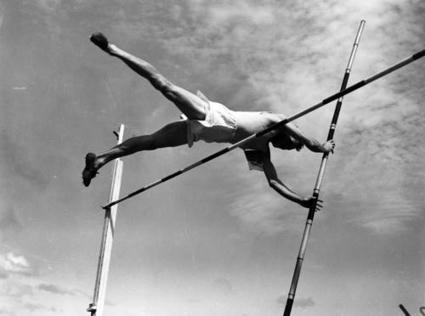
Des Frawley, Athletics Carnival, BrisbaneEt cerise sur le gâteau, c’est très amusant de travailler en équipe pour apprendre comment les flux de nouveaux processus peuvent fonctionner, de travailler avec des maquettes qu’on peut déplacer et modifier à volonté, de redécouvrir chaque individu du groupe !
Le seul inconvénient d’essayer est qu’on prend le risque de l’échec. C’est souvent la peur de l’échec qui prolonge la phase de préparation et retarde la mise en œuvre.
On comprend bien que l’échec est cependant beaucoup plus grave si on passe sans transition de l’idée à la mise en œuvre effective sans essais et ajustements préalables. Il nous faut donc passer sans attendre aux essais et simulations.
|
|
|
Scooped by
Mickael Ruau
September 29, 2025 8:30 AM
|
Inspirées des Liberating Structures, les Liberating Structures basées sur les Forces sont une adaptation positive et intentionnelle de ces processus d'interaction. Elles représentent une magnifique collection de pratiques qui nous invitent à révéler le potentiel et à célébrer la contribution de chaque personne dans un groupe en se concentrant explicitement sur ce qui fonctionne déjà.Cette structure a été créée par Henri Lipmanowicz et Keith McCandless et adaptée avec l'Appreciative Inquiry par L
|
|
Scooped by
Mickael Ruau
June 12, 2025 8:35 AM
|
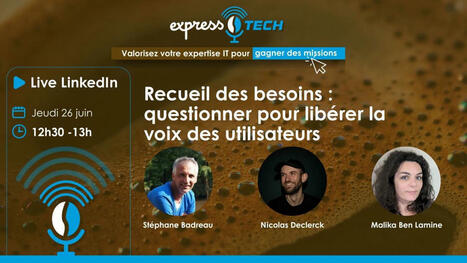
Retours utilisateurs ignorés, besoins flous, solutions mal alignées…
Et si la réponse ne résidait pas dans plus de données, mais dans de meilleures questions ?
Cette table ronde croise les regards de professionnels du produit, de l’agilité et du terrain pour explorer une conviction commune : questionner autrement, c’est écouter autrement et créer des projets qui font vraiment sens.
Autour de la table :
- Des experts de l’agilité et du produit pour partager leurs pratiques de terrain
- Des retours d’expérience clients pour confronter les approches
- Un espace pour repenser la place du questionnement dans vos projets
Animée par Malika Ben Lamine – Médiatrice de projet, Agence D-Risque
Avec :
- Stéphane Badreau – Consultant, coach, formateur et auteur pour une ingénierie agile
- Nicolas Declerck – CPO chez NOA XP, Product Manager & Agile Project Manager
|
|
Scooped by
Mickael Ruau
May 29, 2025 5:36 AM
|
Maîtrisez l’art du questionnement avec des techniques qui améliorent la clarté et l’engagement. Améliorez considérablement vos compétences en communication.
|
|
Scooped by
Mickael Ruau
July 29, 2024 3:00 AM
|
Prépare les certifications Scrum.org cet été : c'est gratuit ! Ce parcours reprendre les learning path Scrum.org pour aider à réussir en autodidacte les certifications de Scrum Master (PSM1) et Product Owner (PSPO1).
|
|
Scooped by
Mickael Ruau
July 23, 2024 4:39 AM
|
A la découverte des Liberating Structures - Téléchargez le document au format PDF ou consultez-le gratuitement en ligne
|
|
Scooped by
Mickael Ruau
June 17, 2024 5:26 AM
|
ScrumAlliance vs Scrum.org - Pourquoi avoir choisi le cursus ScrumAlliance.org ?
|
|
Scooped by
Mickael Ruau
June 2, 2024 5:53 AM
|
De nombreuses équipes changent souvent le format et la conception des phases de leur rétrospective afin d'assurer la diversité et de stimuler la créativité des participants.
|
|
Scooped by
Mickael Ruau
April 23, 2024 3:48 PM
|
La formation gratuite conçue par Scrum Life pour :
✔️ Revoir (et maitriser) les fondamentaux de l'agilité
✔️ Choisir les bons outils
✔️ Faire sa veille facilement
|
|
Scooped by
Mickael Ruau
April 23, 2024 1:24 PM
|
|
|
Scooped by
Mickael Ruau
February 15, 2024 8:30 AM
|
It was one of the best Christmas gifts of my life. My girlfriend handed me a small package. It was certainly a book. I ripped open the paper and a note fell off the top of the book. The note said…
|
|
Scooped by
Mickael Ruau
February 7, 2024 3:54 AM
|
Les jeux de Thiagi dans ce chapitre : présentation des jeux de Thiagi la ludo-pédagogie : pourquoi utiliser les jeux ? les jeux-cadres et jeux à thèmes Thiagi ressources Mieux-Apprendre et le Thiagi Group Présentation des jeux de Thiagi La ludo-pédagogie : pourquoi utiliser les jeux ? L’expression « ludo-pédagogie » est devenue courante depuis quelques années, […]
|
|
Scooped by
Mickael Ruau
January 31, 2024 6:09 AM
|
Le flux unitaire est donc plus efficient que le flux par lot ! De plus, le client peut disposer de la première enveloppe au bout de 13 secondes alors qu’il doit attendre plus de 3′ en flux par lots. A l’échelle d’un processus industriel classique, le seul moyen d’avoir des délais de livraison courts serait de faire du stock. Entre les stocks d’en-cours (les « tas ») et les stocks de produits finis nécessaires, ça fait beaucoup de trésorerie mobilisée.
Par ailleurs le flux unitaire apporte également l’avantage important de repérer rapidement tout défaut de qualité. Au lieu d’attendre qu’un tas passe à l’étape d’après, on voit immédiatement s’il y a un problème et on réagit tout de suite.
|
|
Scooped by
Mickael Ruau
January 30, 2024 4:45 AM
|
La « stratégie créative Disney » est responsable en grande partie du succès de Walt Disney™. Je vous présente la méthode derrière cette stratégie créative efficace, de l'idéation à la réalisation concrète.
|






















Which Code Quality Metrics to Use
Ultimately, software engineers together with management need to take care of the customer's needs and want to leave no quality errors in the measures that the client cares about. Moreover, various measurements make a difference to the board, the group of engineers, and the client. The engineers need to follow certain matrices because they discover them helpful and ought to disclose them to others. Administration necessities require the calculation of certain parameters.
No doubt, you ought to have a set of the most viable Code Quality Metrics for your specific programming task. Mostly, these most common metrics help quantify the issues:
1.Defect Metrics
Flaws within your project are a rich wellspring of data to evaluate or make better the practical, primary, and interaction parts across the life cycle of your project. How many defects are found in the code and what is the density of them are what gives an insight into the problem. The density of the defects can be defined as a proportion of deformities found in the programming during a characterized time of advancement partitioned in terms of module size. The discovery rate of defects can be explained as a tally of various imperfections that are found over the long run.
Defect metrics states:
2. Complexity Metrics
The previously discussed Cyclomatic complexity and Halstead complexity provide an insight into the checks like maintainability. They elevate quality by reducing complexity.
Cyclomatic metrics identify the presence and number of occurrences of individual lines across the original code. Whereas Halstead complexity calculations provide data on Effort, Vocabulary, volume, Length, and Difficulty of the program.