A reference resource for the CIO and the CISO on cyber security, looking beyond the technology horizon into leadership, management, culture, governance, resilience and the real dynamics of security transformation
Most organizations have invested in cybersecurity, from firewalls to identity controls to monitoring tools and backup systems. Yet a serious cyberattack can still disrupt operations, damage customer trust, and leave teams unsure which systems and data they can rely on.
Cybersecurity isn't just about preventing attacks—it's about ensuring businesses can recover quickly when incidents happen. Strong incident response, regular backups, and continuous monitoring are essential to building resilience and maintaining customer trust.
Many organizations think they’re completely ready for a cyberattack. They’ve got binders full of protocols, complex software stacks, and a general sense of security. But when a real crisis hits, these carefully crafted plans often fall apart. Why does this happen so consistently?
Focusing exclusively on the evolving threat landscape risks missing the more fundamental problems that continue to undermine cybersecurity effectiveness across large organisations.
Directors don't need to understand how quantum computers work. They just need to know which business services and data could be exposed, how long the organization will need to reduce that risk, what the migration will cost and what should be funded first.
As the CISO’s remit grows, blending business risk management alongside its traditional technical roots, some are questioning whether it’s time to rethink the role as one business risk executive and a second focused on technical controls.
Cyber budgets are rising as AI accelerates attacks, but weak data controls and continuity plans leave organizations exposed. Security leaders say CIOs should resist
Rapidly emerging risks and the need for business agility have many CISOs forgoing fixed, multi-year plans in favor of a tiered approach that includes continual revisiting of key strategic priorities.
Cisco surveyed 8,000 security professionals in 30 markets about how well their organizations defend against AI-era threats, and only 8% landed in the top group.
The prospect of legal accountability is unclear. Lawsuits are a possibility, but some legal experts believe any criminal investigations would face an extremely high burden.
AI coding tools are increasing code volume and compressing security timelines. JFrog Field CISO Paul Davis discusses how CIOs and CISOs can improve life cycle
After years of asking whether organizations are spending enough on cybersecurity, perhaps executives and boards should start asking a more difficult question: Are we actually managing cybersecurity as the genuine business protection capability it has become?
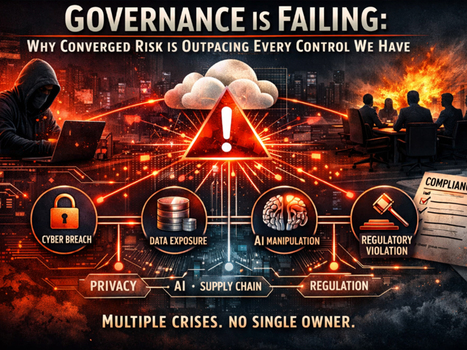
Modern risk doesn’t stay contained—it converges, and failures cascade. Identity, cloud, data, and AI failures don’t occur in isolation, yet governance models still treat them that way.
From escalating AI-enabled threats to persistent skills gaps, security leaders are reshaping their agendas to address several key long-standing and emerging concerns.
The work CISOs are doing to prep for the arrival of quantum computing echoes the race to update computers for Y2K — with one significant difference. They may need to prove, in the here and now, that they will be ready for the expected sea change in cybersecurity.
PwC’s survey found that only 22% of leaders would use fully autonomous AI for cyber defense, while just 21% are implementing quantum-resistant security measures.
Recent supply chain attacks have made one point clear: the attacker is no longer trying only to exploit a vulnerable application at runtime. They are increasingly targeting the systems that create, sign, test, distribute, and update software.
To get content containing either thought or leadership enter:
To get content containing both thought and leadership enter:
To get content containing the expression thought leadership enter:
You can enter several keywords and you can refine them whenever you want. Our suggestion engine uses more signals but entering a few keywords here will rapidly give you great content to curate.