
What happens when AI turns operating assumptions into stress points?
Get Started for FREE
Sign up with Facebook Sign up with X
I don't have a Facebook or a X account


|
Scooped by
JC Gaillard
onto Cybersecurity Leadership Today, 2:09 AM
|
 Scoop.it!
What happens when AI turns operating assumptions into stress points?

 Your new post is loading...
 Your new post is loading...
Your new post is loading...
Scoop.it!
What happens when AI turns operating assumptions into stress points?
Scoop.it!

Many data security strategies are designed to survive audits rather than daily use. Controls are selected to satisfy frameworks and regulatory language, not to align with how data moves across systems in practice.
Scoop.it!

From
www

A proactive, anticipatory, and flexible security posture based on ongoing intelligence and systemic resilience is necessary due to the speed and complexity of AI-enabled threats.
Scoop.it!

Executives who treat transformation as a technology upgrade often see limited returns. Those who treat it as a strategic reinvention unlock new benefits.
Scoop.it!

The AI era is complicating — and exponentiating — the challenges of safeguarding essential and sensitive data. Security leaders must revisit their data security approaches to keep up.
Scoop.it!

AI can strengthen cyber defenses, but only when paired with human oversight, transparent data, and strong governance, not blind trust in autonomous systems.
Scoop.it!

Research shows that both CISOs and boards need to change their approach.
Scoop.it!

Resilience has become the organizing principle for the cybersecurity posture of many organizations, but what about cyber workforce resilience?
Scoop.it!

Board’s must ensure business continuity and resilience in the face of emerging risks generated by AI usage and attack vectors, quantum computing and geopolitics.
Scoop.it!

Turns out the real power move in security isn’t a bigger budget — it’s cutting the clutter and proving what actually reduces risk.
Scoop.it!

Post-quantum cryptography is becoming a supply chain security priority as organizations plan for quantum threats & long-term data protection.
Scoop.it!

“Tool sprawl” in cybersecurity can reduce visibility and overburden your team, increasing risk and diminishing the value of your technology investments.
Scoop.it!

Security leaders’ ever-expanding jurisdictions are increasingly spreading beyond what any single executive can handle. A board-level reassessment of cyber and risk strategies is imperative, experts contend.
|
Scoop.it!

Enterprise endpoint security gaps cost companies $49M yearly in downtime as 1 in 5 devices runs outside enforceable protection.
Scoop.it!

From
www
The question leaders should be asking is no longer “How do we recover?” but “How do we prevent disruption altogether?”
Scoop.it!

Agentic workforce deployed without adequate governance in race to stay ahead
Scoop.it!

Geopolitical Threats Now an Always-on Condition and Most CIOs Aren't Ready
Scoop.it!
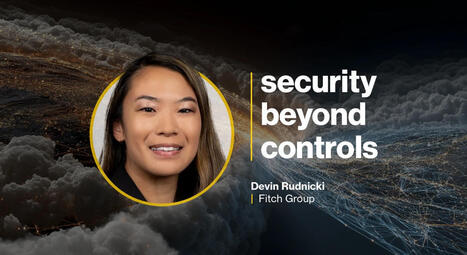
Fitch Group CISO Devin Rudnicki on achieving CISO business alignment through outcome-based security strategy, risk metrics, smart automation.
Scoop.it!

Insurers are rewarding organizations that use AI to strengthen their defenses, while growing more cautious with those whose AI use introduces new risks.
Scoop.it!

Block innovation and you create shadow IT. Govern it well, and it becomes your strongest security control.
Scoop.it!

From
www
Many enterprises are overlooking supply chain risks as part of their cyber resilience strategies.
Scoop.it!

Security teams have learned to measure activity. The harder task is turning those measurements into signals directors can use to govern risk.
Scoop.it!

When the incident happens, the insured often discovers that the question is not simply whether the loss is covered. The question is which insurer will agree that it is their loss to cover.
Scoop.it!

The 'harvest now, decrypt later' threat model could mean businesses' data is already vulnerable.
Scoop.it!

Research proves cybersecurity readiness and transparency are not just safeguards but leading indicators of organizations' superior financial performance.
|





