Your new post is loading...

|
Scooped by
Complexity Digest
December 15, 2018 5:18 PM
|
From preeminent math personality and author of The Joy of x, a brilliant and endlessly appealing explanation of calculus – how it works and why it makes our lives immeasurably better.
Without calculus, we wouldn’t have cell phones, TV, GPS, or ultrasound. We wouldn’t have tamed AIDS or discovered Neptune or figured out how to put 5,000 songs in your pocket.
Though many of us were scared away from this essential, engrossing subject in high school and college, Steven Strogatz’s brilliantly creative, down‑to‑earth history shows that calculus is not about complexity; it’s about simplicity. It harnesses an unreal number—infinity—to tackle real‑world problems, breaking them down into easier ones and then reassembling the answers into solutions that feel miraculous.
Infinite Powers recounts how calculus tantalized and thrilled its inventors, starting with its first glimmers in ancient Greece and bringing us right up to the discovery of gravitational waves (a phenomenon predicted by calculus). Strogatz reveals how this form of math rose to the challenges of each age: how to determine the area of a circle with only sand and a stick; how to explain why Mars goes “backwards” sometimes; how to make electricity with magnets; how to ensure your rocket doesn’t miss the moon; how to cure infectious diseases.
As Strogatz proves, calculus is truly the language of the universe. By unveiling the principles of that language, Infinite Powers makes us marvel at the world anew.
|
|
Scooped by
Complexity Digest
December 13, 2018 3:31 PM
|
How we can invent―but not predict―the future of cities. We cannot predict future cities, but we can invent them. Cities are largely unpredictable because they are complex systems that are more like organisms than machines. Neither the laws of economics nor the laws of mechanics apply; cities are the product of countless individual and collective decisions that do not conform to any grand plan. They are the product of our inventions; they evolve. In Inventing Future Cities, Michael Batty explores what we need to understand about cities in order to invent their future. Batty outlines certain themes―principles―that apply to all cities. He investigates not the invention of artifacts but inventive processes. Today form is becoming ever more divorced from function; information networks now shape the traditional functions of cities as places of exchange and innovation. By the end of this century, most of the world's population will live in cities, large or small, sometimes contiguous, and always connected; in an urbanized world, it will be increasingly difficult to define a city by its physical boundaries. Batty discusses the coming great transition from a world with few cities to a world of all cities; argues that future cities will be defined as clusters in a hierarchy; describes the future “high-frequency,” real-time streaming city; considers urban sprawl and urban renewal; and maps the waves of technological change, which grow ever more intense and lead to continuous innovation―an unending process of creative destruction out of which future cities will emerge.
|
|
Scooped by
Complexity Digest
November 15, 2018 6:25 PM
|
This book provides an introduction to the computational and complex systems modeling of the global spreading of infectious diseases. The latest developments in the area of contagion processes modeling are discussed, and readers are exposed to real world examples of data-model integration impacting the decision-making process. Recent advances in computational science and the increasing availability of real-world data are making it possible to develop realistic scenarios and real-time forecasts of the global spreading of emerging health threats.
The first part of the book guides the reader through sophisticated complex systems modeling techniques with a non-technical and visual approach, explaining and illustrating the construction of the modern framework used to project the spread of pandemics and epidemics. Models can be used to transform data to knowledge that is intuitively communicated by powerful infographics and for this reason, the second part of the book focuses on a set of charts that illustrate possible scenarios of future pandemics. The visual atlas contained allows the reader to identify commonalities and patterns in emerging health threats, as well as explore the wide range of models and data that can be used by policy makers to anticipate trends, evaluate risks and eventually manage future events.
Charting the Next Pandemic puts the reader in the position to explore different pandemic scenarios and to understand the potential impact of available containment and prevention strategies. This book emphasizes the importance of a global perspective in the assessment of emerging health threats and captures the possible evolution of the next pandemic, while at the same time providing the intelligence needed to fight it. The text will appeal to a wide range of audiences with diverse technical backgrounds. Charting the Next Pandemic
Modeling Infectious Disease Spreading in the Data Science Age
Ana Pastore y Piontti, Nicola Perra, Luca Rossi, Nicole Samay, Alessandro Vespignani
|
|
Scooped by
Complexity Digest
October 27, 2018 6:33 PM
|
Network Science In Education
Transformational Approaches in Teaching and Learning
Edited by
Catherine B. Cramer, Mason A. Porter, Hiroki Sayama, Lori Sheetz, Stephen Miles Uzzo

|
Suggested by
AntonJ
October 15, 2018 11:56 PM
|
A look inside the algorithms that are shaping our lives and the dilemmas they bring with them. If you were accused of a crime, who would you rather decide your sentence―a mathematically consistent algorithm incapable of empathy or a compassionate human judge prone to bias and error? What if you want to buy a driverless car and must choose between one programmed to save as many lives as possible and another that prioritizes the lives of its own passengers? And would you agree to share your family’s full medical history if you were told that it would help researchers find a cure for cancer? These are just some of the dilemmas that we are beginning to face as we approach the age of the algorithm, when it feels as if the machines reign supreme. Already, these lines of code are telling us what to watch, where to go, whom to date, and even whom to send to jail. But as we rely on algorithms to automate big, important decisions―in crime, justice, healthcare, transportation, and money―they raise questions about what we want our world to look like. What matters most: Helping doctors with diagnosis or preserving privacy? Protecting victims of crime or preventing innocent people being falsely accused? Hello World takes us on a tour through the good, the bad, and the downright ugly of the algorithms that surround us on a daily basis. Mathematician Hannah Fry reveals their inner workings, showing us how algorithms are written and implemented, and demonstrates the ways in which human bias can literally be written into the code. By weaving in relatable, real world stories with accessible explanations of the underlying mathematics that power algorithms, Hello World helps us to determine their power, expose their limitations, and examine whether they really are improvement on the human systems they replace.
|
|
Suggested by
AntonJ
October 15, 2018 7:55 PM
|
To understand something, you need to know its history. Right? Wrong, says Alex Rosenberg in How History Gets Things Wrong. Feeling especially well-informed after reading a book of popular history on the best-seller list? Don't. Narrative history is always, always wrong. It not just incomplete or inaccurate but deeply wrong, as wrong as Ptolemaic astronomy. We no longer believe that the earth is the center of the universe. Why do we still believe in historical narrative? Our attachment to history as a vehicle for understanding has a long Darwinian pedigree and a genetic basis. Our love of stories is hard-wired. Neuroscience reveals that human evolution shaped a tool useful for survival into a defective theory of human nature. Stories historians tell, Rosenberg continues, are not only wrong but harmful. Israel and Palestine, for example, have dueling narratives of dispossession that prevent one side from compromising with the other. Henry Kissinger applied lessons drawn from the Congress of Vienna to American foreign policy with disastrous results. Human evolution improved primate mind reading―the ability to anticipate the behavior of others, whether predators, prey, or cooperators―to get us to the top of the African food chain. Now, however, this hard-wired capacity makes us think we can understand history―what the Kaiser was thinking in 1914, why Hitler declared war on the United States―by uncovering the narratives of what happened and why. In fact, Rosenberg argues, we will only understand history if we don't make it into a story.
|
|
Suggested by
AntonJ
September 25, 2018 5:05 PM
|
Complex Systems are natural systems that science is unable to describe exhaustively. Examples of Complex Systems are both unicellular and multicellular living beings; human brains; human immune systems; ecosystems; human societies; the global economy; the climate and geology of our planet. This book is an account of a marvelous interdisciplinary journey the author made to understand properties of the Complex Systems. He has undertaken his trip, equipped with the fundamental principles of physical chemistry, in particular, the Second Law of Thermodynamics that describes the spontaneous evolution of our universe, and the tools of Non-linear dynamics. By dealing with many disciplines, in particular, chemistry, biology, physics, economy, and philosophy, the author demonstrates that Complex Systems are intertwined networks, working in out-of-equilibrium conditions, which exhibit emergent properties, such as self-organization phenomena and chaotic behaviors in time and space.
|
|
Suggested by
AntonJ
September 25, 2018 7:50 AM
|
Eric R. Kandel, the winner of the Nobel Prize in Physiology or Medicine for his foundational research into memory storage in the brain, is one of the pioneers of modern brain science. His work continues to shape our understanding of how learning and memory work and to break down age-old barriers between the sciences and the arts. In his seminal new book, The Disordered Mind, Kandel draws on a lifetime of pathbreaking research and the work of many other leading neuroscientists to take us on an unusual tour of the brain. He confronts one of the most difficult questions we face: How does our mind, our individual sense of self, emerge from the physical matter of the brain? The brain’s 86 billion neurons communicate with one another through very precise connections. But sometimes those connections are disrupted. The brain processes that give rise to our mind can become disordered, resulting in diseases such as autism, depression, schizophrenia, Parkinson’s, addiction, and post-traumatic stress disorder. While these disruptions bring great suffering, they can also reveal the mysteries of how the brain produces our most fundamental experiences and capabilities―the very nature of what it means to be human. Studies of autism illuminate the neurological foundations of our social instincts; research into depression offers important insights on emotions and the integrity of the self; and paradigm-shifting work on addiction has led to a new understanding of the relationship between pleasure and willpower. By studying disruptions to typical brain functioning and exploring their potential treatments, we will deepen our understanding of thought, feeling, behavior, memory, and creativity. Only then can we grapple with the big question of how billions of neurons generate consciousness itself.
|
|
Scooped by
Complexity Digest
September 25, 2018 3:53 AM
|
“Anyone who is not shocked by quantum theory has not understood it.”
Since Niels Bohr said this many years ago, quantum mechanics has only been getting more shocking. We now realize that it’s not really telling us that “weird” things happen out of sight, on the tiniest level, in the atomic world: rather, everything is quantum. But if quantum mechanics is correct, what seems obvious and right in our everyday world is built on foundations that don’t seem obvious or right at all—or even possible.
An exhilarating tour of the contemporary quantum landscape, Beyond Weird is a book about what quantum physics really means—and what it doesn’t. Science writer Philip Ball offers an up-to-date, accessible account of the quest to come to grips with the most fundamental theory of physical reality, and to explain how its counterintuitive principles underpin the world we experience. Over the past decade it has become clear that quantum physics is less a theory about particles and waves, uncertainty and fuzziness, than a theory about information and knowledge—about what can be known, and how we can know it. Discoveries and experiments over the past few decades have called into question the meanings and limits of space and time, cause and effect, and, ultimately, of knowledge itself. The quantum world Ball shows us isn’t a different world. It is our world, and if anything deserves to be called “weird,” it’s us.
|
|
Scooped by
Complexity Digest
August 27, 2018 10:46 AM
|
Statistical relationships among the variables of a complex system reveal a lot about its physical behavior. Therefore, identification of the relevant variables and characterization of their interactions are crucial for a better understanding of a complex system. Correlation-based techniques have been widely utilized to elucidate the linear statistical dependencies in many science and engineering applications. However, for the analysis of nonlinear dependencies, information-theoretic quantities, such as Mutual Information (MI) and the Transfer Entropy (TE), have been proven to be superior. MI quantifies the amount of information obtained about one random variable, through the other random variable, and it is symmetric. As an asymmetrical measure, TE quantifies the amount of directed (time-asymmetric) transfer of information between random processes and therefore is related to the measures of causality. https://doi.org/10.3390/books978-3-03842-920-3 Open Access
© 2018 MDPI; under CC BY-NC-ND license
Transfer Entropy
Deniz Gençağa (Ed.)
Pages: VIII, 326
Published: August 2018
|
|
Scooped by
Complexity Digest
June 26, 2018 1:14 PM
|
This text is about spreading of information and influence in complex networks. Although previously considered similar and modeled in parallel approaches, there is now experimental evidence that epidemic and social spreading work in subtly different ways. While previously explored through modeling, there is currently an explosion of work on revealing the mechanisms underlying complex contagion based on big data and data-driven approaches. This volume consists of four parts. Part 1 is an Introduction, providing an accessible summary of the state-of-the-art. Part 2 provides an overview of the central theoretical developments in the field. Part 3 describes the empirical work on observing spreading processes in real-world networks. Finally, Part 4 goes into detail with recent and exciting new developments: dedicated studies designed to measure specific aspects of the spreading processes, often using randomized control trials to isolate the network effect from confounders, such as homophily. Each contribution is authored by leading experts in the field. This volume, though based on technical selections of the most important results on complex spreading, remains quite accessible to the newly interested. The main benefit to the reader is that the topics are carefully structured to take the novice to the level of expert on the topic of social spreading processes. This book will be of great importance to a wide field: from researchers in physics, computer science, and sociology to professionals in public policy and public health. Complex Spreading Phenomena in Social Systems
Influence and Contagion in Real-World Social Networks
Editors: Sune Lehmann, Yong-Yeol Ahn
|
|
Suggested by
AntonJ
June 4, 2018 4:36 PM
|
A Turing Award-winning computer scientist and statistician shows how understanding causality has revolutionized science and will revolutionize artificial intelligence "Correlation is not causation." This mantra, chanted by scientists for more than a century, has led to a virtual prohibition on causal talk. Today, that taboo is dead. The causal revolution, instigated by Judea Pearl and his colleagues, has cut through a century of confusion and established causality--the study of cause and effect--on a firm scientific basis. His work explains how we can know easy things, like whether it was rain or a sprinkler that made a sidewalk wet; and how to answer hard questions, like whether a drug cured an illness. Pearl's work enables us to know not just whether one thing causes another: it lets us explore the world that is and the worlds that could have been. It shows us the essence of human thought and key to artificial intelligence. Anyone who wants to understand either needs The Book of Why.
|
|
Suggested by
AntonJ
June 4, 2018 12:33 PM
|
This book provides a comprehensive review of complex networks from three different domains, presents novel methods for analyzing them, and highlights applications with accompanying case studies. Special emphasis is placed on three specific kinds of complex networks of high technological and scientific importance: software networks extracted from the source code of computer programs, ontology networks describing semantic web ontologies, and co-authorship networks reflecting collaboration in science. The book is primarily intended for researchers, teachers and students interested in complex networks and network data analysis. However, it will also be valuable for researchers dealing with software engineering, ontology engineering and scientometrics, as it demonstrates how complex network analysis can be used to address important research issues in these three disciplines.
|
|
|
Scooped by
Complexity Digest
December 14, 2018 4:47 PM
|
The study of complex systems and their related phenomena has become a major research venue in the recent years and it is commonly regarded as an important part of the scientific revolution developing through the 21st century. The science of complexity is concerned with the laws of operation and evolution of systems formed by many locally interacting elements that produce collective order at spatiotemporal scales larger than that of the single constitutive elements. This new thinking, that explores formally the emergence of spontaneous higher order and feedback hierarchies, has been particularly successful in the biological sciences. One particular life-threatening disease in humans, overwhelmingly common in the modern world is cancer. It is regarded as a collection of phenomena involving anomalous cell growth caused by an underlying genetic instability with the potential to spread to other parts of the human body. In the present book, a group of well recognised specialists discuss new ideas about the disease. These authors coming from solid backgrounds in physics, mathematics, medicine, molecular and cell biology, genetics and anthropology have dedicated their time to write an authoritative free-available text published under the open access philosophy that hopefully would be in the front-line struggle against cancer, a complex disease. Cancer: a complex disease
by Elena R. Alvarez-Buylla • Juan Carlos Balandran • Jose Luis Caldu-Primo • Jose Davila-Velderrain • Jennifer Enciso • Enrique Hernandez-Lemus • Lucia S. Lopez Castillo • Juan Carlos Martinez-Garcia • Nancy R. Mejia-Dominguez • Leticia R. Paiva • Rosana Pelayo • Osbaldo Resendis-Antonio • Octavio Valadez-Blanco
|
|
Scooped by
Complexity Digest
November 28, 2018 11:12 AM
|
From the stock market to genomics laboratories, census figures to marketing email blasts, we are awash with data. But as anyone who has ever opened up a spreadsheet packed with seemingly infinite lines of data knows, numbers aren't enough: we need to know how to make those numbers talk. In The Model Thinker, social scientist Scott E. Page shows us the mathematical, statistical, and computational models--from linear regression to random walks and far beyond--that can turn anyone into a genius. At the core of the book is Page's "many-model paradigm," which shows the reader how to apply multiple models to organize the data, leading to wiser choices, more accurate predictions, and more robust designs. The Model Thinker provides a toolkit for business people, students, scientists, pollsters, and bloggers to make them better, clearer thinkers, able to leverage data and information to their advantage.
|
|
Scooped by
Complexity Digest
November 5, 2018 12:02 PM
|
A novel theoretical framework for an embodied, non-representational approach to language that extends and deepens enactive theory, bridging the gap between sensorimotor skills and language.
Linguistic Bodies offers a fully embodied and fully social treatment of human language without positing mental representations. The authors present the first coherent, overarching theory that connects dynamical explanations of action and perception with language. Arguing from the assumption of a deep continuity between life and mind, they show that this continuity extends to language. Expanding and deepening enactive theory, they offer a constitutive account of language and the co-emergent phenomena of personhood, reflexivity, social normativity, and ideality. Language, they argue, is not something we add to a range of existing cognitive capacities but a new way of being embodied. Each of us is a linguistic body in a community of other linguistic bodies. The book describes three distinct yet entangled kinds of human embodiment, organic, sensorimotor, and intersubjective; it traces the emergence of linguistic sensitivities and introduces the novel concept of linguistic bodies; and it explores the implications of living as linguistic bodies in perpetual becoming, applying the concept of linguistic bodies to questions of language acquisition, parenting, autism, grammar, symbol, narrative, and gesture, and to such ethical concerns as microaggression, institutional speech, and pedagogy. Linguistic Bodies
The Continuity between Life and Language
By Ezequiel A. Di Paolo, Elena Clare Cuffari and Hanne De Jaegher

|
Suggested by
William Grassie
October 22, 2018 11:28 AM
|
Applied Big History: A Guide for Entrepreneurs, Investors, and Other Living Things (9781719853071): William Grassie: Amazon Books Foreword by Mitch Julis, Canyon Partners - Thriving in a Complex World
- The Great Matrix
- The Economy of a Single Cell
- Complexity Economics
- Death and Taxes
- Your Hunter-Gatherer Brain
- The Big Lollapaloozas
- Existential Challenges
- The Bottom Line
|
|
Suggested by
AntonJ
October 15, 2018 9:55 PM
|
This book explores fascinating topics at the edge of life, guiding the reader all the way from the relation of life processes to the second law of thermodynamics and the abundance of complex organic compounds in the universe through to the latest advances in synthetic biology and metabolic engineering. The background to the book is the extraordinary scientific adventures that are being undertaken as progress is made toward the creation of an artificial cell and the control of life processes. This journey involves input from research areas as diverse as genetic engineering, physical chemistry, and information theory. Life is to be thought of not only as a chemical event but also as an information process, with the genome a repository of information gathered over time through evolution. Knowledge of the mechanisms affecting the increase in complexity associated with evolutionary paths is improving, and there appear to be analogies with the evolution of the technologies promoting the development of our society. The book will be of wide interest to students at all levels and to others with an interest in the subject.
|
|
Scooped by
Complexity Digest
October 14, 2018 8:13 PM
|
Too often, accomplishment does not equate to success. We did the work but didn't get the promotion; we played hard but weren't recognized; we had the idea but didn't get the credit. We've always been told that talent and a strong work ethic are the key to getting ahead, but in today's world these efforts rarely translate into tangible results. Recognizing this disconnect, Laszlo Barabasi, one of the world's leading experts on the science of networks, uncovers what success really is: a collective phenomenon based on the thoughts and praise of those around you. In The Formula, Barabasi highlights the vital important of community respect and appreciation when connecting performance to recognition--the elusive link between performance and success. By leveraging the power of big data and historic case studies, Barabasi reveals the unspoken rules behind who truly gets ahead and why, and outlines the twelve laws that govern this phenomenon and how we can use them to our own advantage. Unveiling the scientific principles that drive success, this trailblazing book offers a new understanding of the very foundation of how people excel in today's society. The Formula: The Universal Laws of Success
by Albert-László Barabási November 6, 2018
|
|
Suggested by
AntonJ
September 25, 2018 12:05 PM
|
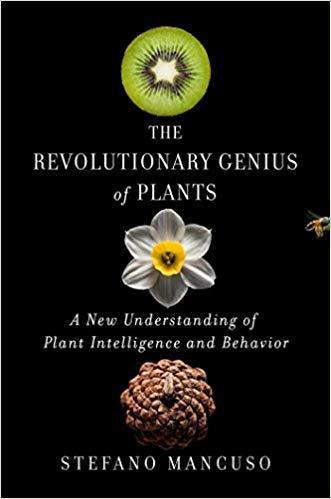
Do plants have intelligence? Do they have memory? Are they better problem solvers than people? The Revolutionary Genius of Plants—a fascinating, paradigm-shifting work that upends everything you thought you knew about plants—makes a compelling scientific case that these and other astonishing ideas are all true.
Plants make up eighty percent of the weight of all living things on earth, and yet it is easy to forget that these innocuous, beautiful organisms are responsible for not only the air that lets us survive, but for many of our modern comforts: our medicine, food supply, even our fossil fuels.
On the forefront of uncovering the essential truths about plants, world-renowned scientist Stefano Mancuso reveals the surprisingly sophisticated ability of plants to innovate, to remember, and to learn, offering us creative solutions to the most vexing technological and ecological problems that face us today. Despite not having brains or central nervous systems, plants perceive their surroundings with an even greater sensitivity than animals. They efficiently explore and react promptly to potentially damaging external events thanks to their cooperative, shared systems; without any central command centers, they are able to remember prior catastrophic events and to actively adapt to new ones.
Every page of The Revolutionary Genius of Plants bubbles over with Stefano Mancuso’s infectious love for plants and for the eye-opening research that makes it more and more clear how remarkable our fellow inhabitants on this planet really are. In his hands, complicated science is wonderfully accessible, and he has loaded the book with gorgeous photographs that make for an unforgettable reading experience. The Revolutionary Genius of Plants opens the doors to a new understanding of life on earth.
|
|
Suggested by
AntonJ
September 25, 2018 5:47 AM
|
This collection of essays explores the different ways the insights from complexity theory can be applied to law. Complexity theory – a variant of systems theory – views law as an emergent, complex, self-organising system comprised of an interactive network of actors and systems that operate with no overall guiding hand, giving rise to complex, collective behaviour in law communications and actions. Addressing such issues as the unpredictability of legal systems, the ability of legal systems to adapt to changes in society, the importance of context, and the nature of law, the essays look to the implications of a complexity theory analysis for the study of public policy and administrative law, international law and human rights, regulatory practices in business and finance, and the practice of law and legal ethics. These are areas where law, which craves certainty, encounters unending, irresolvable complexity. This collection shows the many ways complexity theory thinking can reshape and clarify our understanding of the various problems relating to the theory and practice of law.
|
|
Scooped by
Complexity Digest
August 27, 2018 2:31 PM
|
A new collection of essays by the author of the successful volume Thinking Ahead - Essays on Big Data, Digital Revolution, and Participatory Market Society
Examines the dangers of a world in which algorithms and social bots aim to control both the societal dynamics and individual behaviors.
Introduces novel approaches on how to redefine collective trust and build platforms to support core societal values
Towards Digital Enlightenment
Essays on the Dark and Light Sides of the Digital Revolution
Editors: Helbing, Dirk (Ed.)
|
|
Scooped by
Complexity Digest
August 21, 2018 10:58 AM
|
This book introduces a new approach to environmental sociology, by integrating complexity-informed social science, Marxian ecological theory, and resilience-based human ecology. It argues that sociologists have largely ignored developments in ecology which move beyond functionalist approaches to systems analysis, and as a result, environmental sociology has failed to capitalise not only on the analytical promise of resilience ecology, but on complementary developments in complexity theory. By tracing the origins and discussing current developments in each of these areas, it offers several paths to interdisciplinary dialogue. Eoin Flaherty argues that complexity theory and Marxian ecology can enhance our understanding of the social aspect of social-ecological systems, whilst a resilience approach can sharpen the analytical power of environmental sociology. Complexity and Resilience in the Social and Ecological Sciences
Eoin Flaherty Springer
|
|
Scooped by
Complexity Digest
June 12, 2018 1:54 PM
|
This thesis looks at how cities operate as Complex Adaptive Systems (CAS). It focuses on how certain characteristics of urban form can support an urban environment's capacity to self-organize, enabling emergent features to appear that, while unplanned, remain highly functional. The research is predicated on the notion that CAS processes operate across diverse domains: that they are ‘generalized' or ‘universal'. The goal of the dissertation is then to determine how such generalized principles might ‘play out' within the urban fabric. The main thrust of the work is to unpack how elements of the urban fabric might be considered as elements of a complex system and then identify how one might design these elements in a more deliberate manner, such that they hold a greater embedded capacity to respond to changing urban forces. The research is further predicated on the notion that, while such responses are both imbricated with, and stewarded by human actors, the specificities of the material characteristics themselves matter. Some forms of material environments hold greater intrinsic physical capacities (or affordances) to enact the kinds of dynamic processes observed in complex systems than others (and can, therefore, be designed with these affordances in mind). The primary research question is thus: What physical and morphological conditions need to be in place within an urban environment in order for Complex Adaptive Systems dynamics arise - such that the physical components (or ‘building blocks') of the urban environment have an enhanced capacity to discover functional configurations in space and time as a response to unfolding contextual conditions? WOHL, Sharon. Complex Adaptive Systems & Urban Morphogenesis. A+BE | Architecture and the Built Environment, [S.l.], n. 10, p. 1-238, june 2018. ISSN 2214-7233. Available at: <https://journals.open.tudelft.nl/index.php/abe/article/view/2397>. Date accessed: 12 june 2018. doi: https://doi.org/10.7480/abe.2018.10.
|
|
Suggested by
AntonJ
June 4, 2018 2:34 PM
|
The rise of manufacturing could not have happened without an attention to precision. At the dawn of the Industrial Revolution in eighteenth-century England, standards of measurement were established, giving way to the development of machine tools—machines that make machines. Eventually, the application of precision tools and methods resulted in the creation and mass production of items from guns and glass to mirrors, lenses, and cameras—and eventually gave way to further breakthroughs, including gene splicing, microchips, and the Hadron Collider. Simon Winchester takes us back to origins of the Industrial Age, to England where he introduces the scientific minds that helped usher in modern production: John Wilkinson, Henry Maudslay, Joseph Bramah, Jesse Ramsden, and Joseph Whitworth. It was Thomas Jefferson who later exported their discoveries to the fledgling United States, setting the nation on its course to become a manufacturing titan. Winchester moves forward through time, to today’s cutting-edge developments occurring around the world, from America to Western Europe to Asia. As he introduces the minds and methods that have changed the modern world, Winchester explores fundamental questions. Why is precision important? What are the different tools we use to measure it? Who has invented and perfected it? Has the pursuit of the ultra-precise in so many facets of human life blinded us to other things of equal value, such as an appreciation for the age-old traditions of craftsmanship, art, and high culture? Are we missing something that reflects the world as it is, rather than the world as we think we would wish it to be? And can the precise and the natural co-exist in society?
|