Your new post is loading...

|
Suggested by
AntonJ
February 10, 2014 8:17 PM
|
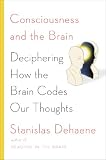
How does our brain generate a conscious thought? And why does so much of our knowledge remain unconscious? Thanks to clever psychological and brain-imaging experiments, scientists are closer to cracking this mystery than ever before.
In this lively book, Stanislas Dehaene describes the pioneering work his lab and the labs of other cognitive neuroscientists worldwide have accomplished in defining, testing, and explaining the brain events behind a conscious state. We can now pin down the neurons that fire when a person reports becoming aware of a piece of information and understand the crucial role unconscious computations play in how we make decisions. The emerging theory enables a test of consciousness in animals, babies, and those with severe brain injuries.
A joyous exploration of the mind and its thrilling complexities, Consciousness and the Brain will excite anyone interested
in cutting-edge science and technology and the vast philosophical, personal, and ethical implications of finally quantifying
consciousness.

|
Scooped by
Complexity Digest
February 6, 2014 12:51 PM
|
How best to prevent and control an infectious disease pandemic is one of the major challenges facing modern biomedicine, with inputs and impacts beyond the purely scientific. The potential for novel microbial pathogens to emerge and cause mass sickness and death has inspired often frightening and sometimes fantastic tales, with the distinction between fact and fiction often blurry at best. Globalization has aided the rapid spread of ancient and novel pathogens at a time when the drugs to combat them are losing their effectiveness as the pathogens evolve resistance. Without a reasoned view it might be easy to believe that the human species is a face mask away from extinction. A factual, yet accessible, account of how pandemics arise and what we might do to prevent them would therefore be a valuable asset. Peter Doherty's new book, Pandemics: What Everyone Needs to Know, provides a calm and authoritative counterpoint to pandemic scare-mongering, and manages to entertain at the same time.
Holmes EC (2014) Pandemics–Keep Calm and Carry On. PLoS Biol 12(2): e1001780. http://dx.doi.org/10.1371/journal.pbio.1001780
Doherty PC (2013) Pandemics: What Everyone Needs to Know. New York: Oxford University Press. 222 pp. ISBN 978-0-19-989812-1 (paperback).
http://tinyurl.com/la6eos5
|
|
Scooped by
Complexity Digest
January 31, 2014 7:50 PM
|
Dehaene has little patience with philosophy. No eristic and endless debates about whether consciousness can or cannot be explained within a reductionist framework. The book introduces the methods that acted as midwife at the birth of a science of consciousness: treating people's reports about their subjective experiences as genuine scientific data (with appropriate caveats); manipulating the visibility of briefly flashed images of faces, objects, words, or numbers so that the subject sometimes consciously sees them but sometimes not (depending on experimental conditions or uncontrolled processes in the subject's brain); and recording the associated neural activity using functional brain imaging, electroencephalography (EEG), magnetoencephalography, or electrodes implanted into the brain of epileptic patients to monitor seizures for clinical purposes.
In the Playing Ground of Consciousness Christof Koch Science 31 January 2014:
Vol. 343 no. 6170 p. 487
http://dx.doi.org/10.1126/science.1248710
Consciousness and the Brain Deciphering How the Brain Codes Our Thoughts by Stanislas Dehaene Viking, New York, 2014. 350 pp. $27.95, C$32.95. ISBN 9780670025435. http://tinyurl.com/klpczln
|
|
Suggested by
AntonJ
January 27, 2014 8:50 AM
|
Understanding Complex Urban Systems takes as its point of departure the insight that the challenges of global urbanization and the complexity of urban systems cannot be understood – let alone ‘managed’ – by sectoral and disciplinary approaches alone. But while there has recently been significant progress in broadening and refining the methodologies for the quantitative modeling of complex urban systems, in deepening the theoretical understanding of cities as complex systems, or in illuminating the implications for urban planning, there is still a lack of well-founded conceptual thinking on the methodological foundations and the strategies of modeling urban complexity across the disciplines.
Bringing together experts from the fields of urban and spatial planning, ecology, urban geography, real estate analysis, organizational cybernetics, stochastic optimization, and literary studies, as well as specialists in various systems approaches and in transdisciplinary methodologies of urban analysis, the volume seeks to advance the discussion on multidisciplinary approaches to urban modeling. While engaging with the ‘state of the art’ in their respective fields, the contributions are specifically written for both experts from a broad range of disciplines as well as for urban practitioners who feel the need for new approaches given the uncertainty of current developments.
|
|
Suggested by
AntonJ
January 27, 2014 8:50 AM
|
This unique book explores recent developments in experimental research in this broad field, organized in four distinct sections. Part I introduces the reader to the fractional dynamics and Lie group analysis for nonlinear partial differential equations. Part II covers chaos and complexity in nonlinear Hamiltonian systems, important to understand the resonance interactions in nonlinear dynamical systems, such as Tsunami waves and wildfire propagations; as well as Lev flights in chaotic trajectories, dynamical system synchronization and DNA information complexity analysis. Part III examines chaos and periodic motions in discontinuous dynamical systems, extensively present in a range of systems, including piecewise linear systems, vibro-impact systems and drilling systems in engineering. And in Part IV, engineering and financial nonlinearity are discussed. The mechanism of shock wave with saddle-node bifurcation and rotating disk stability will be presented, and the financial nonlinear models will be discussed.
|
|
Suggested by
AntonJ
January 23, 2014 8:39 AM
|
This introductory text is devoted to exposing the underlying nature of price formation in financial markets as a predominantly sociological phenomenon that relates individual decision-making to emergent and co-evolving social and financial structures.
Two different levels of this sociological influence are considered: First, we examine how price formation results from the social dynamics of interacting individuals, where interaction occurs either through the price or by direct communication. Then the same processes are revisited and examined at the level of larger groups of individuals.
In this book, models of both levels of socio-finance are presented, and it is shown, in particular, how complexity theory provides the conceptual and methodological tools needed to understand and describe such phenomena. Accordingly, readers are first given a broad introduction to the standard economic theory of rational financial markets and will come to understand its shortcomings with the help of concrete examples. Complexity theory is then introduced in order to properly account for behavioral decision-making and match the observed market dynamics.
|
|
Suggested by
AntonJ
January 23, 2014 8:38 AM
|
The first notable feature of this book is its innovation: Computational intelligence (CI), a fast evolving area, is currently attracting lots of researchers’ attention in dealing with many complex problems. At present, there are quite a lot competing books existing in the market. Nevertheless, the present book is markedly different from the existing books in that it presents new paradigms of CI that have rarely mentioned before, as opposed to the traditional CI techniques or methodologies employed in other books. During the past decade, a number of new CI algorithms are proposed. Unfortunately, they spread in a number of unrelated publishing directions which may hamper the use of such published resources. These provide us with motivation to analyze the existing research for categorizing and synthesizing it in a meaningful manner. The mission of this book is really important since those algorithms are going to be a new revolution in computer science. We hope it will stimulate the readers to make novel contributions or even start a new paradigm based on nature phenomena. Although structured as a textbook, the book's straightforward, self-contained style will also appeal to a wide audience of professionals, researchers and independent learners. We believe that the book will be instrumental in initiating an integrated approach to complex problems by allowing cross-fertilization of design principles from different design philosophies. The second feature of this book is its comprehensiveness: Through an extensive literature research, there are 134 innovative CI algorithms covered in this book.
|
|
Suggested by
AntonJ
January 23, 2014 8:38 AM
|
This important collection presents recent advances in nonlinear dynamics including analytical solutions, chaos in Hamiltonian systems, time-delay, uncertainty, and bio-network dynamics. Nonlinear Dynamics and Complexity equips readers to appreciate this increasingly main-stream approach to understanding complex phenomena in nonlinear systems as they are examined in a broad array of disciplines. The book facilitates a better understanding of the mechanisms and phenomena in nonlinear dynamics and develops the corresponding mathematical theory to apply nonlinear design to practical engineering.
|
|
Scooped by
Complexity Digest
January 6, 2014 10:54 AM
|
Evolution and complexity characterize both biological and artificial life – by direct modeling of biological processes and the creation of populations of interacting entities from which complex behaviors can emerge and evolve.
This edited book includes invited chapters from leading scientists in the fields of artificial life, complex systems, and evolutionary computing. The contributions identify both fundamental theoretical issues and state-of-the-art real-world applications.
The book is intended for researchers and graduate students in the related domains.
|
|
Suggested by
AntonJ
January 6, 2014 10:04 AM
|
Since the second half of the 20th century machine computations have played a critical role in science and engineering. Computer-based techniques have become especially important in molecular biology, since they often represent the only viable way to gain insights into the behavior of a biological system as a whole. The complexity of biological systems, which usually needs to be analyzed on different time- and size-scales and with different levels of accuracy, requires the application of different approaches, ranging from comparative analysis of sequences and structural databases, to the analysis of networks of interdependence between cell components and processes, through coarse-grained modeling to atomically detailed simulations, and finally to molecular quantum mechanics. This book provides a comprehensive overview of modern computer-based techniques for computing the structure, properties and dynamics of biomolecules and biomolecular processes. The twenty-two chapters, written by scientists from all over the world, address the theory and practice of computer simulation techniques in the study of biological phenomena. The chapters are grouped into four thematic sections dealing with the following topics: the methodology of molecular simulations; applications of molecular simulations; bioinformatics methods and use of experimental information in molecular simulations; and selected applications of molecular quantum mechanics. The book includes an introductory chapter written by Harold A. Scheraga, one of the true pioneers in simulation studies of biomacromolecules.
|
|
Suggested by
AntonJ
January 6, 2014 9:54 AM
|
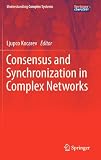
In this book for the first time two scientific fields - consensus formation and synchronization of communications - are presented together and examined through their interrelational aspects, of rapidly growing importance. Both fields have indeed attracted enormous research interest especially in relation to complex networks.
In networks of dynamic systems (or agents), consensus means to reach an agreement regarding a certain quantity of interest that depends on the state of all dynamical systems (agents). Consensus problems have a long history in control theory and computer sciences, and form the foundation of the field of distributed computing. Synchronization, which defines correlated-in-time behavior between different processes and roots going back to Huygens to the least, is now a highly popular, exciting and rapidly developing topic, with applications ranging from biological networks to mathematical epidemiology, and from processing information in the brain to engineering of communications devices.
The book reviews recent finding in both fields and describes novel approaches to consensus formation, where consensus is realized as an instance of the nonlinear dynamics paradigm of chaos synchronization. The chapters are written by world-known experts in both fields and cover topics ranging from fundaments to various applications of consensus and synchronization.
|
|
Suggested by
AntonJ
December 11, 2013 2:02 PM
|
For the past fifty years, popular culture has led us to believe in the left brain vs. right brain theory of personality types. It would be an illuminating theory if it did not have one major drawback: It is simply not supported by science. In contrast, the Top Brain, Bottom Brain theory is based on solid research that has stayed within the confines of labs all over the world—until now.
With cowriter G. Wayne Miller, Stephen M. Kosslyn, PhD, a leader in the field of cognitive neuroscience, explains this exciting new theory for the first time. Kosslyn and Miller describe how the top and bottom parts of the brain work together, summarizing extensive research with ease and accessibility. In doing so, they introduce us to four modes of thought: Mover, Perceiver, Stimulator, and Adaptor.
These ways of thinking and behaving shape your personality, and with the scientifically developed test provided in the book, you’ll quickly be able to determine which mode best defines your dominant way of thinking. Once you’ve identified your dominant cognitive mode, you can reflect on the many possible practical applications from the way you conduct business to your relationships to your voyage of personal discovery.
|
|
Suggested by
AntonJ
December 11, 2013 1:36 PM
|
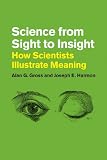
John Dalton’s molecular structures. Scatter plots and geometric diagrams. Watson and Crick’s double helix. The way in which scientists understand the world—and the key concepts that explain it—is undeniably bound up in not only words, but images. Moreover, from PowerPoint presentations to articles in academic journals, scientific communication routinely relies on the relationship between words and pictures. In Science from Sight to Insight, Alan G. Gross and Joseph E. Harmon present a short history of the scientific visual, and then formulate a theory about the interaction between the visual and textual. With great insight and admirable rigor, the authors argue that scientific meaning itself comes from the complex interplay between the verbal and the visual in the form of graphs, diagrams, maps, drawings, and photographs. The authors use a variety of tools to probe the nature of scientific images, from Heidegger’s philosophy of science to Peirce’s semiotics of visual communication. Their synthesis of these elements offers readers an examination of scientific visuals at a much deeper and more meaningful level than ever before.
|
|
|
Suggested by
AntonJ
February 10, 2014 6:17 PM
|
Demonstrating the different roles that logic plays in the disciplines of computer science, mathematics, and philosophy, this concise undergraduate textbook covers select topics from three different areas of logic: proof theory, computability theory, and nonclassical logic. The book balances accessibility, breadth, and rigor, and is designed so that its materials will fit into a single semester. Its distinctive presentation of traditional logic material will enhance readers' capabilities and mathematical maturity. The proof theory portion presents classical propositional logic and first-order logic using a computer-oriented (resolution) formal system. Linear resolution and its connection to the programming language Prolog are also treated. The computability component offers a machine model and mathematical model for computation, proves the equivalence of the two approaches, and includes famous decision problems unsolvable by an algorithm. The section on nonclassical logic discusses the shortcomings of classical logic in its treatment of implication and an alternate approach that improves upon it: Anderson and Belnap's relevance logic. Applications are included in each section. The material on a four-valued semantics for relevance logic is presented in textbook form for the first time.

|
Suggested by
Segismundo
February 3, 2014 11:51 AM
|
[...]The first half of the book provides the background on why and how evolution has shaped men and women to behave in different ways. [...] In the second half of the book, the author attempts to explain gender inequality, drawing on these stories of cooperation and conflict to illuminate why so few women are found in the highest echelons of business.
|
|
Scooped by
Complexity Digest
January 27, 2014 8:57 AM
|
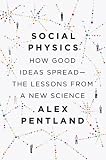
For good or ill, big data and networks have taken over our lives and, unfortunately, they too often run amok. From the Arab Spring, mediated on Twitter and Facebook, to the NSA spying scandal, to the 2008 financial crash, big data and networks are causing wrenching changes but very rarely can we piece together why, how, or what do to about the problem. Alex “Sandy” Pentland and his team have created a new data science that not only describes how networks of people behave but also creates actionable intelligence from that understanding. Called “Social Physics,” it encapsulates social, analytical, computer, and managerial sciences into a synthesis that allows us to build more resilient and creative societies while at the same time providing greater protection for personal privacy and resistance to cyber attack. Pentland’s new book, SOCIAL PHYSICS: How Good Ideas Spread—The Lessons from a New Science, is a landmark tour of this new science, offering revolutionary insights into the mysteries of collective intelligence and social influence.
|
|
Suggested by
AntonJ
January 27, 2014 8:50 AM
|
This wide-ranging and accessible book serves as a fascinating guide to the strategies and concepts that help us understand the boundaries between physics, on the one hand, and sociology, economics, and biology on the other. From cooperation and criticality to flock dynamics and fractals, the author addresses many of the topics belonging to the broad theme of complexity. He chooses excellent examples (requiring no prior mathematical knowledge) to illuminate these ideas and their implications. The lively style and clear description of the relevant models will appeal both to novices and those with an existing knowledge of the field.
|
|
Scooped by
Complexity Digest
January 24, 2014 4:23 PM
|
What is absorbing about Dave Eggers's latest novel is not the dystopic world it depicts but the way that arose: Everyone at The Circle, a Google-Amazon-Facebook-Twitter mash-up, is eager to make the world a better place. Engineers at heart, they relentlessly innovate to reduce crime, to organize and store all information, and to leave no one behind. While their motivations are pure, each of their products is a subtle slide toward the 21st century's version of Orwell's 1984—not a world in which a selected few control many but one where everyone monitors everybody. As the company helps us become “all-seeing, all knowing,” privacy becomes a crime, and the upbeat culture of The Circle morphs into an organization whose core values are lifted from the playbook of the U.S. National Security Agency (NSA): “Privacy is theft.” “Secrets are lies.”
Bordering Fiction
Albert-László Barabási Science 24 January 2014:
Vol. 343 no. 6169 p. 372
http://dx.doi.org/10.1126/science.1248660
The Circle A Novel by Dave Eggers Knopf, New York/McSweeney's Books, San Francisco, 2013. 501 pp. $27.95. ISBN 9780385351393. Hamish Hamilton, London. £18.99. ISBN 9780241146484. http://tinyurl.com/ot63qjy
|
|
Suggested by
AntonJ
January 23, 2014 8:38 AM
|
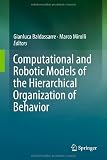
Current robots and other artificial systems are typically able to accomplish only one single task. Overcoming this limitation requires the development of control architectures and learning algorithms that can support the acquisition and deployment of several different skills, which in turn seems to require a modular and hierarchical organization. In this way, different modules can acquire different skills without catastrophic interference, and higher-level components of the system can solve complex tasks by exploiting the skills encapsulated in the lower-level modules. While machine learning and robotics recognize the fundamental importance of the hierarchical organization of behavior for building robots that scale up to solve complex tasks, research in psychology and neuroscience shows increasing evidence that modularity and hierarchy are pivotal organization principles of behavior and of the brain. They might even lead to the cumulative acquisition of an ever-increasing number of skills, which seems to be a characteristic of mammals, and humans in particular. This book is a comprehensive overview of the state of the art on the modeling of the hierarchical organization of behavior in animals, and on its exploitation in robot controllers. The book perspective is highly interdisciplinary, featuring models belonging to all relevant areas, including machine learning, robotics, neural networks, and computational modeling in psychology and neuroscience. The book chapters review the authors' most recent contributions to the investigation of hierarchical behavior, and highlight the open questions and most promising research directions. As the contributing authors are among the pioneers carrying out fundamental work on this topic, the book covers the most important and topical issues in the field from a computationally informed, theoretically oriented perspective. The book will be of benefit to academic and industrial researchers and graduate students in related disciplines.
|
|
Suggested by
AntonJ
January 23, 2014 8:38 AM
|
This authored monograph introduces a genuinely theoretical approach to biology. Starting point is the investigation of empirical biological scaling including their variability, which is found in the literature, e.g. allometric relationships, fractals, etc. The book then analyzes two different aspects of biological time: first, a supplementary temporal dimension to accommodate proper biological rhythms; secondly, the concepts of protension and retention as a means of local organization of time in living organisms. Moreover, the book investigates the role of symmetry in biology, in view of its ubiquitous importance in physics. In relation with the notion of extended critical transitions, the book proposes that organisms and their evolution can be characterized by continued symmetry changes, which accounts for the irreducibility of their historicity and variability. The authors also introduce the concept of anti-entropy as a measure for the potential of variability, being equally understood as alterations in symmetry. By this, the book provides a mathematical account of Gould's analysis of phenotypic complexity with respect to biological evolution. The target audience primarily comprises researchers interested in new theoretical approaches to biology, from physical, biological or philosophical backgrounds, but the book may also be beneficial for graduate students who want to enter this field.
|
|
Scooped by
Complexity Digest
January 6, 2014 10:57 AM
|
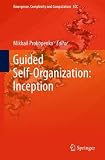
Is it possible to guide the process of self-organisation towards specific patterns and outcomes? Wouldn’t this be self-contradictory? After all, a self-organising process assumes a transition into a more organised form, or towards a more structured functionality, in the absence of centralised control. Then how can we place the guiding elements so that they do not override rich choices potentially discoverable by an uncontrolled process?
This book presents different approaches to resolving this paradox. In doing so, the presented studies address a broad range of phenomena, ranging from autopoietic systems to morphological computation, and from small-world networks to information cascades in swarms. A large variety of methods is employed, from spontaneous symmetry breaking to information dynamics to evolutionary algorithms, creating a rich spectrum reflecting this emerging field.
Demonstrating several foundational theories and frameworks, as well as innovative practical implementations, Guided Self-Organisation: Inception, will be an invaluable tool for advanced students and researchers in a multiplicity of fields across computer science, physics and biology, including information theory, robotics, dynamical systems, graph theory, artificial life, multi-agent systems, theory of computation and machine learning.
|
|
Suggested by
AntonJ
January 6, 2014 10:04 AM
|
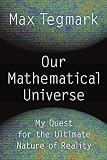
Max Tegmark leads us on an astonishing journey through past, present and future, and through the physics, astronomy and mathematics that are the foundation of his work, most particularly his hypothesis that our physical reality is a mathematical structure and his theory of the ultimate multiverse. In a dazzling combination of both popular and groundbreaking science, he not only helps us grasp his often mind-boggling theories, but he also shares with us some of the often surprising triumphs and disappointments that have shaped his life as a scientist. Fascinating from first to last—this is a book that has already prompted the attention and admiration of some of the most prominent scientists and mathematicians.
|
|
Suggested by
AntonJ
January 6, 2014 9:54 AM
|
In this volume recent advances in the use of modern quantitative models for the analysis of various problems related to the dynamics of social and economic systems are presented. The majority chapters describe tools and techniques of broadly perceived computational intelligence, notably fuzzy logic, evolutionary computation, neural networks and some non-standard probabilistic and statistical analyses. Due to the high complexity of the systems and problems considered, in many situations it is necessary to consider at the same time analytic, topological and statistical aspects and apply appropriate procedures and algorithms.
|
|
Suggested by
AntonJ
December 11, 2013 2:03 PM
|
There exists an undeniable chasm between the capacities of humans and those of animals. Our minds have spawned civilizations and technologies that have changed the face of the Earth, whereas even our closest animal relatives sit unobtrusively in their dwindling habitats. Yet despite longstanding debates, the nature of this apparent gap has remained unclear. What exactly is the difference between our minds and theirs?
In The Gap, psychologist Thomas Suddendorf provides a definitive account of the mental qualities that separate humans from other animals, as well as how these differences arose. Drawing on two decades of research on apes, children, and human evolution, he surveys the abilities most often cited as uniquely human—language, intelligence, morality, culture, theory of mind, and mental time travel—and finds that two traits account for most of the ways in which our minds appear so distinct: Namely, our open-ended ability to imagine and reflect on scenarios, and our insatiable drive to link our minds together. These two traits explain how our species was able to amplify qualities that we inherited in parallel with our animal counterparts; transforming animal communication into language, memory into mental time travel, sociality into mind reading, problem solving into abstract reasoning, traditions into culture, and empathy into morality.
Suddendorf concludes with the provocative suggestion that our unrivalled status may be our own creation—and that the gap is growing wider not so much because we are becoming smarter but because we are killing off our closest intelligent animal relatives.
Weaving together the latest findings in animal behavior, child development, anthropology, psychology, and neuroscience, this book will change the way we think about our place in nature. A major argument for reconsidering what makes us human, The Gap is essential reading for anyone interested in our evolutionary origins and our relationship with the rest of the animal kingdom.
|
|
Suggested by
AntonJ
December 11, 2013 2:02 PM
|
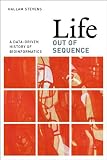
Thirty years ago, the most likely place to find a biologist was standing at a laboratory bench, peering down a microscope, surrounded by flasks of chemicals and petri dishes full of bacteria. Today, you are just as likely to find him or her in a room that looks more like an office, poring over lines of code on computer screens. The use of computers in biology has radically transformed who biologists are, what they do, and how they understand life. In Life Out of Sequence, Hallam Stevens looks inside this new landscape of digital scientific work. Stevens chronicles the emergence of bioinformatics—the mode of working across and between biology, computing, mathematics, and statistics—from the 1960s to the present, seeking to understand how knowledge about life is made in and through virtual spaces. He shows how scientific data moves from living organisms into DNA sequencing machines, through software, and into databases, images, and scientific publications. What he reveals is a biology very different from the one of predigital days: a biology that includes not only biologists but also highly interdisciplinary teams of managers and workers; a biology that is more centered on DNA sequencing, but one that understands sequence in terms of dynamic cascades and highly interconnected networks. Life Out of Sequence thus offers the computational biology community welcome context for their own work while also giving the public a frontline perspective of what is going on in this rapidly changing field.
|