Your new post is loading...

|
Suggested by
AntonJ
October 27, 2014 8:07 PM
|
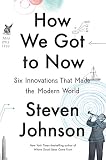
In this illustrated history, Steven Johnson explores the history of innovation over centuries, tracing facets of modern life (refrigeration, clocks, and eyeglass lenses, to name a few) from their creation by hobbyists, amateurs, and entrepreneurs to their unintended historical consequences. Filled with surprising stories of accidental genius and brilliant mistakes—from the French publisher who invented the phonograph before Edison but forgot to include playback, to the Hollywood movie star who helped invent the technology behind Wi-Fi and Bluetooth—How We Got to Now investigates the secret history behind the everyday objects of contemporary life.
In his trademark style, Johnson examines unexpected connections between seemingly unrelated fields: how the invention of air-conditioning enabled the largest migration of human beings in the history of the species—to cities such as Dubai or Phoenix, which would otherwise be virtually uninhabitable; how pendulum clocks helped trigger the industrial revolution; and how clean water made it possible to manufacture computer chips. Accompanied by a major six-part television series on PBS, How We Got to Now is the story of collaborative networks building the modern world, written in the provocative, informative, and engaging style that has earned Johnson fans around the globe.
|
|
Suggested by
AntonJ
October 13, 2014 5:59 PM
|
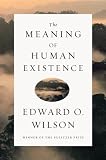
How did humanity originate and why does a species like ours exist on this planet? Do we have a special place, even a destiny in the universe? Where are we going, and perhaps, the most difficult question of all, "Why?" In The Meaning of Human Existence, his most philosophical work to date, Pulitzer Prize–winning biologist Edward O. Wilson grapples with these and other existential questions, examining what makes human beings supremely different from all other species. Searching for meaning in what Nietzsche once called "the rainbow colors" around the outer edges of knowledge and imagination, Wilson takes his readers on a journey, in the process bridging science and philosophy to create a twenty-first-century treatise on human existence—from our earliest inception to a provocative look at what the future of mankind portends. Continuing his groundbreaking examination of our "Anthropocene Epoch," which he began with The Social Conquest of Earth, described by the New York Times as "a sweeping account of the human rise to domination of the biosphere," here Wilson posits that we, as a species, now know enough about the universe and ourselves that we can begin to approach questions about our place in the cosmos and the meaning of intelligent life in a systematic, indeed, in a testable way.
|
|
Suggested by
AntonJ
October 13, 2014 1:57 PM
|
In The Glass Cage, best-selling author Nicholas Carr digs behind the headlines about factory robots and self-driving cars, wearable computers and digitized medicine, as he explores the hidden costs of granting software dominion over our work and our leisure. Even as they bring ease to our lives, these programs are stealing something essential from us. Drawing on psychological and neurological studies that underscore how tightly people’s happiness and satisfaction are tied to performing hard work in the real world, Carr reveals something we already suspect: shifting our attention to computer screens can leave us disengaged and discontented. From nineteenth-century textile mills to the cockpits of modern jets, from the frozen hunting grounds of Inuit tribes to the sterile landscapes of GPS maps, The Glass Cage explores the impact of automation from a deeply human perspective, examining the personal as well as the economic consequences of our growing dependence on computers. With a characteristic blend of history and philosophy, poetry and science, Carr takes us on a journey from the work and early theory of Adam Smith and Alfred North Whitehead to the latest research into human attention, memory, and happiness, culminating in a moving meditation on how we can use technology to expand the human experience.
|
|
Suggested by
AntonJ
October 13, 2014 9:56 AM
|
Socioinformatics is a new scientific approach to study the interactions between humans and IT. These proceedings are a collection of the contributions during a workshop of the Gesellschaft für Informatik (GI). Researchers in this emerging field discuss the main aspects of interactions between IT and humans with respect to; social connections, social changes, acceptance of IT and the social conditions affecting this acceptance, effects of IT on humans and in response changes of IT, structures of the society and the influence of IT on these structures, changes of metaphysics influenced by IT and the social context of a knowledge society.
|
|
Suggested by
AntonJ
September 23, 2014 4:37 AM
|
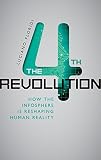
Who are we, and how do we relate to each other? Luciano Floridi, one of the leading figures in contemporary philosophy, argues that the explosive developments in Information and Communication Technologies (ICTs) is changing the answer to these fundamental human questions.
As the boundaries between life online and offline break down, and we become seamlessly connected to each other and surrounded by smart, responsive objects, we are all becoming integrated into an "infosphere". Personas we adopt in social media, for example, feed into our 'real' lives so that we begin to live, as Floridi puts in, "onlife". Following those led by Copernicus, Darwin, and Freud, this metaphysical shift represents nothing less than a fourth revolution.
"Onlife" defines more and more of our daily activity - the way we shop, work, learn, care for our health, entertain ourselves, conduct our relationships; the way we interact with the worlds of law, finance, and politics; even the way we conduct war. In every department of life, ICTs have become environmental forces which are creating and transforming our realities. How can we ensure that we shall reap their benefits? What are the implicit risks? Are our technologies going to enable and empower us, or constrain us? Floridi argues that we must expand our ecological and ethical approach to cover both natural and man-made realities, putting the 'e' in an environmentalism that can deal successfully with the new challenges posed by our digital technologies and information society.
|
|
Suggested by
AntonJ
September 22, 2014 10:37 PM
|
Extinction and Evolution recounts the work and discoveries of Niles Eldredge, one of the world's most renowned paleontologists, whose research overturned Charles Darwin's theory of evolution as a slow and inevitable process, as published in On the Origin of Species in 1859. Darwin had concluded that evolutionary changes happened very slowly over millions of years. Eldredge's work, however, convinced him that Darwin was wrong and that major evolution of life forms does not happen to any significant degree until after a mass extinction event, thus disproving the traditional view of evolution. Eldredge's groundbreaking work is now accepted as the definitive statement of how life as we know it evolved on Earth. This book chronicles how Eldredge made his discoveries and traces the history of life through the lenses of paleontology, geology, ecology, anthropology, biology, genetics, zoology, mammalogy, herpetology, entomology and botany. While rigorously accurate, the text is accessible, engaging and free of jargon. Extinction and Evolution features 160 beautiful color plates that bridge the gap between science and art, and show more than 200 different fossil specimens, including photographs of some of the most significant fossil discoveries of recent years. This is a book with appeal to a broad general audience, including natural history readers and students.
|
|
Suggested by
AntonJ
September 22, 2014 7:36 PM
|
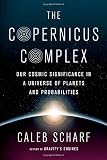
In the sixteenth century, Nicolaus Copernicus dared to go against the establishment by proposing that Earth rotates around the Sun. Having demoted Earth from its unique position in the cosmos to one of mediocrity, Copernicus set in motion a revolution in scientific thought. This perspective has influenced our thinking for centuries. However, recent evidence challenges the Copernican Principle, hinting that we do in fact live in a special place, at a special time, as the product of a chain of unlikely events. But can we be significant if the Sun is still just one of a billion trillion stars in the observable universe? And what if our universe is just one of a multitude of others—a single slice of an infinity of parallel realities?
In The Copernicus Complex, the renowned astrophysicist Caleb Scharf takes us on a scientific adventure, from tiny microbes within the Earth to distant exoplanets, probability theory, and beyond, arguing that there is a solution to this contradiction, a third way of viewing our place in the cosmos, if we weigh the evidence properly. As Scharf explains, we do occupy an unusual time in a 14-billion-year-old universe, in a somewhat unusual type of solar system surrounded by an ocean of unimaginable planetary diversity: hot Jupiters with orbits of less than a day, planet-size rocks spinning around dead stars, and a wealth of alien super-Earths. Yet life here is built from the most common chemistry in the universe, and we are a snapshot taken from billions of years of biological evolution. Bringing us to the cutting edge of scientific discovery, Scharf shows how the answers to fundamental questions of existence will come from embracing the peculiarity of our circumstance without denying the Copernican vision.
With characteristic verve, Scharf uses the latest scientific findings to reconsider where we stand in the balance between cosmic significance and mediocrity, order and chaos. Presenting a compelling and bold view of our true status, The Copernicus Complex proposes a way forward in the ultimate quest: determining life’s abundance, not just across this universe but across all realities.
|
|
Suggested by
AntonJ
September 8, 2014 11:42 PM
|
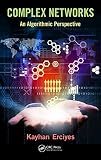
Network science is a rapidly emerging field of study that encompasses mathematics, computer science, physics, and engineering. A key issue in the study of complex networks is to understand the collective behavior of the various elements of these networks.
Although the results from graph theory have proven to be powerful in investigating the structures of complex networks, few books focus on the algorithmic aspects of complex network analysis. Filling this need, Complex Networks: An Algorithmic Perspective supplies the basic theoretical algorithmic and graph theoretic knowledge needed by every researcher and student of complex networks.
This book is about specifying, classifying, designing, and implementing mostly sequential and also parallel and distributed algorithms that can be used to analyze the static properties of complex networks. Providing a focused scope which consists of graph theory and algorithms for complex networks, the book identifies and describes a repertoire of algorithms that may be useful for any complex network. - Provides the basic background in terms of graph theory
- Supplies a survey of the key algorithms for the analysis of complex networks
- Presents case studies of complex networks that illustrate the implementation of algorithms in real-world networks, including protein interaction networks, social networks, and computer networks
Requiring only a basic discrete mathematics and algorithms background, the book supplies guidance that is accessible to beginning researchers and students with little background in complex networks. To help beginners in the field, most of the algorithms are provided in ready-to-be-executed form.
|
|
Suggested by
AntonJ
September 8, 2014 7:41 PM
|
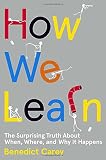
From an early age, it is drilled into our heads: Restlessness, distraction, and ignorance are the enemies of success. We’re told that learning is all self-discipline, that we must confine ourselves to designated study areas, turn off the music, and maintain a strict ritual if we want to ace that test, memorize that presentation, or nail that piano recital.
But what if almost everything we were told about learning is wrong? And what if there was a way to achieve more with less effort?
In How We Learn, award-winning science reporter Benedict Carey sifts through decades of education research and landmark studies to uncover the truth about how our brains absorb and retain information. What he discovers is that, from the moment we are born, we are all learning quickly, efficiently, and automatically; but in our zeal to systematize the process we have ignored valuable, naturally enjoyable learning tools like forgetting, sleeping, and daydreaming. Is a dedicated desk in a quiet room really the best way to study? Can altering your routine improve your recall? Are there times when distraction is good? Is repetition necessary? Carey’s search for answers to these questions yields a wealth of strategies that make learning more a part of our everyday lives—and less of a chore.
By road testing many of the counterintuitive techniques described in this book, Carey shows how we can flex the neural muscles that make deep learning possible. Along the way he reveals why teachers should give final exams on the first day of class, why it’s wise to interleave subjects and concepts when learning any new skill, and when it’s smarter to stay up late prepping for that presentation than to rise early for one last cram session. And if this requires some suspension of disbelief, that’s because the research defies what we’ve been told, throughout our lives, about how best to learn.
|
|
Suggested by
AntonJ
September 1, 2014 7:39 PM
|
Our species long lived on the edge of starvation. Now we produce enough food for all 7 billion of us to eat nearly 3,000 calories every day. This is such an astonishing thing in the history of life as to verge on the miraculous. The Big Ratchet is the story of how it happened, of the ratchets—the technologies and innovations, big and small—that propelled our species from hunters and gatherers on the savannahs of Africa to shoppers in the aisles of the supermarket.
The Big Ratchet itself came in the twentieth century, when a range of technologies—from fossil fuels to scientific plant breeding to nitrogen fertilizers—combined to nearly quadruple our population in a century, and to grow our food supply even faster. To some, these technologies are a sign of our greatness; to others, of our hubris. MacArthur fellow and Columbia University professor Ruth DeFries argues that the debate is the wrong one to have. Limits do exist, but every limit that has confronted us, we have surpassed. That cycle of crisis and growth is the story of our history; indeed, it is the essence of The Big Ratchet. Understanding it will reveal not just how we reached this point in our history, but how we might survive it.
|
|
Suggested by
AntonJ
September 1, 2014 4:40 PM
|
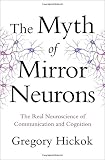
An essential reconsideration of one of the most far-reaching theories in modern neuroscience and psychology. In 1992, a group of neuroscientists from Parma, Italy, reported a new class of brain cells discovered in the motor cortex of the macaque monkey. These cells, later dubbed mirror neurons, responded equally well during the monkey’s own motor actions, such as grabbing an object, and while the monkey watched someone else perform similar motor actions. Researchers speculated that the neurons allowed the monkey to understand others by simulating their actions in its own brain. Mirror neurons soon jumped species and took human neuroscience and psychology by storm. In the late 1990s theorists showed how the cells provided an elegantly simple new way to explain the evolution of language, the development of human empathy, and the neural foundation of autism. In the years that followed, a stream of scientific studies implicated mirror neurons in everything from schizophrenia and drug abuse to sexual orientation and contagious yawning. In The Myth of Mirror Neurons, neuroscientist Gregory Hickok reexamines the mirror neuron story and finds that it is built on a tenuous foundation—a pair of codependent assumptions about mirror neuron activity and human understanding. Drawing on a broad range of observations from work on animal behavior, modern neuroimaging, neurological disorders, and more, Hickok argues that the foundational assumptions fall flat in light of the facts. He then explores alternative explanations of mirror neuron function while illuminating crucial questions about human cognition and brain function: Why do humans imitate so prodigiously? How different are the left and right hemispheres of the brain? Why do we have two visual systems? Do we need to be able to talk to understand speech? What’s going wrong in autism? Can humans read minds?
|
|
Suggested by
AntonJ
August 25, 2014 4:31 PM
|
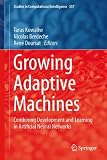
The pursuit of artificial intelligence has been a highly active domain of research for decades, yielding exciting scientific insights and productive new technologies. In terms of generating intelligence, however, this pursuit has yielded only limited success. This book explores the hypothesis that adaptive growth is a means of moving forward. By emulating the biological process of development, we can incorporate desirable characteristics of natural neural systems into engineered designs and thus move closer towards the creation of brain-like systems. The particular focus is on how to design artificial neural networks for engineering tasks. The book consists of contributions from 18 researchers, ranging from detailed reviews of recent domains by senior scientists, to exciting new contributions representing the state of the art in machine learning research. The book begins with broad overviews of artificial neurogenesis and bio-inspired machine learning, suitable both as an introduction to the domains and as a reference for experts. Several contributions provide perspectives and future hypotheses on recent highly successful trains of research, including deep learning, the Hyper NEAT model of developmental neural network design, and a simulation of the visual cortex. Other contributions cover recent advances in the design of bio-inspired artificial neural networks, including the creation of machines for classification, the behavioural control of virtual agents, the design of virtual multi-component robots and morphologies and the creation of flexible intelligence. Throughout, the contributors share their vast expertise on the means and benefits of creating brain-like machines.
|
|
Suggested by
AntonJ
August 25, 2014 1:30 PM
|
In this unique exploration of the mysteries of the human brain, Roger Bartra shows that consciousness is a phenomenon that occurs not only in the mind but also in an external network, a symbolic system. He argues that the symbolic systems created by humans in art, language, in cooking or in dress, are the key to understanding human consciousness. Placing culture at the centre of his analysis, Bartra brings together findings from anthropology and cognitive science and offers an original vision of the continuity between the brain and its symbolic environment. The book is essential reading for neurologists, cognitive scientists and anthropologists alike.
|

|
Scooped by
Complexity Digest
October 15, 2014 2:03 PM
|
Financial crises, terrorism, conflict, crime: it turns out, the conventional ‘medicines’ to tackle global problems are often inefficient or even counter-productive. The reason for this is surprisingly simple: we approach these problems with an outdated understanding of our world. While the world might still look similar to how it has looked for a long time, I will argue that it has, in fact, inconspicuously but fundamentally changed over time. (...)
This is second in a series of blog posts that form chapters of my forthcoming book Digital Society. Last week's chapter was titled: GENIE OUT OF THE BOTTLE: The digital revolution on its way. [http://futurict.blogspot.ie/2014/10/genie-out-of-bottle-digital-revolution.html]
http://futurict.blogspot.ch/2014/10/complexity-time-bomb-when-systems-get.html
|
|
Suggested by
AntonJ
October 13, 2014 3:58 PM
|
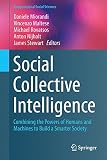
The book focuses on Social Collective Intelligence, a term used to denote a class of socio-technical systems that combine, in a coordinated way, the strengths of humans, machines and collectives in terms of competences, knowledge and problem solving capabilities with the communication, computing and storage capabilities of advanced ICT.
Social Collective Intelligence opens a number of challenges for researchers in both computer science and social sciences; at the same time it provides an innovative approach to solve challenges in diverse application domains, ranging from health to education and organization of work.
The book will provide a cohesive and holistic treatment of Social Collective Intelligence, including challenges emerging in various disciplines (computer science, sociology, ethics) and opportunities for innovating in various application areas.
By going through the book the reader will gauge insight and knowledge into the challenges and opportunities provided by this new, exciting, field of investigation. Benefits for scientists will be in terms of accessing a comprehensive treatment of the open research challenges in a multidisciplinary perspective. Benefits for practitioners and applied researchers will be in terms of access to novel approaches to tackle relevant problems in their field. Benefits for policy-makers and public bodies representatives will be in terms of understanding how technological advances can support them in supporting the progress of society and economy.
|
|
Suggested by
AntonJ
October 13, 2014 11:57 AM
|
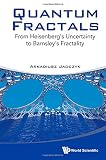
Starting with numerical algorithms resulting in new kinds of amazing fractal patterns on the sphere, this book describes the theory underlying these phenomena and indicates possible future applications. The book also explores the following questions: - What are fractals?
- How do fractal patterns emerge from quantum observations and relativistic light aberration effects?
- What are the open problems with iterated function systems based on Mobius
- transformations?
- Can quantum fractals be experimentally detected?
- What are quantum jumps?
- Is quantum theory complete and/or universal?
- Is the standard interpretation of Heisenberg's uncertainty relations accurate?
- What is Event Enhanced Quantum Theory and how does it differs from spontaneous localization theories?
- What are the possible applications of quantum fractals?
Readership: Advanced undergraduate students and professionals in quantum chaos, as well as philosophers of science.
|
|
Scooped by
Complexity Digest
September 25, 2014 10:18 AM
|
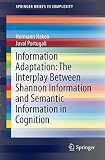
This monograph demonstrates the interplay between Shannon information and semantic information in cognition. It shows that Shannon’s information acts as driving force for the formation of semantic information; and vice versa, namely, that semantic information participates in the formation of Shannonian information. The authors show that in cognition, Shannonian and semantic information are interrelated as two aspects of a cognitive process termed as information adaptation. In the latter the mind/brain adapts to the environment by the deflating and/or inflating of the information conveyed by the environment. In the process of information adaptation, quantitative variations in Shannon’s information entail different meanings while different meanings affect the quantity of information. The book illustrates the above conceptually and mathematically by reference to three cognitive processes: pattern recognition, face learning and the recognition of a moving object.
Haken, H. and Portugali, J. (2015). Information Adaptation: The Interplay Between Shannon Information and Semantic Information in Cognition. SpringerBriefs in Complexity, vol. XII. Springer.
|
|
Suggested by
AntonJ
September 23, 2014 12:37 AM
|
Big Data is made up of lots of little data: numbers entered into cell phones, addresses entered into GPS devices, visits to websites, online purchases, ATM transactions, and any other activity that leaves a digital trail. Although the abuse of Big Data -- surveillance, spying, hacking -- has made headlines, it shouldn't overshadow the abundant positive applications of Big Data. In Reality Mining, Nathan Eagle and Kate Greene cut through the hype and the headlines to explore the positive potential of Big Data, showing the ways in which the analysis of Big Data ("Reality Mining") can be used to improve human systems as varied as political polling and disease tracking, while considering user privacy. Eagle, a recognized expert in the field, and Greene, an experienced technology journalist, describe Reality Mining at five different levels: the individual, the neighborhood and organization, the city, the nation, and the world. For each level, they first offer a nontechnical explanation of data collection methods and then describe applications and systems that have been or could be built. These include a mobile app that helps smokers quit smoking; a workplace "knowledge system"; the use of GPS, Wi-Fi, and mobile phone data to manage and predict traffic flows; and the analysis of social media to track the spread of disease. Eagle and Greene argue that Big Data, used respectfully and responsibly, can help people live better, healthier, and happier lives.
|
|
Suggested by
AntonJ
September 22, 2014 8:38 PM
|
Artstein chronicles the discovery of important mathematical connections between mathematics and the real world from ancient times to the present. The author then describes some of the contemporary applications of mathematics—in probability theory, in the study of human behavior, and in combination with computers, which give mathematics unprecedented power.
The author concludes with an insightful discussion of why mathematics, for most people, is so frustrating. He argues that the rigorous logical structure of math goes against the grain of our predisposed ways of thinking as shaped by evolution, presumably because the talent needed to cope with logical mathematics gave the human race as a whole no evolutionary advantage. With this in mind, he offers ways to overcome these innate impediments in the teaching of math.
|
|
Suggested by
AntonJ
September 22, 2014 5:36 PM
|
The discovery of stunning, feathered dinosaur fossils coming out of China since 2006 suggest that these creatures were much more bird-like than paleontologists previously imagined. Further evidence -- bones, genetics, eggs, behavior, and more -- has shown a seamless transition from fleet-footed carnivores to the ancestors of modern birds. Mixing colorful portraits with news on the latest fossil findings and interviews with leading paleontologists in the United States, China, Europe, and Australia, John Pickrell explains and details dinosaurs' development of flight. This special capacity introduced a whole new range of abilities for the animals and helped them survive a mass extinction, when thousands of other dinosaur species that once populated the Earth did not. Pickrell also turns his journalistic eye toward the stories behind the latest discoveries, investigating the role of the Chinese black market in trading fossils, the controversies among various dinosaur hunters, the interference of national governments intent on protecting scientific information, and the race to publish findings first that make this research such a dynamic area of science.
|
|
Suggested by
AntonJ
September 8, 2014 9:41 PM
|
This book presents the basics of quantum information, e.g., foundation of quantum theory, quantum algorithms, quantum entanglement, quantum entropies, quantum coding, quantum error correction and quantum cryptography. The required knowledge is only elementary calculus and linear algebra. This way the book can be understood by undergraduate students. In order to study quantum information, one usually has to study the foundation of quantum theory. This book describes it from more an operational viewpoint which is suitable for quantum information while traditional textbooks of quantum theory lack this viewpoint. The current book bases on Shor's algorithm, Grover's algorithm, Deutsch-Jozsa's algorithm as basic algorithms. To treat several topics in quantum information, this book covers several kinds of information quantities in quantum systems including von Neumann entropy. The limits of several kinds of quantum information processing are given. As important quantum protocols, this book contains quantum teleportation, quantum dense coding, quantum data compression. In particular conversion theory of entanglement via local operation and classical communication are treated too. This theory provides the quantification of entanglement, which coincides with von Neumann entropy. The next part treats the quantum hypothesis testing. The decision problem of two candidates of the unknown state are given. The asymptotic performance of this problem is characterized by information quantities. Using this result, the optimal performance of classical information transmission via noisy quantum channel is derived. Quantum information transmission via noisy quantum channel by quantum error correction are discussed too. Based on this topic, the secure quantum communication is explained. In particular, the quantification of quantum security which has not been treated in existing book is explained. This book treats quantum cryptography from a more practical viewpoint.
|
|
Suggested by
AntonJ
September 8, 2014 5:40 PM
|
Living systems exhibit a fundamental contradiction: they are highly stable and reliable, yet they have the capacity to adapt to changing environmental conditions. This paradoxical behavior arises from the complexity of life--a high degree of order and cooperation that emerges from relatively simple interactions among cellular components. The Complexity Paradox proposes inventive, interdisciplinary approaches to maintaining health and managing and preventing disease by considering the totality of human biology, from the cellular level on up to entire populations of individuals. From the perspective of complexity, which acknowledges that there are limits to what we can know, Kenneth L. Mossman opens the door to understanding essential life processes in new and extraordinary ways. By tying together evolution, functional dynamics, and investigations into how the body processes energy and uses genetic information, Mossman's analysis expresses a unified theory of biology that fills a critical niche for future research in biology, medicine, and public health.
|
|
Suggested by
AntonJ
September 1, 2014 5:39 PM
|
This contributed volume presents interdisciplinary approaches which currently revolutionize the representation of the morphogenesis of living systems. The book introduces concepts from complex systems theory and explores how these concepts lead to quantitative approaches of living systems dynamics. It discusses whether new trends in the quantitative observation of living systems indicate a new paradigm of formal and applied epistemology for the reconstruction of living systems multiscale dynamics. The volume collects a number of articles from interdisciplinary teams, most of the authors were contributors to the MLS09 or MLS10 conferences in Paris.
|
|
Suggested by
AntonJ
September 1, 2014 3:39 PM
|
We are in the midst of a revolution. It is a scientific revolution built upon the tools of molecular biology, with which we probe and prod the living world in ways unimaginable a few decades ago. Need to track a bacterium at the root of a hospital outbreak? No problem: the offending germ's complete genetic profile can be obtained in 24 hours. We insert human DNA into E. coli bacteria to produce our insulin.
It is natural to look at biotechnology in the 21st century with a mix of wonder and fear. But biotechnology is not as 'unnatural' as one might think. All living organisms use the same molecular processes to replicate their genetic material and the same basic code to 'read' their genes. The similarities can be seen in their DNA. Here, John Archibald shows how evolution has been 'plugging-and-playing' with the subcellular components of life from the very beginning and continues to do so today. For evidence, we need look no further than the inner workings of our own cells. Molecular biology has allowed us to gaze back more than three billion years, revealing the microbial mergers and acquisitions that underpin the development of complex life. One Plus One Equals One tells the story of how we have come to this realization and its implications.
|
|
Suggested by
AntonJ
August 25, 2014 2:30 PM
|
Sexual reproduction is a fundamental aspect of life. It is defined by the occurrence of meiosis and the fusion of two gametes of different sexes or mating types. Sex-determination mechanisms are responsible for the sexual fate and development of sexual characteristics in an organism, be it a unicellular alga, a plant, or an animal. In many cases, sex determination is genetic: males and females have different alleles or different genes that specify their sexual morphology. In animals, this is often accompanied by chromosomal differences. In other cases, sex may be determined by environmental (e.g. temperature) or social variables (e.g. the size of an organism relative to other members of its population). Surprisingly, sex-determination mechanisms are not evolutionarily conserved but are bewilderingly diverse and appear to have had rapid turnover rates during evolution. Evolutionary biologists continue to seek a solution to this conundrum. What drives the surprising dynamics of such a fundamental process that always leads to the same outcome: two sex types, male and female? The answer is complex but the ongoing genomic revolution has already greatly increased our knowledge of sex-determination systems and sex chromosomes in recent years. This novel book presents and synthesizes our current understanding, and clearly shows that sex-determination evolution will remain a dynamic field of future research.
|