Your new post is loading...

|
Suggested by
AntonJ
December 3, 2015 1:24 PM
|
In recent decades game theory—the mathematics of rational decision-making by interacting individuals—has assumed a central place in our understanding of capitalist markets, the evolution of social behavior in animals, and even the ethics of altruism and fairness in human beings. With game theory’s ubiquity, however, has come a great deal of misunderstanding. Critics of the contemporary social sciences view it as part of an unwelcome trend toward the marginalization of historicist and interpretive styles of inquiry, and many accuse its proponents of presenting a thin and empirically dubious view of human choice.
The World the Game Theorists Made seeks to explain the ascendency of game theory, focusing on the poorly understood period between the publication of John von Neumann and Oscar Morgenstern’s seminal Theory of Games and Economic Behavior in 1944 and the theory’s revival in economics in the 1980s. Drawing on a diverse collection of institutional archives, personal correspondence and papers, and interviews, Paul Erickson shows how game theory offered social scientists, biologists, military strategists, and others a common, flexible language that could facilitate wide-ranging thought and debate on some of the most critical issues of the day.
|
|
Suggested by
AntonJ
December 3, 2015 11:24 AM
|
In this book, Ted Koppel reveals that a major cyberattack on America’s power grid is not only possible but likely, that it would be devastating, and that the United States is shockingly unprepared.
Imagine a blackout lasting not days, but weeks or months. Tens of millions of people over several states are affected. For those without access to a generator, there is no running water, no sewage, no refrigeration or light. Food and medical supplies are dwindling. Devices we rely on have gone dark. Banks no longer function, looting is widespread, and law and order are being tested as never before.
It isn’t just a scenario. A well-designed attack on just one of the nation’s three electric power grids could cripple much of our infrastructure—and in the age of cyberwarfare, a laptop has become the only necessary weapon. Several nations hostile to the United States could launch such an assault at any time. In fact, as a former chief scientist of the NSA reveals, China and Russia have already penetrated the grid. And a cybersecurity advisor to President Obama believes that independent actors—from “hacktivists” to terrorists—have the capability as well. “It’s not a question of if,” says Centcom Commander General Lloyd Austin, “it’s a question of when.”
|
|
Suggested by
AntonJ
November 9, 2015 9:33 PM
|
The Evolution of Everything is about bottom-up order and its enemy, the top-down twitch—the endless fascination human beings have for design rather than evolution, for direction rather than emergence. Drawing on anecdotes from science, economics, history, politics and philosophy, Matt Ridley’s wide-ranging, highly opinionated opus demolishes conventional assumptions that major scientific and social imperatives are dictated by those on high, whether in government, business, academia, or morality. On the contrary, our most important achievements develop from the bottom up. Patterns emerge, trends evolve. Just as skeins of geese form Vs in the sky without meaning to, and termites build mud cathedrals without architects, so brains take shape without brain-makers, learning can happen without teaching and morality changes without a plan. Although we neglect, defy and ignore them, bottom-up trends shape the world. The growth of technology, the sanitation-driven health revolution, the quadrupling of farm yields so that more land can be released for nature—these were largely emergent phenomena, as were the Internet, the mobile phone revolution, and the rise of Asia. Ridley demolishes the arguments for design and effectively makes the case for evolution in the universe, morality, genes, the economy, culture, technology, the mind, personality, population, education, history, government, God, money, and the future.
|
|
Suggested by
AntonJ
November 9, 2015 5:32 PM
|
Soul Machine takes us back to the origins of modernity, a time when a crisis in religious authority and the scientific revolution led to searching questions about the nature of human inner life. This is the story of how a new concept―the mind―emerged as a potential solution, one that was part soul and part machine, but fully neither. In this groundbreaking work, award-winning historian George Makari shows how writers, philosophers, physicians, and anatomists worked to construct notions of the mind as not an ethereal thing, but a natural one. From the ascent of Oliver Cromwell to the fall of Napoleon, seminal thinkers like Hobbes, Locke, Diderot, and Kant worked alongside often-forgotten brain specialists, physiologists, and alienists in the hopes of mapping the inner world. Conducted in a cauldron of political turmoil, these frequently shocking, always embattled efforts would give rise to psychiatry, mind sciences such as phrenology, and radically new visions of the self. Further, they would be crucial to the establishment of secular ethics and political liberalism. Boldly original, wide-ranging, and brilliantly synthetic, Soul Machine gives us a masterful, new account of the making of the modern Western mind.

|
Scooped by
Complexity Digest
October 24, 2015 3:00 AM
|
Surprising advances are being achieved, for example in 'deep learning' — a method for approximating complex functions using thousands of numerical parameters. And robots are evolving, with advances in 3D sensing and mapping. But progress is not nearly as steady as some claim. Three books explore the topic from different perspectives. All suggest that robot superiority faces a formidable obstacle: human psychology.
Robotics: Countering singularity sensationalism
Ken Goldberg
Nature 526, 320–321 (15 October 2015) http://dx.doi.org/10.1038/526320a ;
|
|
Suggested by
AntonJ
October 19, 2015 10:54 PM
|
The Centered Mind offers a new view of the nature and causal determinants of both reflective thinking and, more generally, the stream of consciousness. Peter Carruthers argues that conscious thought is always sensory-based, relying on the resources of the working-memory system. This system has been much studied by cognitive scientists. It enables sensory images to be sustained and manipulated through attentional signals directed at midlevel sensory areas of the brain. When abstract conceptual representations are bound into these images, we consciously experience ourselves as making judgments or arriving at decisions. Thus one might hear oneself as judging, in inner speech, that it is time to go home, for example. However, our amodal (non-sensory) propositional attitudes are never actually among the contents of this stream of conscious reflection. Our beliefs, goals, and decisions are only ever active in the background of consciousness, working behind the scenes to select the sensory-based imagery that occurs in working memory. They are never themselves conscious.
Drawing on extensive knowledge of the scientific literature on working memory and related topics, Carruthers builds an argument that challenges the central assumptions of many philosophers. In addition to arguing that non-sensory propositional attitudes are never conscious, he also shows that they are never under direct intentional control. Written with his usual clarity and directness, The Centered Mind will be essential reading for all philosophers and cognitive scientists interested in the nature of human thought processes.
|
|
Suggested by
AntonJ
October 19, 2015 8:53 PM
|
Two hundred and sixty million years ago, life on Earth suffered wave after wave of cataclysmic extinctions, with the worst--the end-Permian extinction--wiping out nearly every species on the planet. The Worst of Times delves into the mystery behind these extinctions and sheds light on the fateful role the primeval supercontinent, known as Pangea, may have played in causing these global catastrophes. Drawing on the latest discoveries as well as his own firsthand experiences conducting field expeditions to remote corners of the world, Paul Wignall reveals what scientists are only now beginning to understand about the most prolonged and calamitous period of environmental crisis in Earth's history. He describes how a series of unprecedented extinction events swept across the planet in a span of eighty million years, rapidly killing marine and terrestrial life on a scale more devastating than the dinosaur extinctions that would come later. Wignall shows how these extinctions--some of which have only recently been discovered--all coincided with gigantic volcanic eruptions of basalt lavas that occurred when the world's landmasses were united into a single vast expanse. Unraveling one of the great enigmas of ancient Earth, The Worst of Times also explains how the splitting apart of Pangea into the continents we know today ushered in a new age of vibrant and more resilient life on our planet.
|
|
Suggested by
AntonJ
October 6, 2015 9:24 PM
|
Cities and regions grow (or occasionally decline), and continuously transform themselves as they do so. This book describes the theory and practice of modeling the spatial dynamics of urban growth and transformation. As cities are complex, adaptive, self-organizing systems, the most appropriate modeling framework is one based on the theory of self-organizing systems -- an approach already used in such fields as physics and ecology. The book presents a series of models, most of them developed using cellular automata (CA), which are inherently spatial and computationally efficient. It also provides discussions of the theoretical, methodological, and philosophical issues that arise from the models. A case study illustrates the use of these models in urban and regional planning. Finally, the book presents a new, dynamic theory of urban spatial structure that emerges from the models and their applications. The models are primarily land use models, but the more advanced ones also show the dynamics of population and economic activities, and are integrated with models in other domains such as economics, demography, and transportation. The result is a rich and realistic representation of the spatial dynamics of a variety of urban phenomena. The book is unique in its coverage of both the general issues associated with complex self-organizing systems and the specifics of designing and implementing models of such systems.
|
|
Suggested by
AntonJ
October 6, 2015 5:23 PM
|
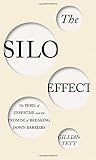
One of the characteristics of industrial age enterprises is that they are organized around functional departments. This organizational structure results in both limited information and restricted thinking. The Silo Effect asks these basic questions: why do humans working in modern institutions collectively act in ways that sometimes seem stupid? Why do normally clever people fail to see risks and opportunities that later seem blindingly obvious? Why, as psychologist Daniel Kahneman put it, are we sometimes so “blind to our own blindness”?
Gillian Tett, journalist and senior editor for the Financial Times, answers these questions by plumbing her background as an anthropologist and her experience reporting on the financial crisis in 2008. In The Silo Effect, she shares eight different tales of the silo syndrome, spanning Bloomberg’s City Hall in New York, the Bank of England in London, Cleveland Clinic hospital in Ohio, UBS bank in Switzerland, Facebook in San Francisco, Sony in Tokyo, the BlueMountain hedge fund, and the Chicago police. Some of these narratives illustrate how foolishly people can behave when they are mastered by silos. Others, however, show how institutions and individuals can master their silos instead. These are stories of failure and success.
From ideas about how to organize office spaces and lead teams of people with disparate expertise, Tett lays bare the silo effect and explains how people organize themselves, interact with each other, and imagine the world can take hold of an organization and lead from institutional blindness to 20/20 vision.
|
|
Suggested by
AntonJ
September 16, 2015 9:23 PM
|
 | Product by Current ~ Michael Harris (author) More about this product
| List Price: | $16.00 | | Price: | $11.32 | | You Save: | $4.68 (29%) | | | |
Soon enough, nobody will remember life before the Internet. What does this unavoidable fact mean? Those of us who have lived both with and without the crowded connectivity of online life have a rare opportunity. We can still recognize the difference between Before and After. We catch ourselves idly reaching for our phones at the bus stop. Or we notice how, midconversation, a fumbling friend dives into the perfect recall of Google. In this eloquent and thought-provoking book, Michael Harris argues that amid all the changes we're experiencing, the most interesting is the end of absence-the loss of lack. The daydreaming silences in our lives are filled; the burning solitudes are extinguished. There's no true "free time" when you carry a smartphone. Today's rarest commodity is the chance to be alone with your thoughts.
|
|
Suggested by
AntonJ
September 16, 2015 5:23 PM
|
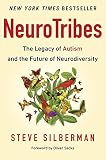
What is autism? A lifelong disability, or a naturally occurring form of cognitive difference akin to certain forms of genius? In truth, it is all of these things and more—and the future of our society depends on our understanding it. WIRED reporter Steve Silberman unearths the secret history of autism, long suppressed by the same clinicians who became famous for discovering it, and finds surprising answers to the crucial question of why the number of diagnoses has soared in recent years.
Going back to the earliest days of autism research and chronicling the brave and lonely journey of autistic people and their families through the decades, Silberman provides long-sought solutions to the autism puzzle, while mapping out a path for our society toward a more humane world in which people with learning differences and those who love them have access to the resources they need to live happier, healthier, more secure, and more meaningful lives.
Along the way, he reveals the untold story of Hans Asperger, the father of Asperger’s syndrome, whose “little professors” were targeted by the darkest social-engineering experiment in human history; exposes the covert campaign by child psychiatrist Leo Kanner to suppress knowledge of the autism spectrum for fifty years; and casts light on the growing movement of "neurodiversity" activists seeking respect, support, technological innovation, accommodations in the workplace and in education, and the right to self-determination for those with cognitive differences.
|
|
Scooped by
Complexity Digest
August 13, 2015 2:52 PM
|
Introduction to the Modeling and Analysis of Complex Systems introduces students to mathematical/computational modeling and analysis developed in the emerging interdisciplinary field of Complex Systems Science. Complex systems are systems made of a large number of microscopic components interacting with each other in nontrivial ways. Many real-world systems can be understood as complex systems, where critically important information resides in the relationships between the parts and not necessarily within the parts themselves. This textbook offers an accessible yet technically-oriented introduction to the modeling and analysis of complex systems. The topics covered include: fundamentals of modeling, basics of dynamical systems, discrete-time models, continuous-time models, bifurcations, chaos, cellular automata, continuous field models, static networks, dynamic networks, and agent-based models. Most of these topics are discussed in two chapters, one focusing on computational modeling and the other on mathematical analysis. This unique approach provides a comprehensive view of related concepts and techniques, and allows readers and instructors to flexibly choose relevant materials based on their objectives and needs. Python sample codes are provided for each modeling example.
http://textbooks.opensuny.org/introduction-to-the-modeling-and-analysis-of-complex-systems/
|
|
Suggested by
AntonJ
August 4, 2015 7:32 PM
|
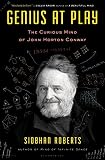
An unabashed original, John Horton Conway is Archimedes, Mick Jagger, Salvador Dali, and Richard Feynman all rolled into one--a singular mathematician, with a rock star's charisma, a sly sense of humor, a polymath's promiscuous curiosity, and a burning desire to explain everything about the world to everyone in it. Born in Liverpool in 1937, Conway found fame as a barefoot Cambridge professor. He discovered the Conway groups in mathematical symmetry, and invented the aptly named surreal numbers, as well as the cult classic Game of Life--more than a cool fad, Life demonstrates how simplicity generates complexity and the game provides an analogy for all mathematics and the entire universe. Moving to Princeton in 1987, as a mathemagician he deployed cards, ropes, dice, coat hangers, and even the odd Slinky as props to extend his winning imagination and share his mathy obsessions with signature contagion. He is a jet-setting ambassador-at-large for the beauties of all things mathematical.
|
|
|
Suggested by
AntonJ
December 3, 2015 12:27 PM
|
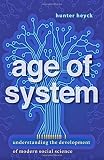
Before the Second World War, social scientists struggled to define and defend their disciplines. After the war, "high modern" social scientists harnessed new resources in a quest to create a unified understanding of human behavior―and to remake the world in the image of their new model man. In Age of System, Hunter Heyck explains why social scientists―shaped by encounters with the ongoing "organizational revolution" and its revolutionary technologies of communication and control―embraced a new and extremely influential perspective on science and nature, one that conceived of all things in terms of system, structure, function, organization, and process. He also explores how this emerging unified theory of human behavior implied a troubling similarity between humans and machines, with freighted implications for individual liberty and self-direction. These social scientists trained a generation of decision-makers in schools of business and public administration, wrote the basic textbooks from which millions learned how the economy, society, polity, culture, and even the mind worked, and drafted the position papers, books, and articles that helped set the terms of public discourse in a new era of mass media, think tanks, and issue networks. Drawing on close readings of key texts and a broad survey of more than 1,800 journal articles, Heyck follows the dollars―and the dreams―of a generation of scholars that believed in "the system." He maps the broad landscape of changes in the social sciences, focusing especially intently on the ideas and practices associated with modernization theory, rational choice theory, and modeling. A highly accomplished historian, Heyck relays this complicated story with unusual clarity.
|
|
Scooped by
Complexity Digest
November 9, 2015 11:39 PM
|
Agent-Based Models Of The Economy uses agent-based models for understanding a broad spectrum of economic phenomena.
This book aim is twofold. First, it introduces the reader to the methodology and to the technicalities and the tools necessary to master the creation of agent-based models. Second, it presents several examples of applications to different economic phenomena where agent-based models are crucial in answering the research question and in solving practical problems emerged in business and policy domains (e.g., financial markets, cooperation dynamics, public policy evaluation).
With this book, readers learn what agent-based models are and the advantages they can provide. Further, readers learn how to develop from scratch and with scientific rigor their own agent-based models for studying economic phenomena. Finally, readers find in the book several applications that can represent examples to be imitated and to be kept as reference.
Agent-based Models of the Economy
From Theories to Applications
Contributor
Riccardo Boero, Matteo Morini, Michele Sonnessa, Pietro Terna http://www.palgrave.com/page/detail/agentbased-models-of-the-economy-/?K=9781137339805
|
|
Suggested by
AntonJ
November 9, 2015 7:32 PM
|
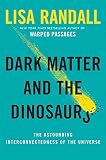
In this brilliant exploration of our cosmic environment, the renowned particle physicist and New York Times bestselling author of Warped Passages and Knocking on Heaven’s Door uses her research into dark matter to illuminate the startling connections between the furthest reaches of space and life here on Earth. Sixty-six million years ago, an object the size of a city descended from space to crash into Earth, creating a devastating cataclysm that killed off the dinosaurs, along with three-quarters of the other species on the planet. What was its origin? In Dark Matter and the Dinosaurs, Lisa Randall proposes it was a comet that was dislodged from its orbit as the Solar System passed through a disk of dark matter embedded in the Milky Way. In a sense, it might have been dark matter that killed the dinosaurs. Working through the background and consequences of this proposal, Randall shares with us the latest findings—established and speculative—regarding the nature and role of dark matter and the origin of the Universe, our galaxy, our Solar System, and life, along with the process by which scientists explore new concepts. In Dark Matter and the Dinosaurs, Randall tells a breathtaking story that weaves together the cosmos’ history and our own, illuminating the deep relationships that are critical to our world and the astonishing beauty inherent in the most familiar things.
|
|
Suggested by
AntonJ
November 9, 2015 3:32 PM
|
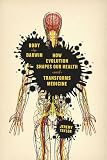
We think of medical science and doctors as focused on treating conditions—whether it’s a cough or an aching back. But the sicknesses and complaints that cause us to seek medical attention actually have deeper origins than the superficial germs and behaviors we regularly fault. In fact, as Jeremy Taylor shows in Body by Darwin, we can trace the roots of many medical conditions through our evolutionary history, revealing what has made us susceptible to certain illnesses and ailments over time and how we can use that knowledge to help us treat or prevent problems in the future.
In Body by Darwin, Taylor examines the evolutionary origins of some of our most common and serious health issues. To begin, he looks at the hygiene hypothesis, which argues that our obsession with anti-bacterial cleanliness, particularly at a young age, may be making us more vulnerable to autoimmune and allergic diseases. He also discusses diseases of the eye, the medical consequences of bipedalism as they relate to all those aches and pains in our backs and knees, the rise of Alzheimer’s disease, and how cancers become so malignant that they kill us despite the toxic chemotherapy we throw at them. Taylor explains why it helps to think about heart disease in relation to the demands of an ever-growing, dense, muscular pump that requires increasing amounts of nutrients, and he discusses how walking upright and giving birth to ever larger babies led to a problematic compromise in the design of the female spine and pelvis. Throughout, he not only explores the impact of evolution on human form and function, but he integrates science with stories from actual patients and doctors, closely examining the implications for our health.
|
|
Suggested by
AntonJ
October 19, 2015 11:54 PM
|
As the world becomes ever more dominated by technology, John Brockman’s latest addition to the acclaimed and bestselling “Edge Question Series” asks more than 175 leading scientists, philosophers, and artists: What do you think about machines that think? The development of artificial intelligence has been a source of fascination and anxiety ever since Alan Turing formalized the concept in 1950. Today, Stephen Hawking believes that AI “could spell the end of the human race.” At the very least, its development raises complicated moral issues with powerful real-world implications—for us and for our machines.
|
|
Suggested by
AntonJ
October 19, 2015 9:54 PM
|
A panoramic overview of biotechnologies that can endlessly boost human capabilities and the drastic changes these “superhuman” traits could trigger
Biotechnology is moving fast. In the coming decades, advanced pharmaceuticals, bioelectronics, and genetic interventions will be used not only to heal the sick but to boost human physical and mental performance to unprecedented levels. People will have access to pills that make them stronger and faster, informatic devices will interface seamlessly with the human brain, and epigenetic modification may allow people to reshape their own physical and mental identities at will.
Until recently, such major technological watersheds—like the development of metal tools or the industrialization of manufacturing—came about incrementally over centuries or longer. People and social systems had time to adapt: they gradually developed new values, norms, and habits to accommodate the transformed material conditions. But contemporary society is dangerously unprepared for the dramatic changes it is about to experience down this road on which it is already advancing at an accelerating pace.
The results will no doubt be mixed. People will live longer, healthier lives, will fine-tune their own thought processes, and will generate staggeringly complex and subtle forms of knowledge and insight. But these technologies also threaten to widen the rift between rich and poor, to generate new forms of social and economic division, and to force people to engage in constant cycles of upgrades and boosts merely to keep up. Individuals who boost their traits beyond a certain threshold may acquire such extreme capabilities that they will no longer be recognized as unambiguously human.
|
|
Suggested by
AntonJ
October 19, 2015 7:53 PM
|
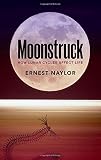
Throughout history, the influence of the full Moon on humans and animals has featured in folklore and myths. Yet it has become increasingly apparent that many organisms really are influenced indirectly, and in some cases directly, by the lunar cycle. Breeding behaviour among some marine animals has been demonstrated to be controlled by internal circalunar biological clocks, to the point where lunar-daily and lunar-monthly patterns of Moon-generated tides are embedded in their genes. Yet, intriguingly, Moon-related behaviours are also found in dry land and fresh water species living far beyond the influence of any tides.
In Moonstruck, Ernest Naylor dismisses the myths concerning the influence of the Moon, but shows through a range of fascinating examples the remarkable real effects that we are now finding through science. He suggests that since the advent of evolution on Earth, which occurred shortly after the formation of the Moon, animals evolved adaptations to the lunar cycle, and considers whether, if Moon-clock genes occur in other animals, might they also exist in us?
|
|
Suggested by
AntonJ
October 6, 2015 7:24 PM
|
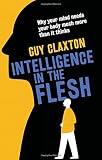
If you think that intelligence emanates from the mind and that reasoning necessitates the suppression of emotion, you’d better think again—or rather not “think” at all. In his provocative new book, Guy Claxton draws on the latest findings in neuroscience and psychology to reveal how our bodies—long dismissed as mere conveyances—actually constitute the core of our intelligent life. From the endocrinal means by which our organs communicate to the instantaneous decision-making prompted by external phenomena, our bodies are able to perform intelligent computations that we either overlook or wrongly attribute to our brains.
Embodied intelligence is one of the most exciting areas in contemporary philosophy and neuropsychology, and Claxton shows how the privilege given to cerebral thinking has taken a toll on modern society, resulting in too much screen time, the diminishment of skilled craftsmanship, and an overvaluing of white-collar over blue-collar labor. Discussing techniques that will help us reconnect with our bodies, Claxton shows how an appreciation of the body’s intelligence will enrich all our lives.
|
|
Suggested by
AntonJ
October 6, 2015 3:23 PM
|
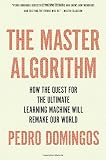
Algorithms increasingly run our lives. They find books, movies, jobs, and dates for us, manage our investments, and discover new drugs. More and more, these algorithms work by learning from the trails of data we leave in our newly digital world. Like curious children, they observe us, imitate, and experiment. And in the world’s top research labs and universities, the race is on to invent the ultimate learning algorithm: one capable of discovering any knowledge from data, and doing anything we want, before we even ask.
Machine learning is the automation of discovery—the scientific method on steroids—that enables intelligent robots and computers to program themselves. No field of science today is more important yet more shrouded in mystery. Pedro Domingos, one of the field’s leading lights, lifts the veil for the first time to give us a peek inside the learning machines that power Google, Amazon, and your smartphone. He charts a course through machine learning’s five major schools of thought, showing how they turn ideas from neuroscience, evolution, psychology, physics, and statistics into algorithms ready to serve you. Step by step, he assembles a blueprint for the future universal learner—the Master Algorithm—and discusses what it means for you, and for the future of business, science, and society.
If data-ism is today’s rising philosophy, this book will be its bible. The quest for universal learning is one of the most significant, fascinating, and revolutionary intellectual developments of all time. A groundbreaking book, The Master Algorithm is the essential guide for anyone and everyone wanting to understand not just how the revolution will happen, but how to be at its forefront.
|
|
Suggested by
AntonJ
September 16, 2015 7:23 PM
|
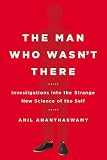
Anil Ananthaswamy’s extensive in-depth interviews venture into the lives of individuals who offer perspectives that will change how you think about who you are. These individuals all lost some part of what we think of as our self, but they then offer remarkable, sometimes heart-wrenching insights into what remains. One man cut off his own leg. Another became one with the universe.
We are learning about the self at a level of detail that Descartes (“I think therefore I am”) could never have imagined. Recent research into Alzheimer’s illuminates how memory creates your narrative self by using the same part of your brain for your past as for your future. But wait, those afflicted with Cotard’s syndrome think they are already dead; in a way, they believe that “I think therefore I am not.” Who—or what—can say that? Neuroscience has identified specific regions of the brain that, when they misfire, can cause the self to move back and forth between the body and a doppelgänger, or to leave the body entirely. So where in the brain, or mind, or body, is the self actually located? As Ananthaswamy elegantly reports, neuroscientists themselves now see that the elusive sense of self is both everywhere and nowhere in the human brain.
|
|
Suggested by
AntonJ
September 11, 2015 1:57 AM
|
A star science journalist with Parkinson's reveals the inner workings of this perplexing disease
Seven million people worldwide suffer from Parkinson's, and doctors, researchers, and patients continue to hunt for a cure. In Brain Storms, the award-winning journalist Jon Palfreman tells their story, a story that became his own when he was diagnosed with the debilitating illness.
Palfreman chronicles how scientists have worked to crack the mystery of what was once called the shaking palsy, from the earliest clinical descriptions of tremors, gait freezing, and micrographia to the cutting edge of neuroscience, and charts the victories and setbacks of a massive international effort to best the disease. He takes us back to the late 1950s and the discovery of L-dopa. He delves into a number of other therapeutic approaches to this perplexing condition, from partial lobotomies and deep brain stimulation to neural grafting. And he shares inspiring stories of brave individuals living with Parkinson's, from a former professional ballet dancer who tricks her body to move freely again to a patient who cannot walk but astounds doctors when he is able to ride a bicycle with no trouble at all.
With the baby boom generation beginning to retire and the population steadily aging, the race is on to discover a means to stop or reverse neurodegenerative conditions like Parkinson's and Alzheimer's. Brain Storms is the long-overdue, riveting, and deeply personal story of that race, and a passionate, insightful, and urgent look into the lives of those affected.
|
|
Suggested by
AntonJ
August 4, 2015 9:31 PM
|
To explain the mystery of how life evolved on Earth, Nick Lane explores the deep link between energy and genes. The Earth teems with life: in its oceans, forests, skies and cities. Yet there’s a black hole at the heart of biology. We do not know why complex life is the way it is, or, for that matter, how life first began. In The Vital Question, award-winning author and biochemist Nick Lane radically reframes evolutionary history, putting forward a solution to conundrums that have puzzled generations of scientists. For two and a half billion years, from the very origins of life, single-celled organisms such as bacteria evolved without changing their basic form. Then, on just one occasion in four billion years, they made the jump to complexity. All complex life, from mushrooms to man, shares puzzling features, such as sex, which are unknown in bacteria. How and why did this radical transformation happen? The answer, Lane argues, lies in energy: all life on Earth lives off a voltage with the strength of a lightning bolt. Building on the pillars of evolutionary theory, Lane’s hypothesis draws on cutting-edge research into the link between energy and cell biology, in order to deliver a compelling account of evolution from the very origins of life to the emergence of multicellular organisms, while offering deep insights into our own lives and deaths.
|