Your new post is loading...

|
Scooped by
Complexity Digest
October 29, 12:34 PM
|
While death may be one of life’s most predictable surprises, it has also proved itself to be one of the most fascinating and cutting-edge areas of scientific inquiry. Our bodies and lives tell a story of cellular creation and destruction that can be traced back to Earth’s primordial oceans. Yet when we follow the interwoven thread of beginnings and endings in an effort to discover death’s origins, nature, and meaning, we find that we cannot settle on a single definition of death or even a single interpretation of it. It would seem that there is not one death, but an endless variety of forms, each of which raises further questions about how well we understand death’s counterpoint—life.
Using death as a connecting theme, in Endless Endings, Ricard Solé explores the differing meanings of death in varied forms, reflecting on questions that are pushing forward the frontiers of scientific understanding. What is the physical basis of inevitable decay? Can we manipulate cellular rules to avoid death? What does death mean if life occurs inside a computer? Can a conscious machine save itself from death? Is immortality possible? What does it mean for language, thought, or information to die? As Solé reveals, life’s endings can be just as fascinating and varied as life itself. More at: press.princeton.edu
|
|
Scooped by
Complexity Digest
September 11, 12:02 PM
|
Business today remains tethered to a paradigm that is long out of date. This mindset assumes that universal answers exist: Businesses can simply apply compartmentalized operations and follow linear paths to success. Experienced managers know business doesn’t work this way. Where should they turn?
In this groundbreaking book, Doug Garnett shows how complexity science reveals a new understanding of how business works that is as useful on the front lines as in the C-suite. This discipline—the study of behaviors in highly interconnected, adapting systems dominated by emergence—is revolutionizing fields from biology and economics to psychology and artificial intelligence. Recognizing a business as a complex adaptive system operating within other complex systems changes our perspective on everything from core concepts of demand, profit, and strategy to the nature of business success. Managers who grasp the order hidden within complexity discover not only a powerful new understanding of their role but also potential for dramatic contributions to success.
The Complexity Paradigm features vivid examples ranging from local coffee shops to major corporations like PepsiCo, Boeing, Mattel, Starbucks, and General Motors as well as tech giants such as Apple and AT&T. Grounding eye-opening theory in the realities of business, this foundational look at complexity offers deep insight and value for practitioners and students alike. More at: cup.columbia.edu
|
|
Scooped by
Complexity Digest
September 6, 9:22 PM
|
Edited by Chrystopher L. Nehaniv, Peter R. Lewis, Stefano Nichele, Jitka Čejková, Christoph Salge, Imran Khan, Hanna Derets
IN MEMORIAM: Inman Harvey, 1948 – 2026. Dedicated to the memory of Inman Harvey, a towering figure with a brilliant mind and joyful, wicked wit, a mentor, and precious friend to our community. This volume presents the proceedings of ALIFE 2026, the 27th Conference on Artificial Life, held in Waterloo, Ontario, Canada, from 17–21 August 2026. The proceedings will be available at the conference through MIT Press open access. The conference theme, "Living and Lifelike Complex Adaptive Systems", places at the centre of the programme the principles through which biological, computational, chemical, robotic, social, and cultural systems generate coherent, adaptive, and evolving organization.
Read the full proceedings at: direct.mit.edu
|
|
Scooped by
Complexity Digest
July 11, 7:56 AM
|
An edited volume bringing together 25 of today’s most forward-thinking biologists and philosophers on sign processes and meaning-making in organisms. Theoretical biology is concerned with providing science with explanatory frameworks within which to fit its findings. The relatively newer field of Biosemiotics is the study of sign processes within life processes. In the tradition of the field-changing four-volume essay collection Towards a Theoretical Biology issued by developmental biologist Conrad Hal Waddington from 1968 to 1972, this volume brings together many of today’s leading scientists to discuss what they consider to be the most important and pressing problems in our current understandings of the biological world—and how best to advance our understandings of such life processes scientifically. Contributors: Denis Noble, Terrance Deacon, Scott F. Gilbert, Stuart Kaufmann, Tom Froese, Erik L. Peterson, Richard I Vane-Wright, Charles Wolfe, Raymond Noble, Claus Emmeche, Alexei Sharov, Kalevi Kull, Donald Favareau, Arantza Etxeberria, Anton Markoš, Jana Švorcová, Daniel C. Mayer-Foulkes, Federico Vega, Henrik Nielsen, Karel Kleisner, David Cortés-García, Matt Kalkman, Georgii Karelin, Takashi Ikegami, and Mariana Vitti Rodrigues. Read the full article at: mitpress.mit.edu
|
|
Scooped by
Complexity Digest
March 31, 4:46 PM
|
Collective action has been a fundamental aspect of human societies throughout history, from building irrigation systems and defenses in Neolithic times to coordinated disaster relief and scientific collaborations today. In this book, Sergey Gavrilets explains when and why groups of people cooperate, presenting a quantitative framework that unifies game theory with models of social influence, cognition, and individual and cultural variation. He shows how humans’ deep susceptibility to social influence—grounded in evolutionary need to cooperate and learn from peers, reinforced by deference to parents and elders, and extended to cultural, religious, and political leaders—shapes norms, beliefs, and collective outcomes.
Integrating previously separate literatures, Gavrilets introduces explicit dynamics for norms and beliefs, quantifies the effects of individual and cultural differences, and tests predictions across societies. Drawing on formal, data-based mathematical modeling supported by behavioral experiments and studies of online behavior, he concludes that successful collective action depends on six interacting forces: material payoffs, personal norms and attitudes, social influence, cognition, evolving social norms and beliefs about others, and individual and cultural differences. Lasting cultural change, he argues, depends on norms and institutions that shape behavior through persuasion, nudging, and enforcement. Gavrilets translates this theory into practical, testable strategies for policy and design, including targeted messaging, dynamic norms, and culturally sensitive approaches, and connects it to broader theories of behavior change. More at: press.princeton.edu
|
|
Scooped by
Complexity Digest
January 7, 11:10 AM
|
In this timely book, Juval Portugali ties together ancient archaeology with the present to explore the city as a phenomenon that has been rapidly increasing in power and importance since its earliest emergence. He links the walled cities of ancient civilization with modern-day borderless cities, while providing connections between modern nationalism and postmodern urbanism. More at: www.e-elgar.com
|
|
Scooped by
Complexity Digest
December 4, 2025 5:16 PM
|
ALIFE 2025: Ciphers of Life: Proceedings of the Artificial Life Conference 2025 Read the full Proceedings at: direct.mit.edu
|
|
Scooped by
Complexity Digest
September 27, 2025 11:27 AM
|
This book offers a unique perspective on the evolution of scientific theories through the lens of their changing complexity.
To explore this non-trivial connection, the author draws on well-known historical cases from the philosophy of science tradition to test the central theses of the work. At the same time, the book develops a conceptual framework in which the debates on emergence and complexity play a central role.
The opening chapter provides the historical background of emergence, examining both classical and contemporary perspectives, highlighting diverse viewpoints and their contributions to the current discussion.
The second chapter turns to the foundations of complexity science, detailing its key methodologies and emphasizing the role of information in describing and modeling systems.
Building on this foundation, the book introduces a novel quantitative definition of emergent properties, grounded in the concept of parametric model complexity. It discusses how slight variations in control parameters can generate universal features and explores the implications of these dynamics for our understanding of systemic behavior.
Finally, the author shows how this framework illuminates critical aspects of scientific practice, ranging from the criteria guiding theory choice to the relationship between technological innovation and the risk of the appearance of anomalies. By combining historical analysis, conceptual innovation, and formal modeling, the book presents a compelling vision of how complexity and emergence can be predictive indicators of theoretical transformation, recognizing the moments when our current models have reached their limits. More at: link.springer.com
|
|
Scooped by
Complexity Digest
August 31, 2025 12:53 PM
|
COMPUTATION IS A TECHNOLOGY TO THINK WITH. It is an instrument for epistemological discovery. It changes not only what we know but how we know.
Computation was discovered as much as it was invented. It is part of how the universe works, including, as Blaise Agüera y Arcas gracefully shows, what intelligence is.
Among the many rich takeaways that await you as you read What is Intelligence? is that much of what is traditionally categorized as “life,” “intelligence,” and “technology” is combining in new ways (think synthetic biology, artificial life, and AI). So too are the definitions of these terms, in ways that would have been unthinkable only a few years ago.
Are these three words—life, intelligence, technology—actually different names for the effects of a more general process? Just as life is a factory for making more life, and technology is a factory for making more technology, now life makes technologies that make new life that makes new technologies. Ultimately, it may be the same factory, and at its heart is computation.
That such a claim could be made at all is due in no small part to the creative and curious use of our computational tools—or what we might more precisely call artificial computation. With these we discover that the otherwise imperceivable building blocks of our reality and of our own flesh are themselves computational. Computation discovers itself through us. Read the full book at: whatisintelligence.antikythera.org
|
|
Scooped by
Complexity Digest
July 17, 2025 9:57 AM
|
Cristian Axenie , Meisam Akbarzadeh , Michail A. Makridis , Matteo Saveriano , Alexandru Stancu The book purpose is to build a foundational knowledge base by applying antifragile system design, analysis, and development in technical systems, with a focus on traffic engineering, robotics, and control engineering. The authors are interested in formalizing principles and an apparatus that turns the basic concept of antifragility into a tool for designing and building closed-loop technical systems that behave beyond robust in the face of uncertainty.
As coined in the book of Nassim Taleb, antifragility is a property of a system to gain from uncertainty, randomness, and volatility, opposite to what fragility would incur. An antifragile system’s response to external perturbations is beyond robust, such that small stressors can strengthen the future response of the system by adding a strong anticipation component. The work of the Applied Antifragility Group in traffic control and robotics, led by the authors, provides a good overview on the current research status. Read the full article at: link.springer.com
|
|
Scooped by
Complexity Digest
June 26, 2025 3:06 PM
|
This book brings together key findings, insights, and theories at the intersection of two disciplines – city science and complex systems. It features a curated collection of chapters contributed by emerging scholars conducting cutting-edge research in complexity science, interdisciplinary physics, and quantitative geography. The compendium is tailored to a thematically diverse audience, spanning quantitative fields such as statistical and mathematical physics, as well as socially-focused domains such as geography and urban planning. By integrating novel methods and insights from physics, economics, and geography, this book aims at an interdisciplinary spectrum of graduate students and academic researchers studying cities as complex systems. More at: link.springer.com
|
|
Scooped by
Complexity Digest
May 7, 2025 11:20 AM
|
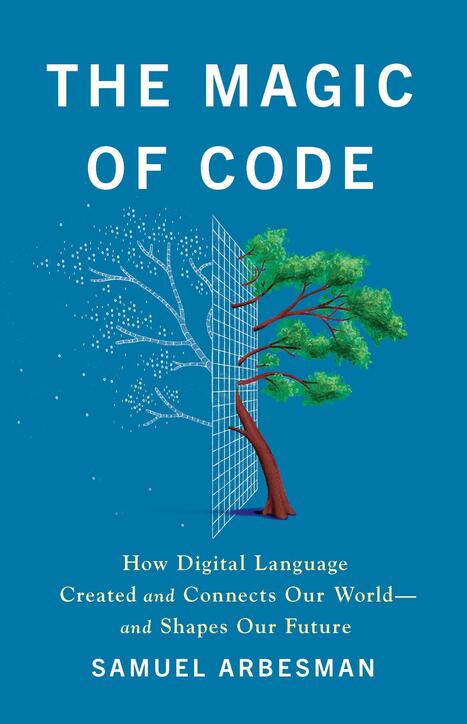
In the tradition of classics such as The Lives of a Cell, a bold reframing of our relationship with technology that is more positive and human centered.
In the digital world, code is the essential primary building block, the equivalent of the cell or DNA in the biological sphere—and almost as mysterious. Code can create entire worlds, real and virtual; it allows us to connect instantly to people and places around the globe; and it performs tasks that were once only possible in science fiction. It is a superpower, and not just in a technical sense. It is also a gateway to ideas. As vividly illustrated by Samuel Arbesman, it is the ultimate connector, providing new insight and meaning into how everything from language and mythology to biblical texts, biology, and even our patterns of thought connect with the history and nature of computing. While the building block of code can be used for many wondrous things it can also create deeper wedges in our society and be weaponized to cause damage to our planet or our civilization. Code and computing are too important to be left to the tech community; it is essential that each of us engage with it. And we fail to understand it to our detriment. By providing us with a framework to think about coding and its effects upon the world and placing the past, current, and future developments in computing into its broader setting we see how software and computers can work for people as opposed to against our needs. With this deeper understanding into the “why” of coding we can be masters of technology rather than its subjects. More at: www.publicaffairsbooks.com
|
|
Scooped by
Complexity Digest
April 18, 2025 11:21 AM
|
Carl Zimmer For generations, physicists have puzzled over life. Their theories about matter and energy have helped them understand how the universe produced galaxies and planets. But physicists have struggled to understand how lifeless chemical reactions give rise to the complexity stored in our cells. In a new book, “Life as No One Knows It: The Physics of Life’s Emergence,” out on Aug. 6, Sara Walker, a physicist at Arizona State University, offers a theory that she and her colleagues believe can make sense of life. Assembly theory, as they call it, looks at everything in the universe in terms of how it was assembled from smaller parts. Life, the scientists argue, emerges when the universe hits on a way to make exceptionally intricate things. The book arrives at an opportune time, as assembly theory has attracted both praise and criticism in recent months. Dr. Walker argues that the theory holds the potential to help identify life on other worlds. And it may allow scientists like her to create life from scratch. “I actually think alien life will be discovered in the lab first,” Dr. Walker said in an interview. Read the full article at: www.nytimes.com
|
|
|
Scooped by
Complexity Digest
September 26, 3:37 PM
|
This book offers a unified quantitative framework for understanding the dynamics of novelty and innovation across biological, technological, and societal systems. It explores how first-time occurrences—ranging from everyday experiences to groundbreaking discoveries—can lead to subsequent breakthroughs. The content is organized into three main parts. The first part introduces essential theoretical tools for investigating the emergence of new ideas. The second part examines both classical and modern models that capture the evolution, interaction, and competition of innovations within complex systems. This section emphasizes the importance of models based on the concept of the ‘Adjacent Possible’, i.e., all those things—ideas, molecules, technologies— that are one step away from what actually exists. The final section presents empirical case studies that utilize computational and data-driven methods to uncover hidden patterns in the diffusion of novelty. A postface summarizes the main findings and provides insight into future directions for research. By synthesizing insights from theoretical and computational physics, complexity science, and social sciences, this work challenges traditional views on predictability and control. It demonstrates that the forces driving innovation are both serendipitous and systematic, offering new perspectives on how progress unfolds. This comprehensive approach provides valuable methodologies for researchers, students, practitioners, and the general public, making it an essential resource for anyone looking to understand the complex processes that shape our ever-evolving world.This book offers a unified quantitative framework for understanding the dynamics of novelty and innovation across biological, technological, and societal systems. It explores how first-time occurrences—ranging from everyday experiences to groundbreaking discoveries—can lead to subsequent breakthroughs. The content is organized into three main parts. The first part introduces essential theoretical tools for investigating the emergence of new ideas. The second part examines both classical and modern models that capture the evolution, interaction, and competition of innovations within complex systems. This section emphasizes the importance of models based on the concept of the ‘Adjacent Possible’, i.e., all those things—ideas, molecules, technologies— that are one step away from what actually exists. The final section presents empirical case studies that utilize computational and data-driven methods to uncover hidden patterns in the diffusion of novelty. A postface summarizes the main findings and provides insight into future directions for research. By synthesizing insights from theoretical and computational physics, complexity science, and social sciences, this work challenges traditional views on predictability and control. It demonstrates that the forces driving innovation are both serendipitous and systematic, offering new perspectives on how progress unfolds. This comprehensive approach provides valuable methodologies for researchers, students, practitioners, and the general public, making it an essential resource for anyone looking to understand the complex processes that shape our ever-evolving world. More at: academic.oup.com
|
|
Scooped by
Complexity Digest
September 10, 2:01 PM
|
This book describes the urgent need of modern humanity to renew and reinforce an open attitude to the complexity of life, above all by embracing its intrinsic indeterminacy, rather than attempting futilely to control its evolution. Oblivious to this ever-more urgent necessity, seduced by the speed and virality of digital pattern recognition, computing, and artificial simulation of human thought, society has reverted to a linear, deterministic concept of reality, under the belief that everything can be measured and managed, and that error and unpredictability will soon be eliminated from our lives and organizations. Consequently, choices and responsibilities have been delegated to technology, artificial intelligence and algorithms, even in educational institutions, which are now preoccupied with teaching mere skills and know-how, thus committing the fatal error of confusing artificial, mechanical, complicated systems with living, complex, adaptive systems.
This volume is intended not only for complexity/social scientists, philosophers and students, but to the curious from all walks of life. It calls for learning to inhabit complexity, while recognizing and participating in its interdependent, interconnected, interactive systems of relationships. Dominici reveals the futility of endeavoring to control the uncontrollable or observe the unobservable, showing how self-organization and emergence, triggered from the smallest and most modest elements, impact the entire system. More at: link.springer.com
|
|
Scooped by
Complexity Digest
August 29, 10:54 AM
|
Perspectives on Machine Consciousness asks whether any AIs are conscious today, whether any future ones could be conscious, how we could know, and what implications machine consciousness would have for us and for them. As AI improves rapidly in performance and capability, these questions are becoming increasingly important. We do not fully understand how AIs work, and even some of the leading LLM developers say they cannot be sure that today’s models are not sentient, though many people are forming relationships with them, sometimes intimate ones. The book explores consciousness alongside our interactions with AI, including the critical need to avoid committing mind crime by causing artificial minds to suffer, as well as considering that if and when superintelligence arrives, its enormous effect on humanity may be significantly determined by whether or not it is conscious. The authors show that machines becoming conscious means we may learn a great deal about our own consciousness – arguably the most important, and yet most mysterious, thing about us. This book is required reading for anybody developing advanced AI, working in AI safety, responsible for developing AI policies at an organizational or national level, and indeed anybody concerned with the long-term future of humanity. More at: www.taylorfrancis.com
|
|
Scooped by
Complexity Digest
April 29, 10:29 AM
|
What kind of trouble lies ahead? How can we successfully transition towards a sustainable future? Drawing on a remarkably broad range of insights from complex systems and the functioning of the brain to the history of civilizations and the workings of modern societies, the distinguished scientist Marten Scheffer addresses these key questions of our times. He looks to the past to show how societies have tipped out of trouble before, the mechanisms that drive social transformations and the invisible hands holding us back. He traces how long-standing practices such as the slave trade and foot-binding were suddenly abandoned and how entire civilizations have collapsed to make way for something new. Could we be heading for a similarly dramatic change? Marten Scheffer argues that a dark future is plausible but not yet inevitable and he provides us instead with a hopeful roadmap to steer ourselves away from collapse-and toward renewal. More at: www.cambridge.org
|
|
Scooped by
Complexity Digest
March 13, 2:30 PM
|
The contemporary global economy exhibits unprecedented structural complexity—characterized by nonlinear dynamics, adaptive behaviors, and emergent properties. Understanding these phenomena requires theoretical frameworks capable of addressing complexity, path dependence, and evolutionary processes. Complexity economics has developed to address such intellectual challenges. Originating in a seminal 1987 Santa Fe Institute workshop and first described in The Economy as an Evolving Complex System (1988), this approach fundamentally reconceptualizes economic systems as complex adaptive systems. Subsequent volumes (1997, 2005) progressively developed this framework, offering new insights into finance, technological innovation, and social interactions. Like each of its predecessors, this fourth volume is the product of an interdisciplinary workshop hosted at the Santa Fe Institute. It represents the latest synthesis, reflecting theoretical advances and methodological developments achieved over nearly four decades. Drawing on contributions from leading scholars worldwide, the chapters span foundational questions to policy applications—from agent-based modeling and network theory to macroeconomic dynamics, innovation systems, sustainability transitions, and inequality. The result demonstrates complexity economics' capacity to generate novel insights into phenomena that remain puzzling within traditional frameworks: financial instability, technological disruption, climate economics, and institutional change. This volume positions complexity economics as an essential analytical framework for understanding twenty-first-century economic realities. More at: www.sfipress.org
|
|
Scooped by
Complexity Digest
January 6, 4:01 AM
|
The scientific understanding of energy, matter, and spacetime has advanced rapidly, whereas the study of information—its properties, behavior, and dynamics—remains underdeveloped. Despite the complexity of knowledge and information, our conceptual and empirical grasp of its evolution lags significantly behind. Progress in disciplines such as artificial intelligence, genomics, cognitive science, cyber governance, global ecology, and quantum mechanics depends critically on a more rigorous understanding of information dynamics. Absent such insight, humanity risks succumbing to entropic forces that threaten systemic stability and long-term survival. In this book, Klaus Jaffe addresses the limitations of prior treatments of infodynamics, many of which have been incomplete, imprecise, or conceptually flawed. It offers an interdisciplinary investigation into the relationship between information and energy, drawing on theoretical and empirical contributions from economics, biology, and physics. By challenging conventional paradigms, the book constructs a conceptual framework that bridges disparate scientific domains and societal processes. The resulting synthesis opens new avenues for empirical inquiry and policy-relevant research, with implications for both academic scholarship and public discourse. Inviting readers to explore the evolving frontier of information science, the book highlights the role of information and its impact on both natural and social systems. More at: link.springer.com
|
|
Scooped by
Complexity Digest
November 27, 2025 12:08 PM
|
* Explores the potential of complex systems in shaping the future of communication networks
* Integrates network science, bio-inspired models, artificial intelligence, and higher-order graph theory
* Provides a guide for researchers to use the full potential of complex systems in revolutionizing communication networks More at: link.springer.com
|
|
Scooped by
Complexity Digest
September 11, 2025 3:26 PM
|
Engineering Swarms for Cyber-Physical Systems covers the whole design cycle for applying swarm intelligence in Cyber-Physical Systems (CPS) and guides readers through modeling, design, simulation, and final deployment of swarm systems. The book provides a one-stop-shop covering all relevant aspects for engineering swarm systems. Following a concise introduction part on swarm intelligence and the potential of swarm systems, the book explains modeling methods for swarm systems embodied in the interplay of physical swarm agents. Examples from several domains including robotics, manufacturing, and search and rescue applications are given. In addition, swarm robotics is further covered by an analysis of available platforms, computation models and applications. It also treats design methods for cyber-physical swarm applications including swarm modeling approaches for CPSs and classical implementations of behaviors as well as approaches based on machine-learning. A chapter on simulation covers simulation requirements and addresses the dichotomy between abstract and detailed physical simulation models. A special feature of the chapters is the hands-on character by providing programming examples with the different engineering aspects whenever possible, thus allowing for fast translation of concepts to actual implementation. Overall, the book is meant to give a creative researcher or engineer the inspiration, theoretical background, and practical knowledge to build swarm systems of CPSs. It also serves as a text for students in science and engineering. Read the full article at: www.routledge.com
|
|
Scooped by
Complexity Digest
July 17, 2025 11:58 AM
|
Cristian Axenie , Roman Bauer , Oliver López Corona , Jeffrey West As coined in the book of Nassim Taleb, antifragility is a property of a system to gain from uncertainty, randomness, and volatility, opposite to what fragility would incur. An antifragile system’s response to external perturbations is beyond robust, such that small stressors can strengthen the future response of the system by adding a strong anticipation component. Such principles are already well suited for describing behaviors in natural systems but also in approaching therapy designs and eco-system modelling and eco-system analysis.
The purpose of this book is to build a foundational knowledge base by applying antifragile system design, analysis, and development in natural systems, including biomedicine, neuroscience, and ecology as main fields. We are interested in formalizing principles and an apparatus that turns the basic concept of antifragility into a tool for designing and building closed-loop systems that behave beyond robust in the face of uncertainty when characterizing and intervening in biomedical and ecological (eco)systems.
The book introduces the framework of applied antifragility and possible paths to build systems that gain from uncertainty. We draw from the body of literature on natural systems (e.g. cancer therapy, antibiotics, neuroscience, and agricultural pest management) in an attempt to unify the scales of antifragility in one framework. The work of the Applied Antifragility Group in oncology, neuroscience, and ecology led by the authors provides a good overview on the current research status. Read the full article at: link.springer.com
|
|
Scooped by
Complexity Digest
June 27, 2025 3:28 PM
|
Interdisciplinary systems thinking is complementary but does not replace conventional disciplinary analytical thinking. The book is valuable for researchers, their advisors, and other thinkers interested in deep knowledge of science. Interdisciplinary systems thinking is valuable for three reasons: The goal of all science is a unified view of the world; we cannot solve the significant problems of our time without interdisciplinary collaboration; and general theories of systems and system archetypes support the solution to those problems. System archetypes are generic system models that have stood the test of time. As specialists within a discipline, we must be able to communicate between disciplines.
Interdisciplinary generalists can offer us reliable visions and relevant research problems. The goal of interdisciplinary research is to find unified solutions to those problems. The book provides a lot of information from over a thousand sources in a structured manner to help the reader. The book includes a comprehensive chronology, vocabulary, and bibliography. The author has been a research professor in information engineering for over 25 years. During his career, he became interested in systems thinking, which is closely related to the philosophy and history of science. More at: link.springer.com
|
|
Scooped by
Complexity Digest
May 19, 2025 2:48 PM
|
Information, along with energy, matter, and spacetime, is one of the fundamental elements of nature that underpins all known phenomena. While our knowledge of the universe is expanding exponentially—particularly regarding energy, spacetime, and matter—our understanding of information progresses at a much slower pace. The amount of information is increasing exponentially, but not our comprehension of its dynamics. Advancements in artificial intelligence, genetic research, natural intelligence, cyber governance, and global ecological phenomena hinge on our ability to enhance our understanding of information dynamics. Without improved access to and understanding of information, we risk succumbing to the entropic forces that threaten humanity’s survival. Read the full book at: papers.ssrn.com
|
|
Scooped by
Complexity Digest
May 3, 2025 4:55 PM
|
Heather Z. Brooks, Michelle Feng, Mason A. Porter, and Alexandria Volkening The spread of memes and misinformation on social media, political redistricting, gentrification in urban communities, pedestrian movement in crowds, and the dynamics of voters are among the many social phenomena that researchers investigate in the field of complex systems. In the study of complex social systems, there is often also societal relevance to improving our understanding of how individuals interact with each other and their environment, giving rise to collective group dynamics. The mathematical and computational study of complex social systems relies on and motivates the development of methods in many topics, including mathematical modeling, data analysis, network science, and topology and geometry. This volume is a collection of diverse articles about complex social systems. This collection includes both (1) survey and tutorial articles that introduce complex social systems and methods to study them and (2) manuscripts with original research that highlight a variety of mathematical areas and applications. This book introduces the study of complex social systems to a broad mathematical audience. It will particularly appeal to people who are interested in applied mathematics. Read the full article at: www.ams.org
|